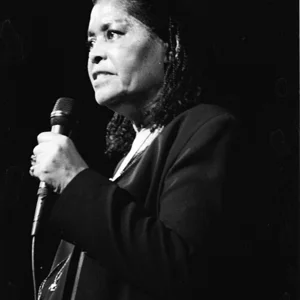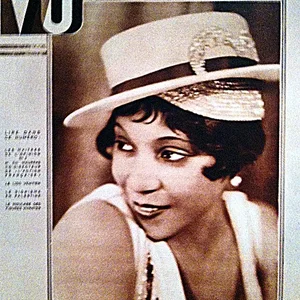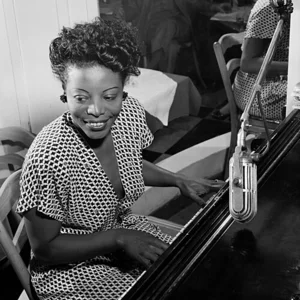

Mary Lou Williams (1910-1981) was an American jazz pianist, composer, and arranger. A major and influential figure across several decades, she moved through all the great jazz styles, from swing to bebop, and was a mentor to many musicians.
Mary Lou Williams(1910 — 1981)
Mary Lou Williams
États-Unis
6 min read
Frequently asked questions
Key Facts
- Born on May 8, 1910, in Atlanta, Georgia.
- A leading arranger and pianist for Andy Kirk's orchestra (Clouds of Joy) in the 1930s.
- Wrote arrangements for the great swing bandleaders such as Duke Ellington and Benny Goodman.
- Mentored bebop musicians such as Thelonious Monk and Dizzy Gillespie in the 1940s.
- Composed works of sacred jazz, including masses, after her conversion to Catholicism. Died on May 28, 1981, in Durham.
Works & Achievements
A landmark composition and arrangement for Andy Kirk and His Twelve Clouds of Joy, which became emblematic of the Kansas City swing sound.
A boogie-woogie piece written for Benny Goodman's orchestra, which turned it into one of its great hits.
A suite of twelve movements, one for each sign of the zodiac, blending jazz with concert writing; performed at Town Hall and later at Carnegie Hall.
A dazzling arrangement of “Blue Skies” created for Duke Ellington's orchestra.
A composition recorded by Dizzy Gillespie's big band, a testament to her commitment alongside the inventors of bebop.
A sacred jazz hymn dedicated to the first Black saint of the Americas, born of her conversion to Catholicism.
A mass composed in the language of jazz, choreographed by Alvin Ailey and performed at St. Patrick's Cathedral.
A duo concert with avant-garde pianist Cecil Taylor at Carnegie Hall, proof of her never-fading curiosity.
Anecdotes
A child prodigy from Pittsburgh, Mary Lou played piano by ear from the age of three or four, without ever having taken a lesson. Nicknamed “the little piano girl,” she was carried from house to house to perform, earning money that helped support her large family.
Within Andy Kirk's Clouds of Joy, in Kansas City, she was not only the pianist but above all the chief arranger: she was the one who decided which instrument played what. Her reputation grew so great that bandleaders as famous as Benny Goodman, Duke Ellington, and Tommy Dorsey bought her arrangements.
In her apartment on Hamilton Terrace, in Harlem, Mary Lou ran a true jazz salon. Young revolutionaries like Thelonious Monk, Dizzy Gillespie, Bud Powell, and Tadd Dameron came by at all hours: she fed them, advised them, and helped them work out the emerging bebop.
After her conversion to Catholicism in the 1950s, she devoted part of her music to faith. In 1975, her “Mary Lou's Mass” was performed at St. Patrick's Cathedral in New York: she thus became the first jazz musician to perform there, and choreographer Alvin Ailey turned it into a ballet.
Mary Lou Williams never stopped evolving: a swing pianist who became a bebop pioneer, in 1977 she gave a duo concert with the avant-garde artist Cecil Taylor at Carnegie Hall. In the last years of her life, she taught jazz as a professor at Duke University.
Primary Sources
Around four a.m. I awoke to hear someone tapping on my window. It was Ben Webster: 'Get up, pussycat, we're jammin' and all the pianists are tired out now.'
I am praying through my fingers when I play.
A tree-shaped diagram tracing every branch of jazz — spirituals, ragtime, blues, swing, bop — back to a single root: the sufferings and songs of enslaved African Americans.
A suite of twelve pieces, one for each sign of the zodiac, each inspired by a musician in her circle; a pioneering work blending jazz with the forms of concert music.
Key Places
Birthplace of Mary Elfrieda Scruggs, which she left at a very young age when her family moved North.
The city of her childhood, where the “little piano girl” made a name for herself and learned music by ear.
The heart of a deeply bluesy, swinging jazz; this is where she established herself as pianist and arranger for Andy Kirk's Clouds of Joy.
Her apartment on Hamilton Terrace became a jazz salon where she mentored the pioneers of bebop such as Monk and Gillespie.
In 1975, her “Mary Lou's Mass” was performed there: she was the first jazz musician to perform in the cathedral.
Home of Duke University, where she taught jazz late in her life and where she died in 1981.
Typical Objects
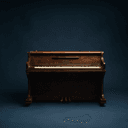
Her lifelong instrument: from the stride of her childhood to bebop and then sacred jazz, the keyboard was her means of expression and composition.

Bent over her manuscript paper, she wrote the parts for each instrument; her arrangements for Andy Kirk, Benny Goodman, and Duke Ellington made her name.

A symbol of the Catholic faith she embraced in the 1950s, which inspired the sacred side of her work, including the “Mary Lou's Mass.”

The medium on which her works were pressed, from the “Zodiac Suite” to the “Black Christ of the Andes,” carrying her music far beyond the clubs.

A tree-shaped diagram she drew to teach the history of jazz, linking every style back to the roots of spirituals and the blues.

For her concerts in clubs and prestigious halls, she wore elegant gowns; in everyday life, her dress remained understated.
School Curriculum
Vocabulary & Tags
Key Vocabulary
Tags
Daily Life
Morning
A musician of the night for decades, she often slept late after concerts. From her conversion in the 1950s onward, her mornings began with Mass and prayer, which she considered inseparable from her music.
Afternoon
Afternoons were devoted to composing and arranging: bent over her piano and her music paper, she painstakingly wrote out the parts for each instrument, a demanding task that made her reputation.
Evening
In the evening, she performed in clubs such as the Café Society and the Hickory House, then often stretched the night out by hosting young musicians at her home, who came to play and talk until dawn.
Food
Renowned for her hospitality, she gladly cooked for the crowd of musicians who frequented her Harlem apartment; her table drew on the African American Southern cooking (soul food) of her childhood.
Clothing
On stage, she wore elegant concert gowns suited to clubs and prestigious venues; in everyday life, her dress remained simple and understated, even more so after her religious turn.
Housing
For a long time she lived in a rented apartment on Hamilton Terrace, in Harlem, which became a true jazz salon, before ending her days in Durham, North Carolina, near Duke University.