
Mia Hamm is an American soccer player, one of the greatest players in the history of women's soccer. A forward for the United States national team, she won two World Cups and two Olympic titles before retiring in 2004.
Mia Hamm(1972 — ?)
Mia Hamm
États-Unis
6 min read
Frequently asked questions
Key Facts
- Born on March 17, 1972, in Selma, Alabama (United States)
- World champion with the United States in 1991 and 1999
- Olympic gold medalist in 1996 (Atlanta) and 2004 (Athens)
- Holder of the record for goals in international competition for many years (158 goals)
- Retired from sport in 2004, then inducted into the National Soccer Hall of Fame in 2007
Works & Achievements
Youngest member of the American team crowned at the first FIFA Women's World Cup, in China.
The inaugural Olympic title for women's soccer, won on home soil before a record crowd.
A historic victory at the Rose Bowl that turned the team into a national and popular phenomenon.
The greatest number of goals scored for a national team, across both men and women, a record that stood unmatched for years.
A second Olympic title, the high point of her career before retirement.
The first recipient of the brand-new trophy for the best player on the planet, two years running.
A book in which she shares her philosophy of hard work, teamwork, and perseverance with young readers.
A charitable organization created in memory of her brother, supporting bone marrow transplant research and women's sports.
Anecdotes
In 1999, during the final of the Women's World Cup at the Rose Bowl in Pasadena, Mia Hamm and her teammates played in front of more than 90,000 spectators, an attendance record for a women's soccer match. This victory by the United States over China, decided on penalty kicks, turned the team into national heroines and truly launched American women's soccer.
Mia Hamm long held the record for the most goals scored in international play, men and women combined, with 158 goals. This record, set in 2004, was not surpassed until years later by another American, Abby Wambach.
Born into a military family, Mia moved constantly across the United States and even to Italy. Born with a slight foot deformity, she wore corrective shoes at a very young age before becoming one of the fastest forwards in the world.
Nike named one of the largest buildings on its Oregon campus the “Mia Hamm Building,” a rare honor reflecting her status as an icon. She also filmed a famous commercial alongside basketball player Michael Jordan on the theme “Anything you can do, I can do better.”
In 1989, at just 15 years old, Mia Hamm became the youngest player to wear the jersey of the United States national team, a record for precociousness that foreshadowed an exceptional career.
Primary Sources
A true athlete isn't the one who wins. It's the one who gets back up when they fail and starts over, again and again.
I was lucky enough to play with and against the best players in the world, and every day they pushed me to become better.
When I saw all those families in the stands, all those little girls wearing our jerseys, I understood that we were playing for something bigger than ourselves.
Key Places
Birthplace of Mia Hamm, born on March 17, 1972, into a military family that would move frequently.
There, Mia Hamm won four NCAA collegiate titles and sharpened her game under coach Anson Dorrance.
Stadium of the victorious 1999 Women's World Cup final, in front of more than 90,000 spectators. A founding moment for women's soccer.
Setting of Mia Hamm's second Olympic title in 2004, just before her retirement from the sport.
Site of the Atlanta 1996 Olympic football tournament, where the U.S. team claimed the discipline's first-ever Olympic gold medal in the women's game.
Typical Objects

The central tool of the game, the football allowed Mia Hamm to showcase her striking and ball-control technique. She spent hours training to master it with both feet.
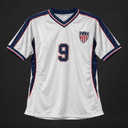
The white and blue national team jersey, bearing the number 9, became inseparable from Mia Hamm. Thousands of young girls wore it as a way of identifying with her.
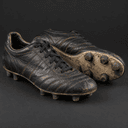
The cleats provided the grip needed to run and change direction on the grass. As a child, Mia wore corrective shoes before lacing up these competition cleats.

The two gold medals won in 1996 and 2004 reward the Olympic titles of the American team. They symbolize the peak of Mia Hamm's international career.

The trophy lifted in 1991 and 1999 crowns the world champions. For Mia Hamm, it embodies the global recognition of women's football.
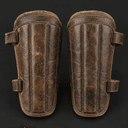
Worn under the socks, shin guards protected the legs from impacts and tackles. They are mandatory equipment for every football player.
School Curriculum
Vocabulary & Tags
Key Vocabulary
Tags
Daily Life
Morning
A top-level footballer's day began early with a carbohydrate-rich breakfast, followed by a morning training session. Mia worked on her fitness, her runs and her shooting for several hours.
Afternoon
The afternoon was devoted to team tactical sessions, technical drills and video work to analyze opponents. Competition periods meant frequent travel across the United States and around the world.
Evening
In the evening came recovery: stretching, treatments, rest and sleep to prepare for the next day. Mia also added media and promotional commitments tied to her star status.
Food
A tightly controlled athlete's diet, rich in pasta, rice, fruit, vegetables and lean protein, went hand in hand with constant hydration. The goal was to support endurance and muscle recovery.
Clothing
At training, she wore shorts, a jersey, high socks, shin guards and cleats. During matches, the national team's number 9 jersey, and off the field sportswear often linked to her sponsors.
Housing
Born into a military family that moved frequently, Mia lived in several states and even in Italy during her childhood. As an adult and professional player, she resided in modern housing near her training centers in the United States.
Historical Timeline
Period Vocabulary
Liens externes & ressources
Références
Œuvres
Championne du monde 1991
1991
Médaille d'or olympique d'Atlanta
1996
Championne du monde 1999
1999
Record de 158 buts en sélection
2004
Médaille d'or olympique d'Athènes
2004
Joueuse mondiale FIFA de l'année
2001 et 2002
Autobiographie « Go for the Goal »
1999