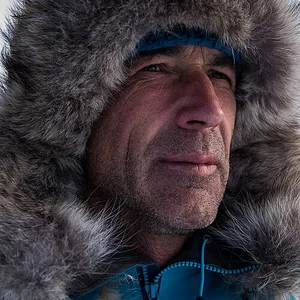

An extreme South African-Swiss adventurer born in 1966, Mike Horn is one of the most daring explorers of our time. He has completed unprecedented expeditions in the most hostile regions of the globe, including a solo circumnavigation of the world without motorized assistance.
Mike Horn(1965 — ?)
Mike Horn
Suisse, Afrique du Sud
9 min read
Frequently asked questions
Key Facts
- 1999-2004: Solo circumnavigation of the globe without motorized assistance (Pangaea project)
- 2002-2004: Round-the-world voyage by sail and kayak without motorized assistance
- 2006-2007: Solo and unassisted crossing of the Arctic
- 2019-2020: Expedition to Antarctica with Borge Ousland in extreme winter conditions
- Founder of the Pangaea educational program for young explorers
Works & Achievements
First solo circumnavigation of the globe along the equator without a motor — by kayak, on foot, by bicycle, and under sail — over 17 months. This landmark expedition established Mike Horn as a major figure on the international extreme exploration scene.
A solo crossing of the globe from Antarctica to the North Pole along a single meridian, with no motorized assistance, completed over two years. One of the most ambitious and grueling solo journeys of exploration ever undertaken.
A solo trek across the Arctic ice cap in the depths of polar night, enduring extreme cold and total isolation. No explorer had previously crossed the Arctic Ocean alone during the winter season.
A round-the-world voyage aboard the sailing vessel Pangaea, combining exploration of polar and tropical regions with an environmental awareness mission involving young scientists and Horn's own daughters. A shift toward exploration with an educational and humanistic purpose.
An autobiographical account of the equatorial circumnavigation, translated into numerous languages, which introduced the wider public to Horn's philosophy of mental and physical endurance. A landmark work in contemporary exploration literature.
An account of Horn's polar expeditions describing his approach to managing fear, pain, and solitude in hostile environments. A testament to the psychological resources that can be called upon when facing situations of extreme danger.
Anecdotes
Between 1997 and 1998, Mike Horn completed the 'Latitude Zero' expedition: he circumnavigated the globe along the equator using human power alone — by kayak, on foot, by bicycle, and by sail. This 17-month adventure took him across equatorial Africa, the Amazon, and the open oceans without ever using a motor. He thus became the first person to achieve this feat solo.
In 2019, Mike Horn and Norwegian Børge Ousland attempted to cross the Arctic Ocean in winter, in total darkness and temperatures plunging to -40°C. Exhausted after weeks of trekking across drifting, fractured sea ice, they were rescued by the Russian nuclear icebreaker '50 Years of Victory'. This episode illustrates the extreme limits of human endurance.
In 2009, while Mike Horn was alone in the Arctic ice, he learned by satellite phone of the death of his wife Cathy, taken by cancer. Faced with this sudden grief thousands of kilometers from any civilization, he chose to continue the expedition as a tribute to her. This heartbreaking moment reveals the human and emotional depth behind the explorer's image of invincibility.
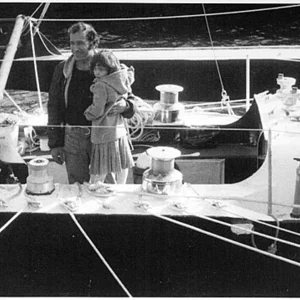
For the Pangaea Expedition (2008–2012), Mike Horn sailed around the globe aboard his yacht named 'Pangaea', bringing along his two daughters Annika and Jessica as well as young scientists. This voyage combined exploration, environmental research, and knowledge-sharing with new generations, showing that adventure can also be a vehicle for education and ecological awareness.
During the Pole to Pole expedition (2002–2004), Mike Horn traveled from Antarctica to the North Pole along a single meridian, crossing oceans, jungles, deserts, and Siberia — always without a motor. This two-year journey stands as one of the longest solo traversals ever completed, and remains an unmatched geographical, physical, and mental challenge.
Primary Sources
Mike Horn describes his method: set a daily target in kilometers, never stop until it is reached, and draw on mental strength when the body fails. He argues that physical limits are almost always reached before psychological ones.
Horn recounts how to survive alone in conditions where every decision is a matter of life and death. He describes managing solitude, dietary discipline, and snow-shelter construction as skills just as important as physical endurance.
"I want to show younger generations that our planet is of extraordinary beauty and fragility. Sailing to the most remote places on Earth is how you understand what we stand to lose if we do not change our ways."
Horn explains that solo exploration forces a radical self-knowledge: with no team to compensate for one's weaknesses, the explorer must develop total autonomy — physical and mental — which profoundly transforms the way they see the world.
Key Places
Mike Horn's birthplace, where he grew up under apartheid. This political and social context shaped his fighter's spirit and his determination to break free from imposed boundaries, before he left his country for Europe.
Mike Horn's home base since the 1990s, the departure and return point for all his worldwide expeditions. Switzerland, a country of mountains and adventure, provides him with an ideal setting for intensive physical preparation and the planning of his projects.
An extreme point reached by Mike Horn on several occasions, notably during the Pole to Pole expedition in 2004 and the perilous winter crossing of 2019. Reaching the North Pole in the depths of polar night without motorized assistance remains one of the most extreme challenges in contemporary exploration.
Traversed by kayak during the Latitude Zero expedition, this territory of dense jungle, extreme heat, and dangerous wildlife represents one of the most formidable challenges outside polar environments. Horn covered thousands of kilometres of river and equatorial forest.
The starting point of the Pole to Pole expedition and the stage for several cross-country ski traversals. The Antarctic continent represents for Horn the most isolated territory on the planet, where the slightest mistake can be fatal with no possibility of rapid rescue.
An 8,091-metre Himalayan summit that Mike Horn attempted to climb, illustrating his ambition to conquer every extreme environment on the globe. The Annapurna is statistically the deadliest mountain among the fourteen eight-thousanders.
Typical Objects

A human-powered watercraft used over thousands of kilometers during Latitude Zero, including along the African coastlines and through the Amazon. The kayak embodies Horn's core philosophy: moving forward by the strength of the body alone, with no motor whatsoever.

A lightweight sled of Scandinavian origin, pulled by Horn himself across the pack ice, loaded with 80 to 120 kg of supplies and equipment. With no dogs or snowmobile, the pulk turns every day's march into a test of absolute endurance.

A system of technical garments made from fleece, Gore-Tex, and merino wool, designed to withstand temperatures of -50°C and the fierce winds of the pack ice. Without this protection, survival in winter Arctic conditions would be measured in minutes.

A communication device that functions from any point on the globe via a network of low-Earth-orbit satellites. It was through this device that Horn learned of the death of his wife Cathy in 2009, while he was deep in the Arctic ice.

A satellite navigation instrument that provides one's exact position on the drifting pack ice — an environment that shifts with the currents. Without GPS, maintaining a precise heading in a featureless white expanse would be impossible.

Essential equipment for melting snow into drinking water and heating high-calorie food rations (up to 8,000 cal/day). On a polar expedition, preparing meals is a vital activity that directly determines Horn's ability to keep going the next day.

The exploration ship aboard which Mike Horn completed his educational circumnavigation of the globe from 2008 to 2012, which became a scientific platform and a symbol of his commitment to raising environmental awareness among younger generations.
School Curriculum
Vocabulary & Tags
Key Vocabulary
Tags
Daily Life
Morning
On polar expeditions, Mike Horn wakes after four to six hours of sleep in a specialist tent or a shelter dug into the snow. He spends the first hour melting snow for water, preparing a high-calorie ration, and checking his navigation instruments before assessing the day's weather conditions.
Afternoon
Afternoons are entirely devoted to progress: trekking across the pack ice while hauling the pulka for ten to twenty kilometres depending on conditions, or paddling a kayak through icy waters. Horn sets daily targets he refuses to miss, sometimes pushing on through the night under the northern lights or in total polar darkness.
Evening
In the evening, Horn sets up camp, checks and repairs any damaged gear, writes up his observations in his logbook, and consults the satellite weather forecast. He maintains daily contact with his support team via satellite phone to relay his GPS position — a safety ritual as much as a vital lifeline to the outside world.
Food
On extreme expeditions, Horn takes in between 5,000 and 8,000 calories a day, mainly in the form of freeze-dried rations high in fats and carbohydrates, chocolate, dried meat, and vitamin supplements. Water management is a top priority: melting enough snow to drink and cook can take up to an hour of work each day on the gas stove.
Clothing
Horn wears a technical layering system: merino wool base layer against the skin, mid-layer fleece, waterproof Gore-Tex jacket and trousers, completed by lined mittens, a balaclava, and UV-protective glacier goggles. In extreme polar conditions, dressing and undressing follows a precise protocol to prevent any sweating that would freeze instantly.
Housing
On expedition, Horn lives in a high-resistance tent built to withstand violent winds, or in igloos and snow trenches dug quickly on the spot. Between adventures, he lives in his home in Switzerland, which serves as a space for recovery, planning, and family life — an essential balance between the world of extreme adventure and ordinary life.
Historical Timeline
Period Vocabulary
Liens externes & ressources
Références
Œuvres
Expédition Latitude Zero
1997-1998
Expédition Pole to Pole
2002-2004
Traversée hivernale de l'Arctique
2006-2007
Pangaea Expedition
2008-2012
Latitude Zero (livre)
2000
Plus fort que la mort (livre)
2003