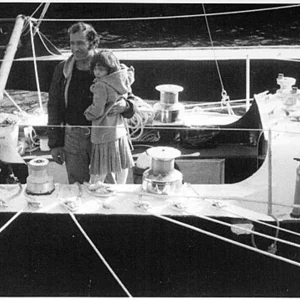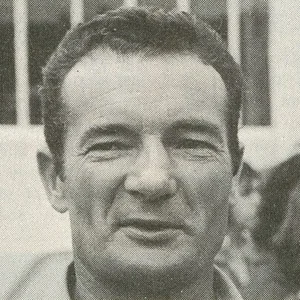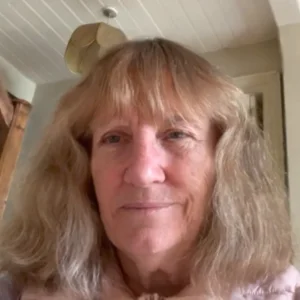

Naomi James, née Power, was a New Zealand-born sailor who became a naturalised British citizen. In 1978, she became the first woman to complete a solo round-the-world voyage by sailing past the formidable Cape Horn, aboard the Express Crusader.
Naomi James(1949 — ?)
Naomi James
Nouvelle-Zélande
6 min read
Frequently asked questions
Key Facts
- Born on 2 March 1949 in Gisborne (New Zealand).
- Set out from Dartmouth on 9 September 1977 aboard the Express Crusader.
- In June 1978, became the first woman to complete a solo round-the-world voyage via Cape Horn, in about 272 days.
- Beat the time set by Francis Chichester by roughly two days.
- Made a Dame Commander of the Order of the British Empire (DBE) in 1979.
Works & Achievements
Aboard the Express Crusader, she completed a solo circumnavigation of the world via Cape Horn in 272 days, a feat until then reserved for men.
An autobiographical account of her voyage, which became a classic of maritime literature and a testimony to solitude at sea.
A royal honour awarded for her achievement, making her one of the youngest women to be ennobled for a sporting feat.
She took part in the great solo transatlantic race, confirming her place among the world's top sailors.
She sailed as a pair with her husband in the famous race around Great Britain, shortly before his tragic death.
Anecdotes
Before her feat, Naomi James had almost no experience of the sea: she had worked as a hairdresser and had only learned to sail a few years earlier, after meeting her husband, the yachtsman Rob James. She even admitted that she could not swim well. In just a few years, this beginner had become a world record holder.
To avoid facing months of solitude alone, Naomi brought along a little cat named Boris. But during the crossing, the animal went overboard and was lost at sea, plunging her into deep grief. She had to finish her round-the-world voyage without her only companion on board.
As she approached Cape Horn, the most dreaded point of the voyage, the *Express Crusader* was violently knocked down by a wave and its self-steering gear broke. Naomi James nearly lost her boat in those icy, raging seas, but she managed to regain control and round the cape.
When she returned to Dartmouth on **8 June 1978**, Naomi James had completed her round-the-world voyage in **272 days**, beating the time of the famous yachtsman **Francis Chichester** by two days. She became the first woman to sail solo around the world via Cape Horn.
To honour her feat, **Queen Elizabeth II** made her a Dame of the British Empire (DBE) in **1979**, when she was only thirty years old. The almost unknown young New Zealander had become a heroine of world sailing.
Primary Sources
In her account, Naomi James gives a day-by-day record of her voyage, from her beginnings as a novice sailor to the rounding of Cape Horn, describing the solitude, the fear of heavy weather and the loss of her cat Boris.
On 8 June 1978 the press hailed the return of Naomi James, the first woman to complete a solo round-the-world voyage via Cape Horn, after 272 days at sea and in a time two days faster than that of Francis Chichester.
Naomi Christine James is appointed Dame Commander of the Order of the British Empire (DBE) for her feat at sea, an honour officially published in the British honours list.
Key Places
Coastal town where Naomi Power was born in 1949, at the eastern tip of the North Island.
Devon port from which she set off on 9 September 1977 and to which she returned in triumph on 8 June 1978.
Major port where she stopped to repair her boat during the first part of the voyage.
Southern tip of the Americas, famous for its storms; being rounded solo by a woman earned Naomi James a place in history.
Typical Objects

The 16-metre (53-foot) sailboat aboard which Naomi James completed her solo voyage around the world via Cape Horn.

A mechanical system that keeps the boat on course without human intervention; hers broke near Cape Horn and nearly cost her the ship.

An optical instrument used to measure the altitude of celestial bodies in order to calculate one's position, in an era without GPS on board.

A shortwave transmitter used to communicate with land; its breakdowns sometimes left her out of contact, raising fears of the worst.

A waterproof suit worn over several layers of wool to protect against the sea spray and cold of the southern oceans.

A strap linking the sailor to the boat to prevent going overboard in heavy weather, vital in solo sailing.

A notebook in which she recorded positions, weather, and private thoughts; it served as the basis for her book published in 1979.
School Curriculum
Vocabulary & Tags
Key Vocabulary
Tags
Daily Life
Morning
At daybreak, she would inspect the boat, the sails, and the rigging after the night, then take a sextant reading to fix her position. Breakfast often amounted to little more than hot tea and biscuits, swallowed down while keeping an eye on the sky and the sea.
Afternoon
Afternoons were devoted to the countless tasks aboard: trimming the sails, repairing equipment, bailing out water, recharging the batteries. When the sea allowed, she read, wrote in her journal, or tried to reach land by radio.
Evening
In the evening, she would prepare a hot meal on her little stove, then ready herself to face the night, the most nerve-racking part of sailing solo. She slept only in short snatches, waking constantly to check her heading and watch out for ships.
Food
Her diet relied on canned goods, freeze-dried meals, rice, pasta, and biscuits, with water carefully rationed. Cooking on a boat tossed about by the waves was a feat in itself, and seasickness often killed her appetite.
Clothing
In the Southern Ocean, she bundled herself up in several layers of wool beneath waterproof oilskins, with a woolly hat, boots, and gloves. On deck, she kept a safety harness on at all times so as not to be swept overboard by a wave.
Housing
Her “home” was the cramped cabin of the Express Crusader, at once kitchen, bedroom, workshop, and navigation station. Damp, cold, and constantly in motion, it offered neither privacy nor any real comfort for nearly nine months.
Historical Timeline
Period Vocabulary
Liens externes & ressources
Références
Œuvres
Premier tour du monde féminin en solitaire par le cap Horn
1977-1978
At One With The Sea: Alone Around the World
1979
Dame Commandeur de l'Empire britannique (DBE)
1979
Participation à l'OSTAR
1980
Round Britain Race avec Rob James
1982