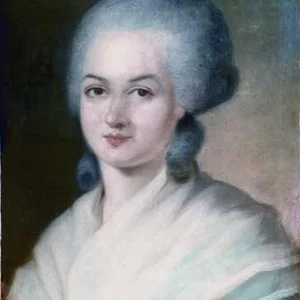

French author, politician and pamphleteer (1748–1793), Olympe de Gouges campaigned for women's rights and the abolition of slavery during the French Revolution. She wrote the Declaration of the Rights of Woman and of the Female Citizen in 1791, a founding document of feminism.
Olympe de Gouges(1748 — 1793)
Olympe de Gouges
France
8 min read
Frequently asked questions
Famous Quotes
« Woman has the right to mount the scaffold; she must equally have the right to mount the rostrum.»
« Mothers, daughters, sisters, representatives of the nation, demand to be constituted into a national assembly.»
Key Facts
- 1791: Wrote the Declaration of the Rights of Woman and of the Female Citizen, the first declaration demanding equal political and civic rights for women
- 1788–1792: Published numerous pamphlets and plays criticising the Ancien Régime and championing equality
- 1793: Arrested for her moderate political positions and her criticism of Robespierre
- November 3, 1793: Executed by guillotine, the first French female politician to suffer this fate
Works & Achievements
Founding text of feminism, written as a mirror of the Declaration of the Rights of Man of 1789. Olympe de Gouges proclaims the equality of rights between men and women and demands women's access to political citizenship.
Anti-slavery play performed at the Comédie-Française, denouncing the slave trade and slavery in the French colonies. One of the first openly abolitionist dramatic works in France.
Militant pamphlet in favor of the abolition of slavery, published the year preceding the Revolution. It bears witness to Olympe de Gouges's early commitment to the rights of oppressed peoples.
Philosophical novel in which Olympe de Gouges defends women's rights and criticizes social inequalities through a fictional narrative of Oriental inspiration, a fashionable genre in the 18th century.
Prefatory text of the Declaration addressed to Marie-Antoinette, in which Olympe de Gouges calls upon the queen to support the cause of women and to use her influence in favor of equality.
Last text written shortly before her execution, in which she reaffirms her convictions and her fidelity to her ideals of freedom and equality in the face of the death that awaits her.
Anecdotes
Olympe de Gouges, born Marie Gouze in Montauban in 1748, invented a noble origin for herself by claiming to be the illegitimate daughter of the Marquis Le Franc de Pompignan. This identity construction allowed her to establish herself in Parisian salons, where women of low birth were rarely admitted.
In 1791, she wrote the Declaration of the Rights of Woman and of the Female Citizen, mirroring point by point the Declaration of the Rights of Man and of the Citizen of 1789. She dedicated it to Queen Marie-Antoinette, hoping the sovereign would champion the cause of women — an audacious political gamble that did not pay off.
Olympe de Gouges wrote a play, 'The Slavery of the Blacks', which was performed at the Comédie-Française in 1789 after years of resistance from the actors, backed by the colonial lobby. She is one of the first women to have had an anti-slavery play staged on a major national theatre.
Arrested in July 1793 for posting a placard proposing a referendum on the form of government, she attempted to plead pregnancy to escape the guillotine — a legal stratagem recognized at the time. The physicians appointed by the tribunal concluded she was not pregnant, and she was guillotined on 3 November 1793.
Despite her revolutionary commitment, Olympe de Gouges publicly opposed the execution of King Louis XVI, even offering to defend him herself before the tribunal. This courageous but unpopular stance earned her the hostility of the Montagnards and contributed to her condemnation.
Primary Sources
Woman is born free and remains equal to man in rights. Social distinctions can only be founded on the common good.
Madame, little accustomed to the language used to Kings, I will not employ the flattery of courtiers to address this work to you. My aim is to speak to you frankly.
Laws were made by men alone, and they have always sought to enslave women, as though they had not been created to share their virtues and their glory.
I die, my fellow citizens, a victim of my passion for the fatherland and for the people. Its enemies, wearing a hypocritical mask, have led me to the grave.
Key Places
A town in southwestern France where Marie Gouze was born in 1748. She spent her early years there before forging a new identity in Paris.
A hub of political and cultural life where revolutionaries, philosophers, and men of letters gathered. Olympe de Gouges frequented this neighborhood to spread her ideas and meet influential figures.
The national theatre where Olympe de Gouges's anti-slavery play 'L'Esclavage des Noirs' was performed in 1789, after years of resistance from the colonial lobby.
The site where Olympe de Gouges was guillotined on November 3, 1793, during the Reign of Terror. It was also where Louis XVI and Marie-Antoinette had been executed.
The meeting place of the Constituent Assembly and later the National Convention. Olympe de Gouges submitted her petitions and her Declaration of the Rights of Woman to its members, none of which were ever debated.
Typical Objects

The daily tool of Olympe de Gouges, who wrote dozens of pamphlets, plays, and political declarations. Her written output is remarkable for a woman who had learned to read and write late in life.

Pamphlets and newspapers circulated widely during the Revolution. Olympe de Gouges published her political texts and declarations in them, reaching a broad audience across Paris.

Olympe de Gouges used public posting to spread her political ideas through the streets of Paris. It was precisely one of these posters proposing a vote on the form of government that prompted her arrest in 1793.
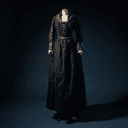
Women involved in the Revolution often wore outfits in tricolour colours or adorned with cockades. Olympe de Gouges attended clubs and revolutionary gatherings dressed according to the codes of her era.
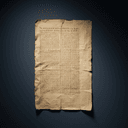
Olympe de Gouges literally took this founding text and rewrote it article by article to include women, thereby creating her own Declaration of the Rights of Woman and of the Female Citizen.

Lighting in the 18th century relied on candles and oil lamps. Olympe de Gouges often wrote her many texts at night, in her Parisian apartment.
School Curriculum
Vocabulary & Tags
Key Vocabulary
Tags
Mouvement
Concept
Daily Life
Morning
Olympe de Gouges rose early in her Parisian apartment and began her day by reading the revolutionary gazettes and newspapers published the day before. She would dictate or write her political texts herself, taking advantage of the cool morning hours to work on her pamphlets and declarations.
Afternoon
The afternoon was devoted to visits to literary and political salons, where she debated with intellectuals, politicians, and other engaged women. She also went to the National Assembly to attempt to have her petitions heard, or distributed her posters in the streets of Paris.
Evening
In the evening, Olympe de Gouges sometimes attended theatrical performances or meetings of revolutionary political clubs. Back home, she continued her writing by candlelight, drafting speeches, open letters, and legislative proposals until late into the night.
Food
The diet in 18th-century Paris for a woman of letters of modest means consisted of bread, soups, vegetables, cheeses, and occasionally meat at more festive salon gatherings. Olympe de Gouges, like many Parisians during the Revolution, sometimes suffered from the food shortages that troubled the city.
Clothing
She wore the fashionable revolutionary-era dresses: white muslin gowns or light-colored fabrics, high-waisted beneath the bust in the emerging neoclassical style. She most likely wore the tricolor cockade, a symbol of allegiance to revolutionary ideals, and took care with her appearance in order to be taken seriously in political circles.
Housing
Olympe de Gouges lived in a Parisian apartment, most likely in a lively neighborhood on the Right Bank. Her living conditions were those of a woman of letters of modest origins: a functional space with a writing desk, a bookcase, and enough room to receive visitors and correspondents.
Historical Timeline
Period Vocabulary
Visual Style
Esthétique néoclassique de la fin du XVIIIe siècle : salons à la bougie, pamphlets imprimés, robes de mousseline et décors révolutionnaires parisiens aux contrastes dramatiques.
Sound Ambience
L'ambiance sonore de Paris révolutionnaire : le bruit des pavés, des crieurs de journaux, des salons animés et de la plume grattant le papier la nuit à la lueur des bougies.
Liens externes & ressources
Références
Œuvres
Déclaration des droits de la femme et de la citoyenne
1791
L'Esclavage des Noirs, ou l'Heureux Naufrage
1789
Réflexions sur les hommes nègres
1788
Le Prince philosophe, conte oriental
1792
Les droits de la femme — Dédicace à la Reine Marie-Antoinette
1791
Testament politique
1793
Rechercher
See also
Related Characters
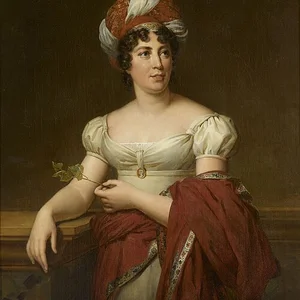
Madame de Staël
1766 — 1817
Anne Thérèse de Marguenat de Courcelles, marquise de Lambert
Mirabeau
1749 — 1791
Élisabeth Vigée Le Brun
1755 — 1842
Mary Wollstonecraft
1759 — 1797
Antoine François de Fourcroy
1755 — 1809