Character Catalog

Historical Library

CollectionGalaxy
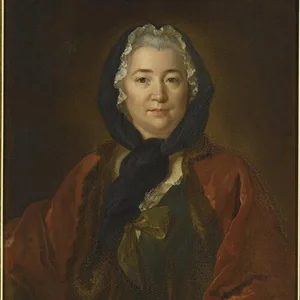
Portrait de Françoise de Graffigny

Françoise de Graffigny

Françoise de Graffigny

1695 — 1758

France

LiteratureÉcrivain(e)Early Modern18th century (Age of Enlightenment)

French writer (1695-1758), pioneer of the epistolary novel in the 18th century. She is best known for her Letters from a Peruvian Woman, a major work of Enlightenment literature that critiques French society through the discerning gaze of an exotic heroine.

Émotions disponibles (6)

N

Neutre

par défaut

I

Inspirée

P

Pensive

S

Surprise

T

Triste

F

Fière

Key Facts

  • 1747: publication of Letters from a Peruvian Woman, a considerable success that went through multiple editions and adaptations
  • Use of the outsider's perspective to critique French society: a literary strategy characteristic of the Enlightenment
  • Reflections on the condition of women and their education, proto-feminist themes ahead of their time
  • Regular attendance at Parisian salons and collaboration with the AcadĂ©mie des Inscriptions et Belles-Lettres
  • 1755: publication of CĂ©nie, another significant novel that consolidated her reputation as a writer

Works & Achievements

Letters from a Peruvian Woman (1747)

An epistolary novel telling the story of Zilia, an Inca princess torn from Peru and brought to France. A major work of the Enlightenment, it critiques the condition of women and French society through a foreign gaze.

Cénie (1750)

A sentimental comedy in five acts performed at the Comédie-Française. A great popular success, this play contributed to the rise of bourgeois drama by blending emotion and morality.

La Fille d'Aristide (1758)

Graffigny's last comedy, performed shortly before her death. The failure of this play deeply affected the author, who was already weakened by illness.

Correspondence of Madame de Graffigny (1716-1758)

A collection of more than 2,500 letters, primarily addressed to François-Antoine Devaux. An exceptional document on the literary, social, and private life of the 18th century.

Spanish Novella (1745)

A short story published in the collection Cinq nouvelles. This work of fiction reflects Graffigny's interest in foreign cultures and brief narrative forms.

Anecdotes

Françoise de Graffigny endured a disastrous marriage with François Huguet de Graffigny, a violent and spendthrift man. After years of mistreatment, she obtained a legal separation in 1723, which was extremely rare for a woman at that time.

In December 1738, Graffigny stayed at the Château de Cirey with Voltaire and Émilie du Châtelet. The visit turned into a scandal when Voltaire accused her of having circulated passages from his La Pucelle d'Orléans. She was publicly humiliated and expelled under distressing circumstances.

Letters from a Peruvian Woman, published in 1747, was an immediate success and was reprinted more than forty times in the 18th century. The novel was translated into several languages and inspired numerous sequels written by other authors.

Her play Cénie, performed at the Comédie-Française in 1750, was a resounding triumph. The audience wept abundantly, and the play ran for twenty-five consecutive performances — a considerable success for the era.

Graffigny hosted a literary salon in Paris on the rue Saint-Hyacinthe, where philosophers and writers such as Helvétius, Turgot, and the young Diderot gathered. This modest but influential salon contributed to the spread of Enlightenment ideas.

Primary Sources

Letters from a Peruvian Woman (1747)
Whatever love of novelty may be attributed to the French, I am persuaded that no one will ever accuse me of having indulged too much in it by depicting customs foreign to us.
Correspondence of Françoise de Graffigny (December 1738)
I am here like a criminal. Voltaire heaped the most dreadful reproaches upon me in front of everyone. I am in a state that I cannot describe to you.
Cénie, a Comedy in Five Acts (1750)
Virtue has no need of foreign ornament; it pleases by itself, and its triumph is all the more beautiful for being simple.
The Daughter of Aristides, a Comedy (1758)
This play, Graffigny's last dramatic work, was performed at the Comédie-Française but did not achieve the same success as Cénie.

Key Places

Nancy, Lorraine

Graffigny's hometown where she spent her youth and unhappy marriage at the court of Duke Léopold of Lorraine.

Château de Cirey, Haute-Marne

The residence of Voltaire and Émilie du Châtelet where Graffigny stayed in 1738–1739, an episode that profoundly marked her life.

Paris, rue Saint-Hyacinthe

The neighborhood where Graffigny settled and held her literary salon, a gathering place for philosophers and writers of the Enlightenment.

Comédie-Française, Paris

The theatre where Cénie was performed in 1750 to immense success, establishing Graffigny as a dramatic author.

Lunéville, Lorraine

Residence of the Lorraine court where Graffigny mingled with aristocratic society before her departure for Paris.

Typical Objects

Portable writing desk

Small travel piece of furniture containing ink, quills and paper. Graffigny maintained an abundant correspondence, sometimes writing several letters a day to her friend Devaux.

Peruvian quipus

Knotted cords used by the Incas to communicate. They play a central role in Letters from a Peruvian Woman as the means of expression of the heroine Zilia.

Enamel snuffbox

Small decorative case for snuff tobacco, a very common accessory in the 18th-century salons that Graffigny frequented regularly.

Hand candlestick

Portable candle holder used for light during late writing sessions. Graffigny often wrote deep into the night, complaining of her poor eyesight.

Wax-sealed letters

Correspondence was sealed with wax to ensure its confidentiality. The Cirey affair cruelly reminded Graffigny of the importance of epistolary secrecy.

Painted fan

Indispensable accessory for women in Parisian salons. It served as much to cool oneself as to punctuate conversation through a codified gestural language.

School Curriculum

LycéeFrançais — La critique de la société française par le regard étranger
LycéeFrançais — Le roman épistolaire au XVIIIe siècle
LycéeFrançais — Les femmes écrivaines des Lumières
LycéeFrançais — L'exotisme dans la littérature des Lumières
LycéeFrançais — Les questions sociales et éducatives dans la littérature du XVIIIe siècle
LycéeFrançais — Lettres d'une Péruvienne : étude du texte pour le Bac français

Vocabulary & Tags

Key Vocabulary

epistolary novelEnlightenmentexoticismsocial critiqueothernessheroinesatirefictional correspondence

Tags

Époque

Mouvement

Françoise de Graffignyroman épistolaireexotismecritique socialealtéritéhéroïnesatirecorrespondance fictiveXVIIIe siècle (Siècle des Lumières)

Daily Life

Morning

Françoise de Graffigny woke up relatively late, like most Parisian men of letters. She would have a hot chocolate or a coffee, fashionable drinks in the 18th century. The morning was often devoted to reading her correspondence and drafting replies, particularly to her faithful friend Devaux.

Afternoon

In the afternoon, she received visitors in her modest apartment or called on friends and patrons. She frequented literary and philosophical circles, discussing newly published works. She sometimes attended rehearsals of her plays at the Comédie-Française.

Evening

Evenings were devoted to suppers in the company of learned friends or to theatrical performances. She held her own salon where writers and philosophers gathered. Late at night, she would return to writing, often complaining of fatigue and eye trouble.

Food

Graffigny's diet was that of a Parisian woman of letters of modest means: soups, stews, white bread, and poultry. Hot chocolate and coffee were her favourite drinks. She frequently suffered from health problems she attributed to a poor diet and financial precarity.

Clothing

Graffigny wore the typical dress of a woman of minor nobility in the 18th century: a robe à la française with panniers, a boned bodice, and a muslin fichu. Her wardrobe was modest compared to that of the great ladies of the court, and her letters bear witness to recurring financial worries about dressing properly.

Housing

After settling in Paris in 1739, Graffigny lived in several modest lodgings, notably on the rue Saint-Hyacinthe. Her apartments were simply furnished, with a study cluttered with books and papers. She regularly complained about the cold, the noise, and the cramped conditions of her accommodations.

Historical Timeline

1695Naissance de Françoise d'Issembourg d'Happoncourt à Nancy, capitale du duché de Lorraine.
1712Mariage avec François Huguet de Graffigny, chambellan du duc de Lorraine.
1713Mort de Louis XIV en 1715 et début de la Régence de Philippe d'Orléans, période de libéralisation des mœurs.
1723Séparation légale d'avec son mari violent, obtenue après des années de procédure.
1733Début de la guerre de Succession de Pologne ; la Lorraine est cédée à Stanislas Leszczynski.
1738Séjour tumultueux au château de Cirey chez Voltaire et Émilie du Châtelet.
1739Installation définitive à Paris, où elle fréquente les milieux littéraires et philosophiques.
1745Début du règne effectif de Louis XV et influence de Madame de Pompadour sur la vie culturelle.
1747Publication des Lettres d'une Péruvienne, succès immédiat dans toute l'Europe.
1748Publication de L'Esprit des lois de Montesquieu, œuvre majeure des Lumières.
1750Triomphe de Cénie à la Comédie-Française, vingt-cinq représentations consécutives.
1751Parution du premier tome de l'Encyclopédie de Diderot et d'Alembert.
1752Publication de la version augmentée des Lettres d'une Péruvienne avec une introduction historique.
1758Mort de Françoise de Graffigny à Paris le 12 décembre, peu après l'échec de La Fille d'Aristide.

Period Vocabulary

Bel esprit — A cultivated and witty person, capable of shining in salon conversation. Graffigny was recognized as a bel esprit in Parisian literary circles.
Ruelle — The space between the bed and the wall where ladies received their visitors in the 18th century. By extension, refers to the literary salon itself.
Quipos — A system of knotted cords used by the Incas to record information. Graffigny made it a central element of her novel as a metaphor for communication.
Comédie larmoyante — An 18th-century theatrical genre blending comedy and emotion, seeking to move the audience to tears. Graffigny's Cénie is an emblematic example of this genre.
Philosophe — In the 18th century, a thinker committed to spreading ideas of reason and progress. The philosophes of the Enlightenment frequented Graffigny's salon.
Gazette — A printed journal disseminating news and information. Literary gazettes reported on publications and theatrical successes such as those of Graffigny.
Épître — A letter in prose or verse, often of a literary or philosophical character. The epistolary genre was at the heart of Graffigny's work.
Protecteur / Protectrice — A high-ranking person who financially supports an artist or writer. Graffigny depended on several patrons to meet her needs.
Libraire — In the 18th century, the libraire was at once publisher, printer, and bookseller. Graffigny negotiated hard with her publishers over the publication of her works.
Privilège du roi — The royal authorization required to publish a work in France. Without this privilege, a book could be seized and its author prosecuted.
Billet doux — A short gallant or friendly letter exchanged in social circles. Private correspondence played an essential role in the sociability of the century.

Gallery


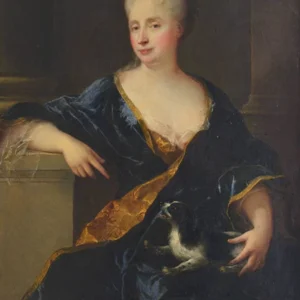
Presumed portrait of Françoise de Graffigny (1695-1758)label QS:Lfr,"Portrait présumé de madame de Graffigny"label QS:Len,"Presumed portrait of Françoise de Graffigny (1695-1758)"

Presumed portrait of Françoise de Graffigny (1695-1758)label QS:Lfr,"Portrait présumé de madame de Graffigny"label QS:Len,"Presumed portrait of Françoise de Graffigny (1695-1758)"

Françoise d’Happencourt de Graffigny

Françoise d’Happencourt de Graffigny


French:  Lecture de la tragédie "L'orphelin de la Chine" de Voltaire dans le salon de madame Geoffrin In the Salon of Madame Geoffrin in 1755title QS:P1476,fr:"Lecture de la tragédie "L'orphelin de l

French: Lecture de la tragédie "L'orphelin de la Chine" de Voltaire dans le salon de madame Geoffrin In the Salon of Madame Geoffrin in 1755title QS:P1476,fr:"Lecture de la tragédie "L'orphelin de l

Françoise de Graffigny - Musée Historique Lorrain

Françoise de Graffigny - Musée Historique Lorrain


French:  Portrait présumé de Mme de Graffigny, née Françoise d'Issembourg d'Happoncourt (1695-1758), femme de lettres title QS:P1476,fr:"Portrait présumé de Mme de Graffigny, née Françoise d'Issembou

French: Portrait présumé de Mme de Graffigny, née Françoise d'Issembourg d'Happoncourt (1695-1758), femme de lettres title QS:P1476,fr:"Portrait présumé de Mme de Graffigny, née Françoise d'Issembou

PeruvianLetters

PeruvianLetters

FilleAristide ornementtypo

FilleAristide ornementtypo

FilleAristide ornementacteIV

FilleAristide ornementacteIV

Portret van Françoise de Graffigny M.me de Grafigny (titel op object), RP-P-1911-1423

Portret van Françoise de Graffigny M.me de Grafigny (titel op object), RP-P-1911-1423

Portret van Françoise de Graffigny M.me de Grafigny (titel op object), RP-P-1911-1424

Portret van Françoise de Graffigny M.me de Grafigny (titel op object), RP-P-1911-1424

Visual Style

Un style visuel rococo intimiste évoquant les intérieurs parisiens des années 1740, entre élégance modeste et atmosphère littéraire, dans des tons pastel rehaussés de dorures.

#C9A96E
#F5E6CC
#8BADC4
#D4A0A0
#5B4A3F
AI Prompt
Rococo interior aesthetic of 1740s Paris. Soft pastel colors with gilt accents, delicate floral wallpaper patterns. Candlelit rooms with warm golden light casting gentle shadows on ornate furniture. Louis XV style curved furniture, porcelain vases with fresh flowers. A writing desk near a tall window draped in damask curtains, overlooking a narrow Parisian street. Watercolor-like rendering with soft edges, reminiscent of Boucher and Chardin paintings. Intimate domestic scenes with books, letters and quill pens. Elegant but modest interiors reflecting a woman of letters rather than high aristocracy. Warm amber and cream tones with touches of powder blue and rose.

Sound Ambience

L'atmosphère sonore d'un salon littéraire parisien du XVIIIe siècle, mêlant conversations raffinées, musique de clavecin et bruits feutrés de la vie mondaine.

AI Prompt
A Parisian literary salon in the mid-18th century. The soft rustle of silk dresses and the creak of wooden chairs on polished floors. Quill pens scratching on thick paper, the gentle clink of porcelain teacups and saucers. Murmured conversations in refined French, occasional bursts of witty laughter. A harpsichord playing softly in an adjacent room, its delicate notes filtering through half-open doors. The snap of a fan opening and closing. Church bells tolling in the distance from Saint-Sulpice. Candle wax dripping, the faint hiss of flames on wicks. A carriage rolling over cobblestones outside, horses' hooves clattering on the Parisian streets.

Portrait Source

Wikimedia Commons — domaine public — Victorine-Angélique-Amélie Rumilly — 1836