Character Catalog

Historical Library

CollectionGalaxy
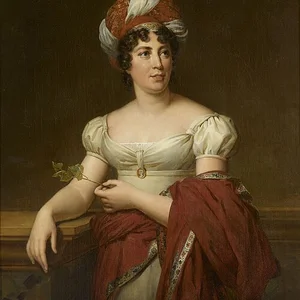
Portrait de Madame de Staël

Madame de Staël

Germaine de Staël

1766 — 1817

royaume de France, république de Genève

LiteraturePhilosophyÉcrivain(e)PhilosopheEarly Modern

Émotions disponibles (6)

N

Neutre

par défaut

I

Inspirée

P

Pensive

S

Surprise

T

Triste

F

Fière

Key Facts

    Works & Achievements

    Letters on the Works and Character of J.-J. Rousseau (1788)

    Madame de Staël's first published essay, written at the age of twenty-two, which pays tribute to Rousseau while asserting her own style. This text immediately reveals her ability to combine literary analysis with moral commitment.

    On Literature Considered in Its Relationship to Social Institutions (1800)

    A foundational essay that analyses for the first time the links between a national literature and its historical, political, and social context. This book inaugurates a comparative and sociological approach to literature, anticipating the sociology of culture.

    Delphine (1802)

    An epistolary novel tracing the life of a free-spirited woman in a society that condemns her. The scandal of its publication directly provoked the first exile imposed by Napoleon, who saw in it an attack on the conservative values of the Empire.

    Corinne, or Italy (1807)

    A novelistic masterpiece that swept across Europe and was translated into numerous languages. Through the figure of Corinne, an improvisational poetess, Madame de Staël champions feminine genius, artistic freedom, and the Romantic ideal against social mediocrity.

    On Germany (1813 (written in 1810))

    A major work of European Romanticism that introduces French readers to German philosophy and literature (Kant, Goethe, Schiller, Schlegel). This book laid the theoretical foundations of Romanticism as a break with Classicism, and was censored and destroyed by Napoleon before being published in London.

    Considerations on the Principal Events of the French Revolution (1818 (posthumous))

    A major political synthesis published after her death, in which Madame de Staël analyses the French Revolution in light of the British experience. She defends a moderate constitutional liberalism against tyranny and demagoguery.

    Ten Years of Exile (1818 (posthumous))

    An autobiographical account of her exile imposed by Napoleon, from 1803 to 1814. Blending personal memoir with historical testimony, this book constitutes a unique document on Napoleonic Europe as seen by a resolute opponent.

    Anecdotes

    From the age of twelve, Germaine Necker attended her father's dinner parties — finance minister Jacques Necker — and joined in the conversations of the great minds of the era. The philosophers and encyclopedists who frequented her mother's salon noted her for the sharpness of her wit. This exceptional upbringing forged in her an insatiable intellectual curiosity.

    Napoleon Bonaparte despised Madame de Staël to the point of having her under constant surveillance. After the publication of her book 'De la littérature' (1800), which magnificently ignored imperial glory, he ordered her to keep at least forty leagues from Paris. She replied with humor that she did not know how to measure distances in political units.

    To escape Napoleonic surveillance, Madame de Staël undertook in 1812 a hair-raising flight from her château at Coppet in Switzerland all the way to Russia, then Sweden, before reaching England. This journey of several thousand kilometers, recounted in 'Ten Years of Exile', transformed her into a European symbol of resistance to tyranny.

    Her salon at Coppet, on the shores of Lake Geneva in Switzerland, became during the Empire the gathering place for all those whom Napoleon persecuted or marginalized — Benjamin Constant, August Wilhelm Schlegel, Lord Byron, Sismondi. This circle of brilliant minds was nicknamed the 'Coppet Group', a true cradle of European Romanticism.

    Madame de Staël was one of the first to introduce German literature and philosophy to the French. Her book 'De l'Allemagne', the fruit of several journeys across the Rhine, was entirely seized and destroyed by the imperial police in 1810 before it could even go on sale. It was only published in London in 1813, immediately becoming a major intellectual event.

    Primary Sources

    On Germany (1813)
    The poetry of the ancients is purer as art, that of the moderns draws more tears. [...] We must embrace Romantic literature, not as imitation, but as a national source.
    Ten Years of Exile (1818 (posthumous))
    Bonaparte could not bear that there existed in France an independent woman. [...] My only crime in his eyes was having refused to submit.
    On Literature Considered in Its Relationship to Social Institutions (1800)
    The perfectibility of the human species is not a vain idea. Political freedom and intellectual freedom share the same source and mutually sustain each other.
    Letter to Bonaparte (First Consul) (1803)
    I have never dealt in my writings with anything but general questions of literature and morality. [...] If you judge that my presence in France is harmful, I will submit to your authority on this matter.
    Corinne, or Italy (1807)
    Glory itself — that glory I have so long desired — what is it, if it can do nothing for happiness? A noise, a commotion, from which the soul grows weary.

    Key Places

    Château de Coppet, Switzerland

    Madame de Staël's main residence on the shores of Lake Geneva, inherited from her father in 1804. This château became the centre of the 'Coppet Group', a European intellectual and Romantic circle that brought together Benjamin Constant, Sismondi, August Wilhelm Schlegel, and many exiles fleeing Napoleon.

    Salon on Rue du Bac, Paris

    Her famous Parisian salon, frequented during the Directory and the Consulate by the most brilliant figures of French political and intellectual life. It was here that she crossed paths with Napoleon Bonaparte and built her liberal network of influence.

    Weimar, Germany

    During her travels in Germany (1803–1804), Madame de Staël stayed in Weimar, where she met Goethe and Schiller. These exchanges deeply informed 'De l'Allemagne' and her thinking on Romanticism as an alternative to French classical aesthetics.

    Rome and Naples, Italy

    Italy forms the backdrop of 'Corinne, or Italy' (1807), a novel that lastingly transformed how Europeans viewed the peninsula. Her Italian stays revealed to Madame de Staël a conception of art and freedom at odds with the rigidity of the Napoleonic Empire.

    Saint Petersburg, Russia

    A stage in her great flight of 1812, Saint Petersburg allowed her to meet Tsar Alexander I, a natural ally against Napoleon. She was received with the honours due to a great European intellectual and found in the Russian court support for her liberal cause.

    London, England

    The refuge of her final exile (1813–1814), London allowed her to publish 'De l'Allemagne', which Napoleon had censored in France. She was welcomed in triumph by British society and was free to openly champion her liberal and Romantic ideas.

    Typical Objects

    The small twig or stick she would twist

    Witnesses and contemporaries report that Madame de Staël could not speak without holding a small twig or stick in her hand, which she would nervously twist. This compulsive gesture, which became her distinctive mark in salon society, betrayed the intensity of her ever-active mind.

    Quill pen and inkwell

    A prolific writer, Madame de Staël composed her works, letters, and notes with a quill pen. She would often write late into the night, surrounded by her manuscripts, producing an extensive correspondence with intellectuals from across Europe.

    Indian muslin shawl

    In the fashion of the Empire period, Madame de Staël often wore large muslin or cashmere shawls draped loosely around her. This semi-orientalizing garment suited her free-spirited style and her taste for romantic exoticism.

    Travel notebook

    During her many travels through Germany, Italy, Russia, and England, Madame de Staël recorded her observations in notebooks. These notes fed into her major analytical works on literature and European civilizations.

    Bust of her father Jacques Necker

    She kept a bust of her father in her apartments, a sign of the passionate filial attachment she herself theorized. Jacques Necker represented for her the model of the enlightened and virtuous statesman.

    Diplomatic correspondence and political pamphlets

    A committed political figure, Madame de Staël maintained a voluminous political correspondence with sovereigns, ministers, and opponents from across Europe. These letters allowed her to exert real political influence despite her exile.

    School Curriculum

    LycéeFrançais
    LycéeHistoire

    Vocabulary & Tags

    Key Vocabulary

    Tags

    Madame de StaëllettresphilosophieecrivainÉcrivainphilosophePenseurlumieresLes LumièresromantismeRomantismerevolution-francaiseRévolution françaisefeminismeFéminisme, droits des femmes

    Daily Life

    Morning

    Madame de Staël rose late, often after ten o'clock, having worked and conversed well into the night. She began her day with extensive correspondence, dictating or writing letters to her many European contacts. She had a light breakfast, often coffee and bread rolls, while already receiving her first visitors.

    Afternoon

    The afternoon was devoted to writing — novels, essays, or political pamphlets — in her study surrounded by books and manuscripts. She also received visitors, discussing literature, philosophy, and politics with infectious passion, effectively holding a traveling salon even in her places of exile.

    Evening

    Evenings formed the heart of her social life: the salon would gather up to twenty or thirty people, blending brilliant conversation, readings aloud, sometimes music or theatrical improvisations. At Coppet, these evenings could stretch until two or three in the morning, with Madame de Staël remaining the tireless host of these exchanges.

    Food

    Her table was that of a wealthy upper-middle-class household: elaborate meals served in several courses in the French fashion, fine wines, fruits, and pastries. She herself often ate distractedly, too absorbed in conversation to linger over food. She was fond of coffee, a drink associated with the Enlightenment world and intellectual salons.

    Clothing

    Madame de Staël wore Empire fashions without following them slavishly: high-waisted gowns in white muslin or colored silk, wide sashes, generous necklines, and large cashmere shawls draped with studied nonchalance. She loved jewelry — cameos, coral or gold sets — and the oriental turban, a headdress she made famous, which concealed her carefully arranged black hair.

    Housing

    She divided her existence between her private mansion in Paris, first on the Rue du Bac then on the Rue de Grenelle, and the Château de Coppet in Switzerland — the family home inherited from her father, with views over Lake Geneva and the Alps. During her years of exile, she stayed in grand bourgeois or aristocratic residences in Weimar, Rome, Vienna, Saint Petersburg, and London, always surrounded by her books, manuscripts, and circle of loyal friends.

    Historical Timeline

    1766Naissance Ă  Paris de Anne-Louise Germaine Necker, fille du banquier genevois et futur ministre Jacques Necker.
    1778Le père de Germaine, Jacques Necker, nommé directeur général des finances de Louis XVI, impose des réformes fiscales audacieuses.
    1786Mariage avec le baron Erik Magnus de Staël-Holstein, ambassadeur de Suède en France. Le mariage est de convenance ; elle conserve son indépendance.
    1789Début de la Révolution française : Germaine anime un salon politique influent où se retrouvent les libéraux constitutionnels comme La Fayette et Narbonne.
    1792Lors des massacres de Septembre, elle risque sa vie pour aider des aristocrates à s'enfuir. Elle se réfugie en Suisse à Coppet.
    1795Retour à Paris après Thermidor. Elle rouvre son salon et soutient les idées républicaines modérées contre les excès de la Terreur et la réaction royaliste.
    1800Publication de 'De la littérature', premier essai à analyser les œuvres littéraires en lien avec le contexte social et politique.
    1803Napoléon Bonaparte la bannit à quarante lieues de Paris après la publication de 'Delphine'. Début de son long exil.
    1804Mort de son père Jacques Necker. Premier voyage en Allemagne où elle rencontre Goethe, Schiller et les philosophes du romantisme allemand.
    1807Publication de 'Corinne ou l'Italie', roman à succès européen qui célèbre le génie féminin et la liberté de la femme créatrice.
    1810La police impériale saisit et détruit les exemplaires de 'De l'Allemagne' avant sa mise en vente. Madame de Staël doit fuir vers l'Autriche puis la Russie.
    1812Grande fuite à travers l'Europe (Suisse, Autriche, Russie, Suède, Angleterre) racontée dans 'Dix années d'exil'. Elle rencontre le futur tsar Alexandre Ier.
    1813Publication à Londres de 'De l'Allemagne', qui introduit le romantisme allemand en France et pose les bases du romantisme européen.
    1815Retour triomphal à Paris après la chute de Napoléon. Son salon redevient le centre de la vie intellectuelle et politique libérale.
    1817Mort à Paris le 14 juillet, à 51 ans, d'une attaque d'apoplexie. Ses écrits posthumes seront publiés par son fils.

    Period Vocabulary

    Salon — A social and intellectual gathering held in a private apartment, typically presided over by a cultured woman known as a 'salonnière'. Under the Ancien Régime and through the 19th century, salons were the primary venues for literary, philosophical, and political debate.
    Émigré / émigrée — A person who left France during the Revolution or under the Empire for political reasons. Madame de Staël, though not officially classified as an émigré, experienced the same reality of forced exile imposed by Napoleon.
    Romanticism — A European literary, artistic, and philosophical movement (late 18th – mid-19th century) that championed feeling, imagination, nature, and individuality against the cold rationalism of Classicism. Madame de Staël was one of its earliest theorists with 'On Germany'.
    Perfectibility — A philosophical concept inherited from the Enlightenment (notably from Rousseau) denoting humanity's capacity to progress morally and intellectually over time. Madame de Staël invokes it in 'On Literature' to argue for the idea of progress.
    Constitutional liberalism — A political doctrine advocating the limitation of state power through a constitution, the guarantee of individual freedoms, and the representation of citizens. This was the political ideal Madame de Staël defended against Napoleonic tyranny.
    Northern literature / Southern literature — A distinction proposed by Madame de Staël in 'On Literature' between a Nordic literature (Germanic, English) that is melancholic and introspective, and a Southern literature (Latin) that is clearer and more rational. This theoretical opposition formed the basis of her thinking on Romanticism.
    Proscrit(e) — A person banned or exiled by a political authority for ideological reasons. Madame de Staël was officially banished from Paris by Napoleon in 1803, and later from all of French territory, making her an emblematic outcast in the eyes of liberal Europe.
    Improvisatrice — An artist — particularly in Italy — capable of composing and reciting poetry on the spot, before an audience, on a given theme. The character of Corinne, heroine of Madame de Staël's eponymous novel, is a celebrated Italian improvisatrice, a symbol of free female genius.
    Enthusiasm — For Madame de Staël, this term goes beyond its common meaning: it denotes a disposition of the soul, a moral and spiritual exaltation that elevates human beings above mediocrity and renders them capable of great deeds or great creations. She devoted celebrated passages to it in 'On Germany'.
    Philosophes — The name given to the thinkers of the 18th-century Enlightenment (Voltaire, Diderot, d'Alembert, Rousseau) who spread reason, tolerance, and progress through the salons and the Encyclopédie. Madame de Staël grew up in their circle and inherited their critical spirit.

    Gallery

    
French:  Portrait de Germaine de Staël en Corinne au Cap Misène Portrait of Madame de Staël as Corinne on Cape Misenumtitle QS:P1476,fr:"Portrait de Germaine de Staël en Corinne au Cap Misène "label

    French: Portrait de Germaine de Staël en Corinne au Cap Misène Portrait of Madame de Staël as Corinne on Cape Misenumtitle QS:P1476,fr:"Portrait de Germaine de Staël en Corinne au Cap Misène "label

    
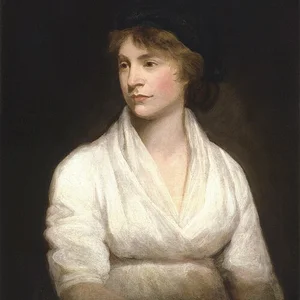
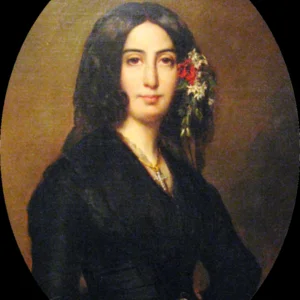
Portrait of Mme de Staël

    Portrait of Mme de Staël

    
Portrait de l'héroïne Corinne de par Louis-Ami Arlaud-Jurine

    Portrait de l'héroïne Corinne de par Louis-Ami Arlaud-Jurine

    
Portrait de l'héroïne Corinne de par Louis-Ami Arlaud-Jurine

    Portrait de l'héroïne Corinne de par Louis-Ami Arlaud-Jurine

    
Varvara Ivanovna Ladomirskylabel QS:Lfr,"Varvara Ivanovna Narichkine"label QS:Len,"Varvara Ivanovna Ladomirsky"label QS:Les,"Retrato de Varvara Ivanovna Ladomirsky"label QS:Lit,"Ritratto di Varvara I

    Varvara Ivanovna Ladomirskylabel QS:Lfr,"Varvara Ivanovna Narichkine"label QS:Len,"Varvara Ivanovna Ladomirsky"label QS:Les,"Retrato de Varvara Ivanovna Ladomirsky"label QS:Lit,"Ritratto di Varvara I

    
French:  Portrait de Mme de Staëllabel QS:Lfr,"Portrait de Mme de Staël"

    French: Portrait de Mme de Staëllabel QS:Lfr,"Portrait de Mme de Staël"

    Corinne Gois Louvre LP1555

    Corinne Gois Louvre LP1555

    Delphine, Madame de Staël, Paris, 1803 04

    Delphine, Madame de Staël, Paris, 1803 04

    Rue Germaine Staël - Paris XV (FR75) - 2021-08-09 - 1

    Rue Germaine Staël - Paris XV (FR75) - 2021-08-09 - 1

    
History of Freedom and Other Essays title QS:P1476,en:"History of Freedom and Other Essays "label QS:Len,"History of Freedom and Other Essays "label QS:Lga,"History of Freedom and Other Essays"

    History of Freedom and Other Essays title QS:P1476,en:"History of Freedom and Other Essays "label QS:Len,"History of Freedom and Other Essays "label QS:Lga,"History of Freedom and Other Essays"

    Visual Style

    Le style visuel évoque les portraits de l'époque Empire et les premières sensibilités romantiques : lumière dorée des bougies, intérieurs néoclassiques luxueux, paysages alpestres brumeux du lac Léman, et les tons chauds des toiles de Gérard ou Vigée Le Brun.

    AI Prompt
    French Empire and early Romanticism visual style, circa 1800-1815. Portrait paintings in the manner of Gérard or Vigée Le Brun: warm candlelit tones, ivory skin against deep burgundy or forest green draperies, elegant muslin and cashmere shawls, classical columns and bookshelves in the background. Landscapes of Lake Geneva with misty Alps. Neoclassical interiors with gilt furniture, tall windows overlooking gardens. Handwritten letters and leather-bound books. Soft chiaroscuro lighting, rich jewel tones — amber, deep crimson, midnight blue.

    Sound Ambience

    L'univers sonore de Madame de Staël mêle l'effervescence des salons parisiens — conversations brillantes, musique de chambre, bruits de la ville — au calme romantique du lac Léman et des jardins du château de Coppet.

    AI Prompt
    Elegant Parisian salon at the turn of the 19th century: animated intellectual conversations overlapping in French, the clink of fine porcelain teacups, quill scratching on parchment, a distant harpsichord or fortepiano playing softly, carriages rolling on cobblestones outside tall windows, crackling fireplace, pages turning, candle flames flickering, the rustle of silk dresses and muslin shawls, Swiss lakeside sounds of Coppet — gentle lapping of Lake Geneva, birdsong, wind through chestnut trees, church bells from a nearby village.

    Portrait Source

    Wikimedia Commons — domaine public — After François Gérard / Marie-Éléonore Godefroid — 1818