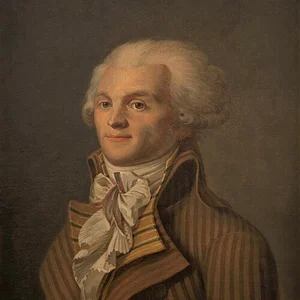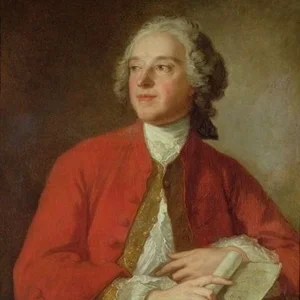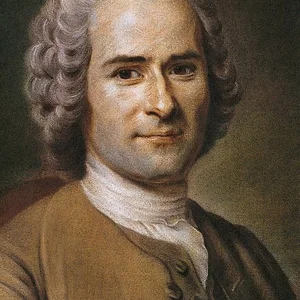

Genevan philosopher, writer, and musician (1712–1778), a central figure of the Enlightenment. Author of The Social Contract and Confessions, he profoundly influenced political and educational thought by championing popular sovereignty and natural education.
Jean-Jacques Rousseau(1712 — 1778)
Jean-Jacques Rousseau
république de Genève
8 min read
Frequently asked questions
Famous Quotes
« Man is born free, and everywhere he is in chains.»
« I feel my heart and I know men.»
« The general will cannot err.»
Key Facts
- 1712: Born in Geneva on June 28
- 1749: Philosophical awakening while reading the Dijon Academy competition
- 1762: Publication of The Social Contract and Émile, which led to his condemnation
- 1769–1770: Writing of Confessions (published posthumously in 1782)
- 1778: Death at Ermenonville on July 2
Works & Achievements
Rousseau's first major text, awarded a prize by the Académie de Dijon, in which he paradoxically argues that the progress of the arts and sciences has corrupted morals rather than improving them.
A major work in which Rousseau imagines mankind's original state of nature — good by essence — and analyses how property and society gave rise to inequalities.
An enormously successful epistolary novel that champions the virtues of sensibility, sincere love, and rural life against the hypocrisy of Parisian manners.
A foundational treatise of political philosophy in which Rousseau develops the concepts of the general will and popular sovereignty, laying the theoretical groundwork for modern democracy.
A revolutionary pedagogical treatise advocating a natural education that respects the child's spontaneous development, far removed from the artificial constraints of society.
A pioneering autobiography in which Rousseau reveals himself with unprecedented sincerity, inventing a new literary genre and influencing the entire Romantic tradition.
Rousseau's final, unfinished text — ten meditative walks in which he reflects on his solitude, nature, and happiness, a masterpiece of pre-Romantic lyricism.
Anecdotes
In 1749, Rousseau was walking to Vincennes to visit the imprisoned Diderot when he stopped under an oak tree to rest and read the Mercure de France. Coming across a competition organized by the Dijon Academy on the question 'Have the sciences and arts contributed to the purification of morals?', he was struck by a sudden illumination that would change his life. He decided to argue the opposite of all his contemporaries: the arts and sciences corrupt mankind. This text, the Discourse on the Sciences and the Arts, won him first prize and immediate fame.
Rousseau harbored a sincere passion for music and proposed in 1742 to the Paris Academy of Sciences a new system of musical notation based on numbers rather than traditional notes. The Academy deemed the system ingenious but impractical. Despite this setback, he continued to compose and wrote an opera, Le Devin du village, which was performed before Louis XV at Fontainebleau in 1752 and met with enormous success.
Although a philosopher of the Enlightenment, Rousseau maintained a turbulent relationship with Voltaire. When Voltaire anonymously published a pamphlet revealing that Rousseau had abandoned his five children to the Hospice des Enfants-Trouvés, the scandal was immense. Rousseau acknowledged the facts but explained himself in his Confessions, claiming he had acted in the children's best interest and out of an inability to raise them properly — a painful contradiction with his theories on education laid out in Émile.
Toward the end of his life, Rousseau developed a passion for botany that brought him a serenity he could no longer find in philosophy. He would spend hours foraging through fields and forests, assembling an herbarium and maintaining a correspondence with botanists. This activity would inspire his Reveries of the Solitary Walker, in which nature becomes a refuge against the anxieties and persecutions he felt.
Primary Sources
Man is born free, and everywhere he is in chains. One man thinks himself the master of others, but remains more of a slave than they are.
Everything is good as it leaves the hands of the Author of things; everything degenerates in the hands of man.
I am commencing an undertaking, hitherto without precedent, and which will never find an imitator. I desire to set before my fellows the likeness of a man in all the truth of nature; and that man myself.
The first man who, having enclosed a piece of ground, bethought himself of saying 'This is mine', and found people simple enough to believe him, was the real founder of civil society.
Here I am, then, alone on the earth, with no brother, neighbour, friend, or society but myself.
Key Places
Rousseau's birthplace, whose citizenship he was proud of. His attachment to the Republic of Geneva and its democratic values profoundly influenced his political thought.
The home of Mme de Warens where Rousseau lived a happy period between 1736 and 1742, educating himself as a self-taught learner by reading and reflecting in a pastoral setting he would idealize for the rest of his life.
Rousseau lived there for many years, frequenting Enlightenment salons and collaborating on the Encyclopédie, before falling out with the Parisian philosophical circles he considered corrupt.
Rousseau's refuge in 1765, having been driven out of Môtiers by his opponents. He spent two months of pastoral happiness there, which he considered the most beautiful of his life, recalled with nostalgia in the Reveries.
The estate of the Marquis de Girardin where Rousseau spent the last weeks of his life and died on 2 July 1778. His tomb on the Island of Poplars immediately became a site of revolutionary pilgrimage.
Typical Objects

Rousseau wrote his works with a quill pen, often by hand in large notebooks. His autograph manuscripts, preserved at the Geneva Library, bear witness to his many crossings-out and corrections.

Rousseau used a metal box to collect plants and flowers during his walks. Botany was for him a philosophical activity as much as a scientific one, a symbol of the return to nature.

To make ends meet, Rousseau copied musical scores by hand — a humble occupation he considered compatible with his philosophy of independence and rejection of patronage from the powerful.

From 1762 onwards, Rousseau adopted an Armenian caftan and a fur cap, an exotic outfit that allowed him to assert his rejection of French social conventions and to relieve a urinary ailment.

During his stay on the Île Saint-Pierre in 1765, Rousseau would drift alone in a rowboat on Lake Bienne, an experience of reverie and union with nature that he describes in the Reveries of the Solitary Walker.
School Curriculum
Vocabulary & Tags
Key Vocabulary
Tags
Concept
Daily Life
Morning
Rousseau rose early and devoted his mornings to copying musical scores, a manual activity that allowed him to earn a modest living while preserving his intellectual independence. He had a light breakfast, often coffee or milk, before starting work.
Afternoon
His afternoons were reserved for long solitary walks on foot through the countryside or gardens, during which he observed nature, collected plants, and let his thoughts form freely. He jotted down his reflections in small notebooks he always carried with him.
Evening
In the evenings, Rousseau read, wrote his major philosophical texts, or received a few close friends in sober simplicity. During his Parisian years, he sometimes attended the philosophers' salons, though he felt increasingly uncomfortable in those worldly circles.
Food
Rousseau had a simple and frugal diet, preferring vegetables, fruits, and dairy products to meat. He criticized the excesses of the rich man's table and advocated for healthy, natural food in keeping with his ideas on virtue and simplicity.
Clothing
In his early Parisian years, Rousseau wore the classic bourgeois dress of the 18th century: jacket, breeches, and stockings. From 1762 onwards, he definitively adopted the Armenian caftan and fur cap, openly displaying his rejection of French social conventions.
Housing
Rousseau lived in very varied accommodations, from modest lodgings to houses lent by patrons. He preferred simple country dwellings, such as Les Charmettes or the Île Saint-Pierre, to Parisian apartments, always living in a state of relative material hardship he willingly embraced.
Historical Timeline
Period Vocabulary
Visual Style
Esthétique des Lumières françaises, mêlant la douceur des portraits réalistes du XVIIIe siècle aux paysages ruraux suisses et savoyards, avec un contraste entre le faste des salons et la simplicité naturelle chère à Rousseau.
Sound Ambience
Une atmosphère intime mêlant le silence studieux du cabinet de travail, les sons de la nature champêtre genevoise et savoyarde, et les échos discrets des salons parisiens du XVIIIe siècle.
Liens externes & ressources
Références
Œuvres
Discours sur les sciences et les arts
1750
Discours sur l'origine et les fondements de l'inégalité parmi les hommes
1755
Julie, ou la Nouvelle Héloïse
1761
Du Contrat social
1762
Émile, ou De l'éducation
1762
Les Confessions
1782 (posthume)
Les Rêveries du promeneur solitaire
1782 (posthume)