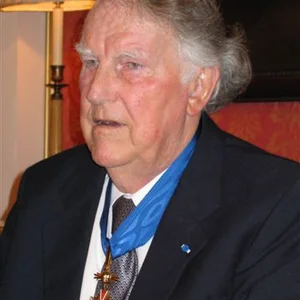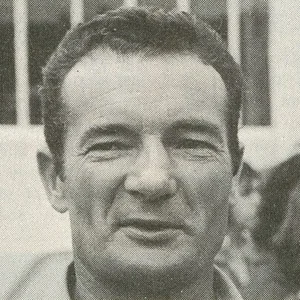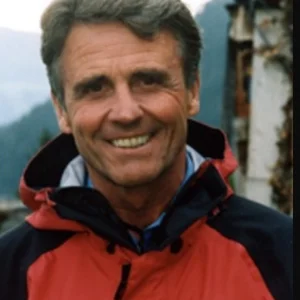

Austrian mountaineer born in 1942, Peter Habeler is famous for making the first ascent of Everest without supplemental oxygen in 1978, alongside Reinhold Messner. This feat revolutionized our understanding of the limits of human endurance at high altitude.
Peter Habeler(1942 — ?)
Peter Habeler
Autriche
8 min read
Frequently asked questions
Key Facts
- 1942: born in Mayrhofen, Austria
- 1975: first ascent of Gasherbrum I (8,068 m) in alpine style with Reinhold Messner
- 8 May 1978: first ascent of Everest without supplemental oxygen with Reinhold Messner
- Career as a high-mountain guide and director of a mountaineering school in Mayrhofen
Works & Achievements
Together with Reinhold Messner, Habeler made the first ascent of a peak over 8,000 metres without supplemental oxygen and via a new route. This achievement was a direct prelude to the 1978 revolution on Everest.
Habeler and Messner climbed the legendary Eiger North Face in ten hours, setting a world record. This performance introduced the wider public to their radical alpine style, built on speed and light-and-fast principles.
A landmark achievement in modern mountaineering: Habeler and Messner reached the summit of Everest (8,848 m) without the use of artificial oxygen, proving that the human body can survive at the top of the world under natural conditions.
A personal account of the historic ascent, translated into many languages. Habeler describes with precision the doubts, the physiological challenges, and the moments of grace experienced on the slopes of Everest.
Throughout his life, Habeler trained generations of climbers and skiers in his home valley in Tyrol. This educational work, often overshadowed by his Himalayan achievements, forms an essential part of his legacy.
Anecdotes
Before the 1978 expedition, many doctors and physiologists insisted it was impossible for a human being to reach the summit of Everest without supplemental oxygen, predicting irreversible brain damage or even death. Habeler and Messner resolved to challenge this certainty, drawing on years of intensive training and high-altitude experience.
On May 8, 1978, after reaching the summit at 8,848 metres, Habeler descended to Camp IV in barely an hour. Exhausted and disoriented by the lack of oxygen, he slipped repeatedly, falling and picking himself up in a semi-conscious state. He later described the descent as a relentless struggle against unconsciousness and death.
In 1975, three years before their feat on Everest, Habeler and Messner had already broken a taboo by climbing Gasherbrum I (8,080 m, Pakistan) without artificial oxygen. It was the first time in the history of mountaineering that a summit above 8,000 metres had been reached without oxygen cylinders, opening the door to a revolution in Himalayan climbing practices.
In 1974, Habeler and Messner climbed the formidable north face of the Eiger in just ten hours, setting a world record. This achievement earned them an international reputation and already embodied their shared philosophy: climb light, fast, and without artificial assistance.
Born and raised in Mayrhofen in the Austrian Zillertal, Habeler first worked as a ski instructor and mountain guide in his home valley. Far from the image of a solitary adventurer roaming the world, he remained deeply rooted in his region, continuing to guide clients in the Alps between Himalayan expeditions.
Primary Sources
Peter Habeler recounts hour by hour the final ascent of May 8, 1978: the altered state of consciousness, each step becoming a struggle, and the certainty of approaching the absolute limits of the human body without resorting to any artificial aid.
The physiological data collected before and after the ascent confirm that Habeler and Messner reached the summit without supplemental oxygen, with critical oxygen saturation levels, but without any documented permanent neurological damage.
Messner describes the rope team formed with Habeler as a partnership built on absolute trust and a shared philosophy: reaching summits in pure alpine style, without artificial oxygen and without high-altitude porters.
On May 10, 1978, the Austrian press agency officially announced the success of the oxygen-free ascent, emphasizing that the feat fundamentally calls into question established medical certainties about human physiological limits at high altitude.
Key Places
Peter Habeler's hometown, nestled in the Zillertal valley in the Austrian Tyrol. He was born there in 1942 and spent his entire career as a mountain guide and ski instructor, remaining deeply attached to his Alpine roots.
The world's highest peak (8,848 m), and the setting of the historic achievement of 8 May 1978. The oxygenless ascent accomplished here by Habeler and Messner permanently transformed our understanding of the limits of human physiology.
The eleventh-highest peak in the world (8,080 m), in the Karakoram range. In 1975, Habeler and Messner made the first ascent of an 8,000-metre peak without supplemental oxygen here, foreshadowing their 1978 feat.
A legendary wall in the Bernese Alps (3,970 m), considered one of the most dangerous in Europe. In 1974, Habeler and Messner set a speed record by climbing it in ten hours, launching their international reputation as an extraordinary rope team.
The starting point for summit expeditions via the Nepalese side, located at 5,364 metres in the Khumbu Glacier. Habeler and Messner spent several weeks there acclimatising before their historic 1978 ascent.
Typical Objects

A fundamental tool for any high-altitude mountaineer, serving both as a walking stick on snow and as an emergency brake in the event of a fall. Habeler used a lightweight ice axe, in keeping with the alpine-style philosophy that favored minimal equipment.

Essential insulating garment for surviving the extreme temperatures of the Himalayas, which can drop to -40 °C. In 1978, these suits were far less effective than today, making Habeler's achievement all the more remarkable.

Metal devices fixed to the underside of boots to grip ice and hardened snow. On the steep slopes of Everest above 8,000 metres, they were an absolute matter of survival.

Standard equipment on Himalayan expeditions since 1953, which Habeler and Messner deliberately chose not to carry in 1978. This intentional absence was the revolutionary core of their undertaking.

The rope connecting the members of a roped team is the symbol of solidarity in the mountains. Habeler and Messner formed one of the most celebrated climbing partnerships in history, the rope a physical expression of their absolute mutual trust.

An instrument that measures altitude through atmospheric pressure, indispensable before the GPS era for gauging one's position on the mountain and anticipating weather changes.

As a ski instructor in the Zillertal, skis were an integral part of Habeler's training and daily life. Mountain skiing built the cardiovascular endurance he would go on to draw upon at high altitude.
School Curriculum
Vocabulary & Tags
Key Vocabulary
Daily Life
Morning
During Himalayan expeditions, Habeler would wake before dawn in his high-altitude tent, sometimes as early as 4 a.m. He would immediately check his fingers and toes for early signs of frostbite, inspect his equipment, and prepare a hot drink — a challenging task when water freezes above 7,000 metres.
Afternoon
Afternoons at high-altitude camps were devoted to forced rest and acclimatization: sleeping for a few hours at altitude was vital for the body to produce more red blood cells. Habeler and Messner used these moments to meticulously plan the next stages, analyzing the weather and their physical condition.
Evening
In the evenings at Himalayan camps, the priority was food and sleep. Habeler ate freeze-dried rations reconstituted with hot water — uninspiring meals, but essential for maintaining energy. Sleep remained elusive due to the lack of oxygen and freezing nights, often interrupted by headaches.
Food
At high altitude, appetite drops drastically due to the lack of oxygen. Habeler subsisted mainly on freeze-dried soups, chocolate, energy biscuits, and sweet hot drinks. Hydration was an obsession: dehydration worsens the effects of altitude and greatly increases the risk of frostbite.
Clothing
High-altitude clothing in the 1970s was far less sophisticated than today. Habeler wore bulky goose-down suits, multi-layered gloves, tinted glacier goggles with high UV protection, and plastic boots with gaiters. Every kilogram saved meant energy preserved for the climb.
Housing
On expedition, Habeler spent several weeks living in ultralight tents designed to withstand the fierce winds of the Himalayas. Back in his native Zillertal valley, he lived in a traditional Tyrolean house at the heart of an alpine village whose slopes had shaped him since childhood.
Historical Timeline
Period Vocabulary
Liens externes & ressources
Références
Œuvres
Première ascension du Gasherbrum I sans oxygène (8 080 m, Pakistan)
1975
Record d'ascension de la face nord de l'Eiger
1974
Première ascension de l'Everest sans oxygène supplémentaire
8 mai 1978
Everest. Der einsame Sieg (Everest : la victoire impossible)
1978
Carrière de guide de haute montagne et formateur en Zillertal
années 1960-2010