 Flip the card
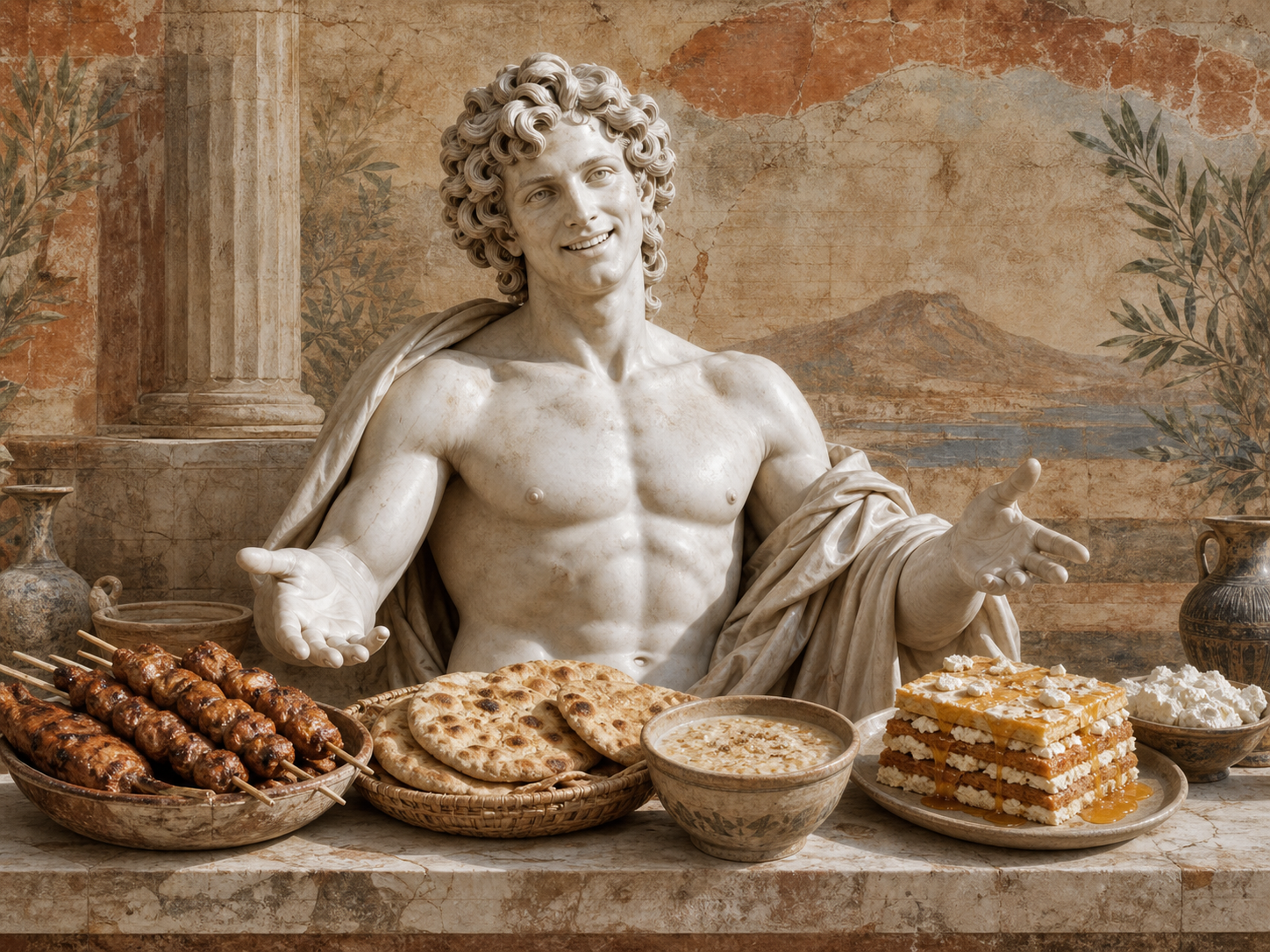
Prometheus at the table
On the menu
The Greek Deipnon and the Thusia Sacrifice
The ancient Greek meal is organized around the sitos — the grain base (barley, sometimes wheat) that nourishes each day — accompanied by the opson, the "that-which-goes-with" (olives, cheese, fish, meat, herbs). After the meal comes the symposion, the time of shared drinking. Apart stands the thusia, the sacrifice: the smoke and bones wrapped in fat are burned for the gods, and the flesh roasted over fire is eaten among humans. It is precisely this sharing — the portion of the gods, the portion of men — that Prometheus established.
Signature : Cooking Fire and Barley
Prometheus's gift is not a dish but a technique: fire, which separates raw man from civilized man. His signature is therefore the very act of cooking, placed upon barley (krithê), the staple grain of the Greeks, and enhanced with olive oil and honey from Mount Hymettus.
click to flip back
Prometheus at the table
5 period recipes
 Offering
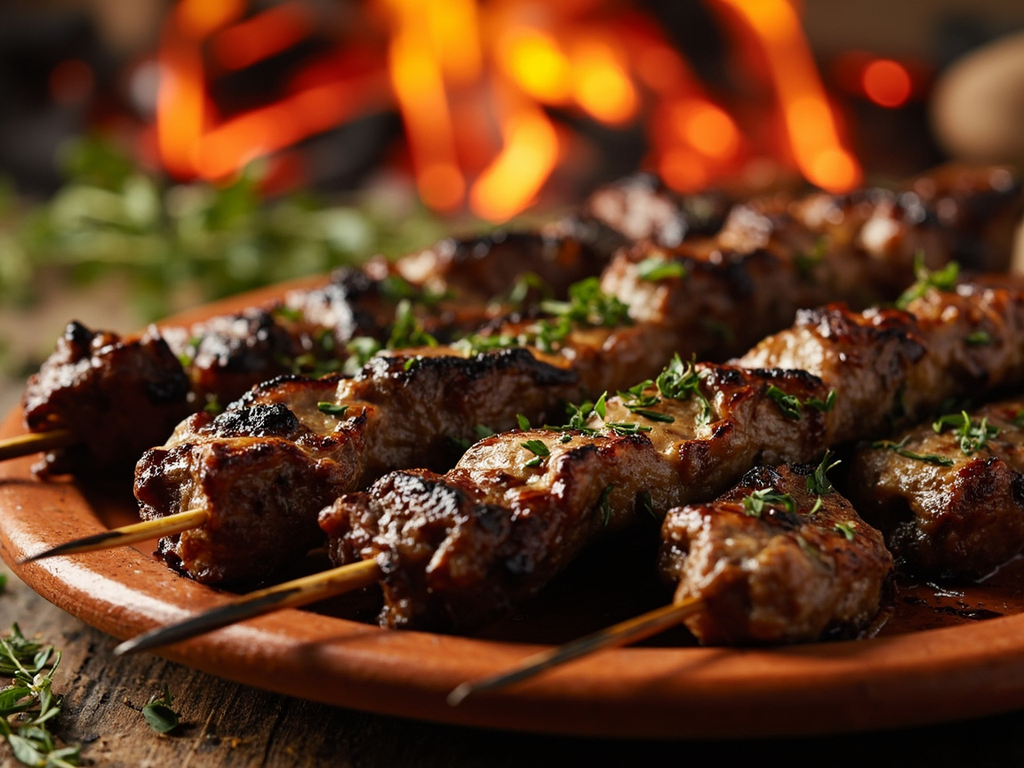
The Portion of Men — Roasted Meat Skewers (Splanchna)
Thusia: the sacrificial meat shared among mortals
🧂 🍄· 45 min
View the recipe
 Everyday
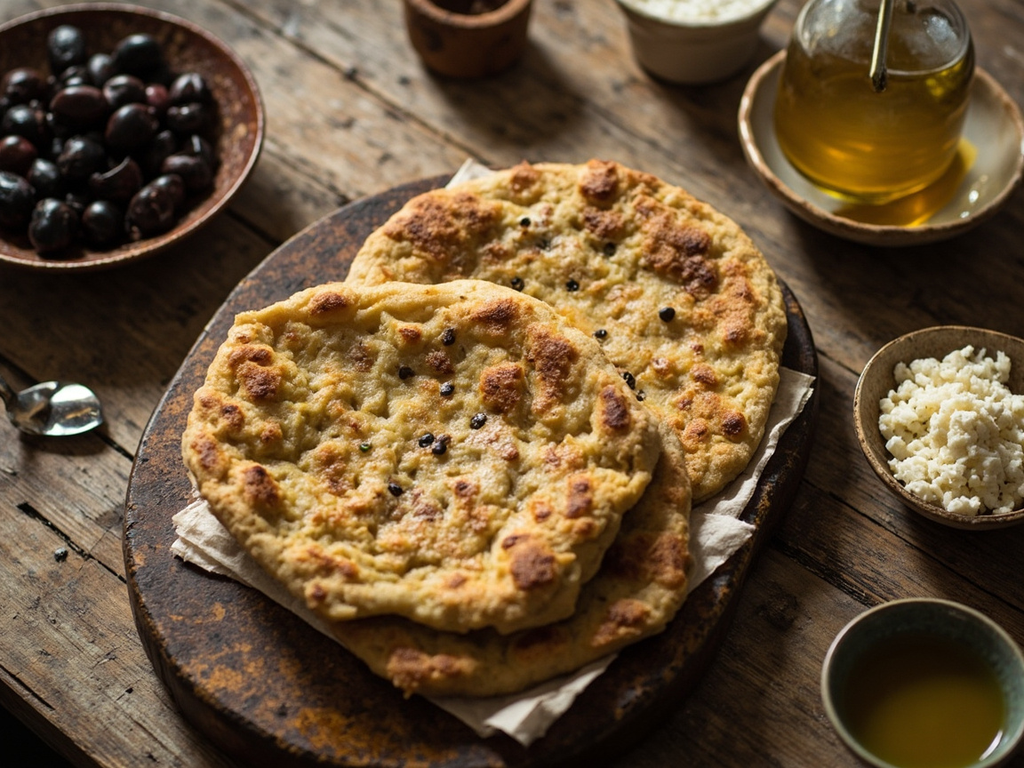
Maza — Barley Flatbread of Mortals
Sitos: the grain base of the daily meal
🧂· 30 min
View the recipe
 Drink
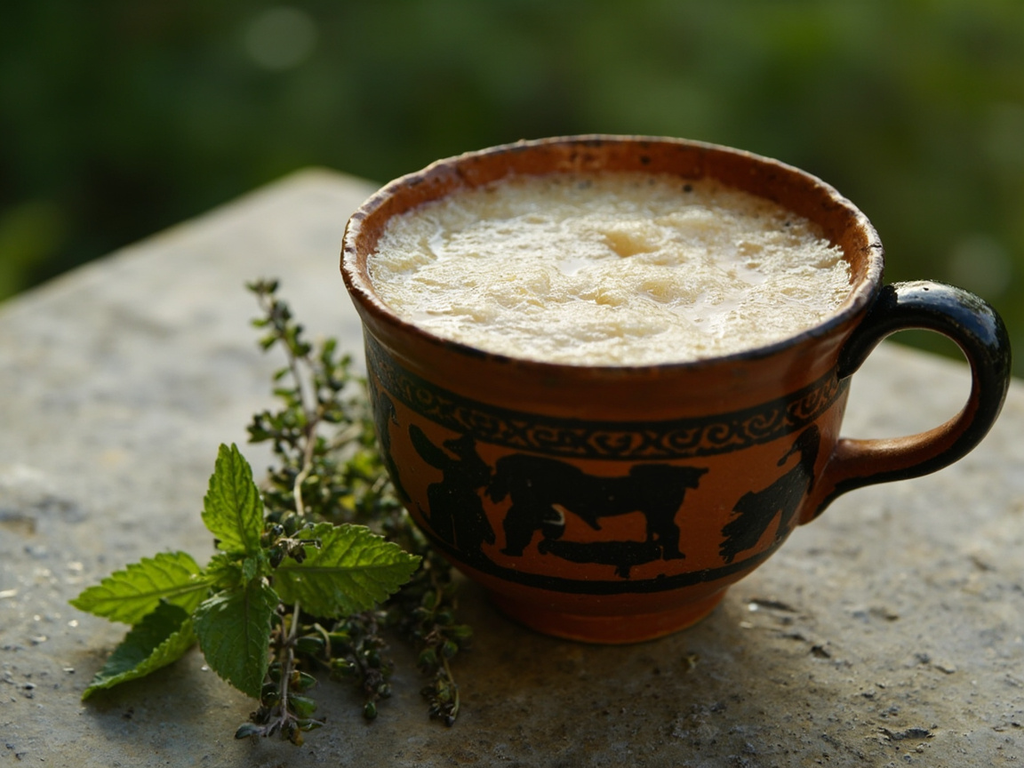
DrinkKykeon — The Barley Potion of the Vigilant
Symposion / beverage: the thick restorative drink
☕ 🍋· 20 min
View the recipe
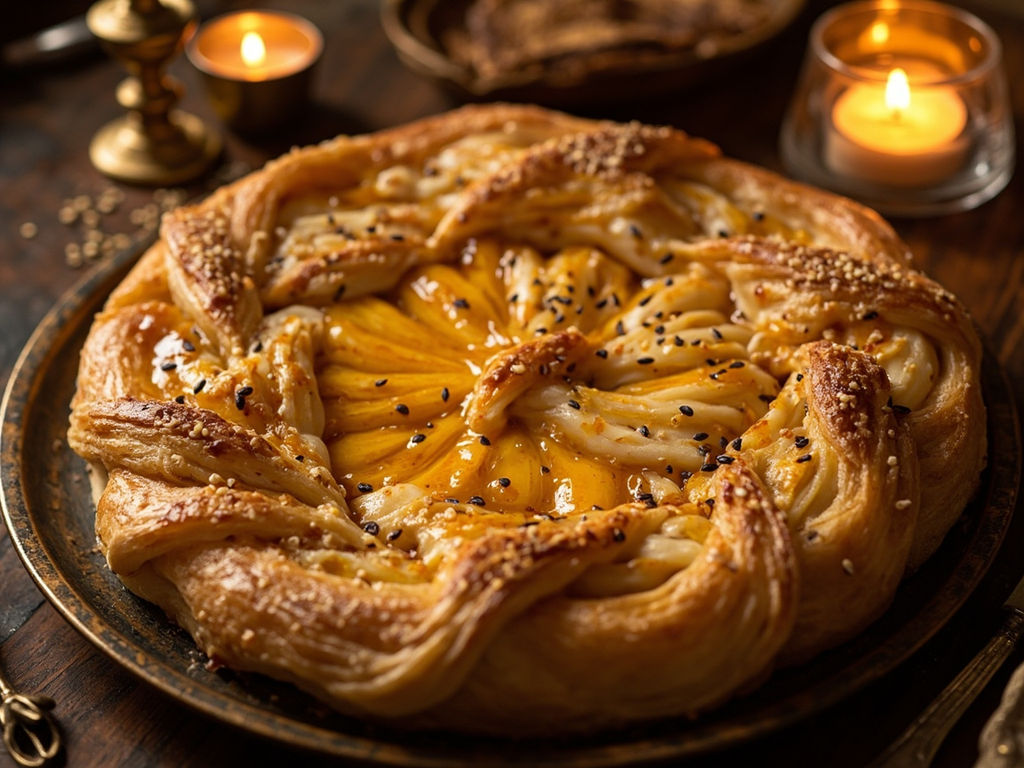 Festive
Plakous with Honey and Fresh Cheese
Tragêmata: the sweets of the symposion, served after the meal
🍯 🫙· 50 min
View the recipe
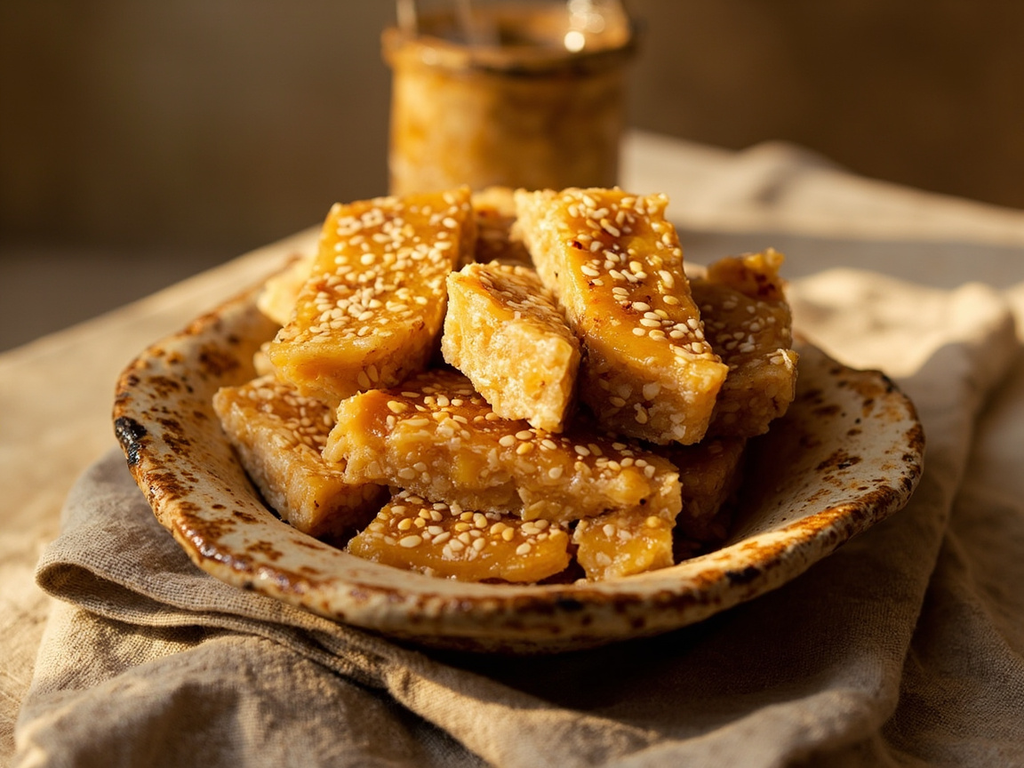 Travel
Pasteli — Sesame and Honey Bars for the Traveler
Provisions for the road: the concentrated snack that keeps
🍯· 45 min
View the recipe