 flip
flipThe Portion of Men — Roasted Meat Skewers (Splanchna)
The Portion of Men — Roasted Meat Skewers (Splanchna)
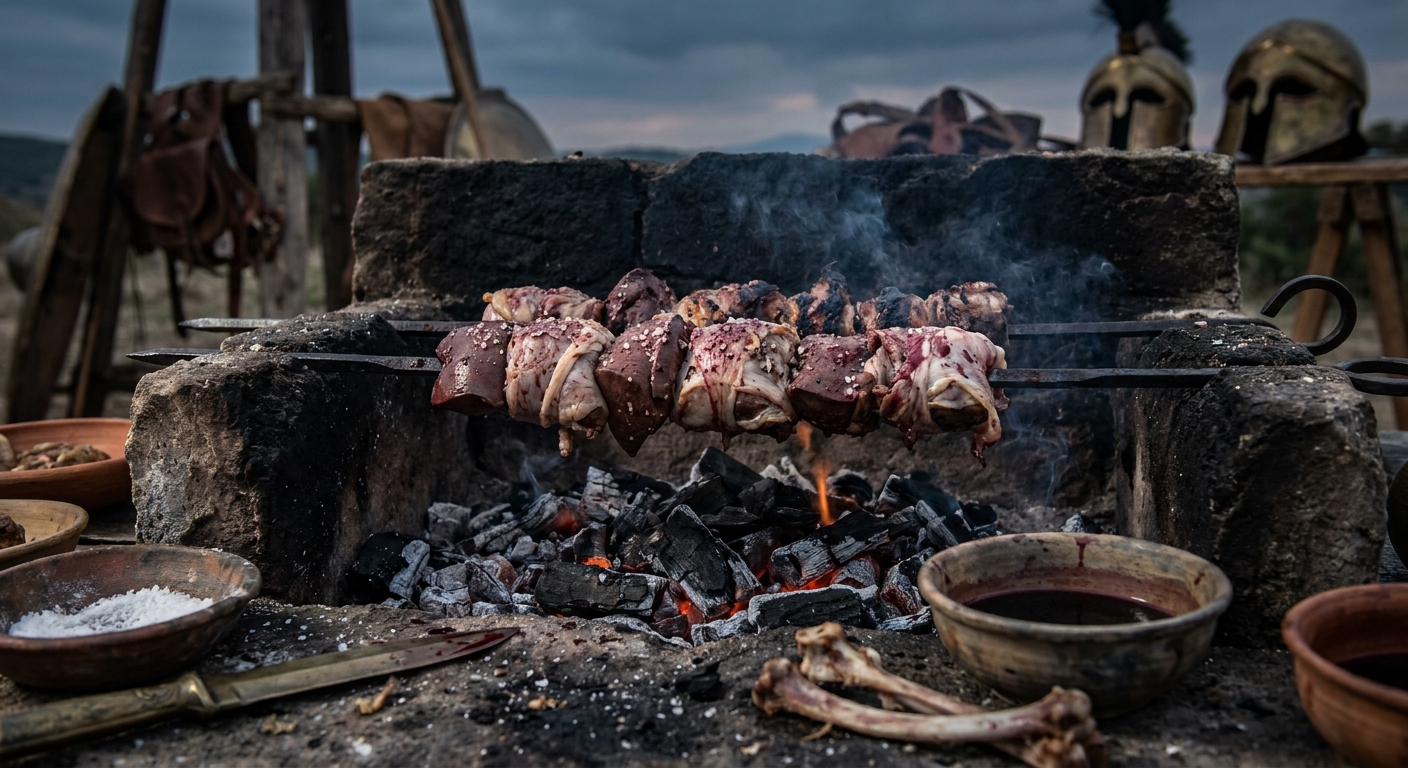
Why this dish? At Mecone, Prometheus divided the ox into two portions to forever establish the rite: to the gods the smoke of bones gleaming with fat, to men the nourishing flesh. This dish IS the direct consequence of his cunning — it was he who gave mortals the right to eat meat grilled over the fire he had stolen for them.
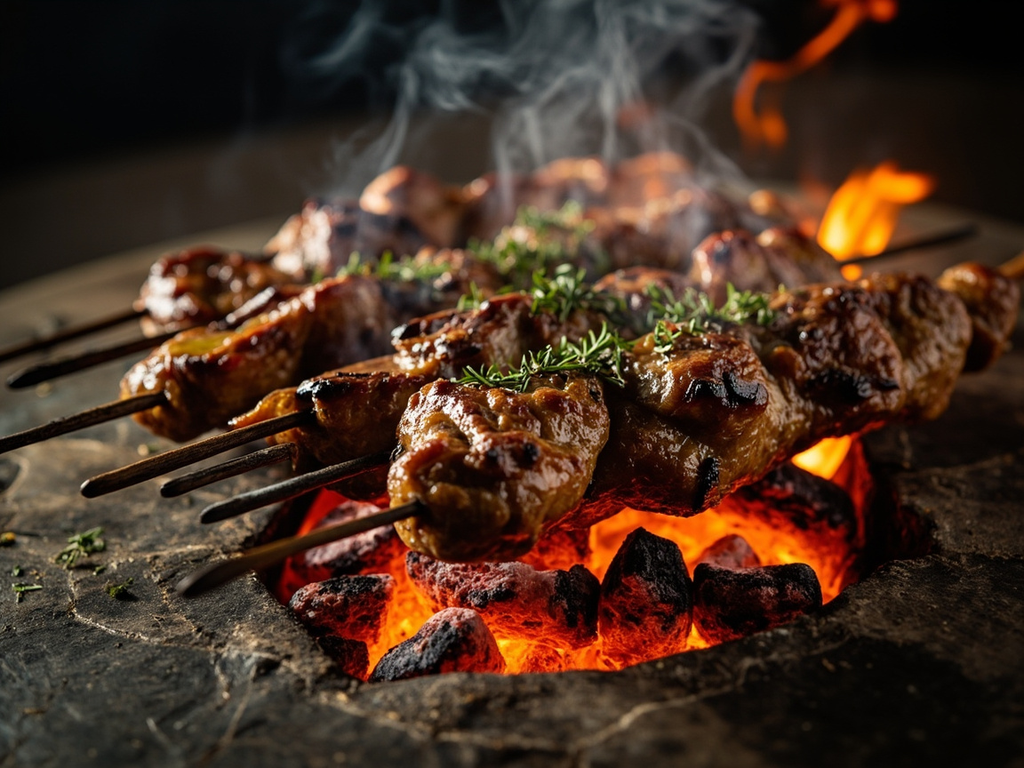
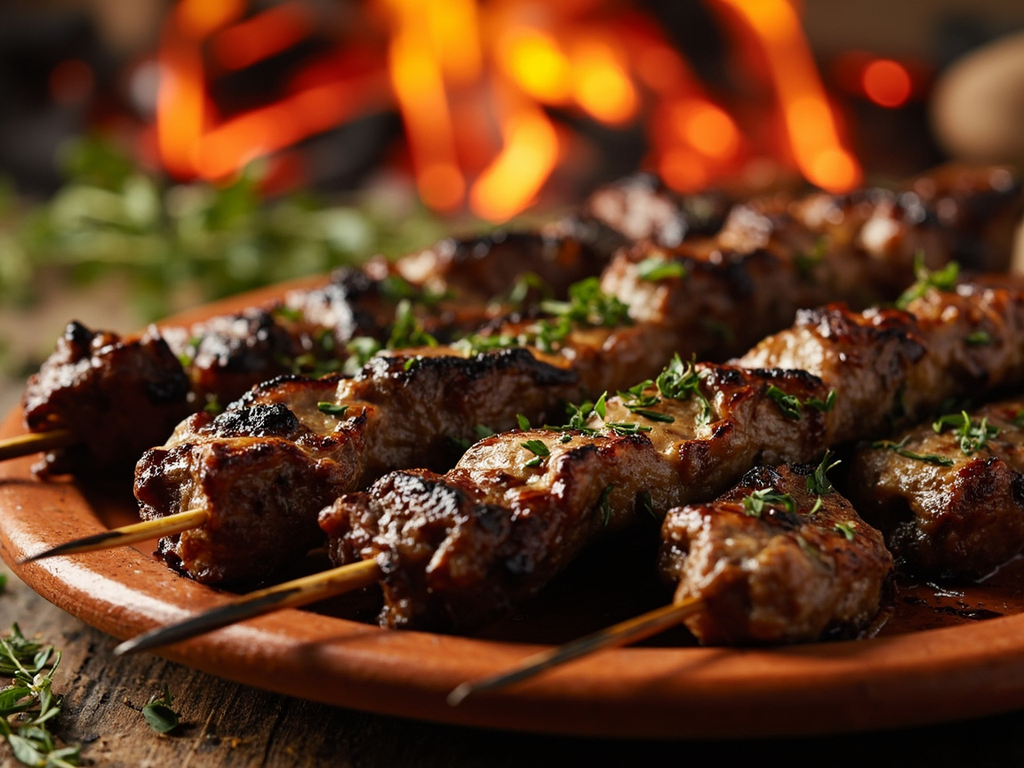
Pieces of meat and offal (liver, heart) threaded onto skewers, salted, rubbed with oil and grilled over embers — the first cooking of humanity, inspired by the sacrificial division described by Hesiod.
Listen to me, mortal. Long ago at Mecone, I set before great Zeus two portions from the same ox: under the gleaming fat, the white bones for the gods; under the repulsive stomach, the good meat for you. The Master chose the gleaming, and found himself deceived. Since then, the meat roasted over the fire I stole falls to you — so seize your skewer, salt the flesh, bring it near the coals, and remember who made this feast possible for you.
- •Sheep or goat meat, and a little liver — as much as you like (sacrificial flesh, the portion of men)
- •Sea salt — a generous pinch (essential Greek seasoning)
- •Olive oil — a drizzle (basting for the embers)
- •Wild thyme and oregano — a few sprigs (scent of the Greek hills)
The Portion of Men — Roasted Meat Skewers (Splanchna)
Pieces of meat and offal (liver, heart) threaded onto skewers, salted, rubbed with oil and grilled over embers — the first cooking of humanity, inspired by the sacrificial division described by Hesiod.
Why this dish? At Mecone, Prometheus divided the ox into two portions to forever establish the rite: to the gods the smoke of bones gleaming with fat, to men the nourishing flesh. This dish IS the direct consequence of his cunning — it was he who gave mortals the right to eat meat grilled over the fire he had stolen for them.
Listen to me, mortal. Long ago at Mecone, I set before great Zeus two portions from the same ox: under the gleaming fat, the white bones for the gods; under the repulsive stomach, the good meat for you. The Master chose the gleaming, and found himself deceived. Since then, the meat roasted over the fire I stole falls to you — so seize your skewer, salt the flesh, bring it near the coals, and remember who made this feast possible for you.
Ingredients (period version)
- Sheep or goat meat, and a little liver — as much as you like (sacrificial flesh, the portion of men)
- Sea salt — a generous pinch (essential Greek seasoning)
- Olive oil — a drizzle (basting for the embers)
- Wild thyme and oregano — a few sprigs (scent of the Greek hills)
Ingredients
- Boneless lamb shoulder — 500 g cubed (main meat)
- Lamb's liver (optional) — 150 g (reminder of grilled splanchna)
- Extra virgin olive oil — 3 tbsp (marinade and basting)
- Dried oregano and thyme — 1 tsp each (herbs)
- Salt and a little lemon juice — to taste (seasoning (lemon: modern touch))
Method
- Cut the meat (and liver) into regular cubes, mix with oil, oregano and thyme, and let rest for 30 minutes.
- Thread the pieces onto metal skewers or soaked wooden sticks.
- Cook over hot embers or a very hot grill, turning, for 8 to 10 minutes, until a nice golden crust forms.
- Salt as soon as it comes off the fire and drizzle with a squeeze of lemon juice just before serving.
How it was made : During Greek sacrifices (thusia), the splanchna — liver, heart, kidneys — were skewered and grilled first to be tasted by the participants, while the smoke of bones wrapped in fat rose to the gods. The remaining meat was boiled or roasted and shared among the citizens. For many, this was almost the only occasion to eat meat.
The contemporary twist : Serve the skewers planted in a half-wheel of flatbread, as if Prometheus's fire still springs from the table.
Sources : Hesiod, Theogony, lines 535-560 (the division at Mecone) · Jean-Louis Durand, Sacrifice et labour en Grèce ancienne (1986)
Prometheus · Charactorium