 flip
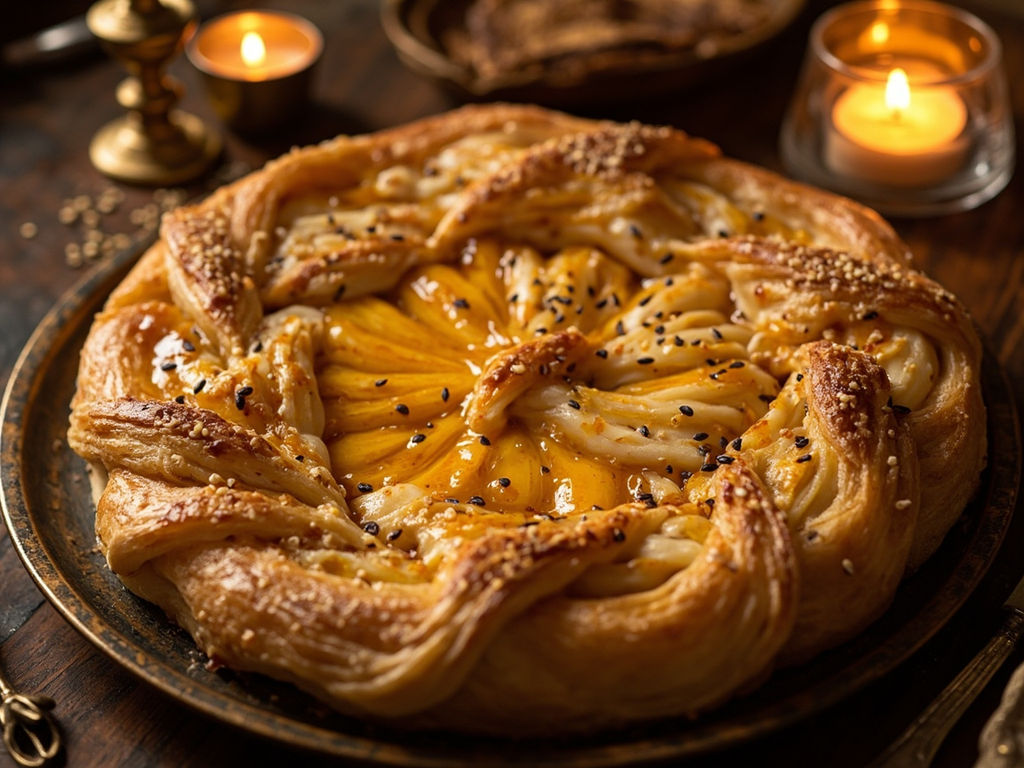
flipPlakous with Honey and Fresh Cheese
Plakous with Honey and Fresh Cheese
Why this dish? The banquets of gods and heroes concluded with sweets. Prometheus, host of the tales of Pindar and Aeschylus, belongs to the world of grand Olympian feasts where he was once a commensal before his fall. This festive cake evokes the sumptuous table from which he was banished for loving men.
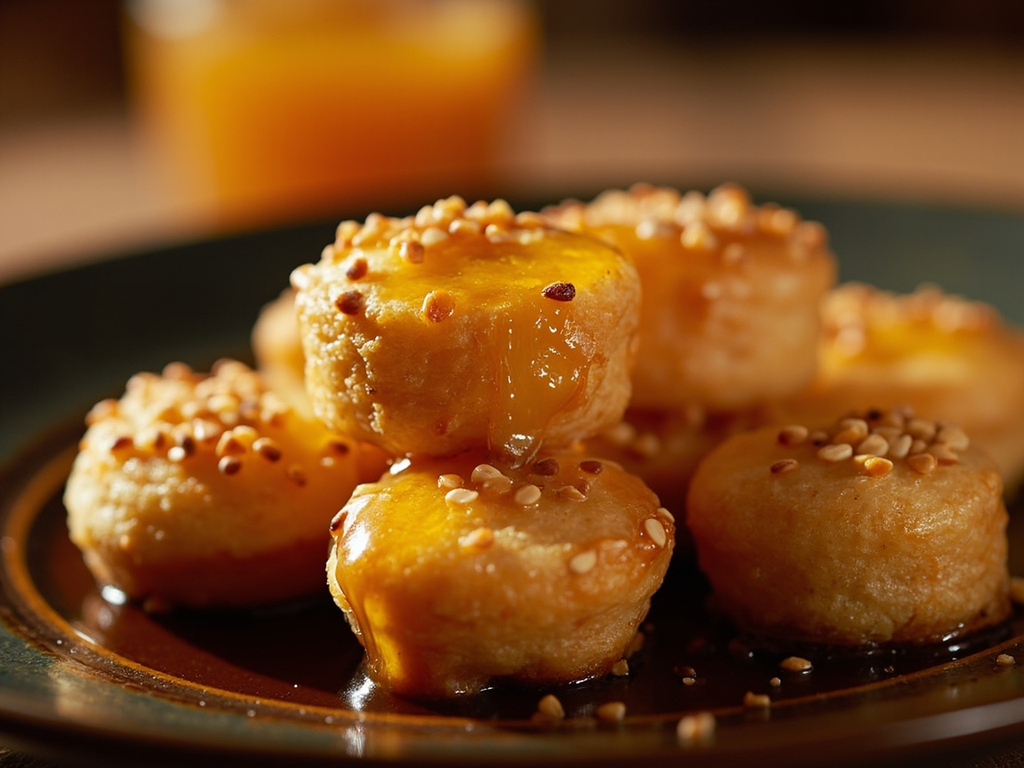
A festive cake made of thin layers of dough stacked, filled with fresh cheese and drizzled with honey — the distant ancestor of Mediterranean honey pastries.
In the days when I still sat among the Immortals, I saw these golden honey cakes laid on the tables of Olympus, flaky and heavy with fresh cheese. Taste it, mortal, and understand what I abandoned for you: I could have kept my place at that eternal feast. I chose instead to give you fire and endure the rock. May this sweetness remind you that a shared happiness is better than a feast kept for oneself.
- •Thin sheets of wheat dough — several (flaky structure)
- •Fresh sheep's cheese — a good portion (filling)
- •Hymettus honey — generously (sweet binder and glaze)
- •Sesame seeds — a handful (crunchy decoration)
Plakous with Honey and Fresh Cheese
A festive cake made of thin layers of dough stacked, filled with fresh cheese and drizzled with honey — the distant ancestor of Mediterranean honey pastries.
Why this dish? The banquets of gods and heroes concluded with sweets. Prometheus, host of the tales of Pindar and Aeschylus, belongs to the world of grand Olympian feasts where he was once a commensal before his fall. This festive cake evokes the sumptuous table from which he was banished for loving men.
In the days when I still sat among the Immortals, I saw these golden honey cakes laid on the tables of Olympus, flaky and heavy with fresh cheese. Taste it, mortal, and understand what I abandoned for you: I could have kept my place at that eternal feast. I chose instead to give you fire and endure the rock. May this sweetness remind you that a shared happiness is better than a feast kept for oneself.
Ingredients (period version)
- Thin sheets of wheat dough — several (flaky structure)
- Fresh sheep's cheese — a good portion (filling)
- Hymettus honey — generously (sweet binder and glaze)
- Sesame seeds — a handful (crunchy decoration)
Ingredients
- Phyllo dough sheets — 6 sheets (flaky layers)
- Ricotta or fresh sheep's cheese — 250 g (filling)
- Thyme or flower honey — 120 g (sweetness and syrup)
- Mild olive oil or melted butter — 50 ml (brushing the sheets)
- Sesame seeds — 2 tbsp (finishing)
Method
- Preheat the oven to 180°C. Brush each phyllo sheet with olive oil and stack three of them in a mold.
- Spread the fresh cheese mixed with 2 tablespoons of honey over this first base.
- Cover with the other three oiled sheets, sprinkle with sesame seeds.
- Bake for 25-30 minutes until the top is golden and crispy.
- Upon removing from the oven, generously drizzle with warm honey and let it soak in before cutting.
How it was made : Plakous ("flat thing") was a Greek festive cake made of layers of dough, cheese and honey; Athenaeus mentions several varieties, and from it derives the placenta described later by Cato. It was served as dessert (tragêmata) at banquets, accompanied by wine mixed with water.
The contemporary twist : Cut into diamonds and top with a shard of honeycomb and a few toasted sesame seeds, like an ancestral baklava.
Sources : Athenaeus, Deipnosophists, Book XIV (on plakous) · Andrew Dalby, Food in the Ancient World from A to Z (2003)
Prometheus · Charactorium