 Flip the card
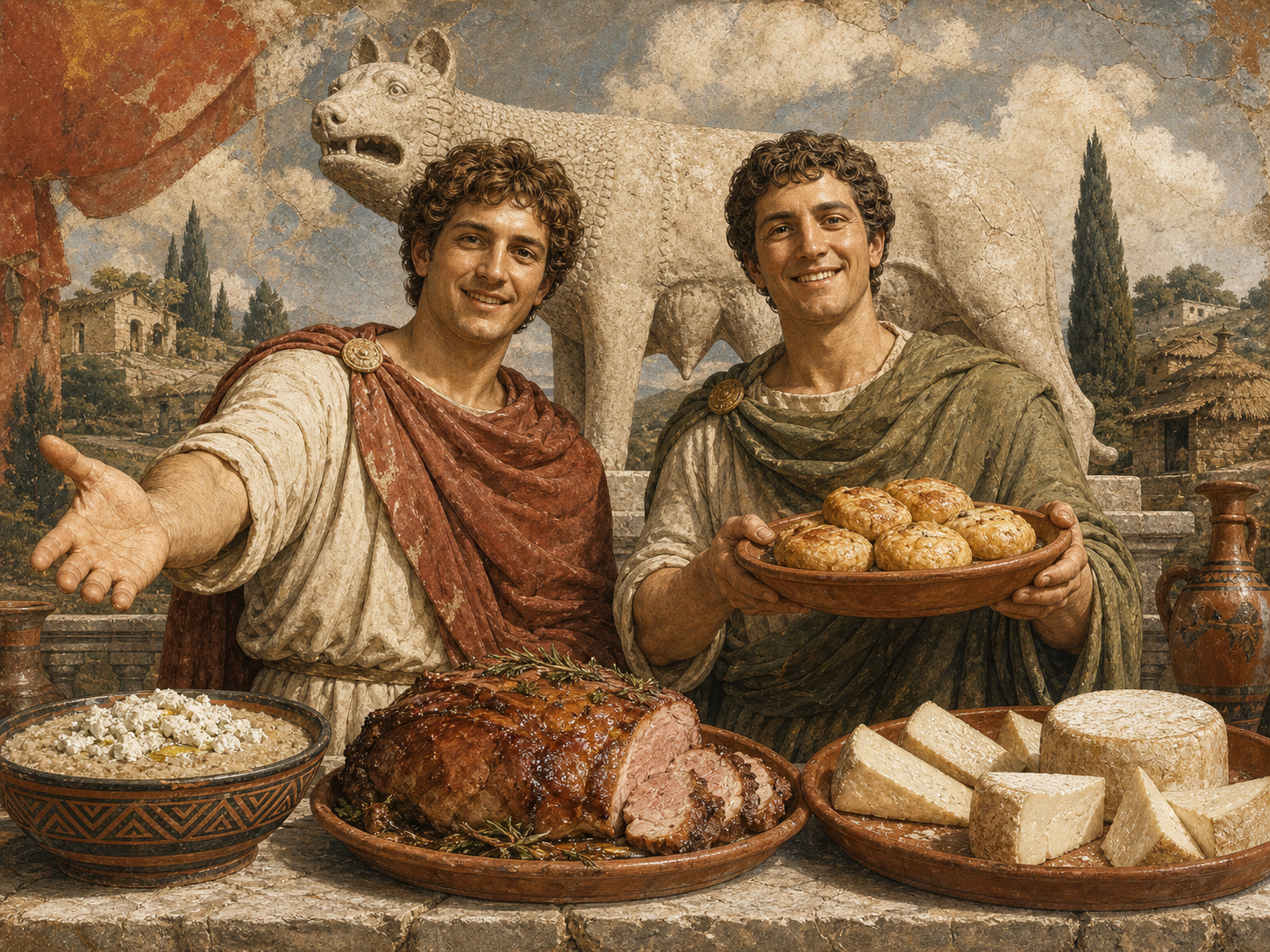
Romulus and Remus at the table
On the menu
Puls and its Pulmentarium
Among the early Romans, the meal was not divided into starter-main-dessert: everything revolved around puls, the spelt (far) porridge that formed the daily staple. It was eaten warm, and a pulmentarium — something 'that goes with it' — was added: sheep's cheese, herbs from Latium, sometimes a bit of meat on feast or sacrifice days. The Romans called themselves pultiphagi, 'porridge-eaters'. The evening meal (cena) was the real meal; morning and midday were satisfied with cold leftovers and cheese.
Signature : Far (spelt/emmer)
The founding grain of archaic Latium. Ground on a stone mill, it became the flour for puls, but also the sacred ingredient of mola salsa — the salted flour thrown onto sacrificial victims. Here, everything begins and ends with far.
click to flip back
Romulus and Remus at the table
5 period recipes
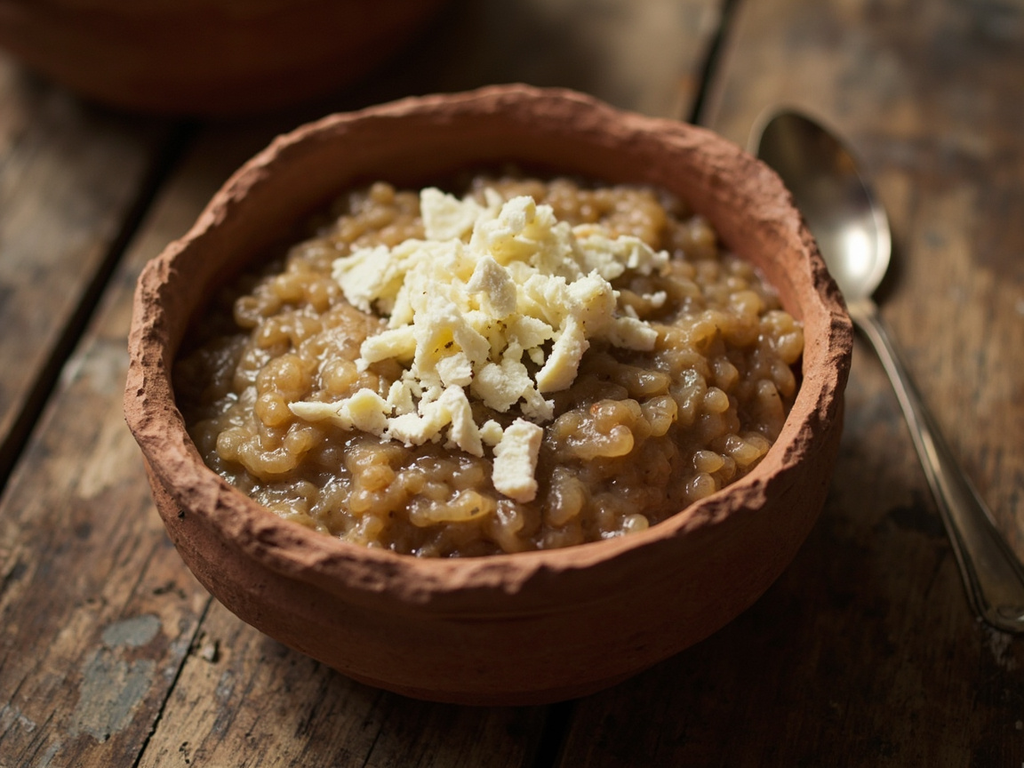 Everyday
Puls of the Palatine (spelt porridge with sheep's cheese)
Daily staple (puls + pulmentarium)
🧂 🍄· 45 min
View the recipe
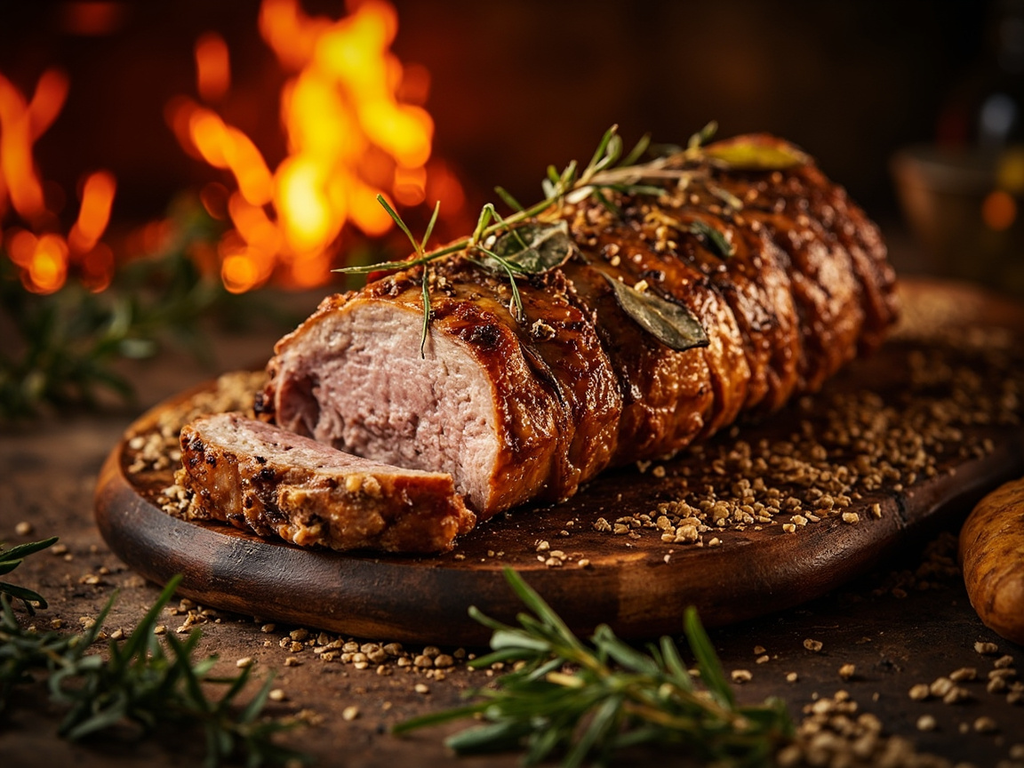 Offering
Pork of the Lupercal (roasted pork loin of the foundation)
Shared sacrificial meat (visceratio)
🧂 🍄· 3 h
View the recipe
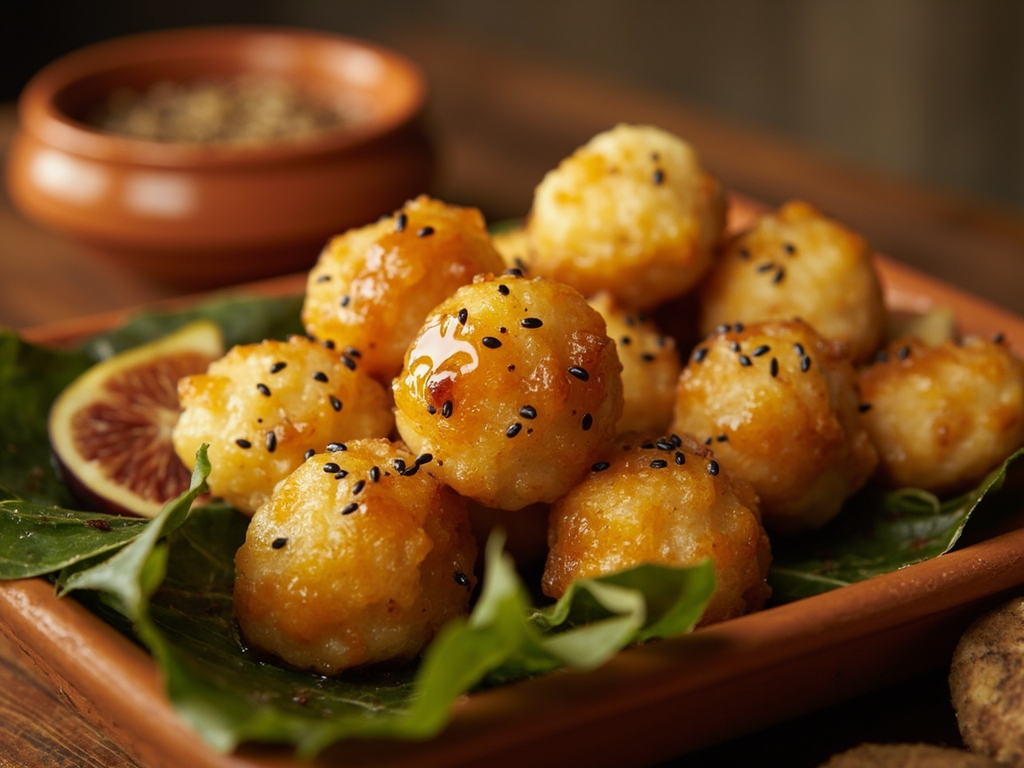 Festive
Globi with honey and cheese
Festive sweet (rustic mensae secundae)
🍯· 40 min
View the recipe
 Preserving
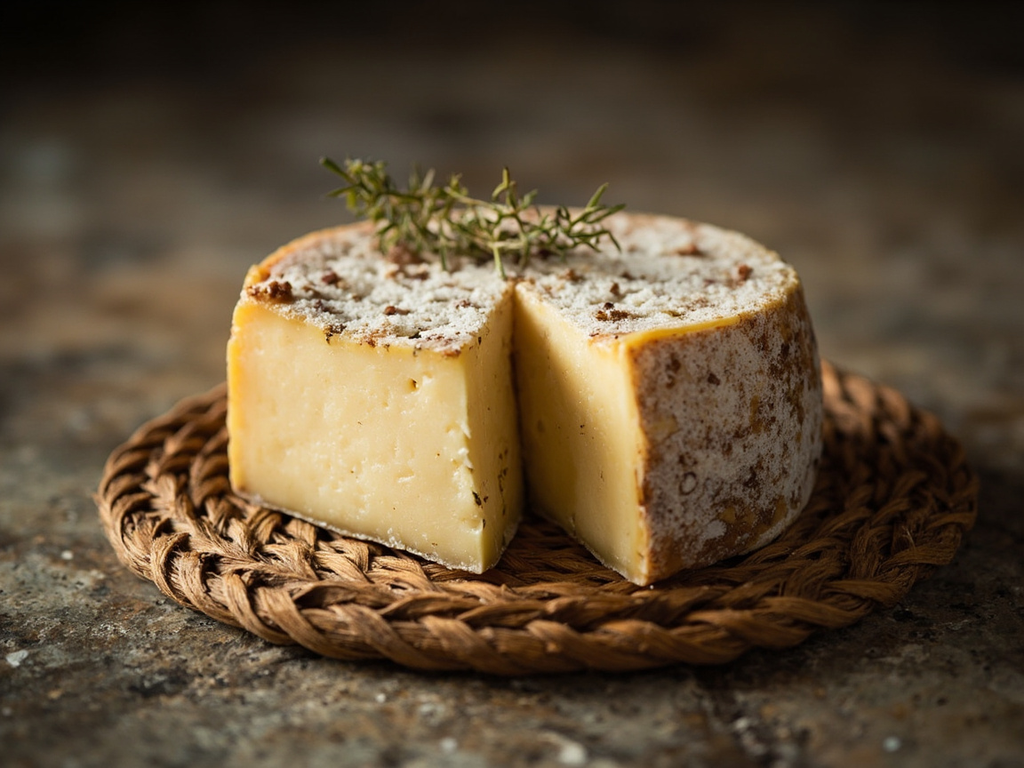
Shepherd's hard cheese (hill country provisions)
Pasture reserve (cibus pastoralis)
🧂 🫙· 2 to 4 weeks (aging)
View the recipe
 Drink
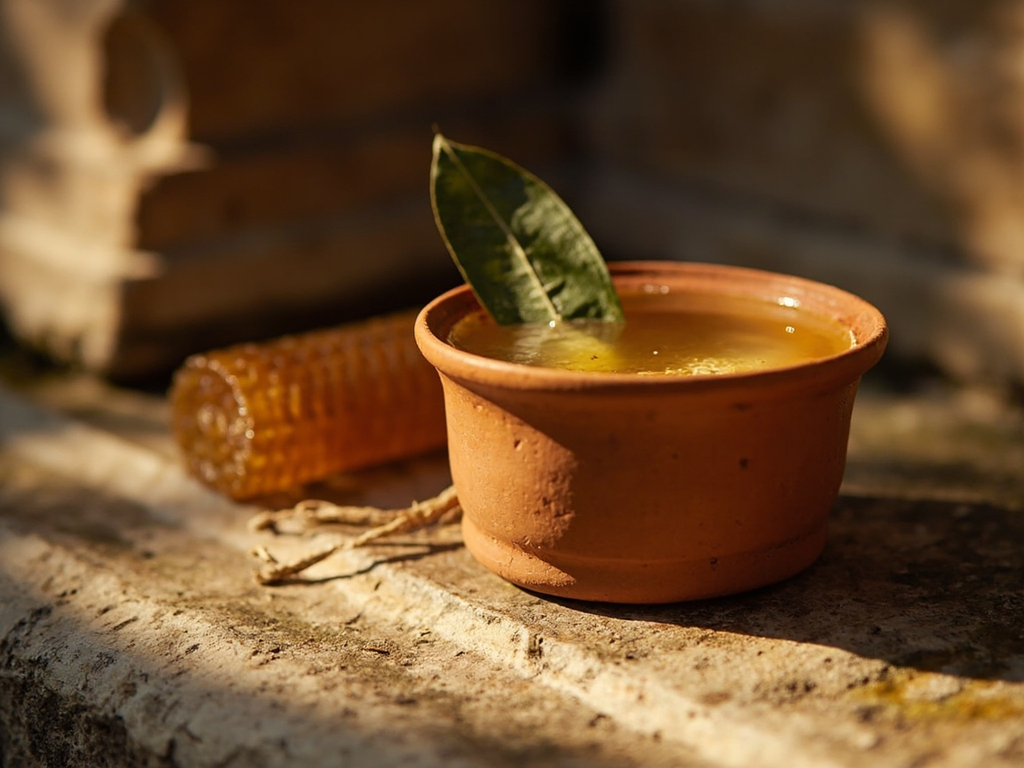
DrinkAqua mulsa (spring water with honey)
Table drink and libation
🍯· 15 min
View the recipe