 flip
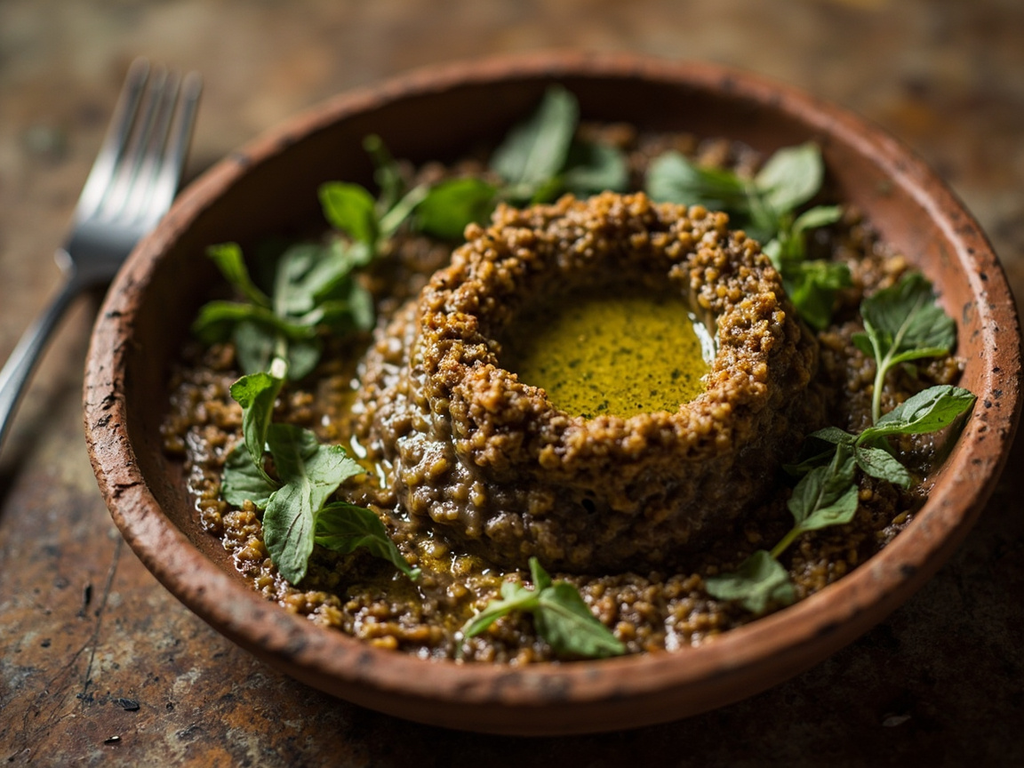
flipPuls of the Palatine (spelt porridge with sheep's cheese)
Puls of the Palatine (spelt porridge with sheep's cheese)
Why this dish? Before becoming king, Romulus was a shepherd raised among the herdsmen of Latium. Spelt puls was the daily bread of these hill men: it was prepared over the fire in the sheepfold, bound with milk and sheep's cheese. This is the dish of origins, the one from before the city.
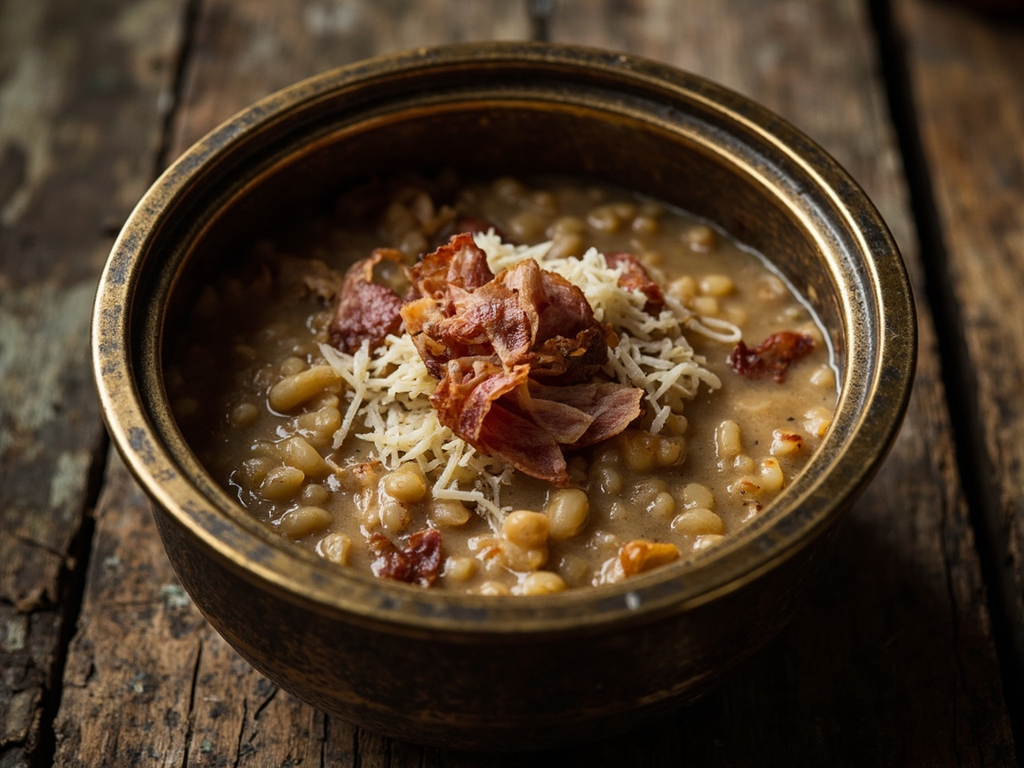
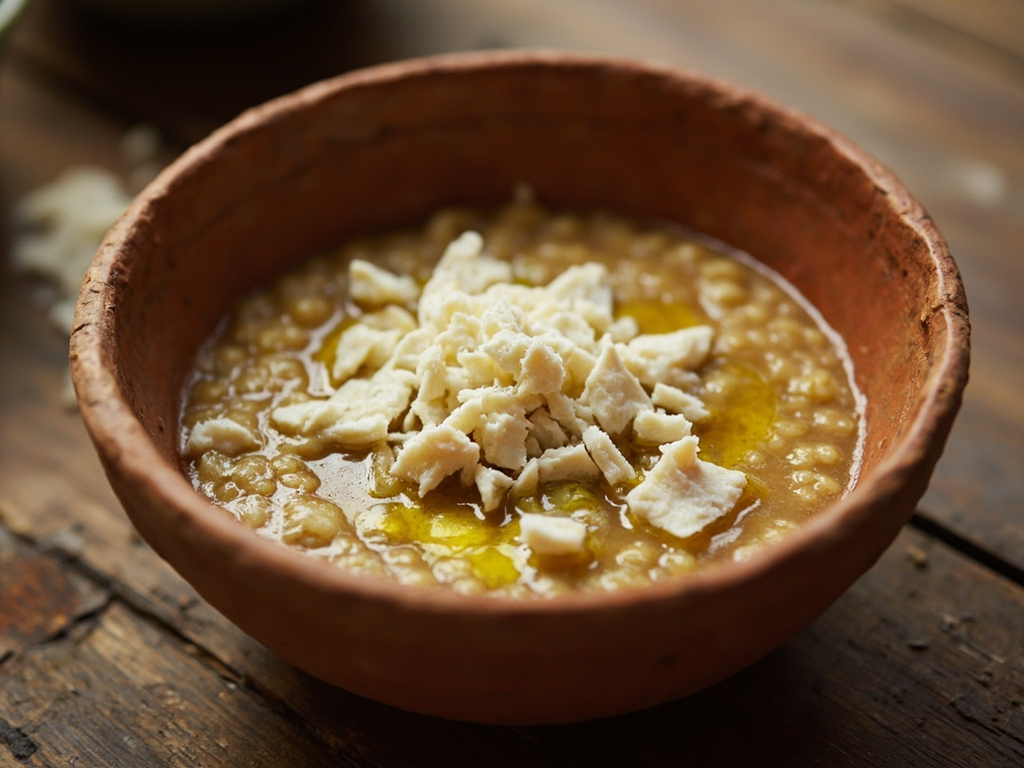
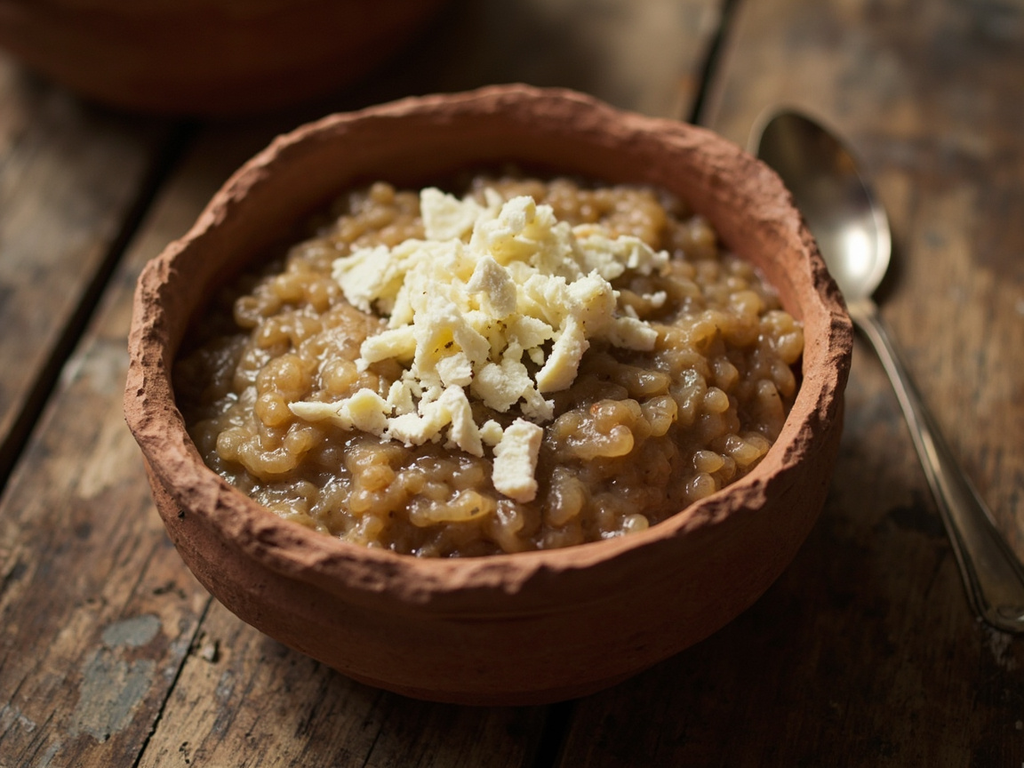
A thick porridge of crushed spelt, cooked slowly in water and milk, salted, enriched with crumbled fresh sheep's cheese and a drizzle of lard. Comforting, rustic, it is the heart of Roman cuisine long before bread.
Listen to me, you who visit me. Before the walls, before the scepter, I tended the flocks on these hills, and this porridge made me strong. We threw the crushed far into the cauldron, stirred without pause with the stick until it thickened, then enriched it with the milk of our ewes and a handful of cheese. Keep a brisk arm on the handle, otherwise it sticks and the meal is ruined. The shepherd who eats his puls hot fears neither cold nor enemy.
- •Crushed far (spelt or emmer) — two handfuls per guest (cereal base)
- •Spring water — to cover generously (cooking)
- •Sheep's milk — one bowl (creamy binder)
- •Fresh sheep's cheese — one lump (richness, natural salt)
- •Lard — one spoonful (fat)
- •Salt — a pinch (seasoning)
Puls of the Palatine (spelt porridge with sheep's cheese)
A thick porridge of crushed spelt, cooked slowly in water and milk, salted, enriched with crumbled fresh sheep's cheese and a drizzle of lard. Comforting, rustic, it is the heart of Roman cuisine long before bread.
Why this dish? Before becoming king, Romulus was a shepherd raised among the herdsmen of Latium. Spelt puls was the daily bread of these hill men: it was prepared over the fire in the sheepfold, bound with milk and sheep's cheese. This is the dish of origins, the one from before the city.
Listen to me, you who visit me. Before the walls, before the scepter, I tended the flocks on these hills, and this porridge made me strong. We threw the crushed far into the cauldron, stirred without pause with the stick until it thickened, then enriched it with the milk of our ewes and a handful of cheese. Keep a brisk arm on the handle, otherwise it sticks and the meal is ruined. The shepherd who eats his puls hot fears neither cold nor enemy.
Ingredients (period version)
- Crushed far (spelt or emmer) — two handfuls per guest (cereal base)
- Spring water — to cover generously (cooking)
- Sheep's milk — one bowl (creamy binder)
- Fresh sheep's cheese — one lump (richness, natural salt)
- Lard — one spoonful (fat)
- Salt — a pinch (seasoning)
Ingredients
- Crushed spelt (or spelt semolina) — 150 g (cereal base)
- Water — 600 ml (cooking)
- Sheep's milk (or whole milk) — 250 ml (creamy binder)
- Fresh sheep's cheese (like brousse) — 100 g (richness)
- Lard or butter — 1 tbsp (fat)
- Salt — 1/2 tsp (seasoning)
Method
- Pour the crushed spelt into salted cold water, bring to a simmer.
- Cook over low heat for 30 to 40 minutes, stirring often, until a thick porridge forms.
- Gradually incorporate the milk to soften the texture.
- Off the heat, add the lard and crumbled cheese, mix until slightly melted.
- Serve warm in a clay bowl, with a grind of salt if needed.
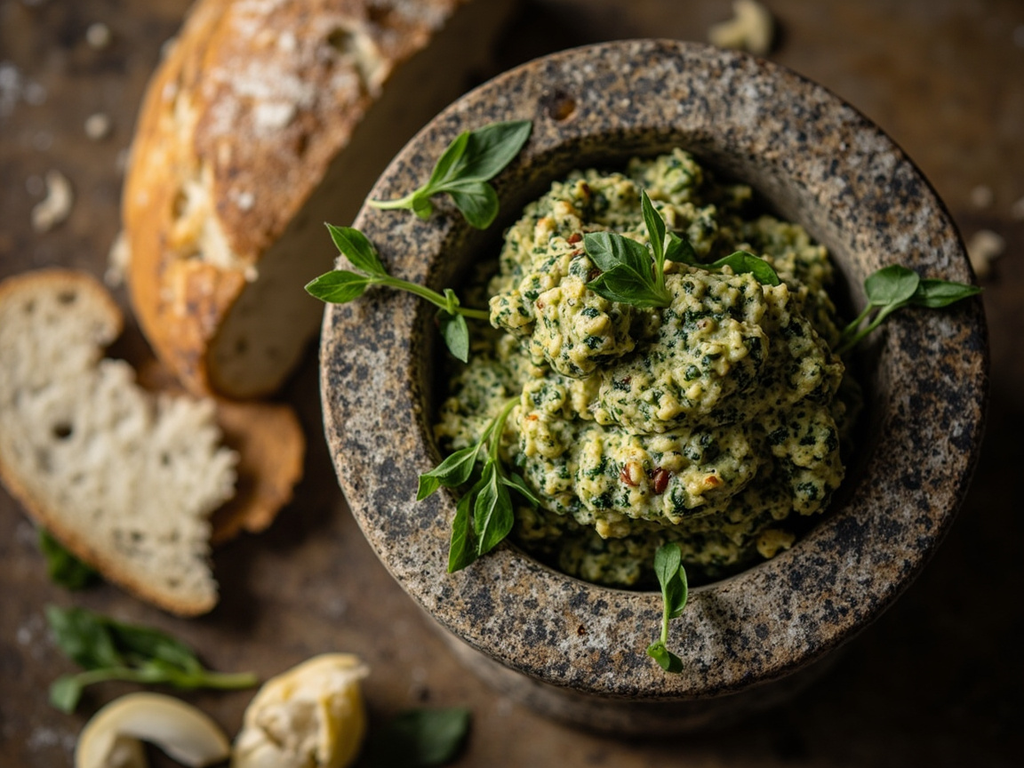
How it was made : Puls was cooked in an earthenware pot (olla) over the hearth, stirred with a wooden spatula. The far was first pounded in a mortar to remove the husk. It was the staple food of all classes: the rich enhanced it with cheese, eggs, or honey; the poor ate it plain.
The contemporary twist : Plated like a creamy risotto, sprinkled with pecorino shavings and a drizzle of Latium olive oil — a nod to the roots of cucina romana.
Sources : Pliny the Elder, Natural History, XVIII (on far and puls) · Cato the Elder, De agricultura
Romulus and Remus · Charactorium