 flip
flipPork of the Lupercal (roasted pork loin of the foundation)
Pork of the Lupercal (roasted pork loin of the foundation)
Why this dish? The Lupercal, the cave where the she-wolf nursed the twins, became the site of the Lupercalia, a festival where goats and a dog were sacrificed. But pork held first place in Latin sacrifices and banquets: the loin was roasted to share the flesh among the faithful. For Romulus the founder, this is the meat of great occasions.
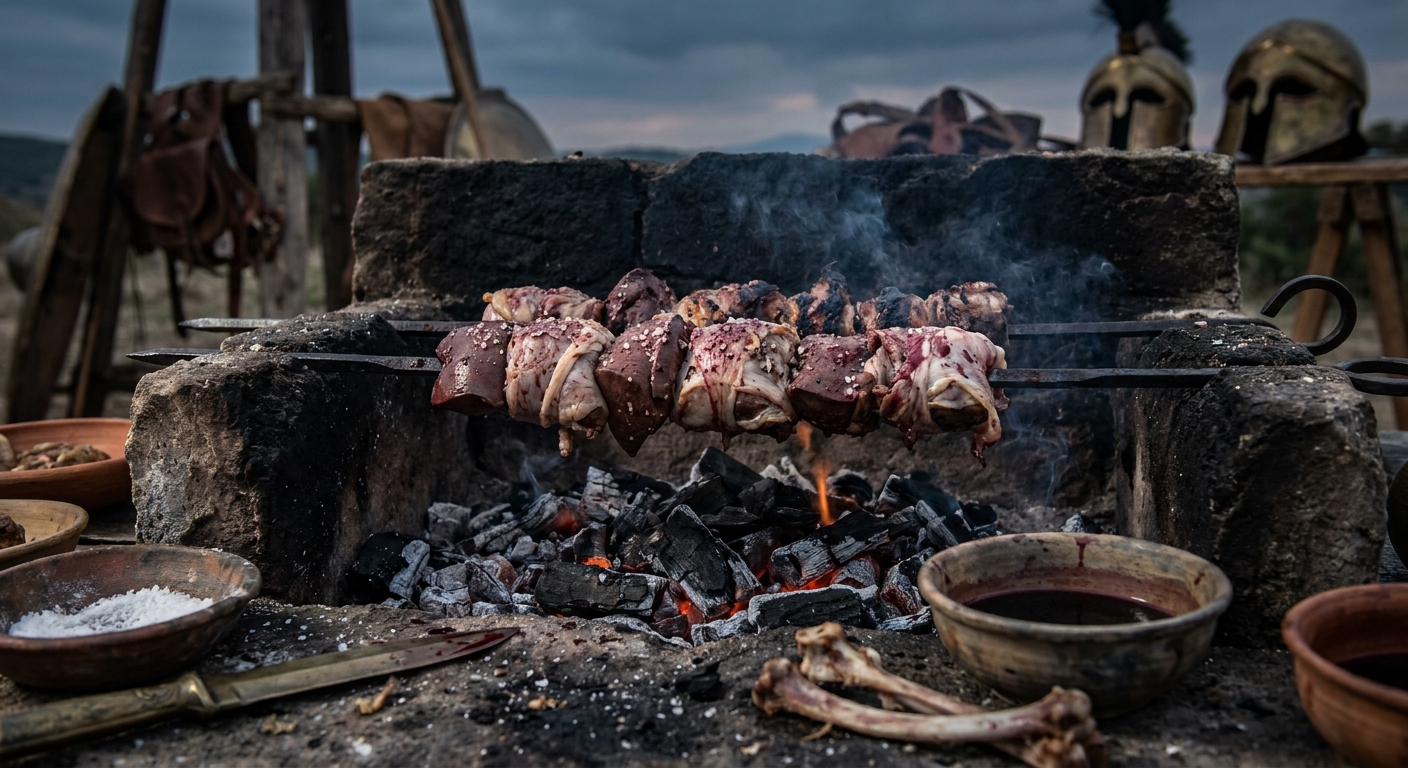
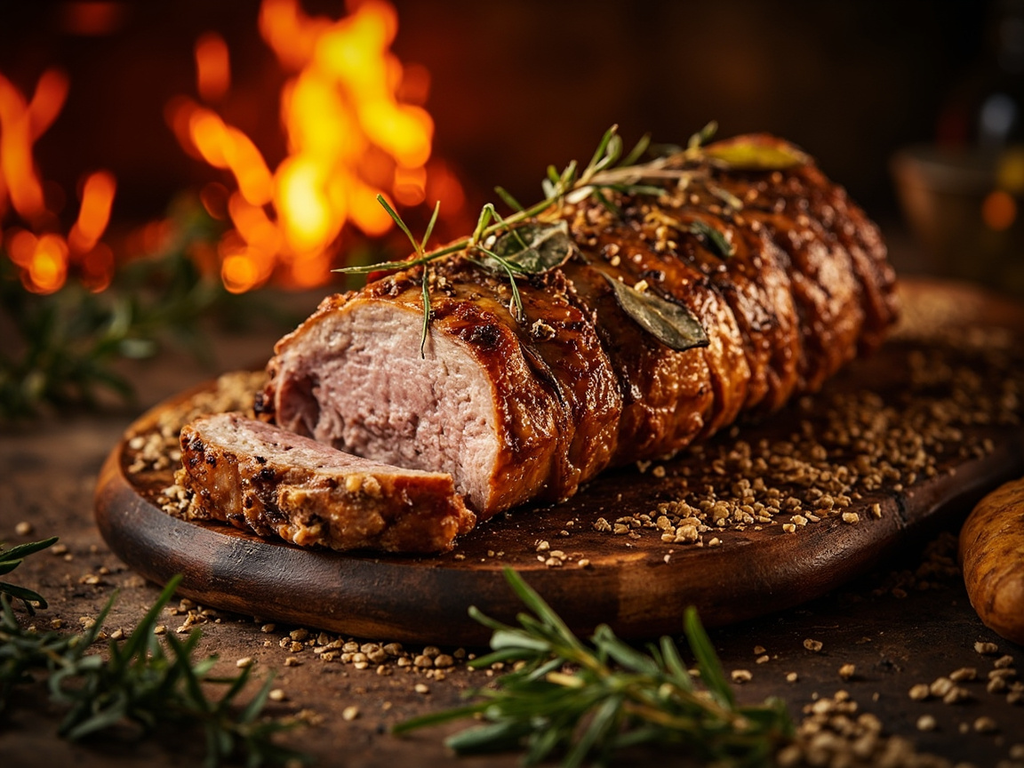
A pork loin rubbed with salt and wild herbs of Latium, slowly roasted near the embers, basted with its own juices. The portion offered to the gods burned on the altar; the rest was shared among the men at the foundation banquet.
Draw near, and lower your voice: what you see there was first offered to the gods. We threw mola salsa, that salted far ground by our hands, onto the beast before consigning the immortals' share to the flames. The rest we roasted near the embers, rubbed with salt and mountain herbs, and each man received his portion — for he who shares the flesh shares the city. That is how I sealed Rome: by knife, fire, and feast.
- •Pork loin — one piece for the banquet (main meat)
- •Salt — to rub generously (seasoning, preservation)
- •Mola salsa (toasted ground far + salt) — a handful (sacrificial gesture)
- •Wild herbs (savory, bay, fennel) — a bunch (aroma)
- •Lard — for basting (fat)
Pork of the Lupercal (roasted pork loin of the foundation)
A pork loin rubbed with salt and wild herbs of Latium, slowly roasted near the embers, basted with its own juices. The portion offered to the gods burned on the altar; the rest was shared among the men at the foundation banquet.
Why this dish? The Lupercal, the cave where the she-wolf nursed the twins, became the site of the Lupercalia, a festival where goats and a dog were sacrificed. But pork held first place in Latin sacrifices and banquets: the loin was roasted to share the flesh among the faithful. For Romulus the founder, this is the meat of great occasions.
Draw near, and lower your voice: what you see there was first offered to the gods. We threw mola salsa, that salted far ground by our hands, onto the beast before consigning the immortals' share to the flames. The rest we roasted near the embers, rubbed with salt and mountain herbs, and each man received his portion — for he who shares the flesh shares the city. That is how I sealed Rome: by knife, fire, and feast.
Ingredients (period version)
- Pork loin — one piece for the banquet (main meat)
- Salt — to rub generously (seasoning, preservation)
- Mola salsa (toasted ground far + salt) — a handful (sacrificial gesture)
- Wild herbs (savory, bay, fennel) — a bunch (aroma)
- Lard — for basting (fat)
Ingredients
- Pork loin or roast — 1.2 kg (main meat)
- Coarse salt — 2 tbsp (seasoning)
- Dried savory and thyme — 2 tsp (aroma)
- Bay leaves — 3 (aroma)
- Fennel seeds — 1 tsp (aroma)
- Lard or olive oil — 2 tbsp (fat)
Method
- Rub the pork loin with coarse salt, crushed herbs, and fennel seeds; let rest for 1 hour.
- Preheat oven to 160°C (320°F).
- Brush with lard, place bay leaves underneath, and roast.
- Roast for 2 to 2.5 hours, basting with juices every 30 minutes.
- Let rest for 15 minutes, then slice and share the meat among guests.
How it was made : Before any sacrifice, the priest sprinkled mola salsa — toasted spelt flour salted by the Vestals — on the victim's head: hence the word 'immolate'. Pork was roasted on a spit or near the embers; the entrails (exta) were offered to the gods, the flesh shared in a public visceratio.
The contemporary twist : Serve the sliced loin on an olive wood board, scattered with a few toasted spelt grains as a reminder of mola salsa — from sacred to plating.
Sources : Ovid, Fasti, II (Lupercalia) · Livy, History of Rome, I (foundation and sacrifices)
Romulus and Remus · Charactorium