 flip
flipGlobi with honey and cheese
Globi with honey and cheese
Why this dish? Honey was the only great sweetener in the Latin world, and sheep's cheese the shepherds' gold: combining the two was a celebration. For Romulus the shepherd turned king, the fried globus glazed with honey is the simple joy of feast days, where wealth lay not in sugar but in the hive and the flock.
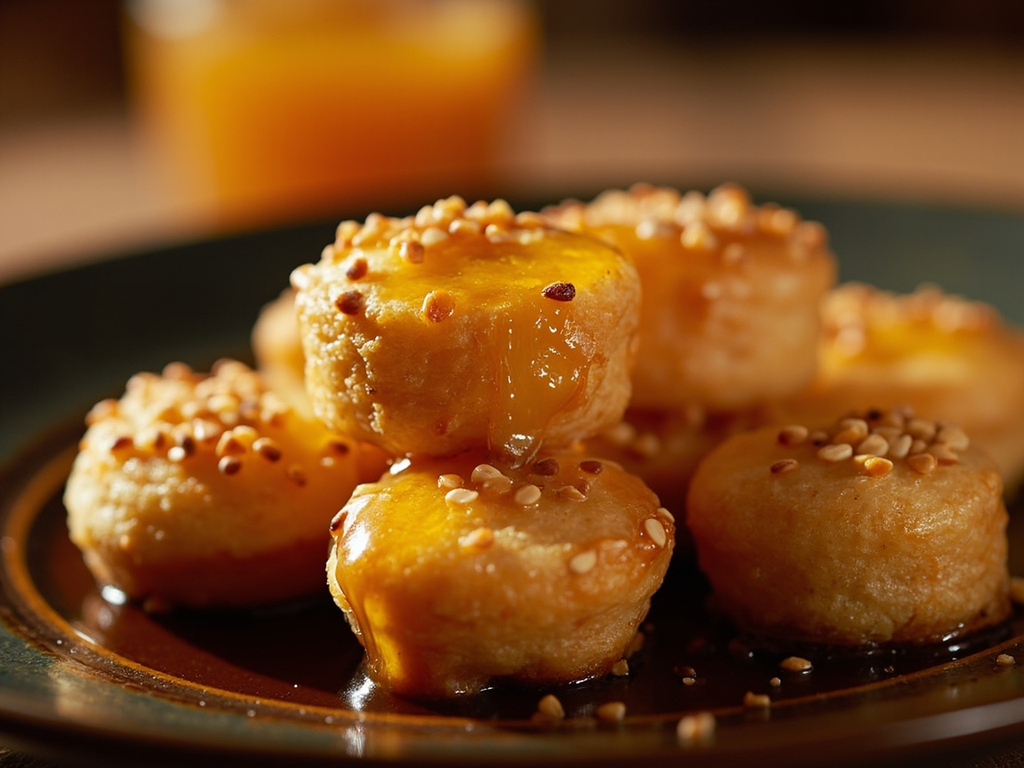
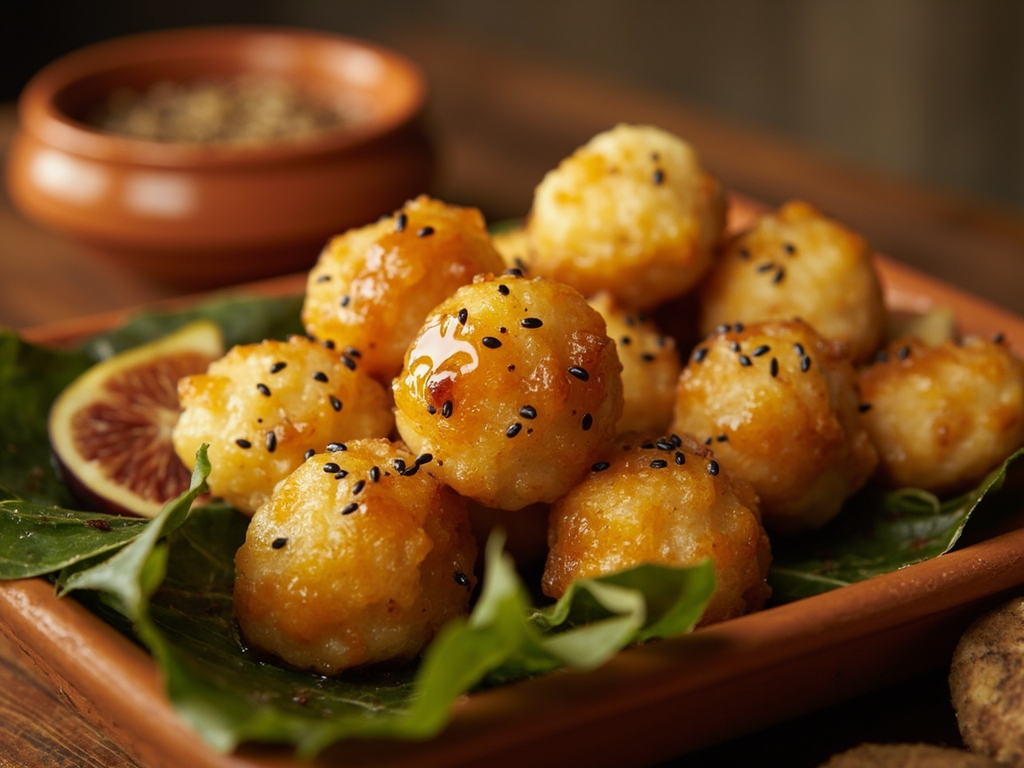
Small balls of fresh cheese mixed with flour, fried in fat until golden, then rolled in warm honey and sprinkled with poppy seeds. Crispy on the outside, soft inside, sweet and comforting.
Ah, these I give you with a light heart! We knead the cheese of our ewes with a little far, roll balls between our palms, and hop, into hot fat until they turn golden like the sun on the Tiber. Then we drown them in honey and toss poppy seeds on top. Eat them burning hot, friend — cold, they have lost half their joy.
- •Fresh sheep's cheese — one lump (soft base)
- •Far (spelt flour) — enough to bind (binder)
- •Honey — one pot (sweet coating)
- •Poppy seeds — a pinch (decoration, crunch)
- •Lard — for frying (frying fat)
Globi with honey and cheese
Small balls of fresh cheese mixed with flour, fried in fat until golden, then rolled in warm honey and sprinkled with poppy seeds. Crispy on the outside, soft inside, sweet and comforting.
Why this dish? Honey was the only great sweetener in the Latin world, and sheep's cheese the shepherds' gold: combining the two was a celebration. For Romulus the shepherd turned king, the fried globus glazed with honey is the simple joy of feast days, where wealth lay not in sugar but in the hive and the flock.
Ah, these I give you with a light heart! We knead the cheese of our ewes with a little far, roll balls between our palms, and hop, into hot fat until they turn golden like the sun on the Tiber. Then we drown them in honey and toss poppy seeds on top. Eat them burning hot, friend — cold, they have lost half their joy.
Ingredients (period version)
- Fresh sheep's cheese — one lump (soft base)
- Far (spelt flour) — enough to bind (binder)
- Honey — one pot (sweet coating)
- Poppy seeds — a pinch (decoration, crunch)
- Lard — for frying (frying fat)
Ingredients
- Ricotta or well-drained sheep's brousse — 250 g (soft base)
- Spelt flour — 80 g (binder)
- Honey — 150 g (sweet coating)
- Poppy seeds — 2 tsp (decoration, crunch)
- Lard or neutral oil — for frying (frying fat)
Method
- Mix the drained cheese and spelt flour until a soft, non-sticky dough forms.
- Shape into small balls the size of a walnut.
- Heat the fat to 170°C (340°F) and fry the globi in small batches until golden.
- Drain, then immediately roll in warmed honey.
- Sprinkle with poppy seeds and serve hot.
How it was made : Cato describes globi in his De agricultura: cheese and semolina (alica) shaped into balls, fried in lard, then coated with honey and poppy seeds. It was a festive treat, older and more rustic than the refined cakes of the imperial era.
The contemporary twist : Piled in a pyramid on a fig leaf, warm honey drizzled at the table — the 'founders' fritters'.
Sources : Cato the Elder, De agricultura, 79 (globi)
Romulus and Remus · Charactorium