 flip
flipShepherd's hard cheese (hill country provisions)
Shepherd's hard cheese (hill country provisions)
Why this dish? The shepherd who led his flock far from home had to carry food that wouldn't spoil. Pressed, salted, and dried sheep's cheese was the provision of the hill men — precisely those herdsmen who took in the twins. This is the food of Rome's pastoral origins, made to last and travel.
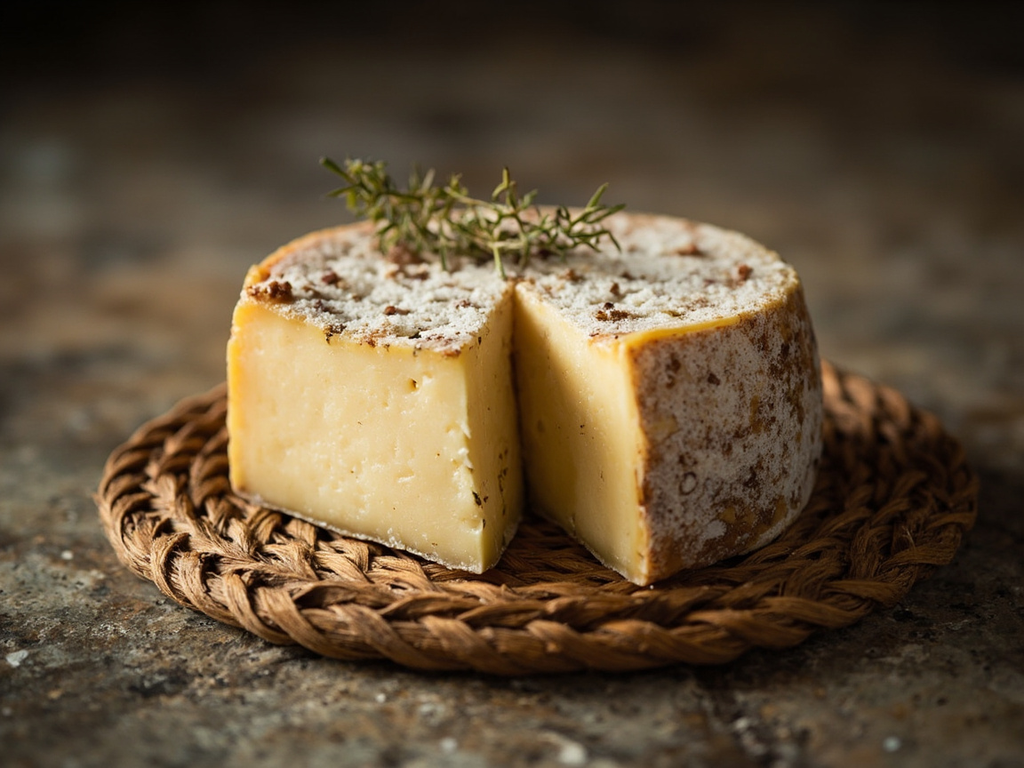
A sheep's cheese curdled with rennet, drained, pressed, heavily salted, then air-dried on the hills until firm and flavorful. It keeps for weeks, can be grated over puls or eaten as is with spelt bread.
You're going far with the flock? Then take this. We curdle the warm milk with a little rennet drawn from the kid's stomach, press the curd in a wicker basket, rub it with salt, and let it take the wind on the rack. After a few moons, it is hard, it is sharp, and it never betrays: it is what feeds a man when the hearth fire is days away.
- •Raw sheep's milk — full bucket (raw material)
- •Rennet (kid's abomasum) — a little (coagulation)
- •Salt — to rub (preservation, flavor)
Shepherd's hard cheese (hill country provisions)
A sheep's cheese curdled with rennet, drained, pressed, heavily salted, then air-dried on the hills until firm and flavorful. It keeps for weeks, can be grated over puls or eaten as is with spelt bread.
Why this dish? The shepherd who led his flock far from home had to carry food that wouldn't spoil. Pressed, salted, and dried sheep's cheese was the provision of the hill men — precisely those herdsmen who took in the twins. This is the food of Rome's pastoral origins, made to last and travel.
You're going far with the flock? Then take this. We curdle the warm milk with a little rennet drawn from the kid's stomach, press the curd in a wicker basket, rub it with salt, and let it take the wind on the rack. After a few moons, it is hard, it is sharp, and it never betrays: it is what feeds a man when the hearth fire is days away.
Ingredients (period version)
- Raw sheep's milk — full bucket (raw material)
- Rennet (kid's abomasum) — a little (coagulation)
- Salt — to rub (preservation, flavor)
Ingredients
- Sheep's milk (or goat's milk) — 4 L (raw material)
- Rennet — per manufacturer's dosage (coagulation)
- Fine salt — about 30 g (preservation, flavor)
Method
- Heat milk to ~32°C (90°F), add rennet, and let curdle for 45 minutes without stirring.
- Cut the curd into cubes, let the whey drain.
- Mold the curd in a cheese mold and press gently for a few hours.
- Unmold, rub salt all over the surface; salt again the next day.
- Dry in a cool, airy place for 2 to 4 weeks, turning daily.
How it was made : Latin shepherds made cheese using rennet taken from the stomachs of young kids or lambs, molded in wicker baskets (formae, from which 'formaggio' derives), and salted for preservation. Dried cheese was a trade currency and the basic provision for transhumant herdsmen.
The contemporary twist : Served in thin slices with a veil of honey and a few wild herbs — 'cibus pastoralis' as a charcuterie board item.
Sources : Varro, De re rustica, II (livestock and cheese) · Columella, De re rustica, VII (cheese making)
Romulus and Remus · Charactorium