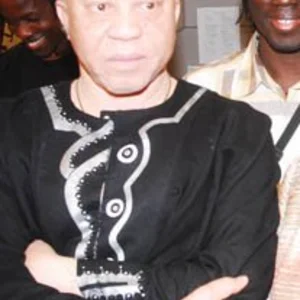

Salif Keïta is a Malian singer and songwriter born in 1949, nicknamed “the golden voice of Africa.” An albino descendant of Mali's royal dynasty, he established himself as a major figure in modern African music by blending Mandinka traditions with Western sounds.
Salif Keita(1949 — ?)
Salif Keita
Mali
5 min read
Frequently asked questions
Key Facts
- Born on August 25, 1949 in Djoliba (Mali), a descendant of Sundiata Keita, founder of the Mali Empire
- In 1967 he rejected his royal lineage to become a musician, a profession traditionally reserved for griots
- Joined the Rail Band of Bamako in 1970, then founded the group Les Ambassadeurs
- Released the album “Soro” in 1987, which brought him to international prominence on the world music scene
- Founded the Salif Keïta Foundation in 2005 to defend people living with albinism
Works & Achievements
Song recorded with Les Ambassadeurs, a tribute to Mandinka history that brought him to the attention of African audiences.
Landmark album recorded in Paris, considered a major milestone in African world music.
Album co-produced by jazz musician Joe Zawinul, blending jazz and Mandinka music.
Album marking his return to more African sounds after his Parisian experiments.
Critically acclaimed acoustic album, accompanying his return to Mali.
Manifesto album against discrimination toward people with albinism, awarded a Victoire de la Musique.
Album presented as his final studio record, continuing his fight for people with albinism.
Anecdotes
Salif Keïta was born an albino into a family descended from Sundiata Keita, the founder of the Mali Empire in the 13th century. In Mandinka society, albinism was viewed negatively and some saw it as a bad omen, so his childhood was marked by rejection and superstition.
Because he came from a royal lineage, Salif Keïta broke a social taboo by becoming a singer: music was traditionally reserved for the caste of griots, and a nobleman was not supposed to make it his profession. His family disapproved of this choice, which drove the young man to leave home.
In the early 1970s, he joined the Rail Band of Bamako, an orchestra attached to the railway station and the railway hotel, where he worked alongside the future star guitarist Mory Kanté. This group became a true breeding ground for modern Malian music.
In 1987, his album *Soro*, recorded in Paris, blended traditional Mandinka instruments with Western synthesizers. It became one of the founding records of what would be called “world music” and brought Salif Keïta's voice to the international stage.
Having become famous, Salif Keïta actively campaigned to defend people with albinism in Africa, creating a foundation in their name. He used his fame to denounce the discrimination and violence they sometimes suffer.
Primary Sources
I am black, my skin is white, and I rather like that — it's the difference that is beautiful.
People looked at me as if I were a ghost; to many, an albino wasn't really a human being.
In my family, a Keïta does not sing. Singing was the business of griots, not of nobles.
Key Places
Village south of Bamako where Salif Keïta was born in 1949. He later built a recording studio there upon his return to the country.
Capital of Mali where he began his career with the Rail Band, tied to the railway station. The heart of Malian musical life.
Major city where Les Ambassadeurs settled in the late 1970s, giving him a pan-African audience.
Capital where he settled in 1984 and recorded "Soro," the springboard for his international career.
Typical Objects

A 21-string harp-lute that is emblematic of Mandinka music, played by the griots. It often accompanies songs from the cultural region of Mali.
An African xylophone with wooden keys fitted with resonating gourds. A central instrument of Mandinka music since the days of the Mali Empire.
📷 CC BY-SA 4.0 · Wikimedia Commons ↗
A Western instrument adopted by modern Malian orchestras such as the Rail Band and Les Ambassadeurs. It symbolizes the fusion of African traditions with urban sounds.

An electronic keyboard used on the album “Soro” to blend Mandinka melodies with modern sounds. It embodies the bridge between Africa and the international stage.

A loose-fitting traditional West African robe, often richly embroidered. Salif Keïta frequently wears it on stage as a mark of cultural identity.

An indispensable tool for the singer, allowing the “golden voice of Africa” to carry across large international concerts.
School Curriculum
Vocabulary & Tags
Key Vocabulary
Daily Life
Morning
As a child in Djoliba, Salif helped with work in the fields like the other village children, despite the fragility of his albino skin exposed to the sun. Later, while on tour, his mornings are devoted to resting his voice and preparing for concerts.
Afternoon
In Bamako, his afternoons were spent rehearsing with the Rail Band in the orchestra's premises. In the studio, he works at length on the arrangements, seeking to blend traditional and modern instruments.
Evening
Evening is the time for concerts: in the clubs of Bamako and Abidjan, then on the great stages of Paris and the world. His powerful voice enlivens evenings that stretch late into the night.
Food
His diet is that of West Africa: rice, millet, peanut or okra sauces, served with fish or meat. Mint tea, shared over several servings, punctuates moments of togetherness.
Clothing
He often wears large embroidered *boubous* and colorful outfits that affirm his African identity. On stage as in town, his clothes also protect his sensitive skin from the sun.
Housing
As a child, he lives in a traditional family compound in Djoliba. Once famous, he divides his life between Paris and Mali, where he has a studio and a residence built on the island of Djoliba.