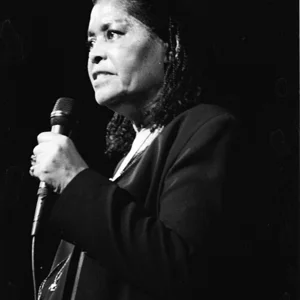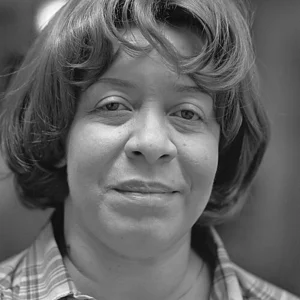

Shirley Horn (1934-2005) was an American jazz pianist and singer. Famous for her intimate phrasing and very slow tempos, she accompanied herself on the piano and achieved late but dazzling recognition in the 1990s.
Shirley Horn(1934 — 2005)
Shirley Horn
États-Unis
6 min read
Frequently asked questions
Key Facts
- Born on May 1, 1934, in Washington, D.C., she studied classical piano from childhood before turning to jazz.
- In 1960, her debut album 'Embers and Ashes' caught the attention of Miles Davis, who invited her to perform alongside him.
- She chose a low-profile career in the 1960s and 1970s to raise her daughter, before making a major recording comeback.
- Her album 'Here's to Life' (1992), on Verve, marked her international breakthrough.
- She won a Grammy Award in 1999 for 'I Remember Miles' and died on October 20, 2005.
Works & Achievements
Her first album, which revealed her intimate phrasing and caught the attention of Miles Davis.
Recorded for Mercury, it marked her debut with a major label during her first period of recognition.
A live album that marked her major recording comeback with Verve after years out of the spotlight.
A record on which Miles Davis came to play trumpet, during one of his final sessions.
Arranged by Johnny Mandel with a string orchestra, it is her greatest success, topping the jazz charts.
An album with a warm, convivial atmosphere, partly recorded at her home, celebrating her trio and her musician friends.
A tribute to Miles Davis that earned her the Grammy Award for Best Jazz Vocal Album in 1999.
Anecdotes
In 1960, trumpeter Miles Davis discovered Shirley Horn's first record
Embers and Ashes." Captivated, he insisted she open for him at New York's Village Vanguard in 1961, even threatening not to play if she weren't on stage. This endorsement from a jazz legend suddenly thrust her into the spotlight.
In the mid-1960s, just as her career was taking off, Shirley Horn made a choice rare among musicians: she drastically cut back on touring to raise her daughter in Washington. For nearly twenty years, she performed mostly in her hometown clubs, choosing family stability over national fame.
Her trademark was extraordinarily slow tempos and long silences. Where others fill the space with notes, she let the music breathe, at the piano as in her voice. Miles Davis admired precisely this knack for "not playing the unnecessary notes.
In 1990, for the album "You Won't Forget Me
Miles Davis came back to play trumpet at her side: it would be one of his very last recording sessions before his death in 1991. The pianist he had launched thirty years earlier was thus welcoming her mentor one final time.
Recognition came late: in 1999, at age 64, she won a Grammy Award for "I Remember Miles." Stricken with diabetes that forced her to have a foot amputated in 2002, she nonetheless kept on singing, sometimes leaving the piano to another musician.
Primary Sources
In it, Miles Davis recounts his fascination with Shirley Horn's playing and how he got her hired at the Village Vanguard, stressing her sense of space and slowness.
The record brings together Shirley Horn and arranger Johnny Mandel for a program of ballads backed by a string orchestra, hailed as the high point of her return to the international stage.
In it, Shirley Horn explains why she loves slow tempos and how accompanying herself on the piano lets her sing exactly as she breathes.
The tribute album to Miles Davis earns her the recording industry's highest honor, crowning a career that had long remained under the radar.
Key Places
Shirley Horn's birthplace, where she grew up, studied piano, and chose to build most of her life. She remained loyal to it even at the height of her fame.
It was at this university's Junior School of Music that she received solid training as a classical pianist. This foundation would nourish the delicacy of her touch.
The legendary Greenwich Village club where Miles Davis featured her as his opening act in 1961. It was her first major national stage.
The capital of jazz and home to major labels like Verve, where she recorded many of her comeback albums in the 1990s. The city embodies her renewed recognition.
A town in the Washington suburbs where Shirley Horn died in 2005 from complications of diabetes. She passed away just a short distance from the city of her entire life.
Typical Objects

Shirley Horn accompanied herself on the piano, a rarity in vocal jazz. For her, instrument and voice were but a single breath.

Her hushed, almost whispered voice demanded a microphone held very close, to catch the faintest tremor. It is the tool of her intimate singing.

Her albums, from “Embers and Ashes” to “Here's to Life,” came out on vinyl records played in clubs and living rooms. They carried her art far beyond Washington.

The trophy she won in 1999 for “I Remember Miles” symbolizes her late but dazzling recognition. It rewards an entire lifetime of musical patience.

She drew from the “Great American Songbook,” those great songs of Broadway and Tin Pan Alley. The sheet music of standards was her raw material.

On stage, in the plush clubs, she wore elegant outfits suited to the muted atmosphere of jazz cabarets. The plainness of her attire left all the room to the music.
School Curriculum
Vocabulary & Tags
Key Vocabulary
Tags
Daily Life
Morning
A musician of the night, Shirley Horn often started her day late, at her home in Washington. The morning was first devoted to family life before music.
Afternoon
The afternoon was given over to the artist's quiet work: rehearsing at the piano, choosing songs, adjusting the tempos of a ballad. She meticulously prepared every silence and every breath.
Evening
In the evening came the clubs and concerts, where she settled at the piano facing an audience close at hand. In soft, dimmed light, she sang and played at the same time, sometimes late into the night.
Food
Like many club musicians, her irregular hours set the rhythm of her meals, often eaten late after concerts. The diabetes that struck her in her final years forced her to watch her diet closely.
Clothing
On stage, she wore elegant, understated outfits suited to the hushed atmosphere of jazz cabarets. In daily life, in Washington, she led a quiet and unpretentious existence.
Housing
She spent most of her life in the Washington area, attached to her home rather than to the great jazz metropolises. Her house was also a place of music, where she even recorded part of her albums.