 Flip the card
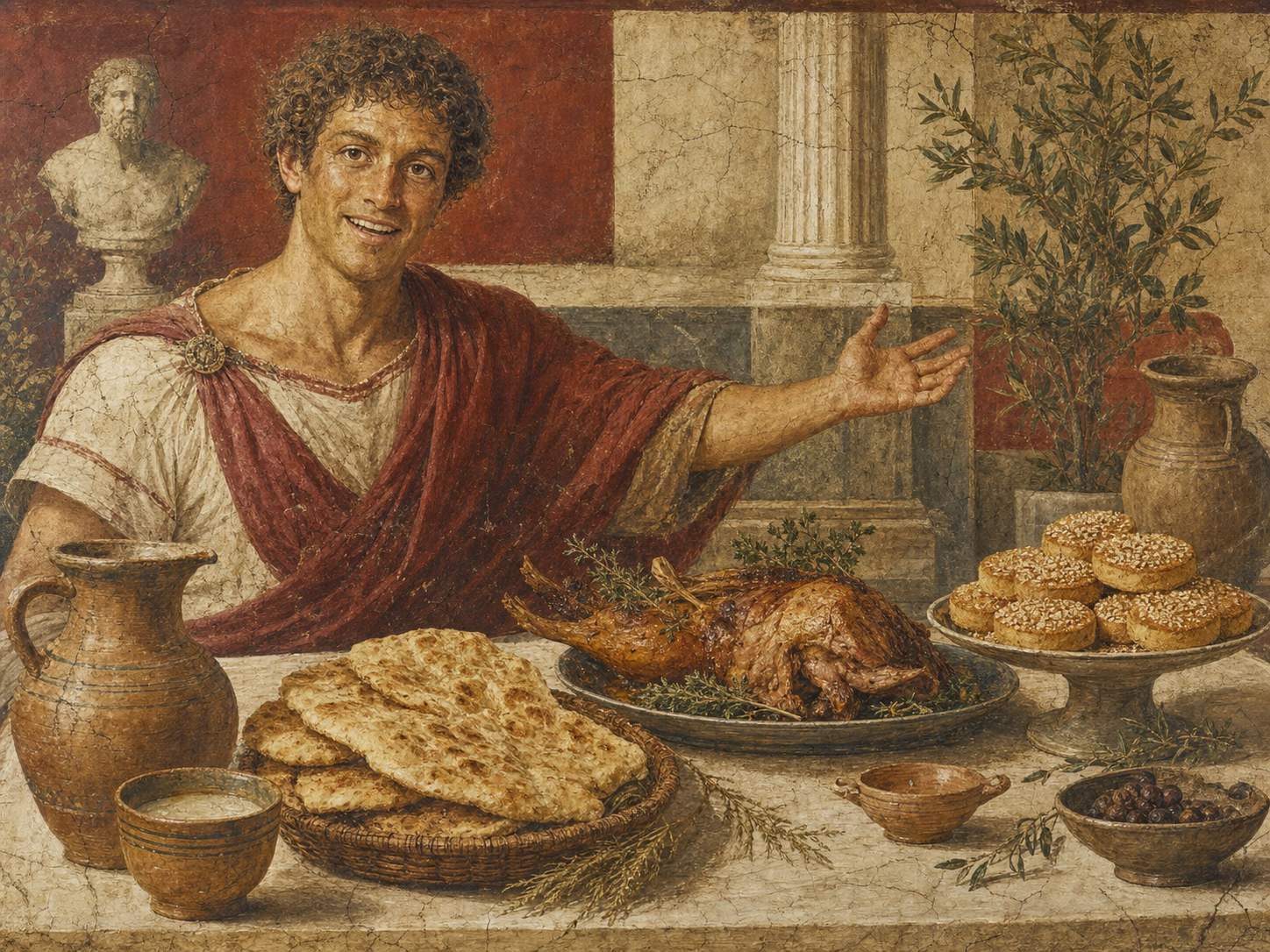
Theseus at the table
On the menu
Deipnon and symposion
The ancient Greek meal unfolds in two parts. First, the deipnon, the nourishing meal: a barley flatbread (the maza) serves as the base, accompanied by opson — what "accompanies the bread": olives, cheese, fish, and more rarely meat, especially after a sacrifice. Then comes the symposion, the time for wine mixed with water, honey sweets, and shared conversation among hosts. Separately, provisions for travel and offerings placed on the altar for the gods are prepared.
Signature : Barley and Hymettus honey
Two pillars of the archaic Greek table: roasted then ground barley, the base of daily maza and the kykéon drink, and the fragrant honey from the hills of Attica (Hymettus, near Athens), which sweetens offering cakes and preserves fruits. No sugar, no butter: everything relies on olive oil, barley, and honey.
click to flip back
Theseus at the table
5 period recipes
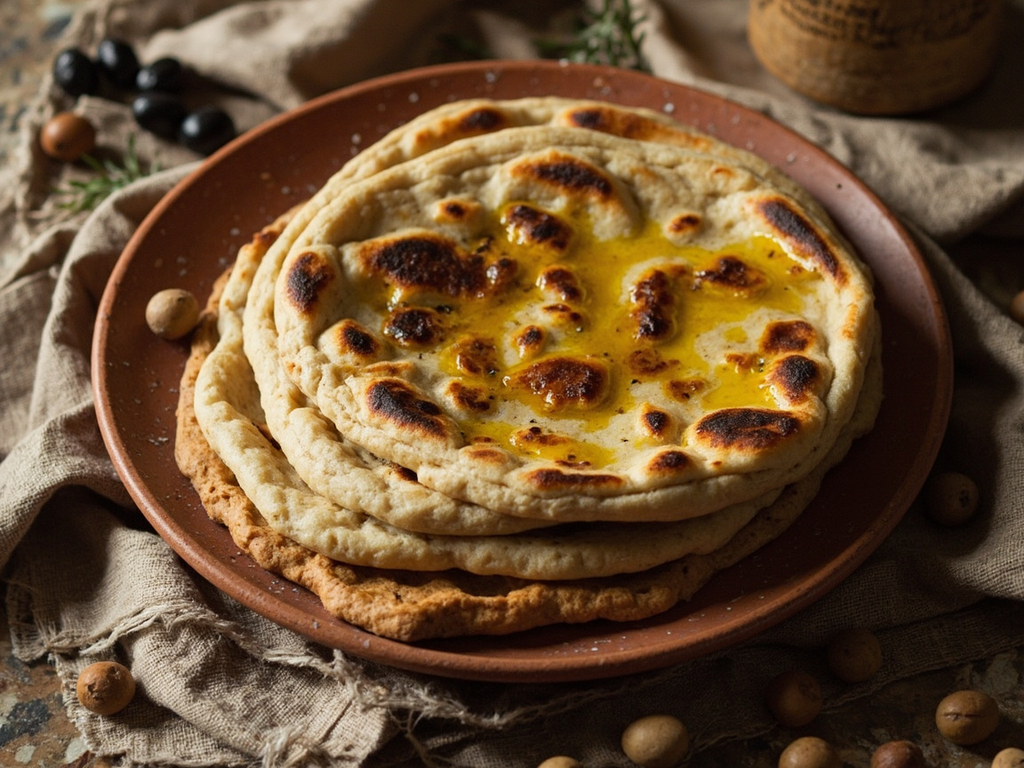 Everyday
Maza, the barley flatbread of the Athenians
Base of the deipnon (the daily "bread")
🧂· 45 min
View the recipe
 Festive
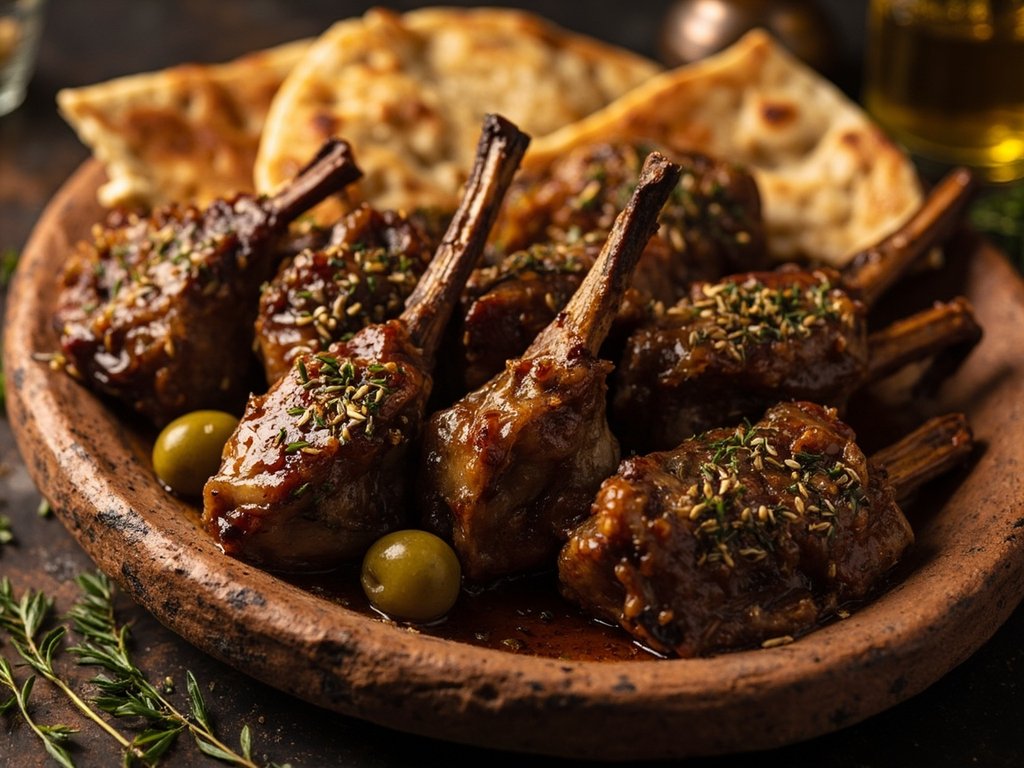
Roasted goat with thyme, coriander, and honey, after the sacrifice
Festive opson (sacrificial banquet meat)
🧂 🍄 🍯· 2 h (plus marinating)
View the recipe
 Offering
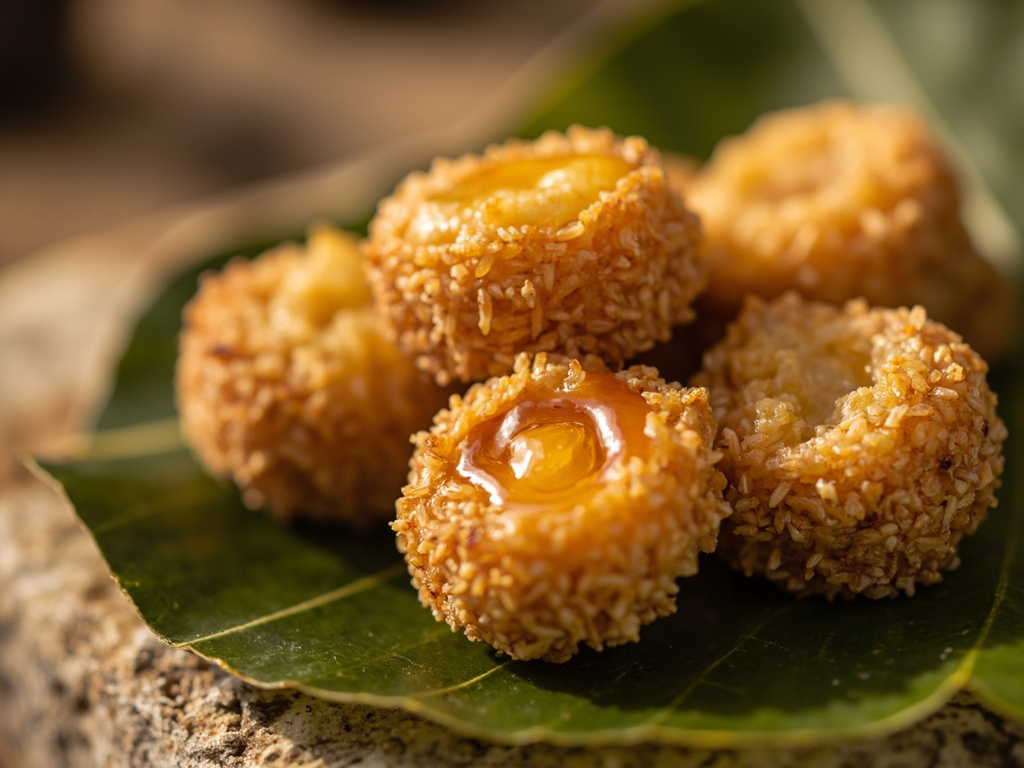
Melitoutta, honey and sesame cakes for the gods
Altar pelanos (sweet offering placed before the deities)
🍯· 40 min
View the recipe
 Drink
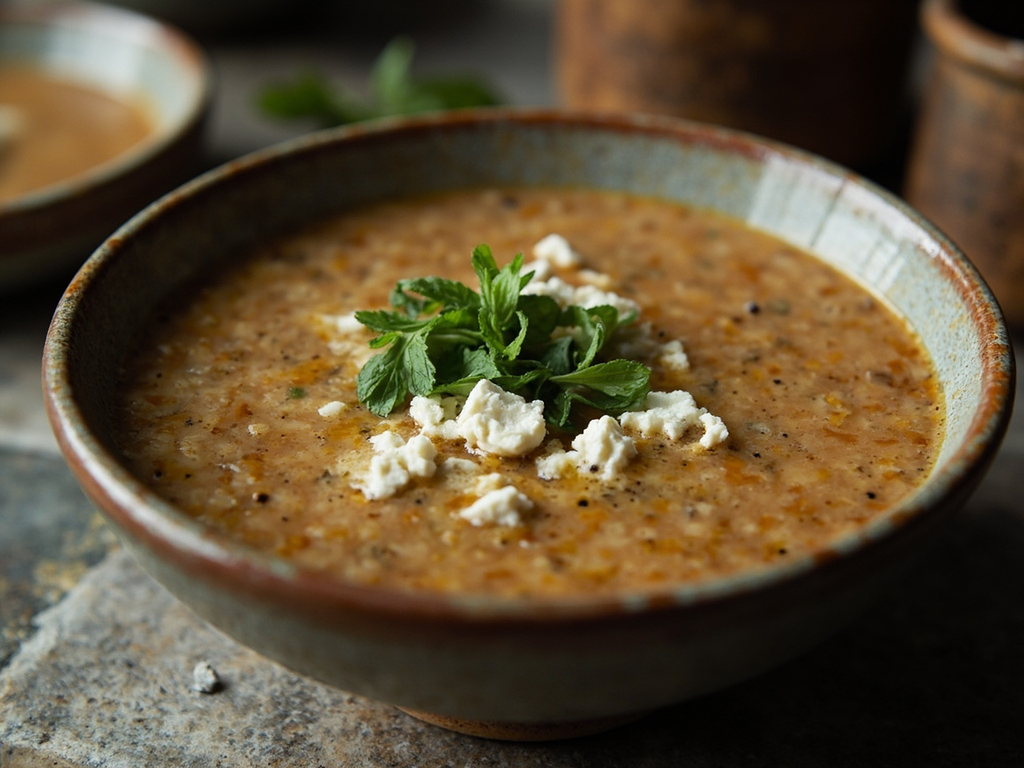
DrinkKykeon, the traveler's barley drink
Symposion and road drink (kykeon, mixed beverage)
🫙 🧂· 10 min
View the recipe
 Preserving
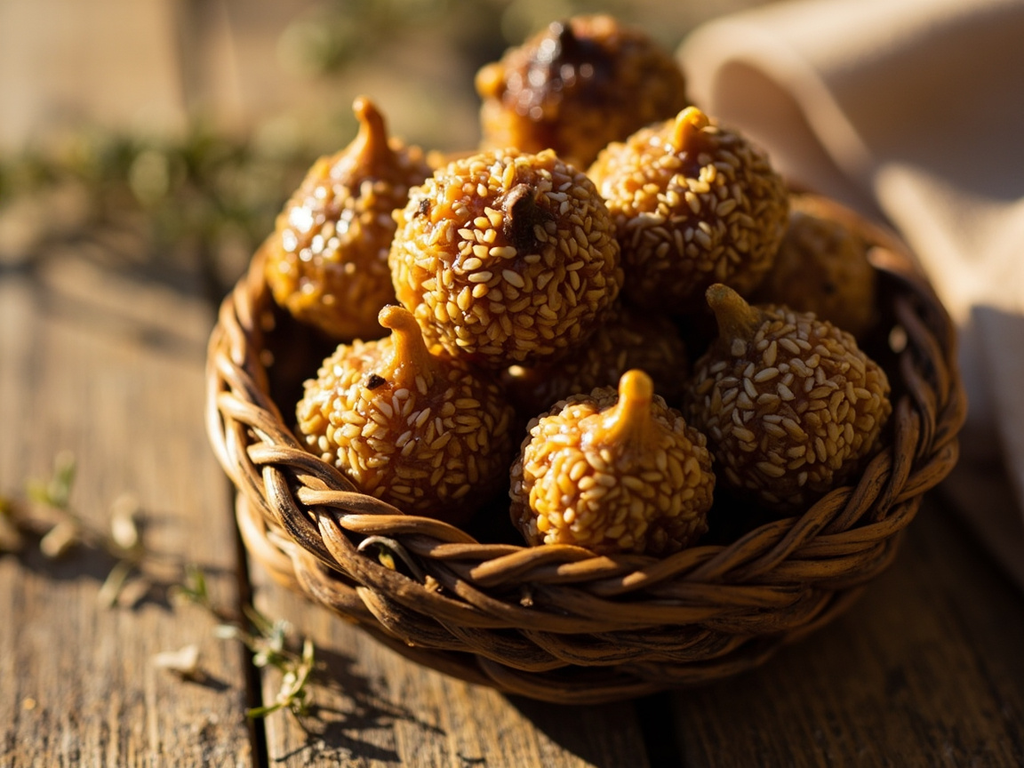
Ischades, dried figs with thyme and honey for the voyage
Travel provisions (dried tragemata, to take to sea)
🍯 🍄· 25 min
View the recipe