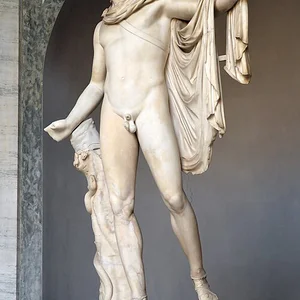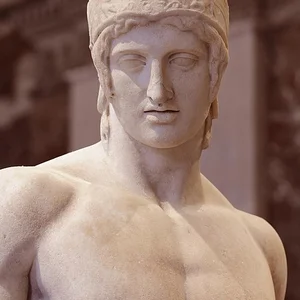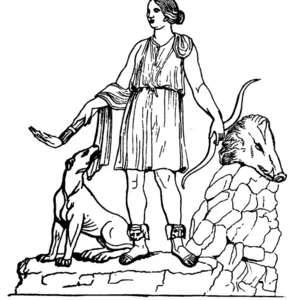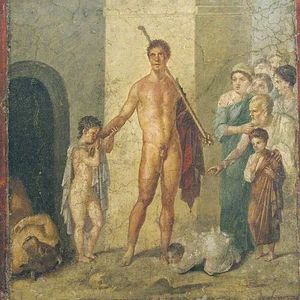

Legendary hero of Greek mythology and king of Athens. Theseus is best known for slaying the Minotaur, a half-man half-bull monster imprisoned in the Labyrinth of Crete. He embodies the civilizing hero and unifier of Attica.
Theseus
Theseus
8 min read
Frequently asked questions
Key Facts
- Slew the Minotaur in the Labyrinth of Crete with the help of Ariadne, who gave him a thread to find his way out
- Became king of Athens after proving his legitimacy through heroic deeds
- United the city-states of Attica under the authority of Athens, laying the foundation of Athenian power
- Fought the Amazons and took part in several legendary expeditions, including the voyage of the Argonauts
- Represents the archetype of the civilizing hero who battles chaos (the Minotaur) to bring order and justice
Works & Achievements
Theseus kills the Minotaur, a monster half-man and half-bull imprisoned in the Labyrinth of Crete, freeing Athens from the human tribute it was forced to pay to King Minos. This feat symbolizes the triumph of the civilizing hero over the forces of chaos and barbarism.
Theseus united the various communities of Attica under the authority of Athens, laying the foundations of Athenian democracy. This political achievement makes him the legendary unifier and founder of Athenian power.
Theseus established the synoikismos, a process of political and administrative unification of the various demes (townships) of Attica. This reform is presented as the legendary origin of the Athenian political system.
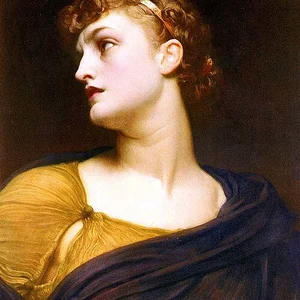
Theseus abducts Antiope, queen of the Amazons, and takes her as his wife, triggering an Amazon invasion and a legendary war. This adventure illustrates his warrior exploits and the encounters between Greece and the barbarian world.
According to legend, Theseus clears the Isthmus of Corinth by eliminating the bandits and tyrants who plagued it, most notably Sinis and Sciron. This civilizing action confirms him as the heroic protector of roads and order.
From the 7th–6th century BCE onward, Athens developed the cult of Theseus and his myth in order to strengthen Athenian national identity. His legendary heroism became a founding element of Athenian political ideology.
Anecdotes
Theseus is said to have sailed to Crete to fight the Minotaur, a half-man half-bull monster imprisoned in a labyrinth designed by the engineer Daedalus. According to legend, Princess Ariadne gave him a thread to help him find his way back through the maze after slaying the beast. This adventure symbolizes the triumph of the civilizing hero over the forces of chaos and savagery.
Theseus founded or consolidated a new political order in Athens by renouncing absolute power in favor of a more shared form of government with its citizens. This legendary act is interpreted by historians as the mythological reflection of the political transformations that led to Athenian democracy in the 5th and 4th centuries BCE.
Theseus is said to have unified the various communities of Attica into a single political entity centered on Athens, a process known as 'synoikismos.' This legend echoes a real historical event: the political unification of the region around Athens, though this union took place gradually over several centuries.
The hero is said to have established the Isthmian Games, or played a key role in organizing them, in honor of the god Poseidon. These Panhellenic games would have strengthened ties between Greek city-states, and in mythology they represent Athens' role as a unifying power in the ancient Greek world.
Primary Sources
Theseus, that generous-hearted king of Athens, welcomed the suppliants and declared: 'I will not allow these women, in their distress, to be treated with contempt. It is the duty of a free city to defend the oppressed.'
Theseus, son of Aegeus and Aethra, slew the Minotaur by sailing to Crete and, guided by Ariadne's thread, escaped safely from the Labyrinth. He became king of Athens and set about unifying the demes of Attica.
Theseus, that noble hero, ventured into the dark Labyrinth, armed with the thread Ariadne had given him. There he faced the Minotaur — that terrible fusion of man and beast — and defeated it through strength and courage.
Theseus, the Athenian counterpart of Romulus among the Romans, was the founder and unifier of Athens. He established democracy and civic order, transforming a collection of villages into a prosperous and powerful city.
Key Places
Capital of Attica where Theseus becomes king after unifying the cities of the region. It is the center of his political power and the heart of his legendary legacy.
Site of the Labyrinth where the Minotaur is imprisoned. Theseus enters it to slay the monster and free the young Athenians sent as tribute to King Minos.
City in the Peloponnese where Theseus is born and spends his childhood with his mother Aethra. It is the site of his first exploits before he sets out for Athens.
A crucial passage where Theseus confronts several monsters and bandits during his journey from Troezen to Athens, cementing his reputation as a hero.
Plain in Attica where Theseus defeats the fearsome Bull of Marathon, one of his fourteen labors before becoming king.
A symbolic site in Athens where Theseus, as a civilizing king, is associated with justice and the establishment of Athenian democratic institutions.
Typical Objects

A legendary weapon given to Theseus by the goddess Athena, symbolizing his legitimacy and divine protection. It represents the hero's courage and martial prowess.

A linen thread given to Theseus by the Cretan princess Ariadne so he could navigate the Labyrinth and find his way out after slaying the Minotaur. It is the key object of his victory and a symbol of strategic guidance.

A subterranean maze where the Minotaur was imprisoned, considered one of the greatest proofs of Theseus's courage and cunning. His journey through it is his most celebrated feat.

A symbol of Theseus's royal power and political legitimacy as king of Athens. It represents his status as unifier and founder of Athenian democracy.

Theseus's legendary vessel, used for his voyage to Crete and his seafaring adventures. It symbolizes his naval dominance and his role as liberator of the young Athenians.

A traditional weapon of the Greek hero, used by Theseus alongside his sword. It represents the raw strength and physical determination of the warrior when facing monstrous creatures.

The seven young men and seven young women that Athens was required to send each year as a sacrifice to the Minotaur. Theseus volunteers himself to save them, embodying his role as protector.
School Curriculum
Vocabulary & Tags
Key Vocabulary
Daily Life
Morning
As king of Athens, Theseus begins his day with religious rituals and offerings to the gods, particularly to Athena, protector of the city. He then convenes his council to discuss affairs of state and the defense of Attica. His mornings are devoted to administering the kingdom and making judicial decisions.
Afternoon
The afternoon is reserved for physical training and martial preparation: fencing, wrestling, and horse riding at the palaestra or gymnasium, for a king must remain an accomplished warrior. Theseus may also take part in hunts or expeditions to consolidate his territorial authority and his standing among his subjects.
Evening
In the evening, Theseus presides over banquets where he receives nobles and prominent citizens to strengthen political alliances. These symposia include music, poetic recitations, and philosophical debates. He then retires to his royal chambers, continuing to manage diplomatic or religious affairs.
Food
As a high-ranking noble in ancient Greece, Theseus eats bread, wine mixed with water, cheese, olives, and fish. Meat — particularly mutton and goat — is reserved for special occasions and religious sacrifices. Dried fruits and honey round out his diet, reflecting his elevated status.
Clothing
Theseus wears the chlamys, a military cloak fastened with a fibula, and a chiton (tunic). As a king and warrior, he dons a Phrygian or Corinthian helmet and bronze armor for official occasions. A neatly trimmed short beard and long hair, typical of his era, complete his royal appearance.
Housing
Theseus resides in the royal palace of Athens, modeled after Mycenaean palaces, featuring several inner courtyards, private apartments, and reception halls. The main building, the megaron, serves as the throne room and seat of governance. The palace symbolizes his power and houses his court, servants, and administrative records.
Historical Timeline
Period Vocabulary
Visual Style
Un style inspiré de la céramique grecque antique et des peintures de vases, combinant l'élégance classique des figures noires et rouges avec une atmosphère épique et héroïque. L'éclairage dramatique et les couleurs chaudes créent une ambiance mythologique intemporelle.
Sound Ambience
Une ambiance sonore épique mêlant les sons sinistres du Labyrinthe de Crète (roars du Minotaure, pas dans les couloirs de pierre) avec la musique héroïque grecque antique (lyre, aulos) et les bruits de tension croissante, culminant en triomphe victorieux à la mort du monstre.
Liens externes & ressources
Références
Œuvres
Meurtre du Minotaure
mythologie (période légendaire)
Unification de l'Attique
mythologie (période légendaire)
Fondation du Synoecisme
mythologie (période légendaire)
Enlèvement d'Antiope
mythologie (période légendaire)
Établissement de l'Isthme de Corinthe
mythologie (période légendaire)
Création du culte de Thésée
VIIe-VIe siècles av. J.-C. (historiquement)