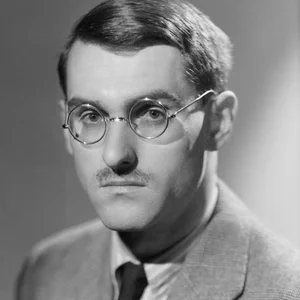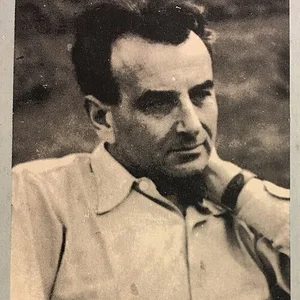

French writer and illustrator (1902-1991), Vercors is the author of the Resistance novel "The Silence of the Sea" (1942), published clandestinely during the Occupation. Co-founder of Les Éditions de Minuit, he fought against Nazism through the power of writing.
Vercors(1902 — 1991)
Vercors
France
8 min read
Frequently asked questions
Key Facts
- 1942: Clandestine publication of "The Silence of the Sea" under the pen name Vercors
- 1941: Co-founding of Les Éditions de Minuit with fellow Resistance members to publish texts opposing the Occupation
- 1952: Publication of "The Walking Shadow" (La Marche à l'étoile), a novel about the persecution of Jews
- Use of parable and allegory to circumvent Nazi censorship
- Post-war: commitment to peace and criticism of the Cold War
Works & Achievements
A Resistance novel published clandestinely during the Occupation, telling the story of the silent relationship between a French family and a German officer. This landmark work became a symbol of intellectual and moral resistance against Nazism.
A clandestine publishing house founded by Vercors during the Occupation to publish works of the Resistance. It represented an act of cultural defiance and became a hub of French Resistance literature.
A novella published clandestinely denouncing the antisemitic persecutions carried out under the Occupation. The work illustrates Vercors's ethical commitment against war crimes and dehumanization.
A science fiction novel exploring the boundaries between the human and the animal, questioning what it means to be human. This later work reveals the author's philosophical evolution beyond the Resistance.
A collection of essays and reflections in which Vercors expresses his political and moral commitment in the face of injustice. The book bears witness to his role as an engaged intellectual in the debates of the postwar years.
A collection of poems and literary texts celebrating the Resistance and the hope of Liberation. The volume brings together works written during the clandestine years and represents the poetic voice of the French Resistance.
Anecdotes
Vercors, whose real name was Jean Bruller, published "Le Silence de la mer" (The Silence of the Sea) clandestinely in 1942 during the Nazi Occupation. This short novel, printed in secret and passed hand to hand, tells the story of a French family forced to host a German officer in their home. It quickly became one of the defining symbols of the French intellectual Resistance and brought its author to the attention of readers throughout occupied France.
In 1941, Vercors co-founded Les Éditions de Minuit, an underground publishing house that printed texts by French resistance writers. Under the direction of Vercors and Pierre de Lescure, this small clandestine press became a hub of Resistance literature, publishing poems, essays, and novels until the Liberation. It was an act of extraordinary courage — discovery would have meant arrest and almost certain death.
After the Liberation, Vercors revealed his true identity in 1945, having kept his pen name secret throughout the war. The pseudonym "Vercors" was inspired by the Vercors Massif in the Isère department, a mountainous region that symbolized freedom and resistance. This revelation turned Vercors into an emblematic figure of literary commitment against fascism.
"Le Silence de la mer" first circulated as handwritten and typed copies before being printed in limited numbers. The novel made such an impression on underground readers that some Nazi officers reportedly read and admired it, initially unaware that it was a subtle critique of the German occupation. This quiet power of persuasion remains remarkable to this day.
Vercors continued writing and engaging politically long after the war, publishing "La Bataille du silence" (The Battle of Silence) in 1967 to tell the story of Les Éditions de Minuit. At the age of 89, shortly before his death in 1991, he remained an important moral voice in the fight against forgetting and for freedom of expression.
Primary Sources
A German officer was billeted at our home. He was a man of average height, neither fat nor thin, with a pale complexion, light blue eyes, and ash-blond hair parted to one side. His features were regular, characterless, unremarkable.
We had to answer lies with truth, violence with words. That is why I wrote this novel, which had to circulate underground, in the darkness of the Occupation.
The writer must be the conscience of the people. In these dark hours, our duty is to keep free thought alive by every means the Occupation cannot take from us.
The clandestine literature of the Éditions de Minuit represents the weapon of silence: every book published underground is an act of rebellion.
Key Places
The capital city where Vercors lived and worked for most of his life. It was in Paris that he founded Les Éditions de Minuit in 1941, a clandestine publishing house that became a symbol of French intellectual Resistance.
The birthplace of Vercors (Jean Bruller) in 1902. It remains an important connection to his Dauphiné roots and the region of his youth.
The mountainous region that inspired the writer's pen name and became a symbol of the French Resistance. The plateau was a major center of clandestine struggle during the Occupation.
The institution where Vercors worked as a scientific illustrator before World War II, combining his artistic talents with his broader intellectual interests.
The area where Vercors periodically took refuge during the Occupation to write in secret. Several temporary hideouts linked to his Resistance activities were located there.
Typical Objects
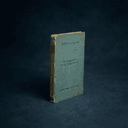
Vercors's founding novel, published in 1942 by Les Éditions de Minuit during the Occupation. A major symbol of French intellectual resistance, it tells the story of the silent relationship between a French family and a German officer billeted in their home.
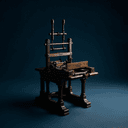
The equipment used by Les Éditions de Minuit to secretly print works during the Occupation. This tool represents resistance through clandestine publishing and the spread of knowledge in defiance of Nazi censorship.
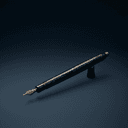
Essential tools for Vercors as both illustrator and writer. The pen symbolizes his dual talent as a draughtsman and author — two disciplines he combined throughout his literary and artistic career.
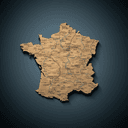
A geographic symbol of Vercors's era, showing the division between the occupied zone and the free zone. It captures the climate of censorship and danger in which the writer had to operate during his resistance activities.
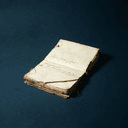
A representation of the writer's everyday working tool. These notebooks held the earliest versions of his works, written in secrecy and hiding during the years of the Occupation.

A symbol of the French national identity that Vercors defended through his writing. The flag represents the author's patriotic commitment and his struggle for freedom of expression against the German occupation.
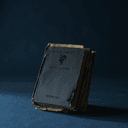
Books secretly published during the Occupation under Vercors's guidance. These works bear witness to resistance through publishing and to the determination to keep French cultural life alive in spite of censorship.
School Curriculum
Vocabulary & Tags
Key Vocabulary
Daily Life
Morning
Vercors rises early, often before 7 a.m., in his Parisian apartment in the Latin Quarter. He has a frugal breakfast of chicory coffee and bread — rationed staples during the Occupation. He devotes his first hours to reading and reflection before sitting down to write.
Afternoon
Afternoons are generally spent writing manuscripts and attending clandestine meetings with members of Les Éditions de Minuit. Vercors moves carefully through Paris, avoiding German patrols, and takes part in discreet gatherings to organize the underground publication of Resistance texts.
Evening
Evenings are devoted to reading, revising texts, or attending Resistance network meetings in safe apartments. Vercors dines simply, often with family or fellow fighters, and goes to bed relatively early to conserve electricity and observe the curfew.
Food
Vercors eats austerely, constrained by Occupation ration books: black bread, seasonal vegetables, ersatz coffee, and very little meat or dairy. Meals are plain — often soups, pasta, and whatever fruit or vegetables can be obtained — sometimes through the black market, which Parisian intellectuals accessed through their networks.
Clothing
Vercors dresses in classic, understated clothes: a worn dark suit, white shirt, and hat or coat depending on the season. His appearance is that of a bourgeois Parisian intellectual, deliberately drab and unremarkable so as not to draw the attention of the German authorities.
Housing
Vercors lives in a Parisian apartment in the Latin Quarter, a neighborhood with a long tradition of intellectual and resistant spirit. His modest lodgings reflect urban life of the era — little modern comfort, limited heating in winter, and strict electricity rationing. It is in these rooms that the clandestine meetings essential to underground publishing take place.
Historical Timeline
Period Vocabulary
Visual Style
Un style graphique austère et clandestin, mêlant gravures sur bois et dessins à l'encre, inspiré par les publications souterraines de la Résistance. L'atmosphère sombre et contrastée évoque le courage intellectuel face à l'oppression, avec des symboles littéraires discrets reflétant l'engagement éthique de Vercors.
Sound Ambience
Une ambiance sonore grave et clandestine de la France occupée, mêlant les bruits de l'imprimerie clandestine des Éditions de Minuit aux tensions de l'époque : cliquetis des presses, papier froissé, pas de soldats au loin, et le silence lourd de la résistance par l'écrit.
Liens externes & ressources
Références
Œuvres
Le Silence de la mer
1942
Les Éditions de Minuit
1941
La Marche à l'étoile
1943
Zoo ou l'Assomoir du Singe
1964
Les Armes de la nuit
1946