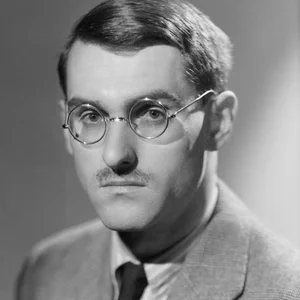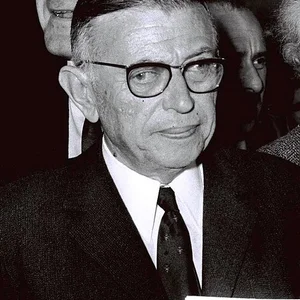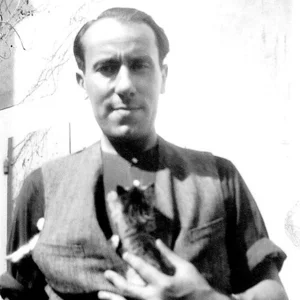

A major French poet of the 20th century, René Char is known for his modern poetry and his involvement in the French Resistance during World War II. His works combine poetic innovation with political commitment, exploring themes of freedom and revolt.
René Char(1907 — 1988)
René Char
France
8 min read
Frequently asked questions
Famous Quotes
« Poetry is living»
« I am in love with that time when men did not yet know how to do evil methodically»
Key Facts
- 1907 - Born in L'Isle-sur-la-Sorgue (Provence)
- 1930s - Joined the Surrealist and avant-garde poetry movements
- 1940-1944 - Active involvement in the French Resistance under the pseudonym 'Captain Alexandre'
- 1948 - Publication of 'Fureur et Mystère', a major collection of his poetic work
- 1988 - Died in L'Isle-sur-la-Sorgue
Works & Achievements
A collective surrealist work written with André Breton and Paul Éluard over just a few days. It marked Char's explosive entry into French poetic modernism.
A collection that established Char's poetic independence from Surrealism. It would later inspire composer Pierre Boulez, who adapted it into a landmark musical work in 1954.
Notebooks kept during the French Resistance, weaving together poetic fragments, moral reflections, and accounts of life underground. An exceptional literary and historical document on occupied France.
René Char's masterpiece, bringing together several collections including 'Seuls demeurent' and 'Les Feuillets d'Hypnos'. Considered one of the pinnacles of 20th-century French poetry.
A luminous, lyrical collection celebrating the light of Provence and the hope that followed the war. Char develops his vision of a poetry rooted in the sensory world and oriented toward the future.
A collection that distills Char's poetics: a fragmented, dense voice that resists any fixed system. The title itself illustrates his conception of poetry as islands of meaning connected by silence.
One of Char's last major collections, in which his meditation on death, nature, and time deepens. A testament to the continuity and depth of his poetic commitment to the very end.
Anecdotes
During World War II, René Char took the alias 'Captain Alexandre' to lead a resistance network in the Basses-Alpes. Already a celebrated poet, he coordinated Allied weapons drops and sheltered fellow resistants, living under permanent threat and secrecy. This experience profoundly shaped his work, most notably the celebrated 'Leaves of Hypnos'.
In 1930, René Char published 'Slow Down Work' ('Ralentir travaux') in collaboration with André Breton and Paul Éluard, a collective Surrealist work written in just a few days during a shared retreat. Yet only a few years later, he distanced himself from the Surrealist movement, rejecting all labels and claiming a poetry that was free and entirely his own.
In 1966, René Char refused the Grand Prix national de la poésie, believing that authentic poetry could not be rewarded by official institutions. This gesture, fully consistent with his ethic of absolute freedom, caused a sensation in French literary circles and cemented his reputation as a man of uncompromising integrity.
Char cultivated a deep intellectual friendship with German philosopher Martin Heidegger, whom he invited to Le Thor, in Provence, for philosophical seminars in 1966 and 1968. These encounters between the poet and the philosopher — centered on poetry and thought — became legendary in the history of twentieth-century ideas.
René Char was born and died bound to L'Isle-sur-la-Sorgue, a Provençal village whose river, the Sorgue, runs through both his work and his memory. He always refused to leave his native land for good, convinced that poetry drew its strength from rootedness — in the landscape, the light, and the stones of Provence.
Primary Sources
"Lucidity is the wound closest to the sun." These notebooks written during the Resistance bear witness to the clandestine life of the maquis and Char's poetic thought in wartime.
"Press your luck, hold tight to your happiness, and move toward your risk. Seeing you do it, they will grow accustomed." A major collection gathering several poetic cycles, considered René Char's masterpiece.
"A poem is always married to someone." Char develops here his conception of poetry as fragmented speech, straining toward the essential, refusing any closed system.
Char and Camus maintained an intense correspondence on freedom, revolt, and the human condition — two friends who shared the conviction that resistance to oppression is a moral and artistic imperative.
"We are of the morning. Men whom the night has not conquered." A lyrical collection celebrating the Provençal light and the hope rediscovered after the dark years of the war.
Key Places
René Char's birthplace, a town cut through by the lively waters of the Sorgue river. Char was born here, lived here, and is buried here; this Provençal landscape runs through his entire poetic work.
A Provençal village where Char organized the famous philosophical seminars with Martin Heidegger in 1966 and 1968, bringing together poets and thinkers around the question of poetry and truth.
The village where Char established his Resistance headquarters under the pseudonym 'Capitaine Alexandre'. It was here that he lived the years of clandestine life that gave rise to the 'Feuillets d'Hypnos'.
From 1929 onwards, Char moved in Parisian literary and artistic circles, rubbing shoulders with Breton, Éluard, Camus, and Picasso. He died in Paris in February 1988, never having turned his back on his Provençal roots.
In the 1970s, Char publicly campaigned against the installation of nuclear missiles on this Provençal plateau, extending his lifelong fight for freedom and the preservation of the land.
Typical Objects

During his years in the maquis, Char jotted down thoughts, poetic fragments, and observations in small hidden notebooks. These notes became 'Leaves of Hypnos', a unique testament to poetry in wartime.

As a network leader, Char used clandestine radio sets to coordinate Allied parachute drops and communicate with London. These devices symbolize his dual role as poet and combatant.

Char typed his poems on a typewriter, the essential literary tool of his generation. The object embodies the painstaking crafting of each word, every line carefully weighed.

The Sorgue river, which flows through L'Isle-sur-la-Sorgue, and its white pebbles recur constantly in Char's poetry. These smooth stones symbolize his rootedness in the Provençal landscape and the enduring resistance of the mineral world.

Char was an avid reader of Heraclitus, Nietzsche, and later Heidegger. These philosophical works nourished his thinking on language, truth, and being — a depth of reflection visible in the density of his poems.

Char maintained a long friendship and artistic collaboration with the painter Georges Braque, owning several of his works. This companionship with the visual arts shaped his conception of poetic form.
School Curriculum
Vocabulary & Tags
Key Vocabulary
Tags
Mouvement
Concept
Daily Life
Morning
René Char rose early, drawn to the morning light he celebrated in 'Les Matinaux'. He would walk the banks of the Sorgue or roam the Provençal garrigue, observing nature with the eye of a poet attuned to the world's signs. It was often in the morning hours that his first poetic intuitions took shape.
Afternoon
Afternoons were devoted to writing, sitting at his desk with views of the Luberon or Vaucluse landscapes. Char worked slowly, weighing each word with exacting care, filling notebooks before typing up final versions. He also received visits from writer friends, painters, and philosophers.
Evening
Evenings often brought friends together: Camus, Braque, or intellectuals passing through Provence. Conversations would stretch on over local wine, poetry, and politics. Char also read widely, particularly the Greek pre-Socratics — Heraclitus above all — whose fragmentary style was a constant lesson in how to write.
Food
Char ate in the Provençal tradition: olive oil, garden vegetables, regional cheeses, Luberon wine. He favored simple, terroir-rooted cooking, in keeping with his philosophy of authenticity and connection to the nourishing land.
Clothing
Char dressed simply, with no interest in ostentatious elegance: canvas trousers, an open shirt, a light jacket. During the Resistance, he wore the discreet, practical clothes of a peasant or mountain man to avoid drawing attention. His appearance was understated — that of a man from the Midi.
Housing
Char lived mainly in traditional Provençal houses, with thick walls and shutters closed against the heat. In L'Isle-sur-la-Sorgue, the family home was his anchor. He favored plain spaces, filled with books and a few works of art given to him by painter friends such as Braque or De Staël.
Historical Timeline
Period Vocabulary
Visual Style
Une esthétique provençale intense : minéralité, lumière crue du Midi, contrastes forts entre l'ombre et la lumière méditerranéenne, évoquant la résistance et l'ancrage à la terre.
Sound Ambience
Un univers sonore provençal : le murmure de la Sorgue, les cigales, le vent dans les pins et, pendant les années de Résistance, le silence tendu des nuits clandestines.
Liens externes & ressources
Références
Œuvres
Ralentir travaux
1930
Le Marteau sans maître
1934
Feuillets d'Hypnos
1946
Fureur et Mystère
1948
Les Matinaux
1950
La Parole en archipel
1962
Aromates chasseurs
1975