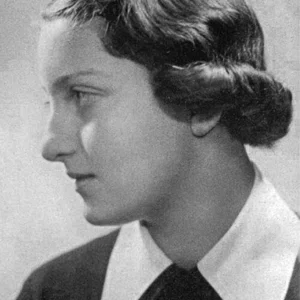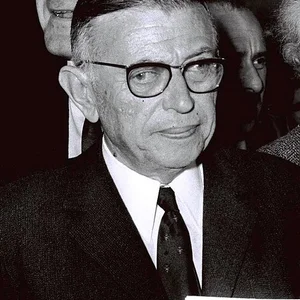

French philosopher, writer, and playwright (1905–1980), founder of existentialism. He explored human freedom, responsibility, and commitment through his major philosophical and literary works.
Jean-Paul Sartre(1905 — 1980)
Jean-Paul Sartre
France
8 min read
Frequently asked questions
Famous Quotes
« Existence precedes essence»
« We are our choices»
« Man is condemned to be free»
« Consciousness is a nothingness»
Key Facts
- 1943: Publication of 'Being and Nothingness', a landmark treatise of existentialist philosophy
- 1944: Premiere of the play 'No Exit', which became a classic of French theatre
- 1945: Lecture 'Existentialism Is a Humanism', which popularized his philosophy
- 1964: Refusal of the Nobel Prize in Literature for political reasons
- 1945–1980: Constant political engagement, notably regarding communism and anti-colonialism
Works & Achievements
Sartre's first novel, it follows Antoine Roquentin as he discovers the absurdity of existence through 'nausea', a feeling of overwhelming reality. A founding text of existentialist sensibility.
A play reworking the myth of Orestes, performed during the Occupation. Sartre develops the themes of freedom and responsibility in the face of oppression, with a veiled message of resistance.
A major philosophical work laying the foundations of Sartrean existentialism: the absolute freedom of consciousness, bad faith, and the distinction between being-in-itself and being-for-itself.
A short and striking play whose line 'Hell is other people' has remained famous. It illustrates how the gaze and judgements of others can imprison one's existence.
A published lecture that popularises existentialist philosophy for a general audience. Sartre asserts that man is responsible for what he is, with no excuses and no determinism.
A novelistic trilogy (The Age of Reason, The Reprieve, Troubled Sleep) exploring freedom and commitment through characters confronted with war and their existential choices.
An autobiography of Sartre's childhood, which that same year earned him the Nobel Prize he declined. A text of ironic lucidity about how he constructed his vocation as a writer.
Anecdotes
In 1964, Sartre refused the Nobel Prize in Literature, becoming the first writer to voluntarily decline the award. He explained that a writer must refuse to be institutionalized in order to remain free in his commitments, adding that he did not want to be turned into an 'institution'.
From 1929 onwards, Sartre and Simone de Beauvoir maintained a romantic 'pact' based on transparency and freedom: they allowed each other 'contingent loves' while keeping their relationship as their 'necessary love'. This unconventional union caused a scandal but became a symbol of emotional freedom in the 20th century.
During the German Occupation, Sartre wrote and staged his play The Flies in 1943, whose message about freedom and resistance to oppression was understood by Parisian audiences despite Nazi censorship. The Germans, failing to grasp the subtext, allowed the play to remain on stage.
In May 1968, Sartre spoke before thousands of striking students at the Sorbonne, openly supporting the movement. At over 60 years old, he also sold the Maoist newspaper La Cause du Peuple in the street to defy authorities who feared arresting him.
Sartre suffered visual hallucinations after a mescaline experiment in 1935, arranged by his friend Daniel Lagache. He saw crabs and octopuses following him everywhere for months — an experience that directly influenced his novel Nausea and his reflection on existential anguish.
Primary Sources
Existence precedes essence. This means that man first exists, encounters himself, surges up in the world, and defines himself afterwards. Man is nothing other than what he makes of himself.
Man is condemned to be free. Condemned, because he did not create himself, yet nonetheless free, because once cast into the world, he is responsible for everything he does.
The writer must therefore refuse to let himself be turned into an institution, even if this occurs under the most honorable circumstances, as is the case here.
I have no Superego. I had a very gentle grandfather who lacked the authority needed to implant one in me. I was left to do as I pleased, and I have no will at all.
The writer is situated in his time: every word has repercussions. Every silence too. I hold Flaubert and the Goncourts responsible for the repression that followed the Commune because they did not write a single line to prevent it.
Key Places
Sartre made the Café de Flore, on Boulevard Saint-Germain, his office and intellectual salon during the Occupation and the post-war years. It was there that he wrote a large part of his works and met the leading intellectuals of his time.
Sartre studied there from 1924 to 1929, forged his formative intellectual friendships, and prepared for the agrégation. This prestigious grande école on the Rue d'Ulm remains the site of his philosophical training.
Sartre lived for many years in the Saint-Germain-des-Prés neighbourhood, particularly on Rue Bonaparte, at the heart of post-war Parisian intellectual and artistic ferment.
Sartre taught philosophy at the lycée in Le Havre from 1931 to 1936, a provincial period often described as oppressive, which directly fed the atmosphere and themes of Nausea.
Sartre is buried alongside Simone de Beauvoir at Montparnasse Cemetery. His funeral in April 1980 drew an enormous crowd, a testament to his impact on French society.
Typical Objects
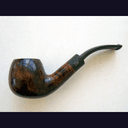
Sartre was an inveterate pipe smoker, visible in almost every photograph of him. The pipe was part of his intellectual image and accompanied his long hours of work at the café.
📷 CC BY-SA 3.0 · Wikimedia Commons ↗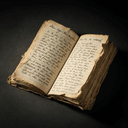
Sartre wrote by hand in school exercise books, thousands of pages per year by his own account. His War Diaries (Carnets de la drôle de guerre), discovered posthumously, are the most famous testament to this habit.

Sartre worked at the Café de Flore or Les Deux Magots, consuming coffee and alcohol in abundance. He himself acknowledged abusing amphetamines and stimulants to sustain his intense working pace.

Sartre suffered from severe myopia and a pronounced squint from childhood, which earned him the nickname 'le Borgne' (the One-Eyed) at the École Normale. His distinctive glasses became an inseparable part of his public image.
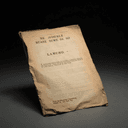
The journal founded by Sartre in 1945 was his primary tool for intellectual and political engagement for decades. Each issue bore his editorial mark and constituted a stance in the debates of his time.

From the 1940s onwards, Sartre used a typewriter to produce clean copies of his manuscripts. His secretary and companion Arlette Elkaïm helped him type up his texts, especially as his eyesight declined severely towards the end of his life.
📷 Domaine public · Wikimedia Commons ↗School Curriculum
Vocabulary & Tags
Key Vocabulary
Tags
Mouvement
Concept
Daily Life
Morning
Sartre woke up relatively late, around 9 a.m., and immediately began working at his desk or in his room before having a light breakfast. He drank strong coffee from early morning to sharpen his focus and would start drafting his philosophical or literary texts.
Afternoon
In the afternoon, Sartre would often head to the Café de Flore or the Deux Magots to read, write, or meet with friends and interlocutors. He gave interviews, met with publishers, and took part in the lively intellectual discussions of the Latin Quarter, often accompanied by Simone de Beauvoir.
Evening
Sartre's evenings were frequently social and cultural: theatre premieres, dinners with writer and philosopher friends, jazz concerts in the cellars of Saint-Germain. He sometimes worked late into the night, aided by amphetamines (Corydrane) and alcohol — a habit that took a lasting toll on his health.
Food
Sartre had a simple and rather careless diet, favouring meals at restaurants or cafés over home cooking. He paid little attention to refined gastronomy but heavily relied on stimulants: coffee, tobacco, alcohol, and amphetamine-based medication to sustain his intense work pace.
Clothing
Sartre dressed in a bourgeois but unstudied manner: dark suits or tweed, plain shirts, sometimes a raincoat. He paid little attention to his appearance, reflecting his conviction that outward looks mattered far less than intellectual commitment.
Housing
Sartre lived for many years in hotels or modest apartments in the Latin Quarter, refusing on principle to settle into a stable, bourgeois home. He resided notably on rue Bonaparte and then on boulevard Raspail, always within the orbit of Saint-Germain-des-Prés, as close as possible to Parisian intellectual life.
Historical Timeline
Period Vocabulary
Visual Style
Esthétique photographique noir et blanc du Paris existentialiste des années 1940-1960, avec l'atmosphère chaleureuse et enfumée des cafés de Saint-Germain-des-Prés.
Sound Ambience
L'ambiance sonore des cafés parisiens de Saint-Germain-des-Prés dans l'après-guerre, mêlant conversations intellectuelles, jazz feutré et bruits de la rue sous la pluie.
Liens externes & ressources
Références
Œuvres
La Nausée
1938
Les Mouches
1943
L'Être et le Néant
1943
Huis Clos
1944
L'Existentialisme est un humanisme
1945
Les Chemins de la liberté (trilogie)
1945-1949
Les Mots
1964