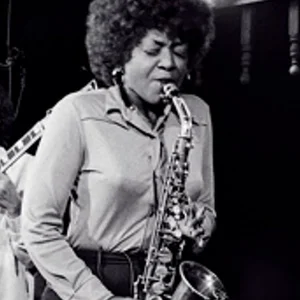

Vi Redd (1928-2022) was an American jazz alto saxophonist and singer, one of the few recognized women instrumentalists on the postwar jazz scene. An heir to Charlie Parker's bebop style, she pursued a dual career as a musician and a teacher.
Vi Redd(1928 — 2022)
Vi Redd
États-Unis
6 min read
Frequently asked questions
Key Facts
- Born on September 20, 1928, in Los Angeles into a family of musicians
- Recorded her first album under her own name, “Bird Call,” in 1962
- Released the album “Lady Soul” in 1963
- Performed with major jazz figures such as Count Basie, Dizzy Gillespie, and Earl Hines
- Having died in 2022, she remains a rare role model as a female saxophonist in a male-dominated field
Works & Achievements
Her first album under her own name, a tribute to Charlie “Bird” Parker, revealing her talent as an alto saxophonist in the bebop style.
A second album highlighting her dual identity as both a jazz saxophonist and singer.
Hired by one of the most prestigious big bands in jazz, she traveled and performed alongside renowned musicians.
She shared the stage with major figures of jazz, confirming her place among recognized soloists.
Her concerts abroad attest to her international career, a rarity for a woman instrumentalist of the era.
Alongside her music, she devoted herself to education in public schools, passing her knowledge on to young people.
Anecdotes
Vi Redd grew up in a family of musicians: her father, Alton Redd, was a New Orleans-style jazz drummer. It was her great-aunt, however, Alma Hightower, who taught her music by leading a youth band in their Los Angeles neighborhood.
At a time when women were expected mainly to sing, Vi Redd made her mark as an alto saxophonist, an instrument almost exclusively played by men in jazz. Critics compared her to Charlie Parker, nicknamed “Bird,” such was her command of the fast, virtuosic language of bebop.
In 1962, she recorded her first album under her own name, titled “Bird Call”: a direct nod to Charlie “Bird” Parker, her idol. That same year, she went on tour with the famous Count Basie orchestra.
Vi Redd led two lives at once: a musician by night on stage and in the studio, she was also a teacher by day in the schools of Los Angeles, where she worked in particular with struggling students.
Recognized by her peers, she shared the stage with jazz giants such as Dizzy Gillespie and the pianist Earl Hines, and performed as far afield as Europe and Japan, proving that a woman instrumentalist could establish herself in this world.
Primary Sources
The first record made by Vi Redd under her own name, whose title pays tribute to Charlie “Bird” Parker, the guiding figure of bebop whose legacy she claimed on the alto saxophone.
The second album released under the name Vi Redd, showcasing her dual identity as a saxophone player and a singer.
Leonard Feather, one of the great critics of American jazz, championed and promoted Vi Redd's career, highlighting how rare it was for a woman to be recognized as an instrumental soloist at that time.
Key Places
Vi Redd's birthplace, where she learned music, lived, and taught in the public schools.
The heart of Los Angeles's African American musical life, where jazz clubs flourished during Vi Redd's youth.
Home of the famous Monterey Jazz Festival, where Vi Redd performed among the great names of jazz.
A stop on her European tours, which brought her playing to audiences beyond the United States.
Vi Redd performed in Japan, a sign of the international recognition of her talent as an instrumentalist.
Typical Objects

Vi Redd's instrument of choice, on which she unfurled the fast-paced bebop language inherited from Charlie Parker.

A small strip of cane fixed to the mouthpiece that makes the air vibrate; a good reed was essential to the player's sound.

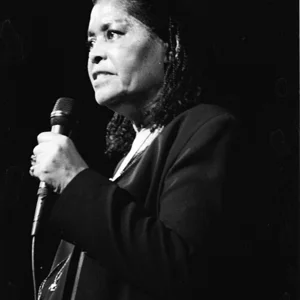
Vi Redd was not only a saxophonist: she sang as well, and the microphone accompanied her vocal performances on stage.

Her albums “Bird Call” (1962) and “Lady Soul” (1963) were pressed onto these vinyl records that spread her music.

Sheet music and chord charts serving as the basis for the “standards” that musicians improvised on together.

A rigid case protecting the instrument during the many touring trips, from Los Angeles all the way to Japan.
School Curriculum
Vocabulary & Tags
Key Vocabulary
Tags
Daily Life
Morning
When she was teaching, Vi Redd started her day early to get to the school where she looked after students, some of whom struggled. Her mornings were devoted to educational work, far from the bustle of the jazz clubs.
Afternoon
Her afternoons might be set aside for rehearsals, practicing her instrument, and preparing pieces. A jazz musician had to keep their technique sharp through hours of daily practice.
Evening
In the evening, life shifted into the world of clubs and concerts: taking the stage, group improvisations, and long nights of music that sometimes stretched late into the night.
Food
Like many touring musicians, her meals depended on the concert schedule: quick bites between two performances, sometimes eaten late at night after the show. The African American cuisine of the southern United States was part of her heritage.
Clothing
On stage, female jazz musicians took care with their appearance, wearing elegant dresses or formal outfits. During the day, her teacher's attire was more understated and suited to work at the school.
Housing
Vi Redd lived in Los Angeles, a sprawling city in California. Her touring career, however, regularly had her staying in hotels, both in the United States and abroad.