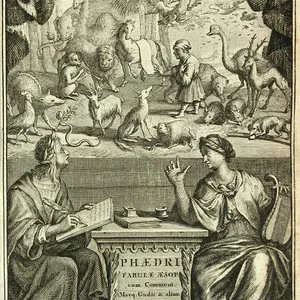

Virgil (70–19 BC) is the greatest poet of ancient Rome. Author of the Aeneid, the founding epic of Latin literature, he also composed the Eclogues and the Georgics. His work has profoundly influenced Western literature.
Virgil(69 av. J.-C. — 18 av. J.-C.)
Virgil
Rome antique
7 min read
Frequently asked questions
Famous Quotes
« Timeo Danaos et dona ferentes»
« Arma virumque cano»
« Magnum nomen Aeneae»
Key Facts
- Born in 70 BC in Mantua, in Cisalpine Gaul
- Composition of the Eclogues (c. 39–38 BC), ten pastoral poems
- Publication of the Georgics (c. 29 BC), a didactic poem on farming and rural life
- Writing of the Aeneid (29–19 BC), an epic in 12 books recounting the adventures of Aeneas
- Death in 19 BC at Brindisi; the Aeneid was published posthumously on the orders of Augustus
Works & Achievements
An epic poem in twelve books recounting the adventures of Aeneas after the fall of Troy and the legendary founding of Rome. It is Virgil's masterwork and one of the most important texts in Latin literature, written to glorify Augustus and the Roman Empire.
A collection of ten eclogues (pastoral poems) depicting shepherds in an idyllic setting. This work established the pastoral genre and influenced European pastoral poetry for centuries.
A didactic poem in four books celebrating agriculture, animal husbandry, and rural life in Italy. A rich and complex work that blends practical instruction with poetic beauty, dedicated to Maecenas.
A short minor epic attributed to Virgil telling the tale of a mosquito. Though its authenticity is debated, the work points to the breadth of Virgil's poetic talents.
A short didactic poem describing the preparation of a fresh herb cheese (moretum). Often attributed to Virgil, this piece reflects his interest in the details of everyday rural life.
After Virgil's death, the Aeneid was completed and published according to his wishes by his friends Varius and Plotius Tucca. This posthumous edition preserved the unfinished work for posterity.
Anecdotes
Virgil was so shy that he refused to appear in public. According to ancient sources, he reportedly fled Rome on several occasions to escape fame. Despite his reluctance to engage in public life, Emperor Augustus himself admired his work and encouraged him to continue the Aeneid.
Virgil worked on the Aeneid for twelve years without ever considering it finished. On his deathbed in 19 BC, he allegedly asked for the manuscript to be burned, deeming it too imperfect. It was Augustus himself who ordered the preservation and publication of this masterwork.
Virgil's Eclogues, written during the Roman civil wars, are pastoral poems featuring shepherds. These poems earned him great popularity upon publication, offering readers a poetic escape from the political turmoil of the time.
Virgil lost family lands during the confiscations that followed the Roman civil wars. According to tradition, it was Octavian (the future Augustus) who helped have them restored to him — an act that may have influenced Virgil's decision to feature Augustus and his family in the Aeneid.
The Aeneid tells the story of Aeneas's journey from Troy to Italy, establishing a mythological link between Troy and Rome, and between Aeneas and Augustus. This epic was composed to glorify Rome and legitimize Augustus's rule, showing how Rome's destiny had been written since antiquity.
Primary Sources
I sing of arms and the man who, driven by fate from the shores of Troy, came to Italy through storms, long tormented by the power of Juno and by war.
Tityrus, lying beneath the shade of a spreading beech, you practice your rustic music on a slender reed.
It is you, Maecenas, to whom I shall sing of the art of tilling the fields, of the season for plowing the furrows, and of taming flocks.
Virgil was born during the consulship of Gnaeus Asinius Pollio, on October 15th, in the territory of Mantua, in the village of Andes.
Key Places
Virgil's birthplace in 70 BC, located in Cisalpine Gaul. This small town in the territory of Mantua shaped the poet's origins and inspired several of his works, most notably the Eclogues.
The political and cultural center where Virgil spent much of his adult life. He moved in the circle of the patron Maecenas and composed his greatest works under the patronage of Emperor Augustus.
A place Virgil traveled to and stayed in, which influenced his poetic imagination. These eastern experiences enriched his epic work and his vision of the ancient world.
The city where Virgil spent his final years and died in 19 BC. He was given an honorific burial there, and the city has preserved the memory of the great Latin poet ever since.
An ancient Greek city near Naples, evoked in the Aeneid as the place where Aeneas meets the Sibyl. This archaeological site embodies the influence of Greek mythology throughout Virgil's work.
A funerary monument built in honor of Virgil in Naples, a site of remembrance attesting to the poet's importance in Roman culture. It stands as a sanctuary dedicated to his memory and literary legacy.
Typical Objects
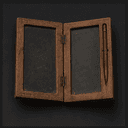
Writing surfaces made of wood coated with wax, used by Virgil and his contemporaries to compose and revise their works. They allowed writing with a stylus and could be smoothed over for drafts.
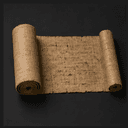
The main document format in Roman times, used for publishing and preserving Virgil's works such as the Aeneid. Papyrus imported from Egypt was the preferred medium for literary texts.
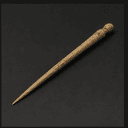
A pointed writing instrument used with wax tablets and papyrus scrolls. Essential to the craft of a Latin writer, it symbolizes the poet's trade.

A sacred plant associated with Apollo and poetry in Roman antiquity. The laurel wreath was the highest honor bestowed upon great poets like Virgil in recognition of their literary achievements.
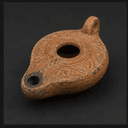
An everyday object that allowed Romans to write and read by lamplight. It illustrates the material conditions in which Virgil composed his works during long nights.
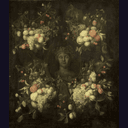
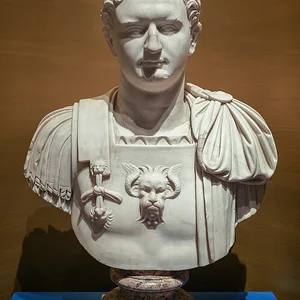
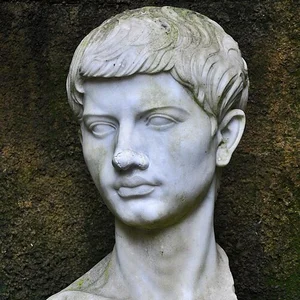
A sculpted portrait typical of great Roman figures. Busts of Virgil that have survived to this day bear witness to his fame and his status as a major poet of Augustan Rome.
📷 Domaine public · Wikimedia Commons ↗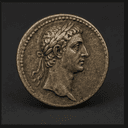
A symbol of prosperity and official recognition in the Augustan era in which Virgil lived. Roman patrons, including Augustus himself, funded the great poets of the age.

A musical instrument associated with Greek and Roman lyric poetry. Although Virgil was primarily an epic poet, the lyre symbolizes poetic inspiration and the Greek heritage that profoundly shaped his work.
📷 CC BY-SA 4.0 · Wikimedia Commons ↗School Curriculum
Vocabulary & Tags
Key Vocabulary
Daily Life
Morning
Virgil rises at dawn and has a light breakfast of bread, cheese, and water-diluted wine. He then devotes himself to composing his verses, working with great intensity during the cool morning hours — his preferred time for writing and revising his poetry.
Afternoon
In the afternoon, he often visits the public baths, an important social hub in ancient Rome where he meets other intellectuals and citizens. He takes part in literary and philosophical discussions, or rests in the shade before the evening meal, as the heat of the day makes sustained intellectual work less productive.
Evening
In the evening, Virgil takes his main meal (the cena), which consists of several courses and is often shared with friends or patrons. He may attend poetry recitations or literary banquets at the home of Emperor Augustus or his circle — prestigious events to which his standing as a celebrated poet grants him access.
Food
As a member of the Roman elite, Virgil's diet includes quality bread, vegetables, fresh fish, meat (especially at banquets), cheese, honey, and fruit. He drinks Italian wine mixed with water, following Roman custom, and uses olive oil in his cooking.
Clothing
Virgil wears the Roman toga — a white, flowing garment reserved for citizens of high status — over an inner tunic. His neat appearance and well-draped toga reflect his elevated social rank and his role as a celebrated poet at the Augustan court.
Housing
Virgil lives in Naples and Rome, residing in a comfortable and prestigious urban home (domus). His residence features several rooms, an atrium, and likely a private garden — spaces that give him the calm needed for intellectual work and the ability to receive distinguished guests.
Historical Timeline
Period Vocabulary
Visual Style
Style néoclassique inspiré de l'Antiquité romaine, associant la noblesse de l'époque augustéenne à une lumière chaleureuse et méditative. Technique picturale rappelant les maîtres de la Renaissance, avec une palette terre et or évoquant la solennité de la littérature épique antique.
Sound Ambience
Une ambiance immersive evoquant le bureau d'un grand poète romain du Ier siècle av. J.-C., mêlant les sons intimes de la création littéraire aux bruits distants de la Rome antique et de la nature méditerranéenne, créant un environnement de concentration poétique et de sérénité intellectuelle.
Liens externes & ressources
Références
Œuvres
L'Énéide
29-19 av. J.-C.
Les Bucoliques
42-39 av. J.-C.
Les Géorgiques
36-29 av. J.-C.
Le Culex
Ier siècle av. J.-C.
Les Moretum
Ier siècle av. J.-C.
L'Aeneis (reconstruction textuelle et critique)
Posthume (18 av. J.-C.)