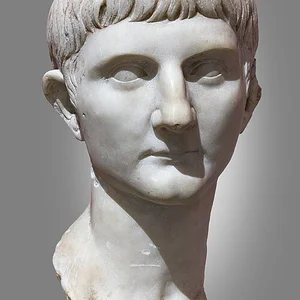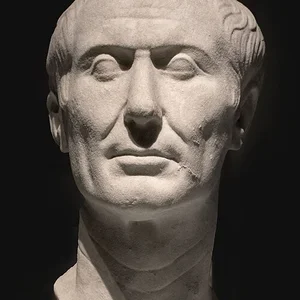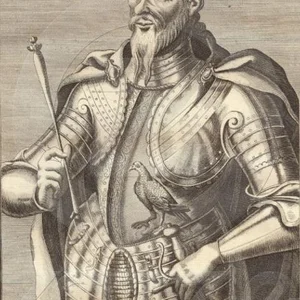

Attila was king of the Huns from 434 to 453. He conquered a vast empire across Eastern and Central Europe, directly threatening the Western Roman Empire through repeated invasions. He is remembered as one of the greatest warriors of Late Antiquity.
Attila(500 — 453)
Attila
Empire hunnique
7 min read
Frequently asked questions
Key Facts
- 434: becomes king of the Huns and unifies the various Hunnic tribes
- 441–443: first invasion of the Western Roman Empire, raids across the Balkans
- 450–451: invasion of Gaul, Battle of the Catalaunian Plains against Aetius and the Visigoths
- 452: invasion of Italy, sack of several Roman cities
- 453: death of Attila, end of the immediate Hunnic threat
Works & Achievements
Attila unified the various Hunnic tribes under his sole authority following the elimination of his brother Bleda, creating the largest empire in Europe since Rome.
Attila negotiated treaties imposing considerable tributes on Constantinople, notably the Treaty of Margus (435) and then the Treaty of Anatolius (447), which tripled the annual tribute to 2,100 pounds of gold.
A series of devastating campaigns against the Eastern Empire, during which Attila ravaged more than 70 cities and advanced on Constantinople, demonstrating the military power of the Huns.
A major military campaign in Roman Gaul, culminating in the siege of Orleans and the Battle of the Catalaunian Plains, one of the most significant confrontations of Late Antiquity.
Attila's last great campaign, marked by the destruction of Aquileia and the sacking of several cities in northern Italy, brought to a halt by his meeting with Pope Leo I.
Attila developed a sophisticated diplomatic network, receiving embassies and sending envoys to both Roman empires, demonstrating a political vision that went beyond mere military conquest.
Anecdotes
At the Battle of the Catalaunian Plains in 451, Attila had an enormous pyre of wooden saddles built at the center of his camp, ready to throw himself into it rather than be captured alive. This precaution shows how unexpected the defeat against the Romano-Visigothic coalition was for the king of the Huns.
Attila died under surprising circumstances for such a warrior: on his wedding night with Ildico, a young Germanic woman, in 453. According to the historian Jordanes, he succumbed to a massive nosebleed in his sleep, likely aggravated by excessive drinking during the banquet.
The bishop of Paris, Saint Geneviève, reportedly convinced the Parisians not to flee before Attila's advance in 451. She assured them the city would be spared, and indeed Attila turned toward Orléans without attacking Paris. This episode made Geneviève the patron saint of Paris.
According to the legend reported by Priscus, Attila lived with remarkable simplicity. While his guests ate from plates of gold and silver, he himself used a simple wooden bowl and drank only from a wooden cup, displaying an ostentatious contempt for luxury.
Pope Leo I met Attila in 452 near the Mincio river, in northern Italy, and succeeded in convincing him to turn back. The exact reasons for this withdrawal remain debated: the pope's diplomacy, an epidemic in the Hunnic army, and a lack of supplies all likely played a role.
Primary Sources
Attila's table was covered with dishes served on silver and gold platters, but he himself ate only meat placed on a wooden board. In all things he showed moderation: his cup was of wood while the guests drank from golden goblets.
In the middle of the night, Attila, heavy with wine and sleep, was suffocated by the blood that ordinarily flowed from his nose. He was found dead in the morning, Ildico weeping beneath her veil beside the body of her husband.
Attila was received by the holy Pope Leo on the bank of the Mincio. The king was so moved by the presence of the pontiff that he ordered the end of hostilities and withdrew beyond the Danube, promising peace.
The Huns, led by their king Attila, invaded Gaul and ravaged many cities. But defeated on the plains of Catalaunum by the patrician Aetius and King Theodoric, they withdrew.
Key Places
Center of the Hunnic empire, the great Hungarian plain served as Attila's base. It was here that he established his royal camp, described in detail by the ambassador Priscus.
Site of the great battle of 451 where Attila faced the coalition of Roman general Aetius and Visigoth king Theodoric. This defeat marked the end of Hunnic expansion into Gaul.
Major Roman city in northeastern Italy, completely destroyed by Attila in 452. According to tradition, refugees from Aquileia later founded Venice in the nearby lagoons.
City besieged by Attila in 451 during his invasion of Gaul. Bishop Anianus organized the resistance and Aetius arrived in time to force Attila to lift the siege.
Capital of the Eastern Roman Empire, threatened by Attila during his Balkan campaigns of 441–447. Emperor Theodosius II was forced to pay a heavy annual tribute to buy peace.
Typical Objects

The emblematic weapon of Hun horsemen, this asymmetric bow reinforced with bone and sinew could be fired with great power from horseback. It was the primary weapon of Attila's army.

The Huns used large bronze cauldrons to cook their food during encampments. Several examples have been found by archaeologists on the plains of Hungary.

The Huns perfected the rigid wooden saddle, an innovation that gave them remarkable stability in mounted combat. According to sources, Attila ordered a pyre of saddles to be built before the Battle of the Catalaunian Plains.

Hun chieftains wore ornaments of worked gold, often decorated with garnets set in the polychrome style of the steppes. These adornments attested to their rank and the wealth accumulated through tributes.

According to the account of Priscus, Attila ate from a simple wooden bowl and drank from a wooden cup, in contrast to the luxury of his court. This choice illustrated his desire to display the sobriety of a warrior.

Hun horsemen used the lasso in combat to unseat enemy riders. This steppe-born fighting technique took Roman armies by surprise, accustomed as they were to a very different style of warfare.
School Curriculum
Vocabulary & Tags
Key Vocabulary
Daily Life
Morning
Attila rose at dawn in his vast wooden palace, built on the Hungarian plain. He began his day by receiving reports from his warlords and inspecting his troops. He rode on horseback through his encampment, accompanied by his personal guard.
Afternoon
The afternoon was devoted to diplomatic affairs: receiving Roman ambassadors, negotiating tributes, and holding audiences with the chiefs of subjugated peoples. Attila held council with his senior lieutenants to plan military campaigns. He also practiced archery and horsemanship, essential skills for a Hun leader.
Evening
In the evening, Attila presided over grand banquets in his wooden palace. His guests feasted from gold and silver dishes while he ate sparingly from his wooden bowl. Bards sang of his martial exploits, and the evening continued with music and drink.
Food
The Huns' diet was based primarily on meat, often dried or cooked in large bronze cauldrons. They consumed game, mutton, and horse meat, accompanied by fermented mare's milk (koumiss). Attila himself ate simply, preferring boiled meat served in a wooden bowl.
Clothing
Attila wore leather and fur garments typical of the nomadic steppe peoples, but of careful craftsmanship. He dressed, however, with a simplicity noted by Roman ambassadors. His boots, tunic, and cap were clean but without excessive ornamentation, contrasting with the luxury of his court.
Housing
Attila resided in a vast complex of wooden buildings on the Pannonian plain, described by Priscus as a veritable city surrounded by a polished wooden palisade. His personal palace featured large reception halls and was adorned with carpets and hangings. Common warriors lived in portable felt tents.
Historical Timeline
Period Vocabulary
Visual Style
Un style visuel sombre et dramatique inspiré de l'art des steppes et de l'Antiquité tardive, dominé par des tons terreux, l'or terni et le rouge profond, évoquant la puissance brute des cavaliers nomades.
Sound Ambience
L'ambiance sonore du monde d'Attila mêle le grondement des cavalcades dans les steppes, le sifflement des flèches et le son du vent sur les campements de yourtes, évoquant la puissance nomade des Huns.
Liens externes & ressources
Références
Œuvres
Unification des peuples hunniques
434-445
Système de tributs imposé à l'Empire romain d'Orient
435-450
Campagne des Balkans
441-447
Invasion de la Gaule
451
Invasion de l'Italie
452
Organisation diplomatique de l'empire hunnique
434-453