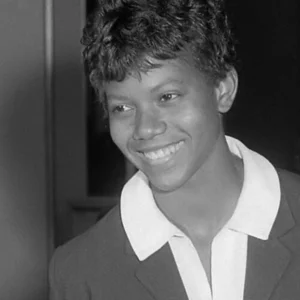

American athlete specializing in sprinting. Struck by polio in her childhood, she became the first American woman to win three gold medals in track and field at a single edition of the Olympic Games, in Rome in 1960.
Wilma Rudolph(1940 — 1994)
Wilma Rudolph
États-Unis
5 min read
Frequently asked questions
Key Facts
- Born in 1940 in Tennessee, she contracted polio in childhood and wore a leg brace until adolescence
- Won a bronze medal in the 4×100 m relay at the 1956 Melbourne Olympic Games at only 16 years old
- At the 1960 Rome Olympic Games, she won three gold medals (100 m, 200 m, 4×100 m relay)
- First American woman to clinch three Olympic track and field titles at a single edition
- Having died in 1994, she remains an inspirational figure in the fight against segregation and disability
Works & Achievements
First Olympic medal, won at age 16, revealing her precocious talent.
A victory in the final that kicked off her historic treble at the Rome Games.
A second Roman crown, confirming her dominance in the sprint.
A third title, making her the first American woman to win three Olympic track and field gold medals in a single edition.
A national honor recognizing the most outstanding amateur athlete in the United States.
The story of her life, adapted that same year into a television film, which inspires generations.
A foundation she created to support amateur sport and mentor disadvantaged youth.
Anecdotes
Struck by polio at the age of four, Wilma Rudolph wore a metal brace on her left leg for years. Her mother and her brothers and sisters took turns massaging it every day, and around the age of nine she managed to remove the device and walk unaided.
At the 1960 Rome Olympic Games, she won the 100 m, the 200 m and the 4×100 m relay, becoming the first American woman to win three gold medals in track and field at a single edition of the Games. The Italian press nicknamed her “La Gazzella Nera” (the Black Gazelle).
On her return from Rome, her hometown of Clarksville, Tennessee, wanted to organize a parade in her honor. Wilma Rudolph insisted that the celebration be desegregated: it became one of the town's first major events open to everyone, both Black and white.
As a teenager, she was already a noticed basketball player: it was during a game that Ed Temple, the track and field coach at Tennessee State University, spotted her and invited her to join his sprint program, the famous “Tigerbelles.”
At the 1956 Melbourne Games, she was only 16 and already won a bronze medal in the 4×100 m relay, before her triumph in Rome four years later.
Primary Sources
“My doctors told me I would never walk again. My mother told me I would. I believed my mother.”
Columnists described the American sprinter nicknamed “La Gazzella Nera,” praising her sweeping stride and her dominance in the 100 m and 200 m.
Rudolph insisted that the reception and parade held in her honor be open to all regardless of color, marking one of the town's first integrated gatherings.
Key Places
A segregated rural area of Tennessee where Wilma Rudolph was born and raised, the twentieth of twenty-two children.
A historically Black university where she trained with the “Tigerbelles” under coach Ed Temple while pursuing her studies.
The setting of her triple triumph at the 1960 Olympic Games, where she earned the nickname “the Black Gazelle.”
The site of the 1956 Olympic Games where, as a teenager, she won her first Olympic medal (bronze in the relay).
A town near Nashville where Wilma Rudolph died in 1994 from cancer.
Typical Objects

Metal brace and orthopedic shoe that she wore for years to support her leg, weakened by polio. A symbol of her struggle before she became a runner.

Sprinting shoes fitted with metal spikes to grip the cinder tracks of stadiums in the 1950s and 1960s.

Award given to the winners of the Games. Rudolph won three at Rome in 1960, an unprecedented feat for an American woman in track and field.

An adjustable footrest the sprinter pushes against at the crack of the pistol to launch forward. An essential tool in sprint events.

A small cylinder passed between teammates during the 4×100 m relay, the event in which Rudolph claimed one of her gold medals.

A timekeeping instrument used by judges to validate the records and performances of sprinters.
School Curriculum
Vocabulary & Tags
Key Vocabulary
Tags
Daily Life
Morning
A student-athlete, she often began with an early-morning workout on the track before classes. Coach Ed Temple's discipline demanded absolute punctuality and sets of sprint accelerations from dawn.
Afternoon
Afternoons combined university classes with sprint, relay, and light weight-training sessions. The “Tigerbelles” trained on cinder tracks, in all weather.
Evening
Evenings were devoted to studying, body care, and the rest needed for recovery. Life on a segregated campus limited outings beyond the places reserved for African Americans.
Food
Born into a large, poor family in the rural South, she grew up with traditional African American home cooking (“soul food”) based on vegetables, corn, and meat when the budget allowed. As an athlete, her diet aimed for energy and endurance.
Clothing
In training, she wore shorts, a team jersey, and spikes; in competition, the white uniform bearing the American logo. Around town, dresses and the neat outfits typical of the 1950s and 1960s.
Housing
As a child, she lived in a small house in rural Tennessee among a family of more than twenty children. As a student, she boarded on the campus of Tennessee State University, in Nashville.
Historical Timeline
Period Vocabulary
Liens externes & ressources
Références
Œuvres
Médaille de bronze au relais 4×100 m (Melbourne)
1956
Médaille d'or du 100 m (Rome)
1960
Médaille d'or du 200 m (Rome)
1960
Médaille d'or du relais 4×100 m (Rome)
1960
Prix Sullivan du meilleur athlète amateur
1961
Wilma Rudolph Foundation
1982