 Flip the card
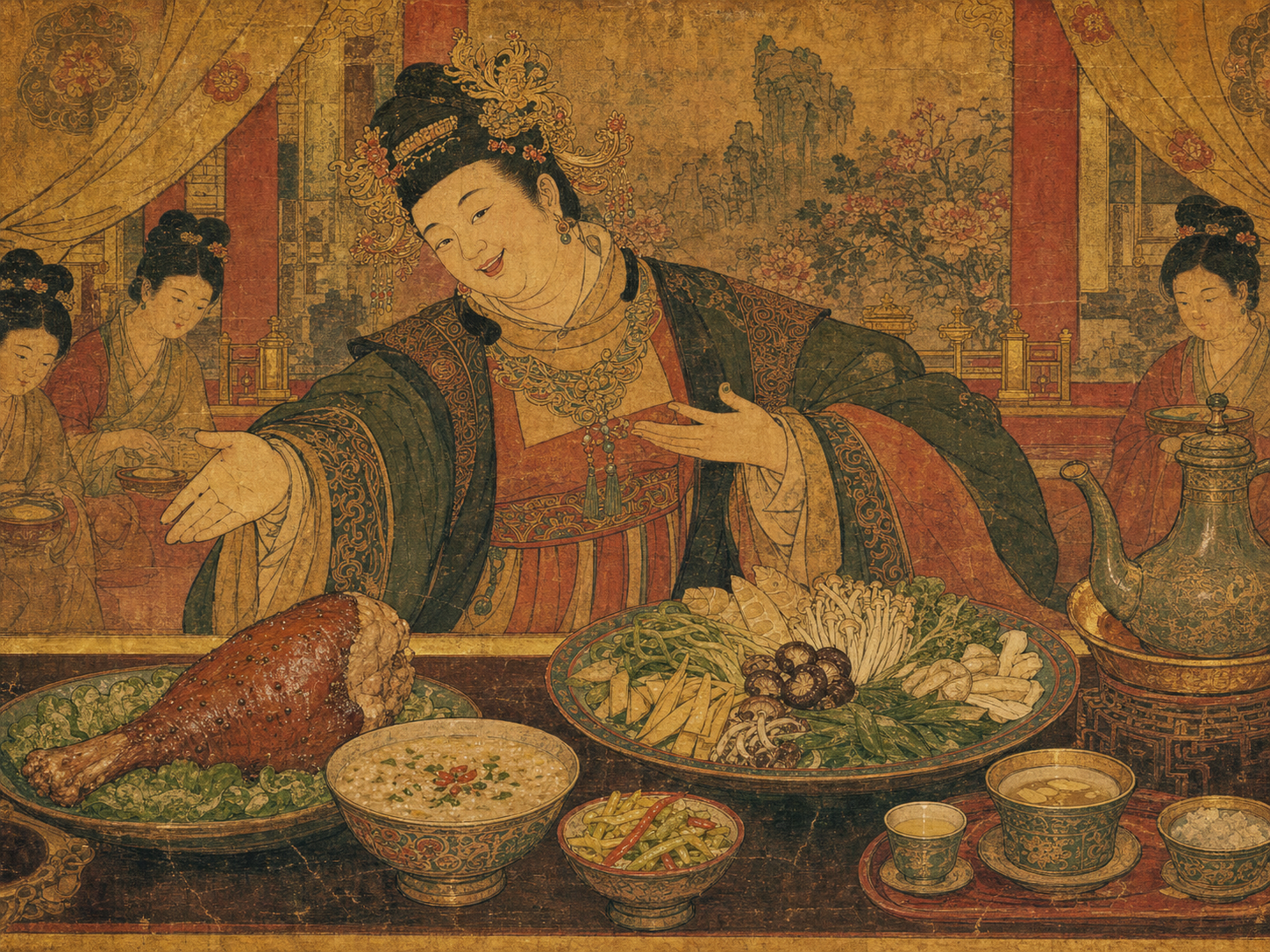
Wu Zetian at the table
624 — 705
On the menu
The Tang Court Banquet (yàn) and the Imperial Table
At the court of Chang'an and later Luoyang, meals were not served as "starter-main-dessert" but as a lavish succession of small dishes arranged together on lacquered trays and precious tableware: roasted or steamed meats, pickled vegetables, grain porridges, fermented sauces (jiàng), fruits and pastries, tea and fine wines. The grand promotion banquet called Shaowei yàn ("banquet of the burned tail"), whose menu has survived, featured dozens of refined dishes. The emperor's daily routine, however, began at dawn before audiences with a bowl of grain porridge and pickled vegetables.
Signature : The Spices of the Silk Road and Fermented Sauces (jiàng)
The Tang golden age brought black pepper (hújiāo), cinnamon (cassia), cloves, and ginger to the court—luxury goods from India and Persia. Combined with fermented soy and bean sauces (jiàng) and grain vinegar, they gave imperial cuisine its distinctive umami, salty, and delicately spiced profile that set it apart from the rest of the empire.
click to flip back
Wu Zetian at the table
624 — 705
5 period recipes
 Festive
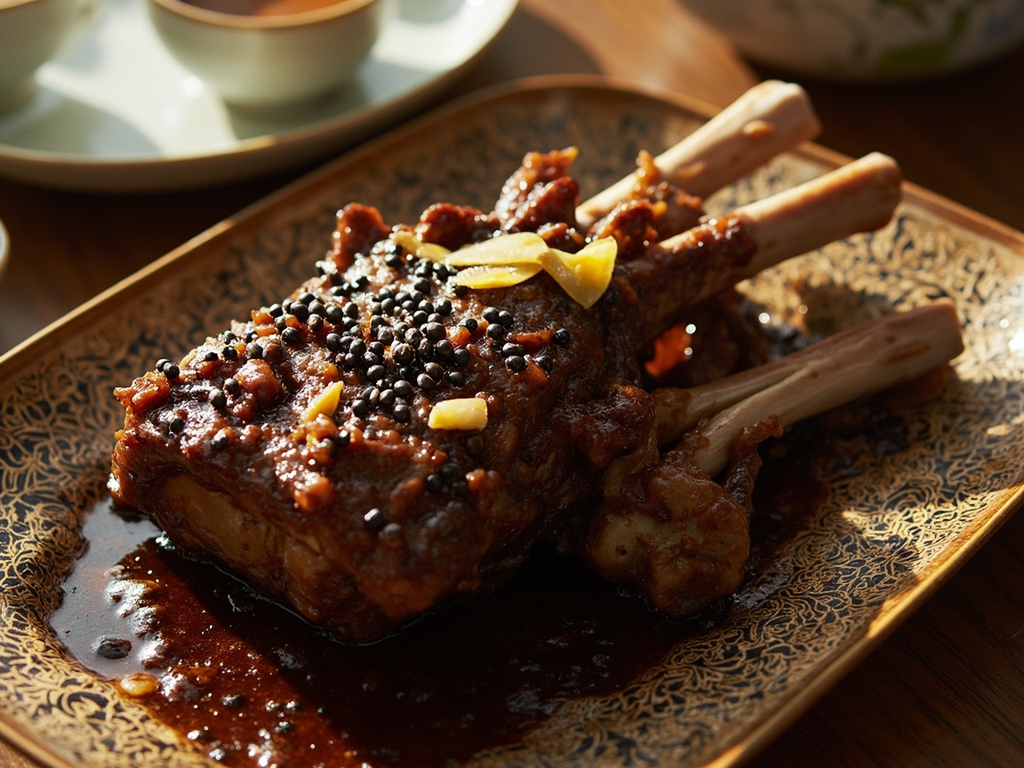
Steamed Lamb Leg with Pepper and Honey Sauce – from the Shaowei Banquet
Meat dish from the grand Shaowei banquet (烧尾宴), the promotion feast for high Tang dignitaries
🧂 🍄 🌶️· 3 h 30 (including cooking)
View the recipe
 Everyday
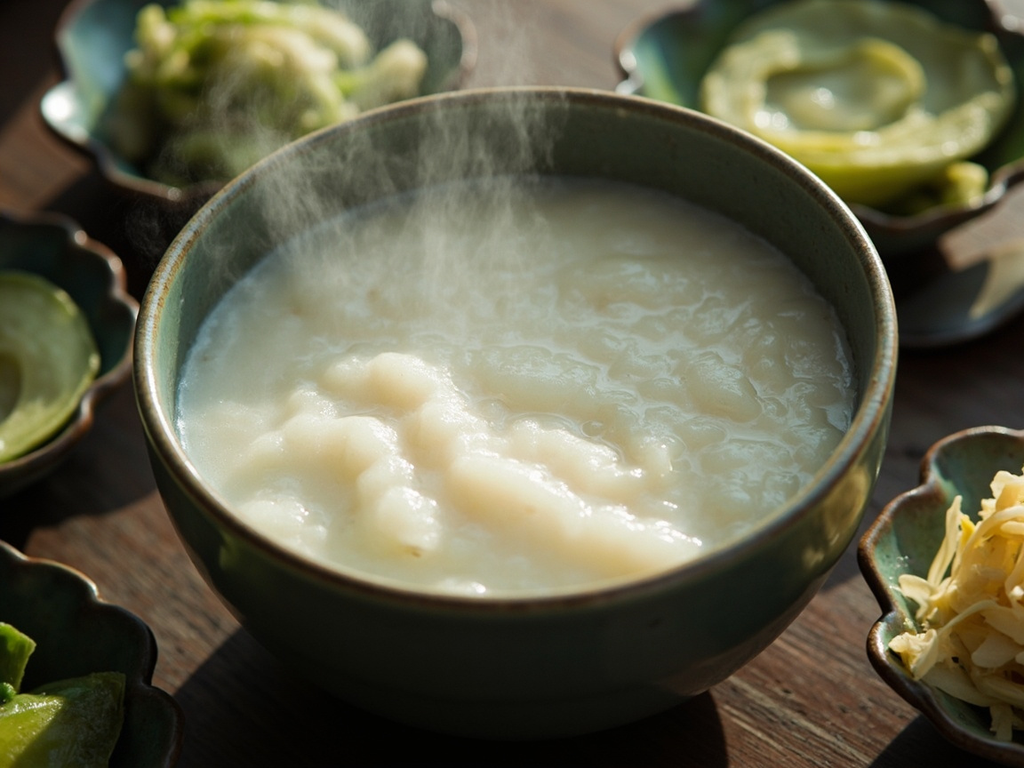
Dawn Rice Porridge and Pickled Vegetables
Morning meal (zǎo fàn) of the imperial table, taken before audiences
🧂 🫙· 1 h 30
View the recipe
 Drink
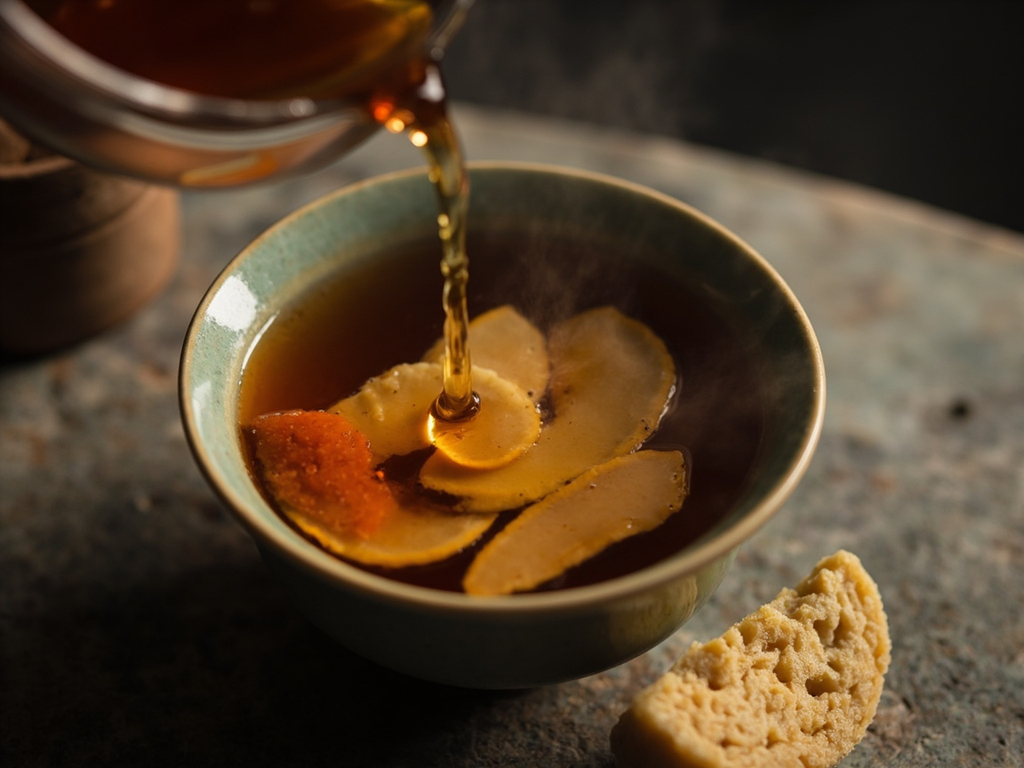
DrinkBoiled Tea Tang-Style with Ginger and Salt
Court and monastery beverage, prepared by decoction (jiān chá)
☕ 🧂· 10 min
View the recipe
 Offering
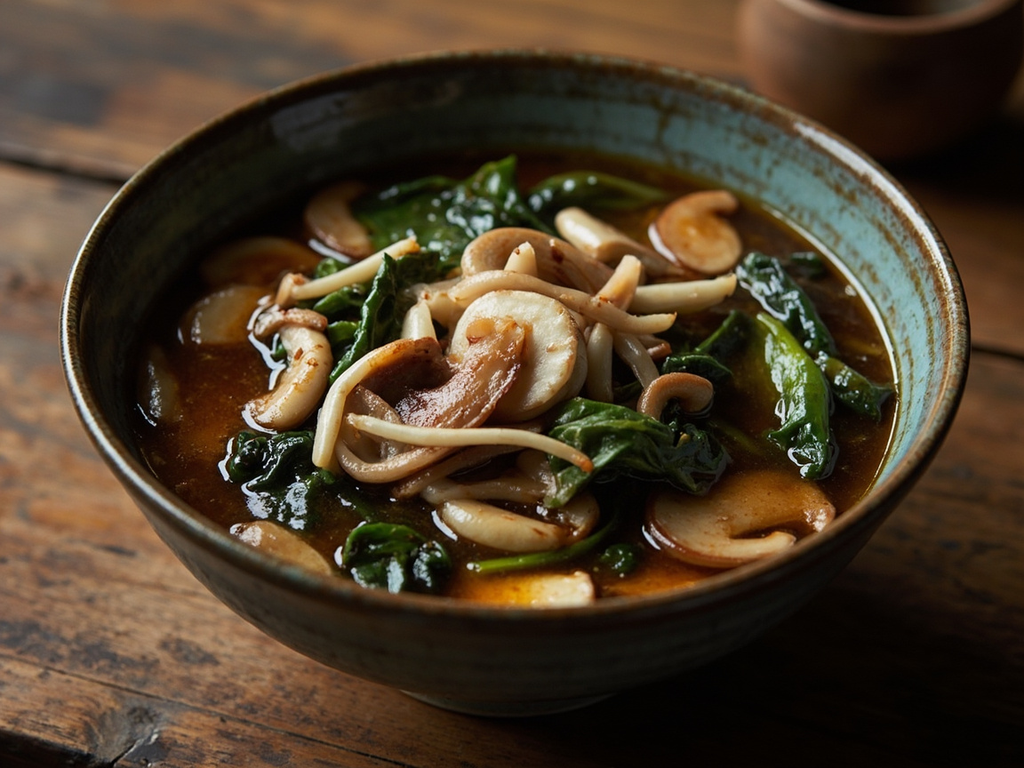
Vegetarian Feast of Mushrooms, Bamboo Shoots, and Greens
Vegetarian meal (sù shí) offered during Buddhist festivals, inspired by monastery cuisine
🍄 ☕· 35 min
View the recipe
 Preserving
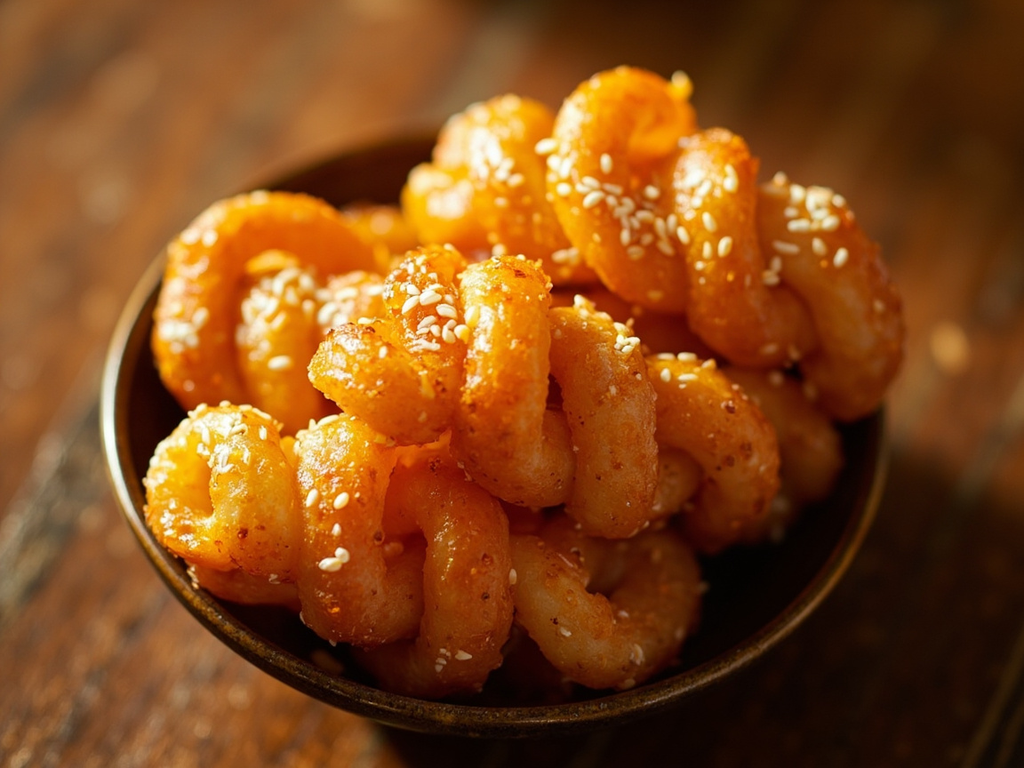
Hán jù — Honey and Sesame Fried Twists
Dry preserved sweet, eaten cold during the Cold Food Festival (Hánshí)
🍯· 1 h
View the recipe