 flip
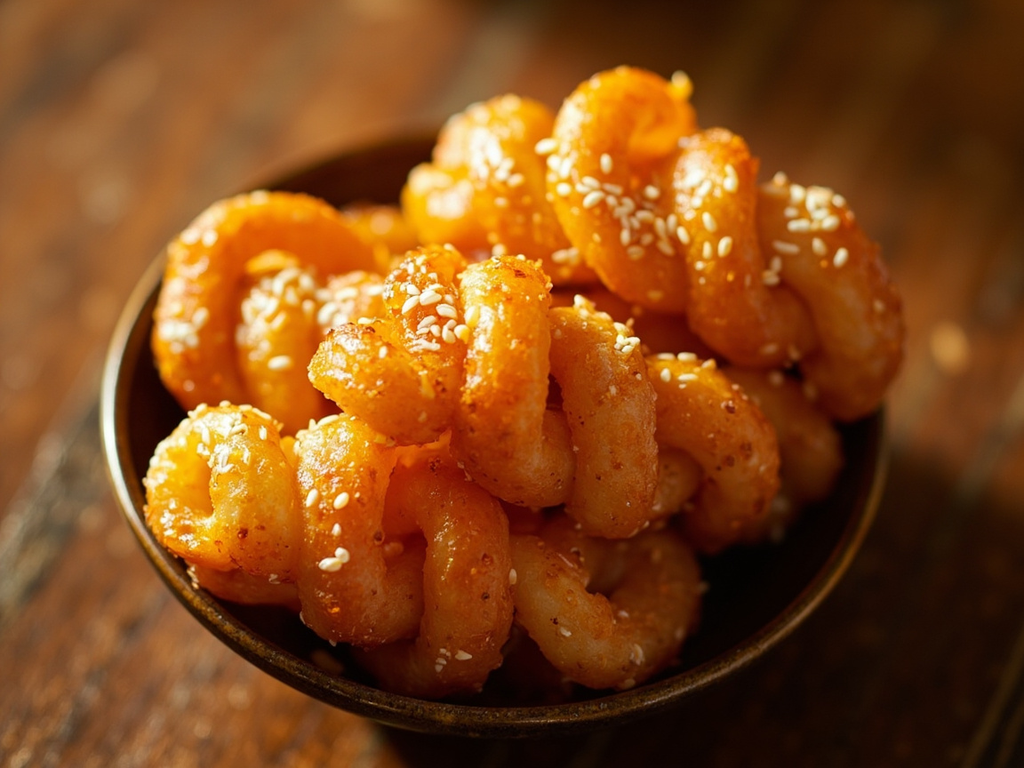
flipHán jù — Honey and Sesame Fried Twists
Hán jù — Honey and Sesame Fried Twists
Why this dish? Every spring, the Cold Food Festival (Hánshí) forbade lighting fires for several days: so dry sweets that could be kept and eaten cold were prepared in advance. At Wu Zetian's court as throughout the empire, these golden, crispy twists were the quintessential seasonal treat.
Thin strips of wheat dough twisted, fried until golden and brittle, then coated with honey or malt and rolled in sesame seeds. Light, sweet, they keep for several days—perfect for the festival when fire is forbidden.
When the Cold Food Festival comes and fire must be extinguished throughout the empire in memory of the ancients, the court must have something sweet to nibble! My cooks rolled the wheat dough into thin ribbons, twisted them like braids, and dropped them into hot oil until they sang as they turned golden. Once honeyed and rolled in sesame, they kept for several days without going soft. Bite into one: it cracks like the first ice of spring.
- •Wheat flour — a large bowl (dough)
- •Water — as needed (binder)
- •Honey or malt syrup (maltose) — one ladle (sweet coating)
- •Sesame seeds — a handful (finish)
- •Oil for frying — plenty (cooking)
Hán jù — Honey and Sesame Fried Twists
Thin strips of wheat dough twisted, fried until golden and brittle, then coated with honey or malt and rolled in sesame seeds. Light, sweet, they keep for several days—perfect for the festival when fire is forbidden.
Why this dish? Every spring, the Cold Food Festival (Hánshí) forbade lighting fires for several days: so dry sweets that could be kept and eaten cold were prepared in advance. At Wu Zetian's court as throughout the empire, these golden, crispy twists were the quintessential seasonal treat.
When the Cold Food Festival comes and fire must be extinguished throughout the empire in memory of the ancients, the court must have something sweet to nibble! My cooks rolled the wheat dough into thin ribbons, twisted them like braids, and dropped them into hot oil until they sang as they turned golden. Once honeyed and rolled in sesame, they kept for several days without going soft. Bite into one: it cracks like the first ice of spring.
Ingredients (period version)
- Wheat flour — a large bowl (dough)
- Water — as needed (binder)
- Honey or malt syrup (maltose) — one ladle (sweet coating)
- Sesame seeds — a handful (finish)
- Oil for frying — plenty (cooking)
Ingredients
- Wheat flour — 250 g (dough)
- Warm water — ~120 ml (binder)
- Pinch of salt — 1 pinch (balance)
- Honey (or malt syrup) — 4 tbsp (coating)
- Sesame seeds — 3 tbsp (finish)
- Neutral frying oil — for deep frying (cooking)
Method
- Knead flour, salt, and water into a firm, smooth dough; let rest for 30 minutes under a cloth.
- Roll out thinly, cut into strips, then twist or tie each strip into a knot.
- Fry in small batches in oil at 170°C until golden and crispy; drain.
- Warm the honey, quickly dip the twists, then roll them in sesame seeds.
- Let cool completely: they keep for several days in an airtight container.
How it was made : Hán jù (寒具, literally "cold utensil/food") is documented as early as the Qimin Yaoshu (6th century) and remained popular under the Tang. Designed for the Cold Food Festival, when lighting a fire was forbidden, this pre-fried treat kept without spoiling—a cuisine of preservation as much as celebration.
The contemporary twist : Stacked in a small sheaf and dusted with a veil of black and white sesame seeds, these twists make a spectacular mignardise at the end of a meal.
Sources : Jia Sixie, Qimin Yaoshu (齊民要術), 6th century, recipe for hán jù
Wu Zetian · Charactorium