 flip
flipBoiled Tea Tang-Style with Ginger and Salt
Boiled Tea Tang-Style with Ginger and Salt
Why this dish? Wu Zetian, a fervent patron of Buddhism, lavished favors on monasteries—she stayed near the White Horse Monastery (Baima Si). And it was in monasteries that tea took root, as it kept monks awake during long meditation vigils. This drink connects the empress to her piety and her time.
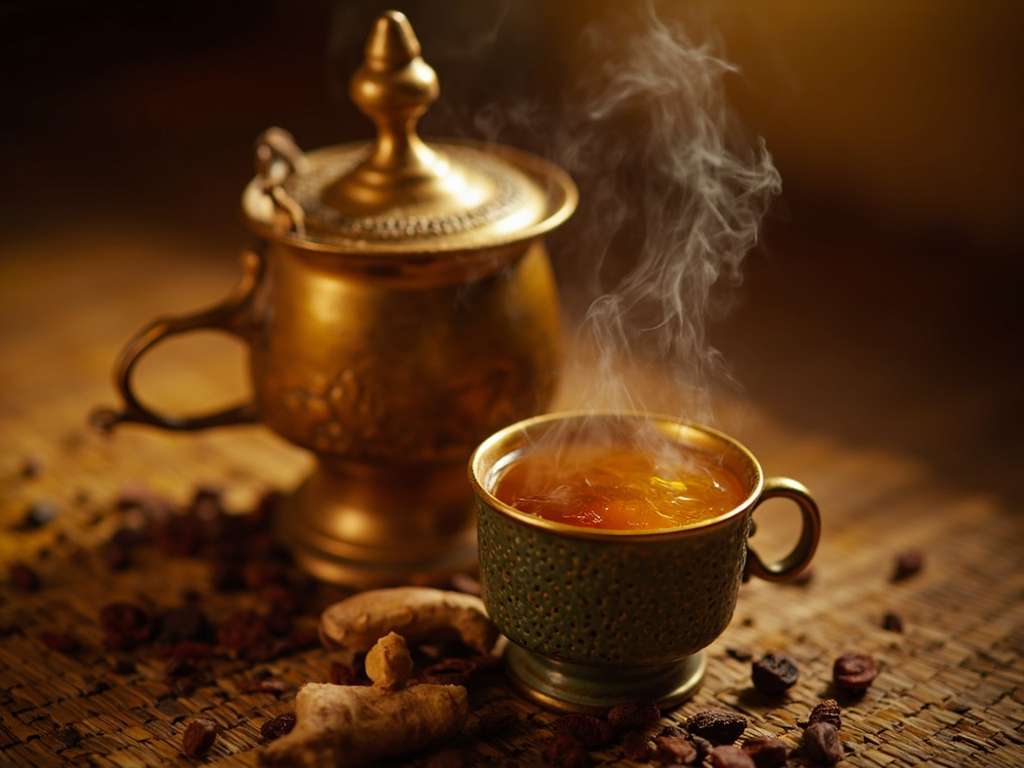
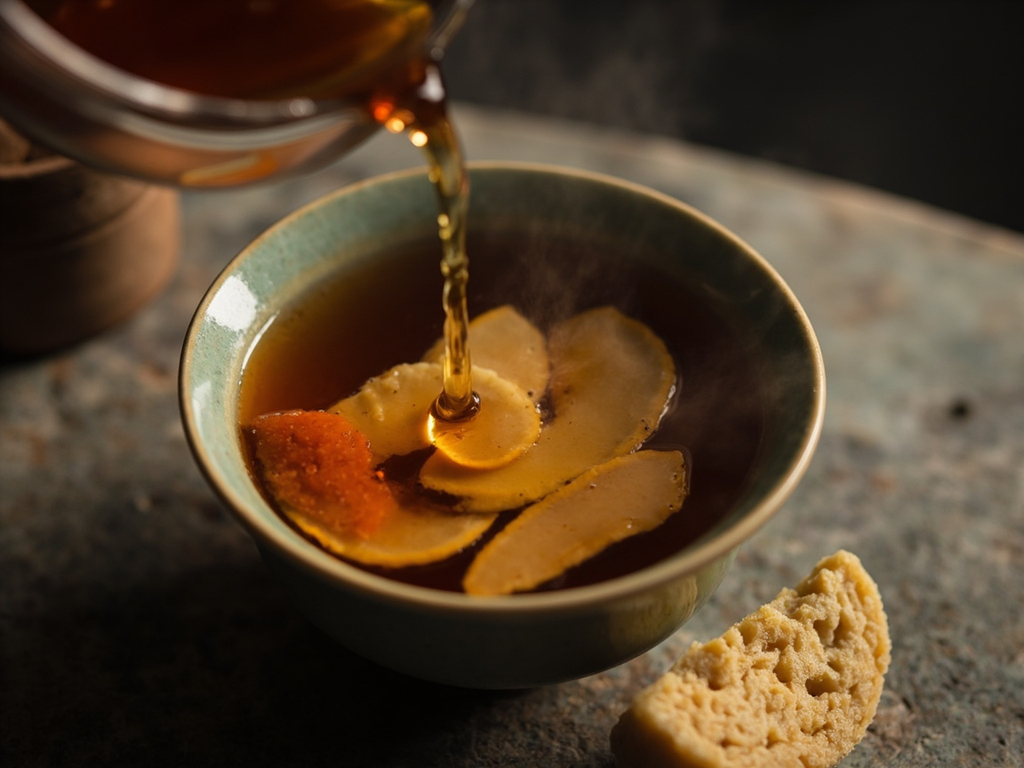
A compressed tea cake, roasted, crumbled, and boiled with ginger and a pinch of salt, in the ancient Tang manner—a robust, bitter, and comforting brew, far from today's light infusion.
You think you know tea? In Our time, it was not left to laze in warm water. We roasted the cake over the embers, crumbled it, and threw it into the simmering water with ginger and a pinch of salt. The monks We protected drank it to keep vigil through the night and pray for the kingdom's prosperity. Bitter, yes—but bitterness sharpens the mind, and a sharp mind suits those who wish to understand Heaven.
- •Compressed tea cake — a fragment (base, roasted then boiled)
- •Fresh ginger — a few slices (warming aromatic)
- •Salt — a pinch (seasoning (Tang usage))
- •Spring water — a cauldron (decoction)
Boiled Tea Tang-Style with Ginger and Salt
A compressed tea cake, roasted, crumbled, and boiled with ginger and a pinch of salt, in the ancient Tang manner—a robust, bitter, and comforting brew, far from today's light infusion.
Why this dish? Wu Zetian, a fervent patron of Buddhism, lavished favors on monasteries—she stayed near the White Horse Monastery (Baima Si). And it was in monasteries that tea took root, as it kept monks awake during long meditation vigils. This drink connects the empress to her piety and her time.
You think you know tea? In Our time, it was not left to laze in warm water. We roasted the cake over the embers, crumbled it, and threw it into the simmering water with ginger and a pinch of salt. The monks We protected drank it to keep vigil through the night and pray for the kingdom's prosperity. Bitter, yes—but bitterness sharpens the mind, and a sharp mind suits those who wish to understand Heaven.
Ingredients (period version)
- Compressed tea cake — a fragment (base, roasted then boiled)
- Fresh ginger — a few slices (warming aromatic)
- Salt — a pinch (seasoning (Tang usage))
- Spring water — a cauldron (decoction)
Ingredients
- Compressed tea (raw pu'er or cake) or robust green tea — 5 g (base)
- Fresh ginger — 3 thin slices (aromatic)
- Salt — 1 small pinch (historical seasoning)
- Water — 600 ml (decoction)
Method
- If using a tea cake, briefly roast a fragment over a flame until fragrant, then crumble it.
- Bring the water to a simmer with the ginger slices.
- Add the crumbled tea and the pinch of salt, let it gently boil for 2 to 3 minutes.
- Strain and serve piping hot in small bowls; taste this bold bitterness typical of the Tang.
How it was made : In Tang times, tea was drunk boiled, often with salt, ginger, or even onion and orange peel. This is precisely the practice that Lu Yu criticized in his Classic of Tea (Chá Jīng, circa 760, shortly after Wu Zetian's death), advocating for a purer tea. Tea owes much to Buddhist monasteries, which the empress protected.
The contemporary twist : Served over crushed ice with an orange zest, this "Tang cold brew" reinterprets the ancients' bitterness for modern palates.
Sources : Lu Yu, Chá Jīng (茶經), Classic of Tea, circa 760
Wu Zetian · Charactorium