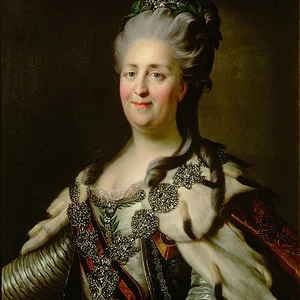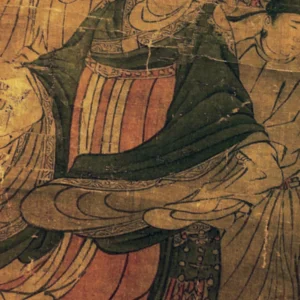

Wu Zetian (624–705) is the only woman ever to have ruled as reigning empress of China. A concubine of Emperor Taizong and later wife of Emperor Gaozong, she gradually seized power before founding her own Zhou dynasty in 690. An ambitious reformer, she modernized the imperial administration and championed merit-based examinations.
Wu Zetian(624 — 705)
Wu Zetian
dynastie Tang, dynastie Zhou
7 min read
Frequently asked questions
Key Facts
- Around 637: enters the imperial court as a concubine of Emperor Taizong
- 655: becomes empress consort by marrying Emperor Gaozong
- 660–683: effectively governs the empire due to Gaozong's recurring illnesses
- 690: overthrows the Tang dynasty and founds her own Zhou dynasty, proclaiming herself Shengshén Huángdì (reigning empress)
- 705: deposed in a palace coup; the Tang dynasty is restored
Works & Achievements
Wu Zetian became the first and only female emperor of China by proclaiming the Zhou dynasty, overthrowing the Tang dynasty. This landmark achievement marked an unprecedented political turning point in imperial China.
Wu Zetian thoroughly restructured the imperial administration by promoting talent based on merit rather than birth, strengthening the centralization of power and the stability of the state.
During her reign, the empire extended its influence into Central Asia and secured its borders against external threats — particularly from the Turks and Tibetans — reinforcing Chinese military power.
Wu Zetian actively supported Buddhism as a state ideology and funded the construction of temples and monasteries, using religion to legitimize her rule and strengthen social cohesion.
She implemented economic policies to encourage agriculture and trade, reorganized the tax system, and improved road infrastructure, contributing to the empire's economic prosperity.
Wu Zetian improved and expanded the civil service examination system, broadening access for talented individuals from humble backgrounds and reducing the power of the traditional aristocracy.
Anecdotes
Wu Zetian began her career as a concubine at the imperial court before becoming the wife of Emperor Taizong. After his death, she dared to break tradition by remaining in power as regent, then proclaimed herself empress in 690, becoming the only woman ever to officially rule China. This extraordinary rise shocked the male aristocracy of the time, yet she governed with great skill for 15 years.
To consolidate her power, Wu Zetian created a more open civil service examination system and promoted talent based on merit rather than aristocratic birth. She also built a network of spies and informants to monitor potential enemies — a feared but effective practice for maintaining her authority.
Wu Zetian was an active patron of Buddhism and had several important temples built, including the Tiangong Temple in Luoyang. She presented herself as a reincarnation of the Maitreya Buddha to legitimize her rule in the eyes of the people, strategically blending politics and religion.
Despite her considerable administrative abilities, Wu Zetian was also accused of having political rivals executed or eliminated, including her own sons who threatened her reign. These darker actions cast a shadow over the end of her political life, though she abdicated with dignity in 705, at over 80 years of age.
Wu Zetian chose her successor carefully and stepped down peacefully — a remarkable act for an absolute ruler of the era. She retired to a monastery where she spent her final years, showing unexpected wisdom after decades of ruthless struggle for power.
Primary Sources
Empress Wu possessed remarkable intelligence and exceptional political ability. She ruled with an iron hand and managed to maintain order throughout the empire for several decades.
Wu Zetian rose gradually to power as an imperial consort, then became empress regent. She established her own Zhou dynasty and issued important decrees governing the administration of the state.
Empress Wu promulgated important edicts concerning the imperial examinations and the selection of officials, thereby strengthening the bureaucratic system.
Ministers and advisors submitted remonstrances to Empress Wu on matters of governance and major political decisions affecting the empire.
Key Places
Capital of the Tang dynasty where Wu Zetian exercised major political power. She resided in the imperial palace and governed the empire from this metropolis.
The second capital of the Tang dynasty, which Wu Zetian favored and developed. She established her secondary residence here and launched several major architectural projects in the city.
An important Buddhist center near Luoyang where Wu Zetian patronized the arts and religion. She supported the translation of Buddhist texts there and funded the construction of statues.
The homeland of Wu Zetian's family. She was born in this region of northern China and retained important family estates there.
A monumental funerary complex built for Wu Zetian and her husband Emperor Tang Gaozong. It stands as a testament to her prestige and enduring influence beyond her death.
Typical Objects

An object of absolute power used to authenticate decrees and edicts. Wu Zetian, the first and only female emperor of China, held the great seal that symbolized her legal and political authority.

The official garment of high dignitaries and the emperor during the Tang dynasty. The color purple was reserved for the sovereign, and Wu Zetian wore it to assert her imperial status.

The royal seat symbolizing absolute imperial power in ancient China. Wu Zetian was the first woman to occupy the Dragon Throne, overturning thousands of years of tradition.

Silk or paper scrolls containing government decrees and reforms. Wu Zetian used these documents to implement her many political reforms and consolidate her power.

The distinctive headdress of the Chinese sovereign, a symbol of dignity and legitimacy. Wu Zetian wore the royal regalia to legitimize her unprecedented authority as a woman in power.

Currency minted in the name of the empire. During Wu Zetian's reign, the coins reflected the political and economic changes she was driving throughout China.

Essential tools for drafting official texts and imperial edicts. Wu Zetian, a learned and cultured woman, used these instruments to document her policies and reforms.

A commemorative monument on which the sovereign's great deeds were carved. Wu Zetian had several erected to preserve her image and achievements in collective memory.
School Curriculum
Vocabulary & Tags
Key Vocabulary
Daily Life
Morning
Wu Zetian rises before dawn in her apartments in the imperial palace. She receives reports from officials and reviews state documents, playing an active role in governing the empire. Her attendants prepare her with care, applying cosmetics and perfumes according to the beauty standards of the Tang court.
Afternoon
The afternoon is devoted to official audiences and meetings with ministers. She presides over sessions of the imperial council and makes major decisions on domestic and foreign policy. She may also oversee religious rituals or important official ceremonies.
Evening
In the evening, Wu Zetian relaxes in her private apartments, receiving trusted courtiers and advisors. She may listen to music, watch performances by dancers and musicians, or continue handling affairs of state with her closest collaborators.
Food
Wu Zetian enjoys the refined diet typical of the Tang court: white rice, poultry, fish, seafood, rare vegetables, and exotic spices. She drinks tea and fine alcoholic beverages. Dishes are prepared by imperial cooks and served on precious tableware.
Clothing
She wears the sumptuous long robes of the Tang aristocracy, adorned with golden silk embroidery and elaborate patterns. Her garments reflect her supreme status: vivid colors, fine fabrics, and abundant jewelry. She sports elaborate hairstyles decorated with diadems and metal ornaments.
Housing
Wu Zetian resides in the imperial palace of Chang'an, the political heart of the empire. Her private apartments are luxuriously decorated with refined furniture, paintings, calligraphy, and precious objects. She has several palatial residences and moves between different courts depending on the season and political needs.
Historical Timeline
Period Vocabulary
Visual Style
Un style inspiré de l'art de la cour impériale Tang, combinant la peinture traditionnelle chinoise avec l'élégance des vêtements de cour, des ornements dorés et des éléments architecturaux palatins. L'ambiance majestueuse et solennelle reflète l'autorité et le prestige de la plus puissante souveraine de l'époque médiévale chinoise.
Sound Ambience
Une ambiance majestueuse du palais impérial Tang, mêlant instruments traditionnels chinois délicats, bruits de la cour royale et murmures politiques, avec une atmosphère à la fois élégante et chargée de pouvoir et d'intrigue.
Liens externes & ressources
Références
Œuvres
Accession au trône impérial
690
Réformes administratives et bureaucratiques
680-705
Expansion territoriale et consolidation militaire
665-705
Promotion du bouddhisme
690-705
Réformes économiques et fiscales
680-705
Établissement du système d'examens impériaux réformé
690-705