 flip
flipDawn Rice Porridge and Pickled Vegetables
Dawn Rice Porridge and Pickled Vegetables
Why this dish? Wu Zetian governed as a hard worker: she presided over audiences at dawn. Like the entire court, she started the day with a comforting grain porridge, accompanied by pickled vegetables that awakened the palate—a modest meal behind the splendor, before the affairs of the empire.
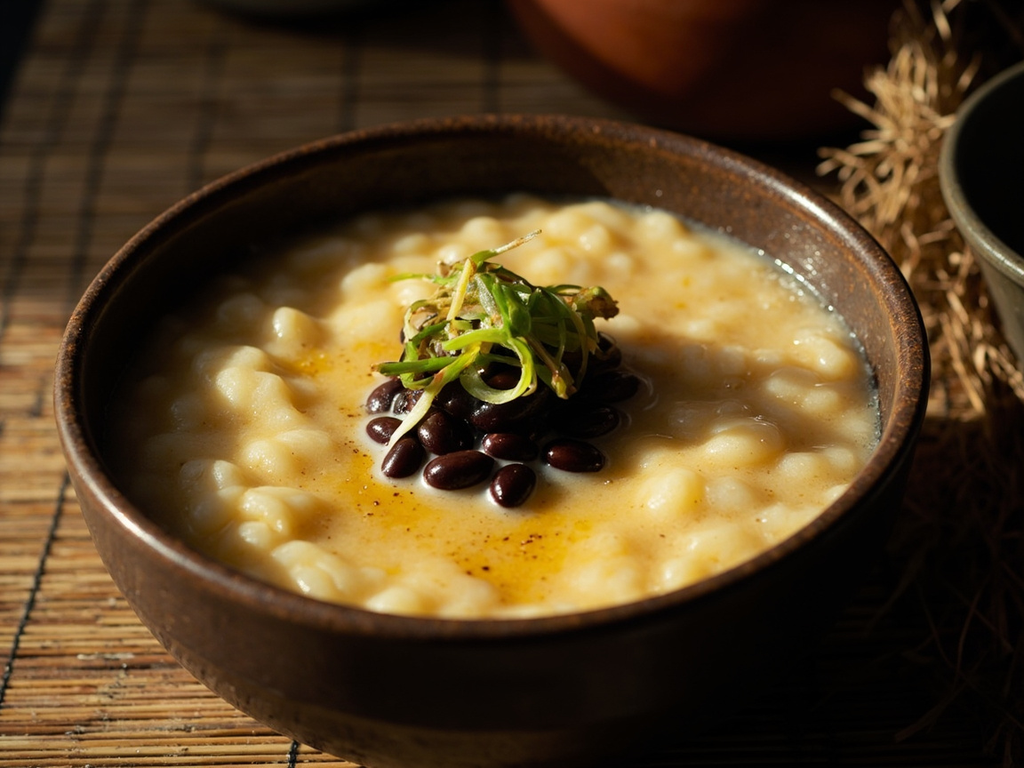
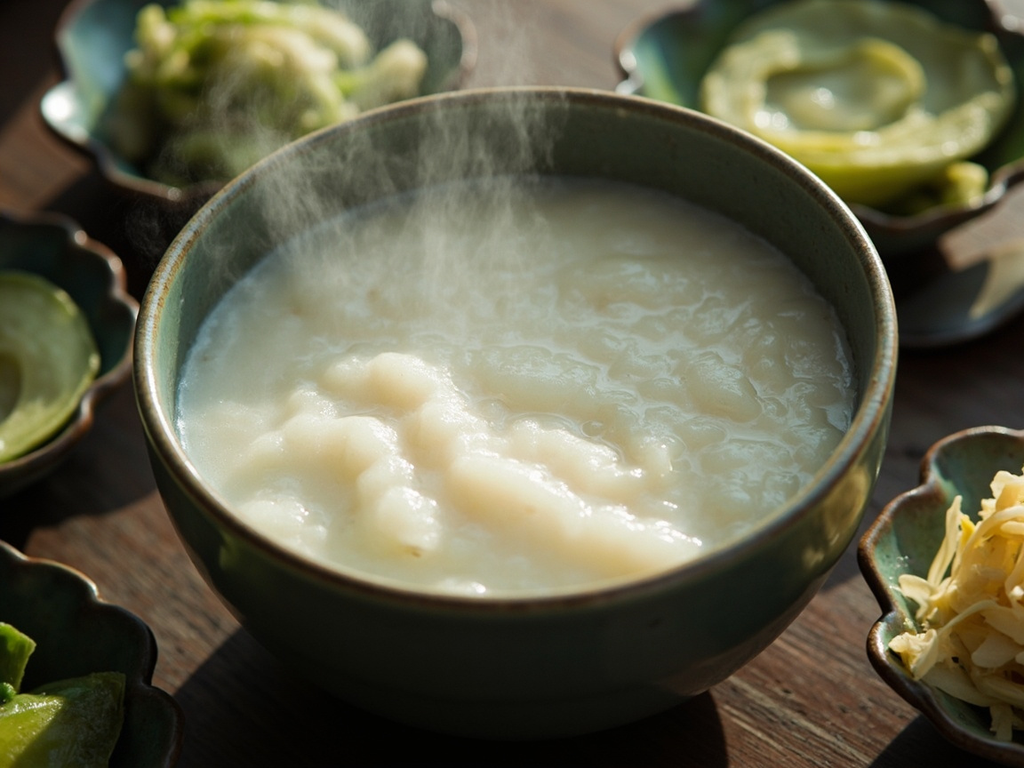
A long-simmered white rice porridge, smooth and nourishing, served with small mounds of lacto-fermented vegetables (turnip, mustard greens, cucumber) and a drizzle of jiàng. The contrast of mild and salty-tangy awakens the senses.
Before the drum calls the ministers, when the lamp still burns, We take this steaming bowl. The white rice, simmered until it becomes velvet, soothes the stomach that the cares of the empire torment. Beside it, these vegetables left to mature in brine sting the tongue and chase away sleep. A sovereign who wishes to hold the Mandate of Heaven from morning to night must first know how to simply nourish the body.
- •White rice — a handful per bowl (base)
- •Spring water — plenty (cooking)
- •Pickled turnip and mustard greens — a small pile (fermented side)
- •Pickled cucumber (hú guā) — a few slices (tangy freshness)
- •Fermented bean sauce (jiàng) — a drizzle (umami seasoning)
Dawn Rice Porridge and Pickled Vegetables
A long-simmered white rice porridge, smooth and nourishing, served with small mounds of lacto-fermented vegetables (turnip, mustard greens, cucumber) and a drizzle of jiàng. The contrast of mild and salty-tangy awakens the senses.
Why this dish? Wu Zetian governed as a hard worker: she presided over audiences at dawn. Like the entire court, she started the day with a comforting grain porridge, accompanied by pickled vegetables that awakened the palate—a modest meal behind the splendor, before the affairs of the empire.
Before the drum calls the ministers, when the lamp still burns, We take this steaming bowl. The white rice, simmered until it becomes velvet, soothes the stomach that the cares of the empire torment. Beside it, these vegetables left to mature in brine sting the tongue and chase away sleep. A sovereign who wishes to hold the Mandate of Heaven from morning to night must first know how to simply nourish the body.
Ingredients (period version)
- White rice — a handful per bowl (base)
- Spring water — plenty (cooking)
- Pickled turnip and mustard greens — a small pile (fermented side)
- Pickled cucumber (hú guā) — a few slices (tangy freshness)
- Fermented bean sauce (jiàng) — a drizzle (umami seasoning)
Ingredients
- Short-grain rice (risotto or congee rice) — 100 g (base)
- Water — 1.2 to 1.5 L (cooking)
- Lacto-fermented vegetables (turnip, mustard greens, cucumber) — 100 g (side)
- Soy sauce or soybean paste — 1 tsp (umami)
- Sesame oil — a few drops (finish)
Method
- Rinse the rice, put it in a large pot with cold water.
- Bring to a boil, then reduce to a simmer and cook for 1 to 1.5 hours, stirring occasionally, until the porridge is smooth and creamy.
- Slice the pickled vegetables into thin strips and arrange in small piles.
- Serve the porridge piping hot, drizzle with soy sauce and a few drops of sesame oil, and accompany with the vegetables.
How it was made : Grain porridge (zhōu) has been the foundation of meals since Chinese antiquity, from peasant to emperor—only the quality of the grain changed: millet and barley for the northern commoners, refined white rice for the elite. Lacto-fermentation of vegetables in brine allowed them to last all winter and remains an art described as early as the Qimin Yaoshu (6th century).
The contemporary twist : A spoonful of homemade pickles and a soft-boiled egg on the congee: the empress's breakfast, brunch-style.
Sources : Jia Sixie, Qimin Yaoshu (齊民要術), 6th century, on brines and fermentations
Wu Zetian · Charactorium