 flip
flipVegetarian Feast of Mushrooms, Bamboo Shoots, and Greens
Vegetarian Feast of Mushrooms, Bamboo Shoots, and Greens
Why this dish? Wu Zetian presented herself as a Buddhist sovereign: in 692, she issued an edict banning animal slaughter and fishing throughout the empire. The vegetarian feasts, without meat, offered in the monasteries she funded are a direct expression of this piety. This dish respectfully draws inspiration from this living tradition.
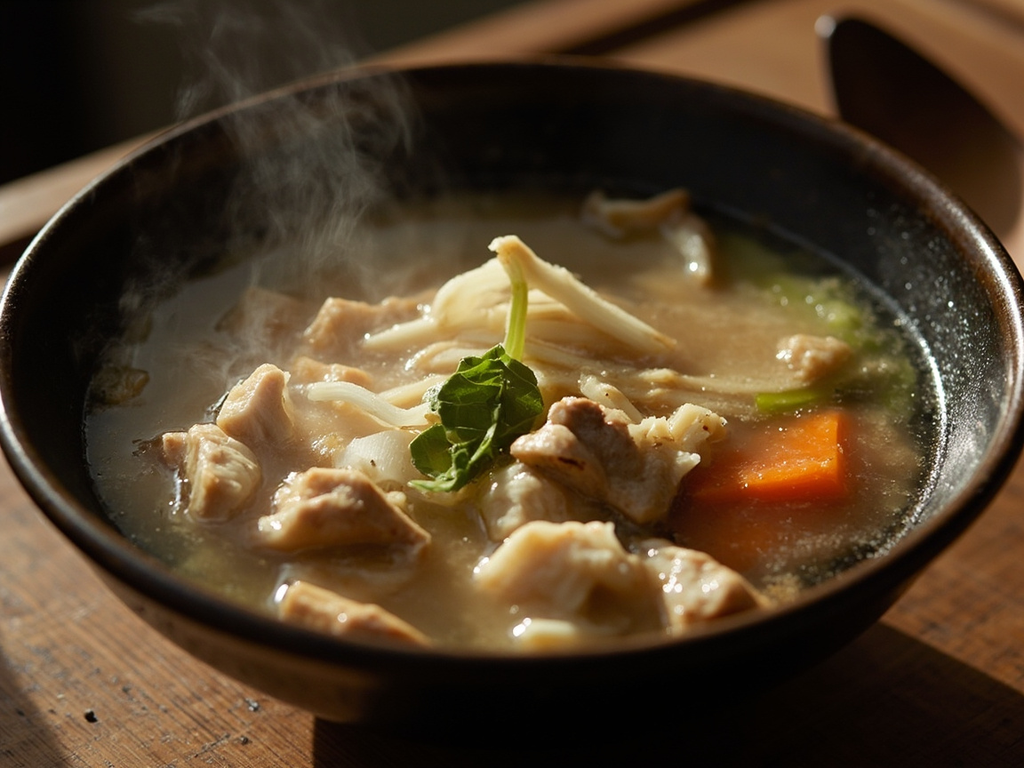
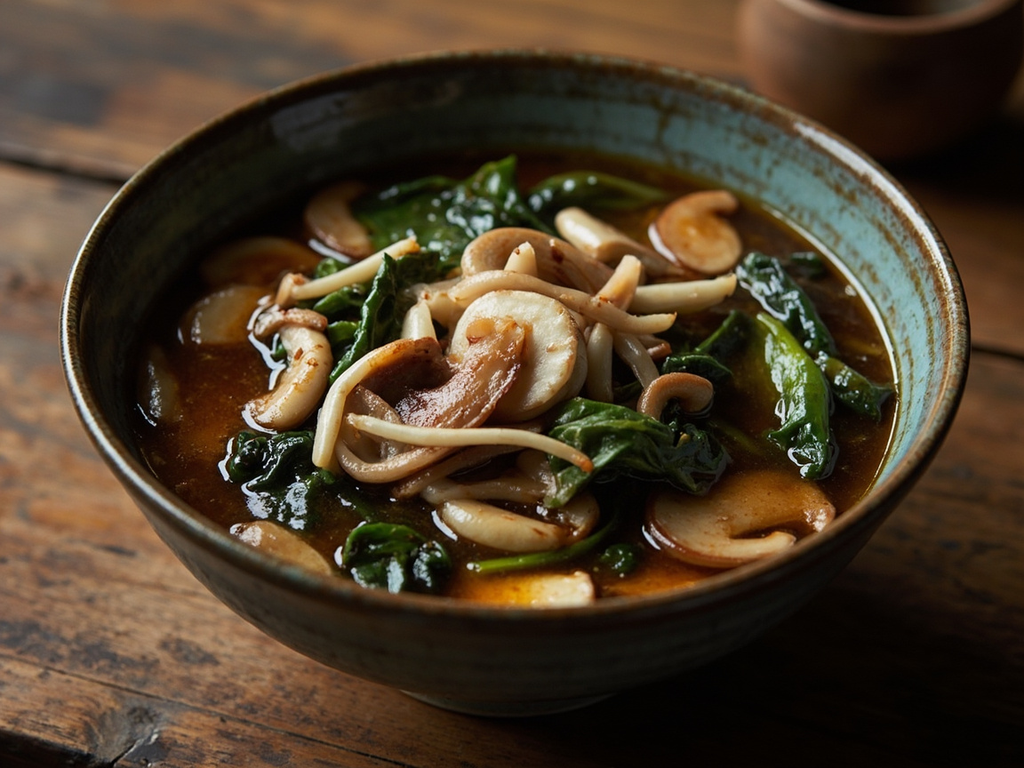
An all-vegetable dish: meaty mushrooms, crunchy bamboo shoots, lotus root, and bitter greens, simmered together in a broth of jiàng and ginger. Without any meat, it derives all its depth from the umami of mushrooms.
When We commanded that no one shed the blood of beasts in Our empire, it was not whim but compassion taught by the Buddha. At the vegetarian table We offered the monks, there was no flesh: and yet, taste this mushroom soaked in broth, this bamboo shoot that cracks under the tooth, this lotus root pale as the moon. Heaven does not need blood to satisfy—a righteous heart and a skillful hand suffice.
- •Fresh and dried mushrooms — a good handful (central umami)
- •Bamboo shoots — a few, sliced (crunch)
- •Lotus root — one, sliced in rounds (texture, sweetness)
- •Bitter greens (mustard, edible chrysanthemum) — one bunch (bitterness)
- •Fermented bean sauce (jiàng), ginger — to taste (seasoning)
Vegetarian Feast of Mushrooms, Bamboo Shoots, and Greens
An all-vegetable dish: meaty mushrooms, crunchy bamboo shoots, lotus root, and bitter greens, simmered together in a broth of jiàng and ginger. Without any meat, it derives all its depth from the umami of mushrooms.
Why this dish? Wu Zetian presented herself as a Buddhist sovereign: in 692, she issued an edict banning animal slaughter and fishing throughout the empire. The vegetarian feasts, without meat, offered in the monasteries she funded are a direct expression of this piety. This dish respectfully draws inspiration from this living tradition.
When We commanded that no one shed the blood of beasts in Our empire, it was not whim but compassion taught by the Buddha. At the vegetarian table We offered the monks, there was no flesh: and yet, taste this mushroom soaked in broth, this bamboo shoot that cracks under the tooth, this lotus root pale as the moon. Heaven does not need blood to satisfy—a righteous heart and a skillful hand suffice.
Ingredients (period version)
- Fresh and dried mushrooms — a good handful (central umami)
- Bamboo shoots — a few, sliced (crunch)
- Lotus root — one, sliced in rounds (texture, sweetness)
- Bitter greens (mustard, edible chrysanthemum) — one bunch (bitterness)
- Fermented bean sauce (jiàng), ginger — to taste (seasoning)
Ingredients
- Shiitake mushrooms (fresh + rehydrated dried) — 250 g (umami)
- Bamboo shoots — 150 g, sliced (crunch)
- Lotus root — 1 small, sliced in rounds (texture)
- Bok choy or mustard greens — 200 g (green bitterness)
- Soy sauce + soybean paste — 2 tbsp (savory umami)
- Ginger + mushroom soaking water — 20 g + 300 ml (broth)
- Sesame oil — 1 tbsp (finish)
Method
- Rehydrate the dried mushrooms; reserve the filtered soaking water.
- Sauté the ginger in a little oil, add mushrooms, bamboo shoots, and lotus root, stir-fry for 3 minutes.
- Add the mushroom water and soybean paste, cover, and simmer for 12 minutes.
- Add the greens at the end so they stay firm, season with soy sauce.
- Finish with a drizzle of sesame oil and serve hot.
How it was made : Buddhist vegetarian cuisine (sù shí) developed in China with the rise of Buddhism and reached great refinement under the Tang and Song. In the absence of meat, cooks exploited the umami of mushrooms, bamboo, and fermented beans. Wu Zetian's 692 edict banning slaughter is historically attested.
The contemporary twist : Arranged as small bites on porcelain spoons, these "monastery tapas" prove that a meatless dish can be a feast.
Sources : Edict of Wu Zetian banning slaughter (692), Zizhi Tongjian (資治通鑑)
Wu Zetian · Charactorium