Dastarkhan (دسترخوان)
The dastarkhan is the ceremonial cloth on which the Central Asian Turkish meal of the 11th century unfolds. Dishes are served all at once or in two stages: first the dairy, dried fruits, breads, and fermented drinks (the 'light'), then the central meat dish (the 'heavy'). There is no starter-main-dessert sequence: one picks according to appetite and rank. At the Karakhanid court, the dastarkhan reflects the khan's generosity and blends nomadic heritage (boiled meat, kumiss) with sedentary refinement (pilaf, oasis fruits).
Signature : Sheep's tail fat (quyruq yaghi)
The rendered fat from the tail of the fat-tailed sheep (Ovis aries steatopyga) is the fundamental cooking fat of Central Asian Turkish cuisine. It flavors pilafs, soups, noodles, and is used to confit meat for preservation. Its rich, slightly sweet taste distinguishes this cuisine from all others. The Karakhanids made it a marker of prestige: the more a dish contained, the more festive it was.
Yusuf Balasaguni at the table
1019 — 1085
5 period recipes
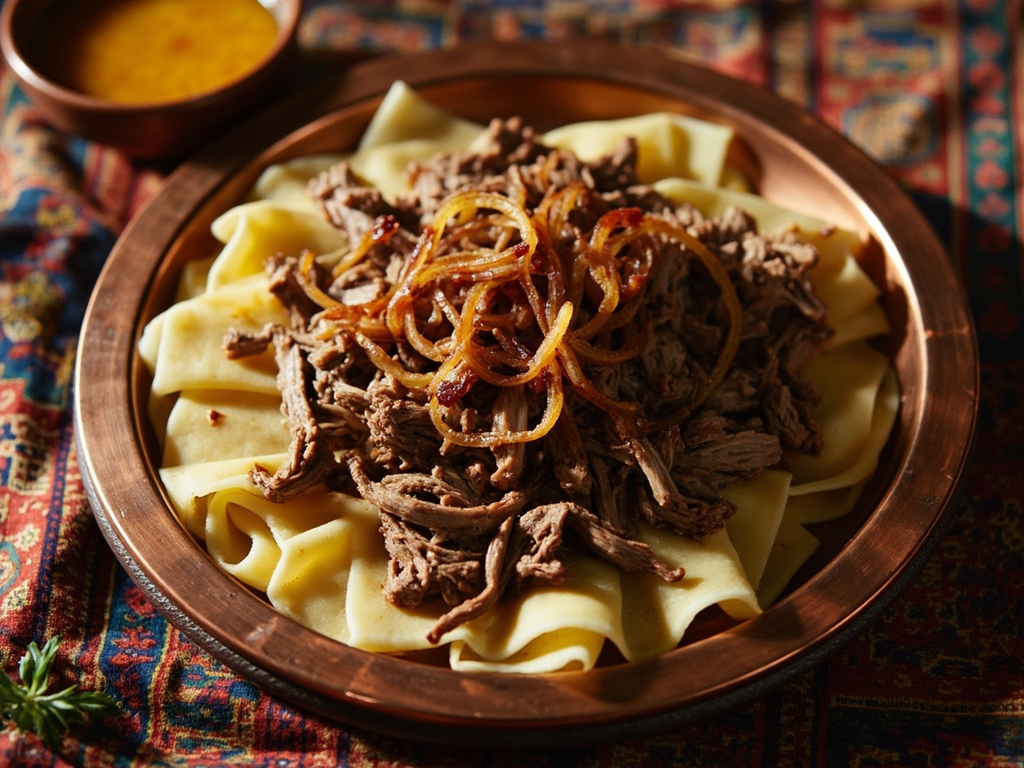 Festive
Beshbarmak (بشبرماق)
Et taami (meat dish, heart of the dastarkhan)
🧂 🍄· 3h30
View the recipe
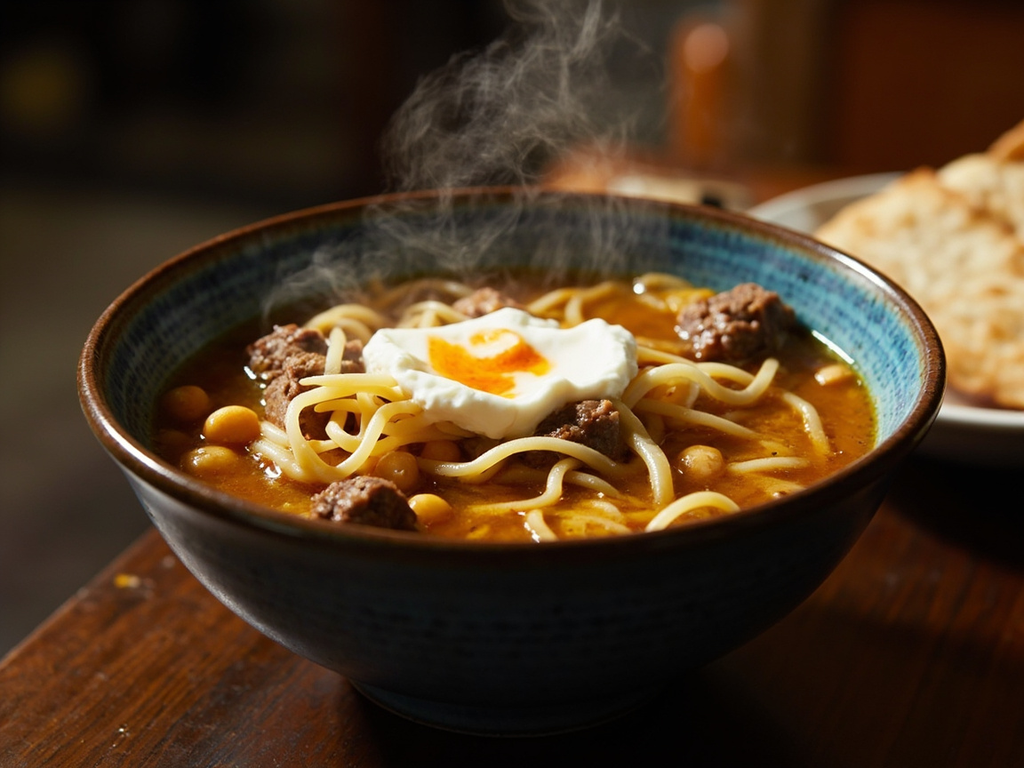 Everyday
Kesmé ash (كسمه آش)
Ash (everyday soup-dish)
🧂 🍄 🍋· 2h
View the recipe
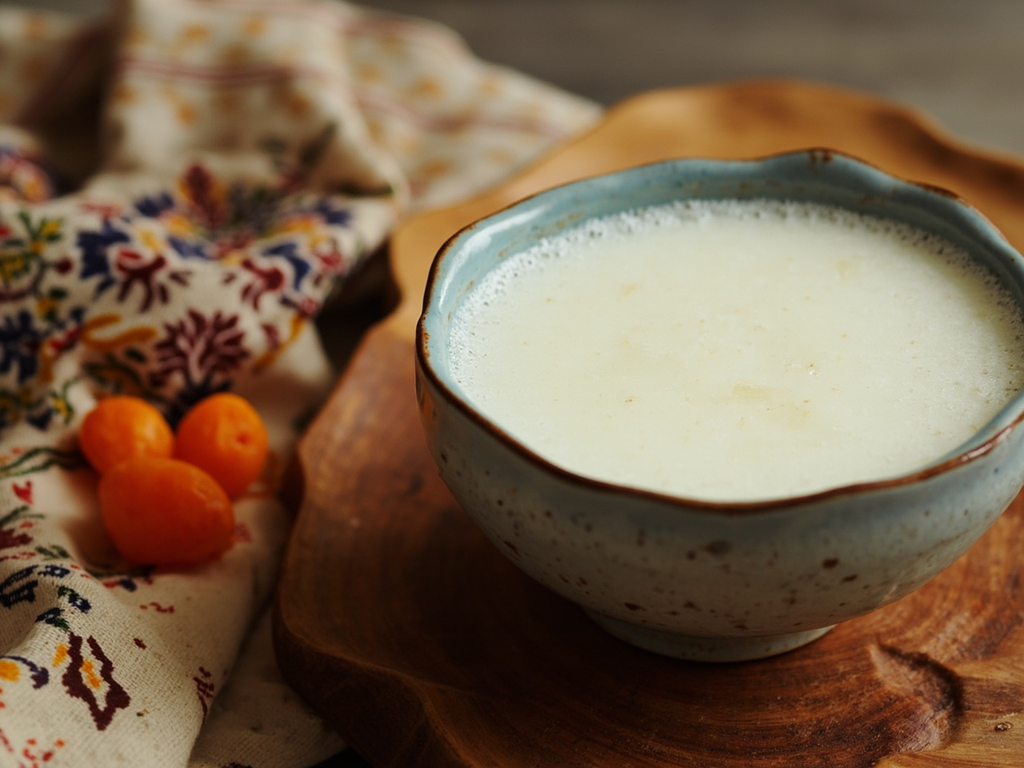 Drink
DrinkQymyz (قمز)
Içimlik (beverage)
🍋 🫙· 48h (fermentation)
View the recipe
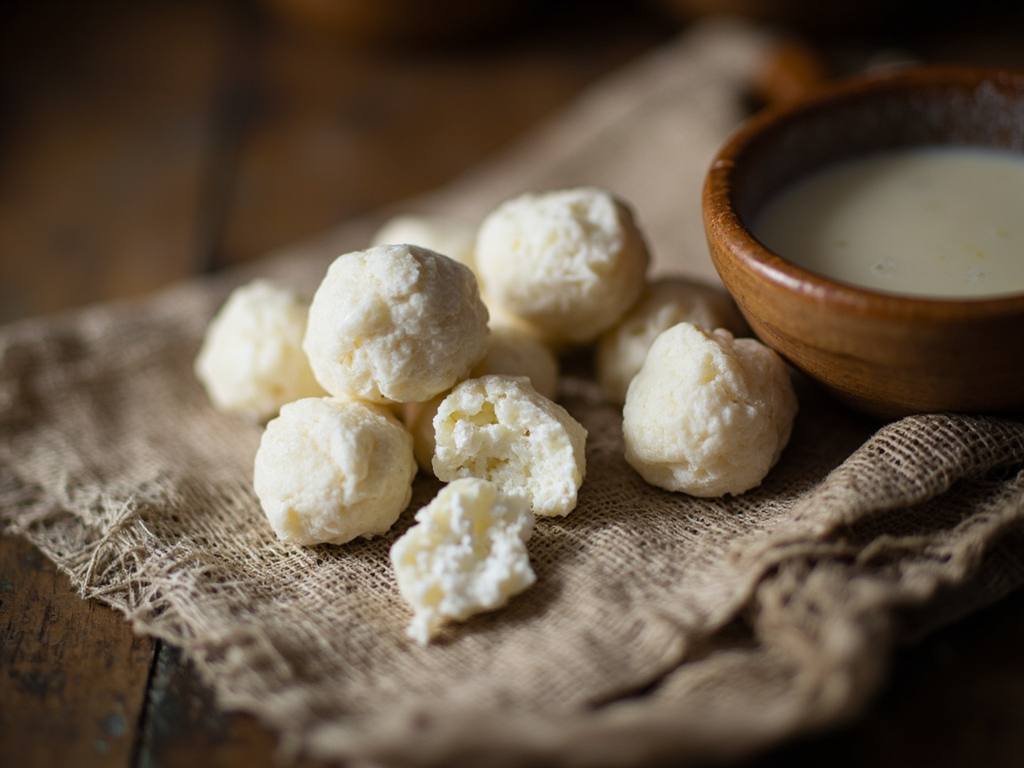 Preserving
Qurut (قروت)
Azuqe (travel and storage provision)
🧂 🍋 🫙· 7 days (drying)
View the recipe
 Festive
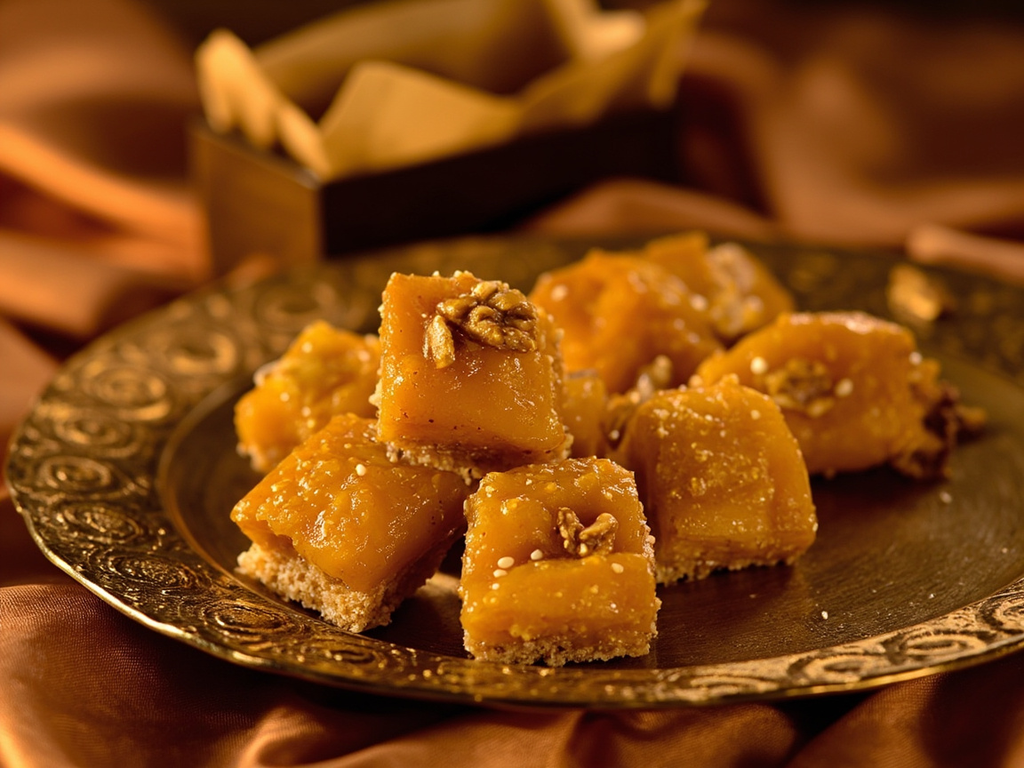
Halvaytar with walnuts and dried apricots (حلوایتر)
Shirinlik (sweet)
🍯 🌶️· 45 min + 2h rest
View the recipe