 flip
flipKesmé ash (كسمه آش)
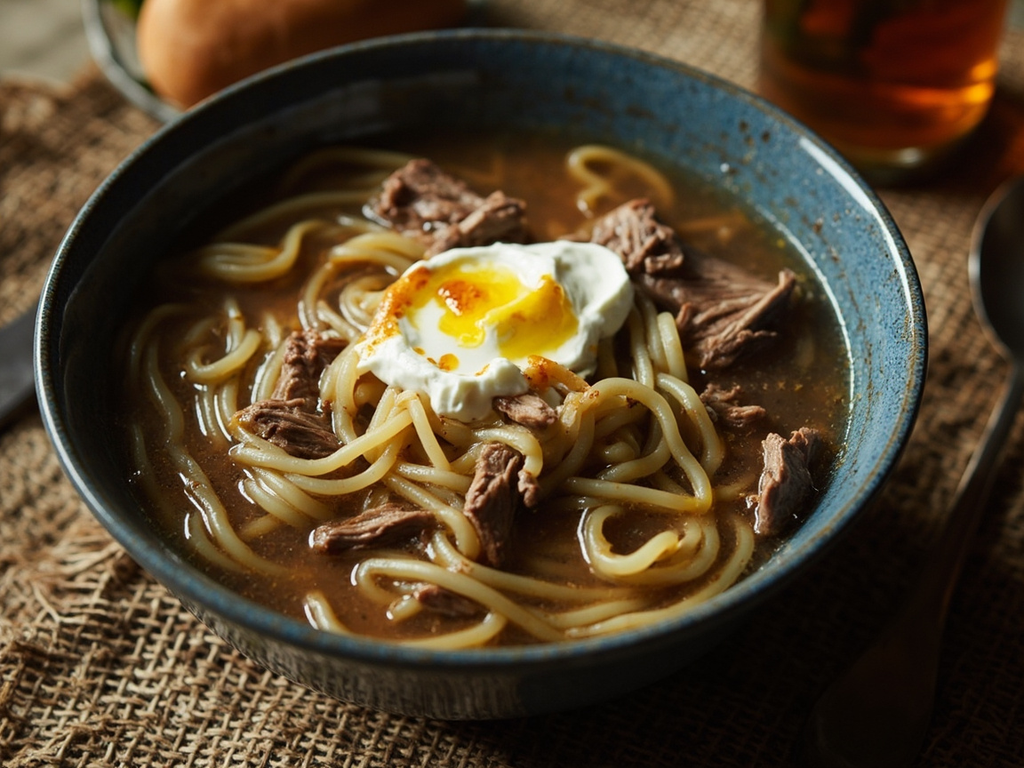
Kesmé ash (كسمه آش)
Why this dish? Ash, a thick noodle soup, is the daily meal of every Central Asian Turkish household. Yusuf Balasaguni, whose Kutadgu Bilig devotes several passages to moderation in eating and the wisdom of frugality, certainly ate this simple, nourishing soup in his life as a scholar in Balasagun before being received at the court of Kashgar.
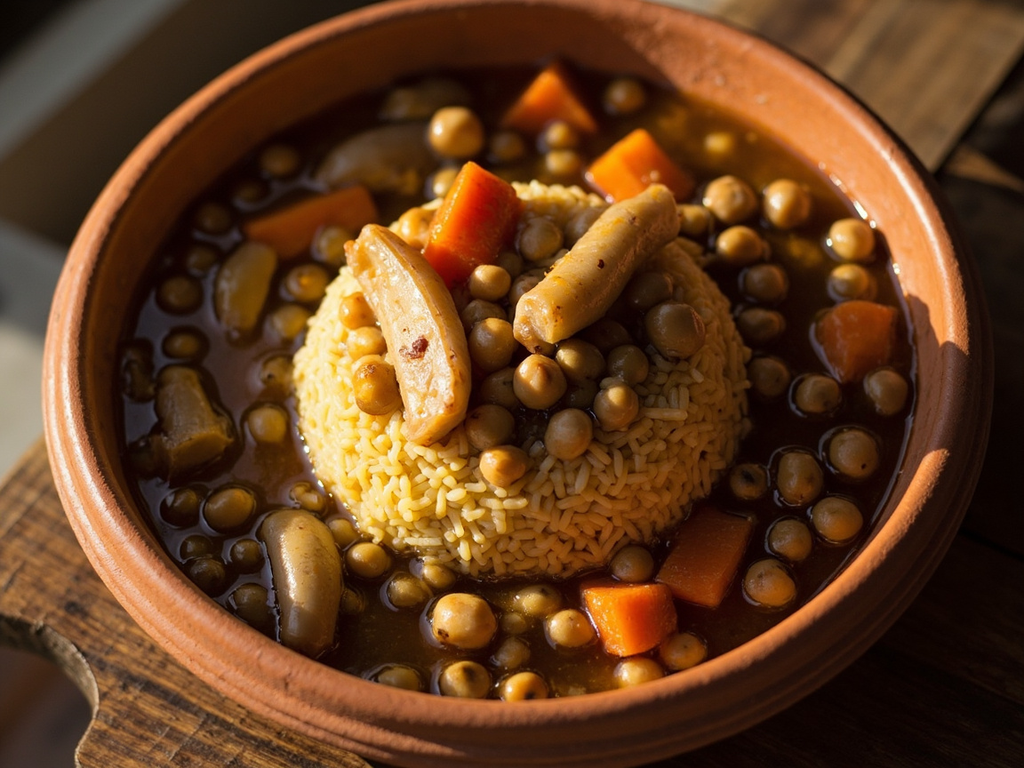
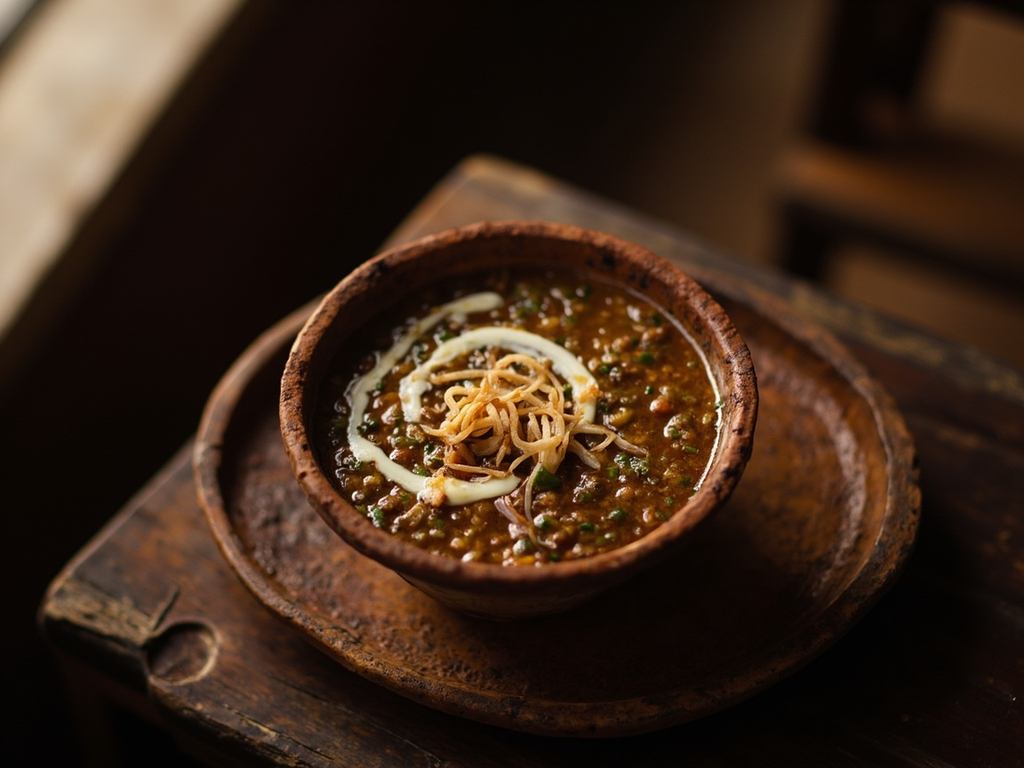
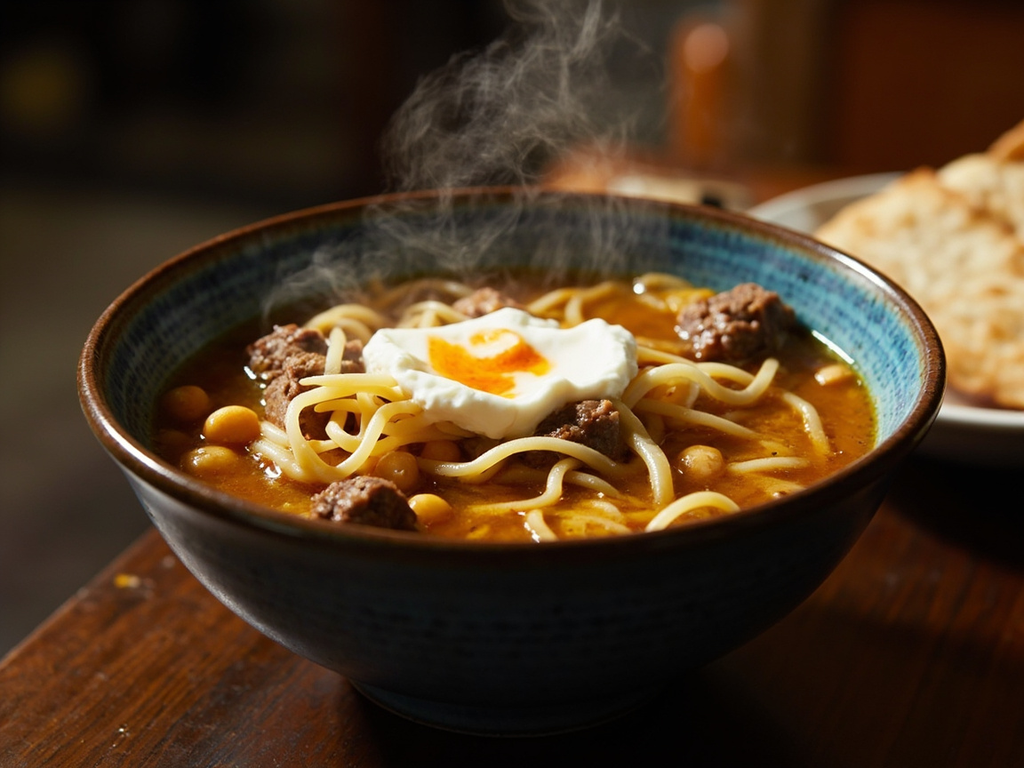
Thick soup of knife-cut noodles in mutton broth, enriched with chickpeas and brightened with a drizzle of sour milk. A complete meal in a bowl, frugal and comforting.
The wise man is content with little, and little well prepared is better than a banquet without measure. In my youth at Balasagun, before the khan called me, I ate this kesmé ash every evening — noodles cut by knife from a wheat dough, thrown into a broth where the bones gave their substance. A little sour milk on top, and the body is nourished, the spirit free for study. He who fills his belly too much cannot fill his inkwell.
- •Mutton bones with some meat — a few pieces (broth base)
- •Wheat flour — enough to make a dough (noodles)
- •Dried chickpeas — a handful, soaked overnight (legume)
- •Onion — one, sliced (aromatic)
- •Sour milk (ayran) — a bowl (acidic touch at serving)
- •Salt — to taste (seasoning)
- •Tail fat — a little (for sautéing onions)
Kesmé ash (كسمه آش)
Thick soup of knife-cut noodles in mutton broth, enriched with chickpeas and brightened with a drizzle of sour milk. A complete meal in a bowl, frugal and comforting.
Why this dish? Ash, a thick noodle soup, is the daily meal of every Central Asian Turkish household. Yusuf Balasaguni, whose Kutadgu Bilig devotes several passages to moderation in eating and the wisdom of frugality, certainly ate this simple, nourishing soup in his life as a scholar in Balasagun before being received at the court of Kashgar.
The wise man is content with little, and little well prepared is better than a banquet without measure. In my youth at Balasagun, before the khan called me, I ate this kesmé ash every evening — noodles cut by knife from a wheat dough, thrown into a broth where the bones gave their substance. A little sour milk on top, and the body is nourished, the spirit free for study. He who fills his belly too much cannot fill his inkwell.
Ingredients (period version)
- Mutton bones with some meat — a few pieces (broth base)
- Wheat flour — enough to make a dough (noodles)
- Dried chickpeas — a handful, soaked overnight (legume)
- Onion — one, sliced (aromatic)
- Sour milk (ayran) — a bowl (acidic touch at serving)
- Salt — to taste (seasoning)
- Tail fat — a little (for sautéing onions)
Ingredients
- Lamb neck or shank — 500 g (broth and meat)
- All-purpose wheat flour — 250 g (noodles)
- Water — 100 ml (dough) + 2 L (broth) (dough and cooking)
- Canned chickpeas — 200 g drained (legume)
- Yellow onion — 1 medium (aromatic)
- Clarified butter or vegetable oil — 2 tbsp (sautéing)
- Plain full-fat yogurt — 100 g (acidic touch)
- Salt and pepper — to taste (seasoning)
- Coriander seeds — 1 tsp (aromatic)
Method
- Prepare the broth: put the lamb in a pot, cover with cold water, bring to a boil, skim, then simmer for 1.5 hours with coriander seeds and salt.
- Prepare the noodle dough: mix flour, a pinch of salt, and warm water. Knead until a smooth, firm dough forms. Let rest for 20 minutes.
- Sauté the sliced onion in clarified butter until golden.
- Remove the meat from the broth, shred into small pieces. Strain the broth and return it to the heat.
- Roll out the dough thinly (3 mm) and cut it with a knife into irregular strips about 1 cm wide and 5 cm long (this is the kesmé action).
- Add the chickpeas and sautéed onions to the broth. Bring to a simmer.
- Drop the noodles into the broth and cook for 5 to 6 minutes. Return the shredded meat.
- Serve in deep bowls, placing a generous spoonful of yogurt in the center of each bowl. Eat by mixing the yogurt into the broth.
How it was made : The word 'ash' (thick soup) is common to all Turkic and Persian languages of the region. Mahmud al-Kashgari mentions knife-cut noodles (kesmé/kesme) among common Turkic foods. Chickpeas were cultivated in Transoxiana since antiquity and were an accessible protein source even for modest scholars.
Sources : Mahmud al-Kashgari, Dîwân Lughât al-Turk, 1072-1074 · Charles Perry, 'Grain Foods of the Early Turks', in Medieval Arab Cookery, 2001
Yusuf Balasaguni · Charactorium