 flip
flipBeshbarmak (بشبرماق)
Beshbarmak (بشبرماق)
Why this dish? Beshbarmak — literally 'five fingers', because it is eaten by hand — is the dish of honor at Turkish banquets. Yusuf Balasaguni, admitted to the court of the Karakhanid khan Tavghatch Bughra Khan in Kashgar after presenting his Kutadgu Bilig, certainly shared this dish at court feasts. In his work itself, he evokes banquets as places of wisdom and power.
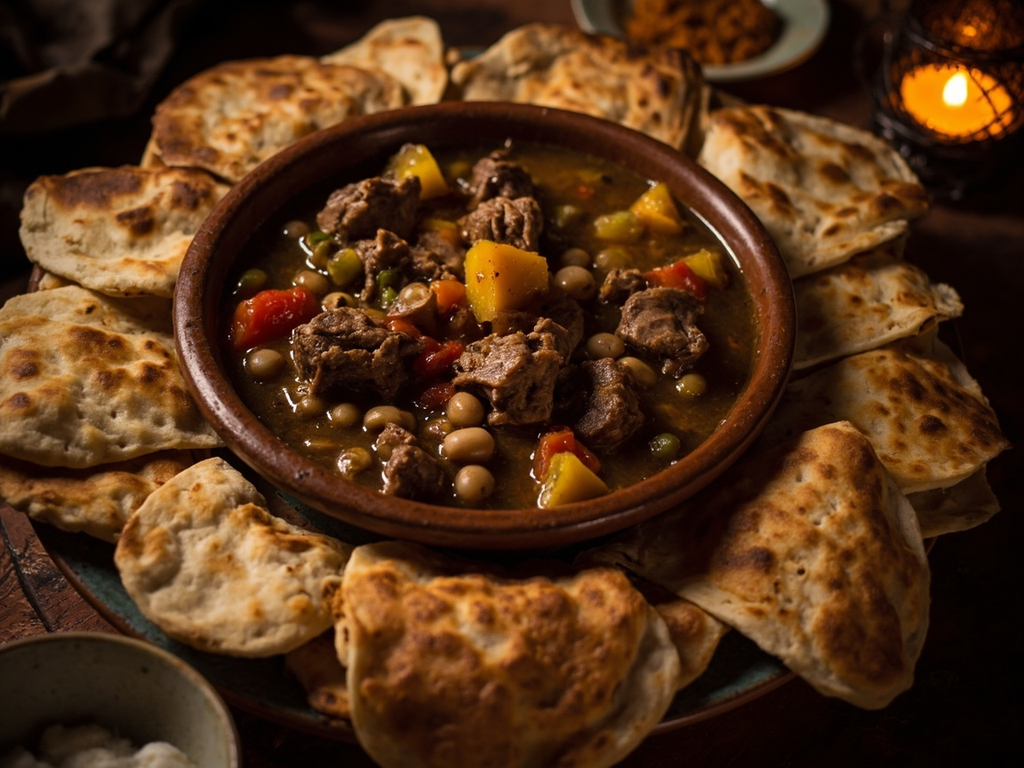
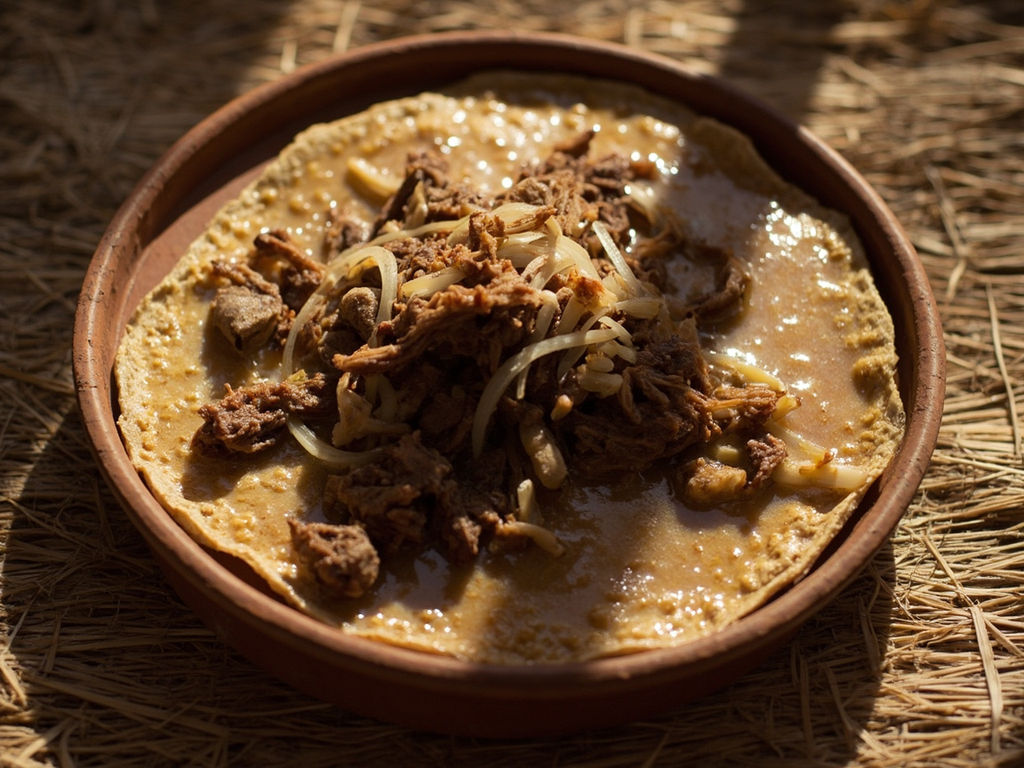
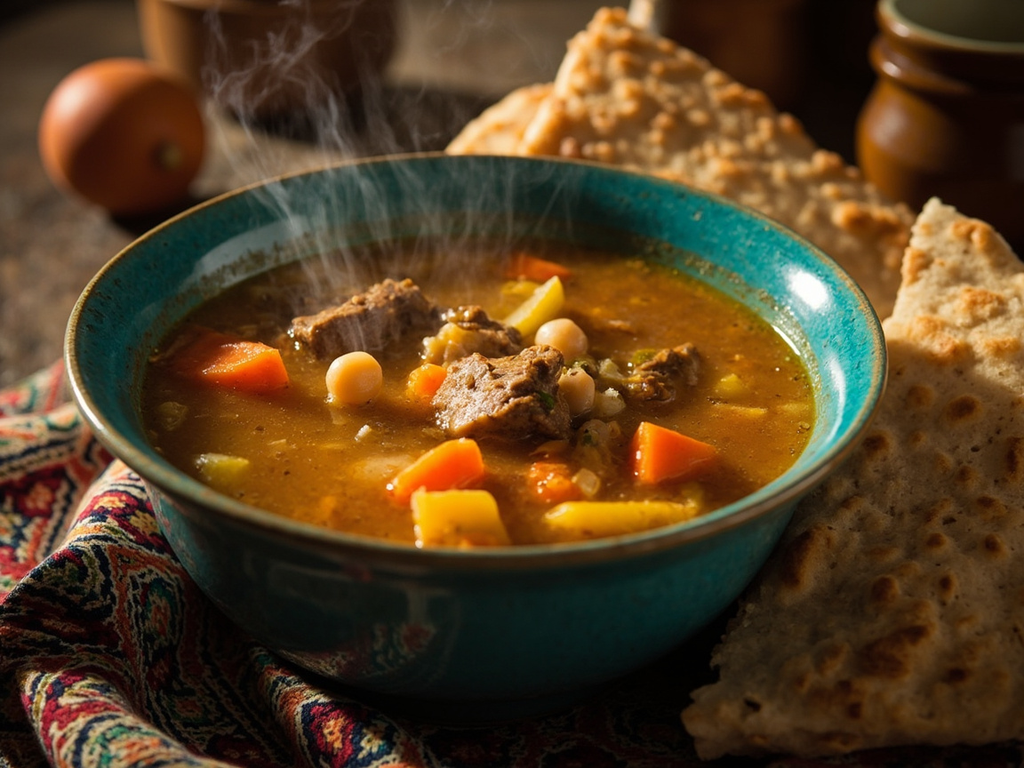
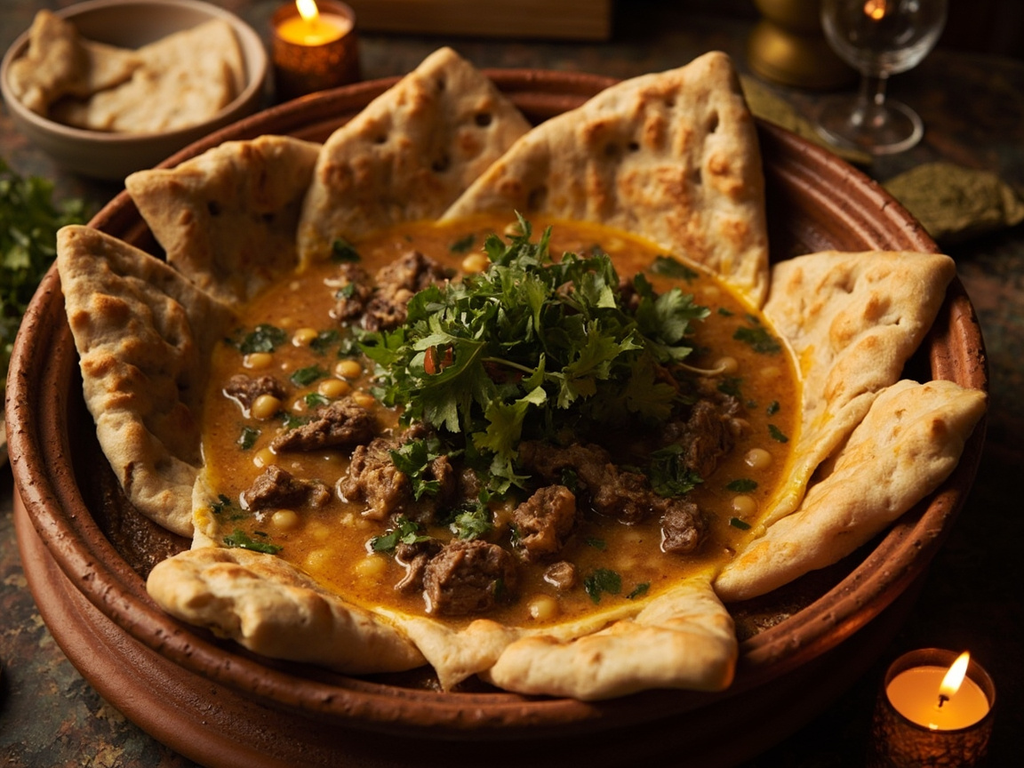
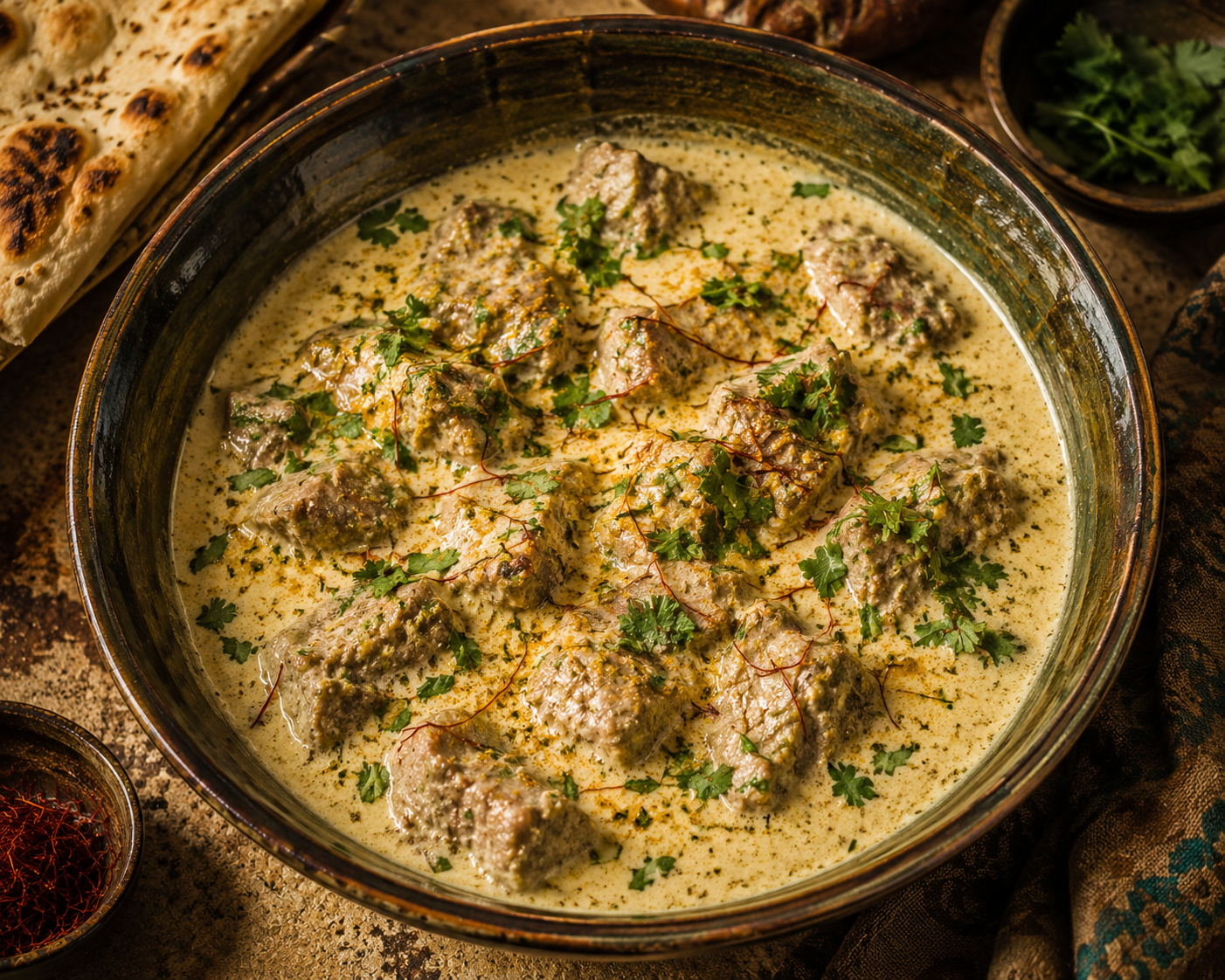
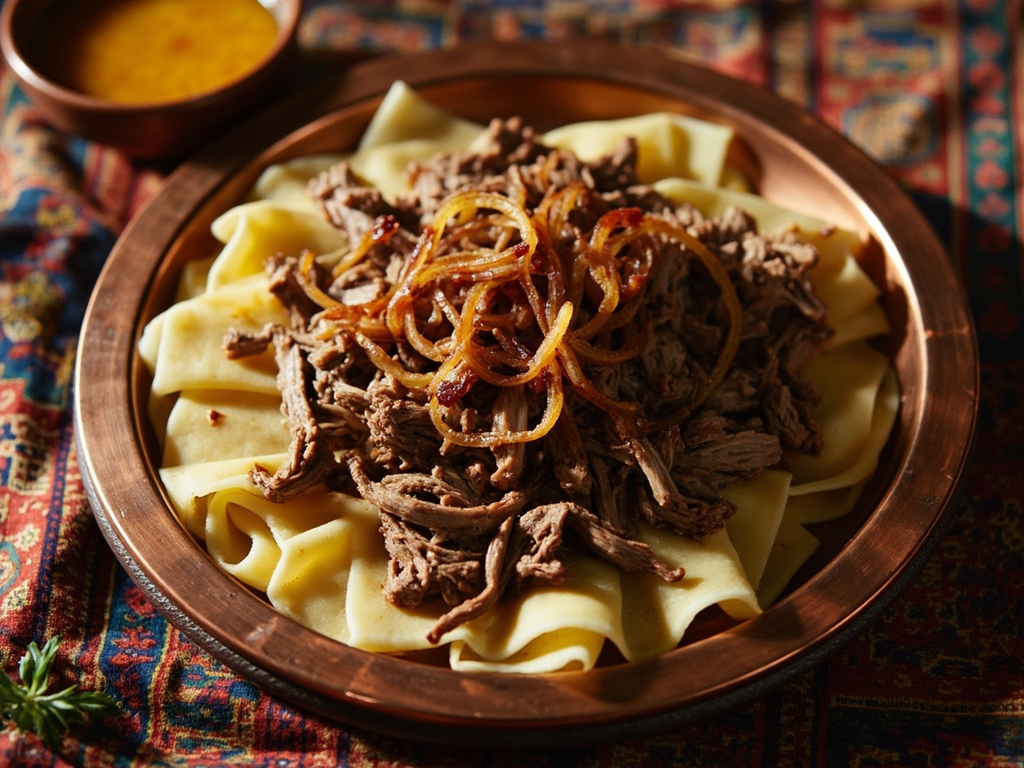
Mutton boiled long on the bone, carved and served on wide fresh noodles, drizzled with concentrated broth and accompanied by onions melted in tail fat. It is the royal dish of the settled steppe.
Know, O seeker of wisdom, that the khan's table is a mirror of his justice. When Tavghatch Bughra Khan honored me by receiving my work, a dastarkhan was laid with beshbarmak at its center — a whole sheep, patiently boiled until the flesh fell from the bone. The noodles, wide as a palm, caught the fatty broth, and each guest ate with his five fingers, according to the rank the khan assigned him. The head piece goes to the most honored: that evening, by God's grace, it was the poet's.
- •Whole sheep (shoulder and leg on the bone) — a one-year-old beast or half a beast (main meat)
- •Sheep's tail fat — a good piece (fat for the onions)
- •Onions — several, sliced (melting garnish)
- •Wheat flour — enough to knead a firm dough (fresh noodles)
- •Salt — to taste (seasoning)
- •Water — enough to generously cover the meat (broth)
Beshbarmak (بشبرماق)
Mutton boiled long on the bone, carved and served on wide fresh noodles, drizzled with concentrated broth and accompanied by onions melted in tail fat. It is the royal dish of the settled steppe.
Why this dish? Beshbarmak — literally 'five fingers', because it is eaten by hand — is the dish of honor at Turkish banquets. Yusuf Balasaguni, admitted to the court of the Karakhanid khan Tavghatch Bughra Khan in Kashgar after presenting his Kutadgu Bilig, certainly shared this dish at court feasts. In his work itself, he evokes banquets as places of wisdom and power.
Know, O seeker of wisdom, that the khan's table is a mirror of his justice. When Tavghatch Bughra Khan honored me by receiving my work, a dastarkhan was laid with beshbarmak at its center — a whole sheep, patiently boiled until the flesh fell from the bone. The noodles, wide as a palm, caught the fatty broth, and each guest ate with his five fingers, according to the rank the khan assigned him. The head piece goes to the most honored: that evening, by God's grace, it was the poet's.
Ingredients (period version)
- Whole sheep (shoulder and leg on the bone) — a one-year-old beast or half a beast (main meat)
- Sheep's tail fat — a good piece (fat for the onions)
- Onions — several, sliced (melting garnish)
- Wheat flour — enough to knead a firm dough (fresh noodles)
- Salt — to taste (seasoning)
- Water — enough to generously cover the meat (broth)
Ingredients
- Lamb or mutton shoulder on the bone — 1.5 kg (main meat)
- Sheep's tail fat (or clarified butter if unavailable) — 80 g (fat)
- Yellow onions — 3 large (garnish)
- All-purpose wheat flour — 400 g (noodles)
- Egg — 1 (dough (binder))
- Warm water — 150 ml + cooking water (dough and broth)
- Salt — to taste (seasoning)
- Black pepper — 1 tsp (seasoning)
- Bay leaf — 2 (broth)
Method
- Place the lamb shoulder in a large pot, cover with cold water. Bring to a boil and carefully skim off the foam that forms.
- Add salt, pepper, and bay leaf. Reduce to a simmer and cook for 2.5 to 3 hours until the meat easily falls off the bone.
- Meanwhile, prepare the dough: mix flour, egg, salt, and warm water. Knead for 10 minutes until a smooth, firm ball forms. Let rest for 30 minutes under a cloth.
- Roll out the dough very thinly (2 mm) and cut into large rectangles about 10 × 15 cm.
- Slice the onions. Melt the tail fat (or clarified butter) and sweat the onions over low heat for 20 minutes until golden and melting.
- Remove the meat from the broth, let it cool slightly, then cut into generous pieces. Strain the broth.
- Cook the noodles in the simmering broth for 5 to 7 minutes. Drain, reserving the broth.
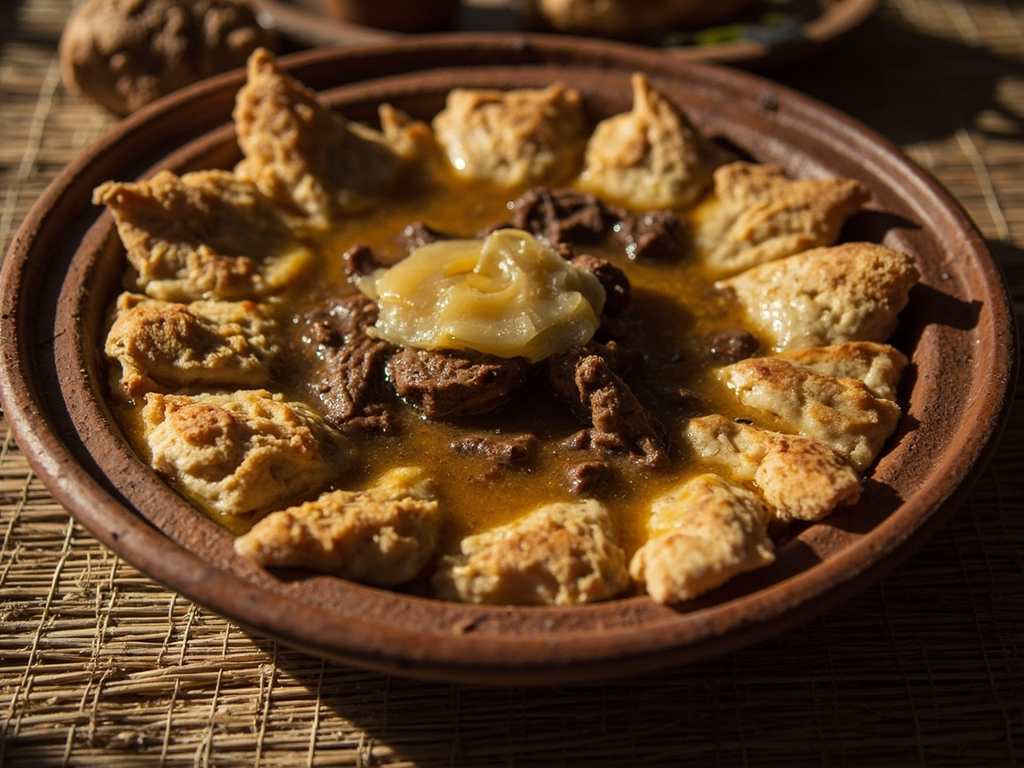
- Assemble: spread the noodles as a bed on a large platter, place the meat on top, cover with the melted onions and their fat, and ladle a few spoonfuls of hot broth over everything. Serve the remaining broth in separate bowls.
How it was made : Beshbarmak is attested among Turkic peoples since pre-Islamic times. Mahmud al-Kashgari, a contemporary of Yusuf Balasaguni, describes in his Dîwân Lughât al-Turk (1072-1074) Turkic food practices, including the long cooking of mutton and wheat noodles. The dish was eaten directly from the large communal platter with five fingers, hence its name.
The contemporary twist : Arrange the noodle rectangles in a fan around the meat, like the pages of an open manuscript — a nod to the Kutadgu Bilig.
Sources : Mahmud al-Kashgari, Dîwân Lughât al-Turk (Compendium of the Turkic Languages), 1072-1074 · Yusuf Khass Hajib, Kutadgu Bilig, ed. R. R. Arat, 1947 · Charles Perry, 'The Central Asian roots of Turkish cuisine', in A Taste of Thyme: Culinary Cultures of the Middle East, 2006
Yusuf Balasaguni · Charactorium