 flip
flipQymyz (قمز)
Qymyz (قمز)
Why this dish? Kumiss (qymyz) is the identity drink of the Turkic peoples. Yusuf Balasaguni, though a settled courtier and pious Muslim, came from a culture where kumiss remained omnipresent. The Kutadgu Bilig refers to feasts and Turkish hospitality, inseparable from this ancestral drink. Even in the Islamized Karakhanid cities, kumiss coexisted with water and syrups.
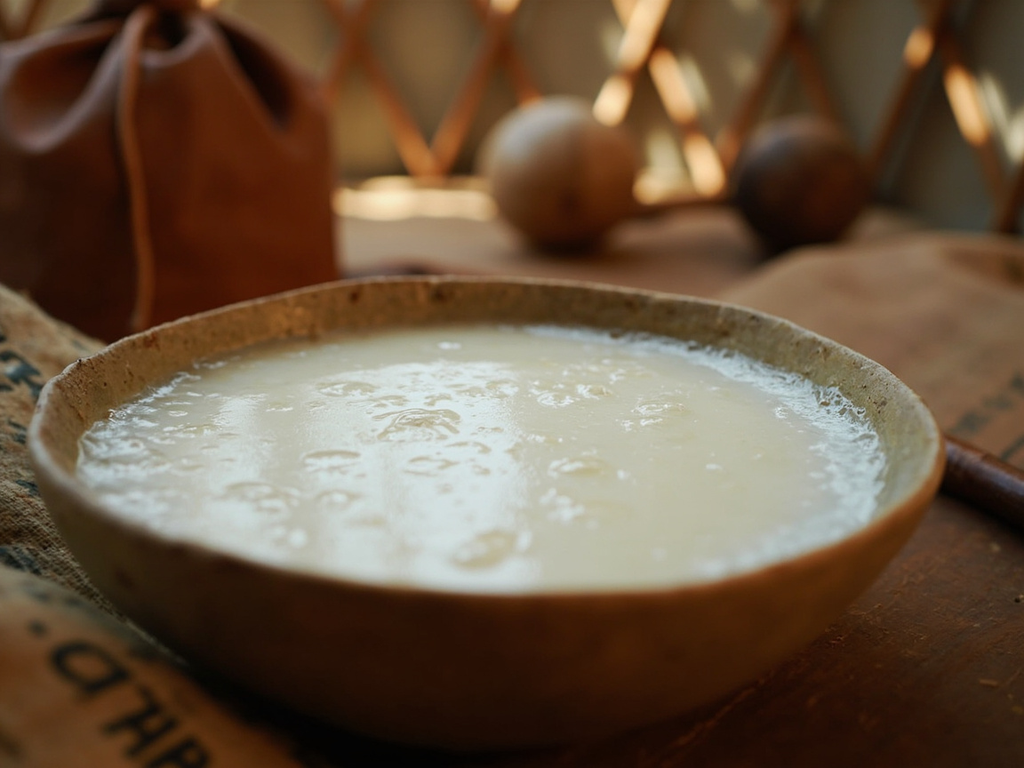
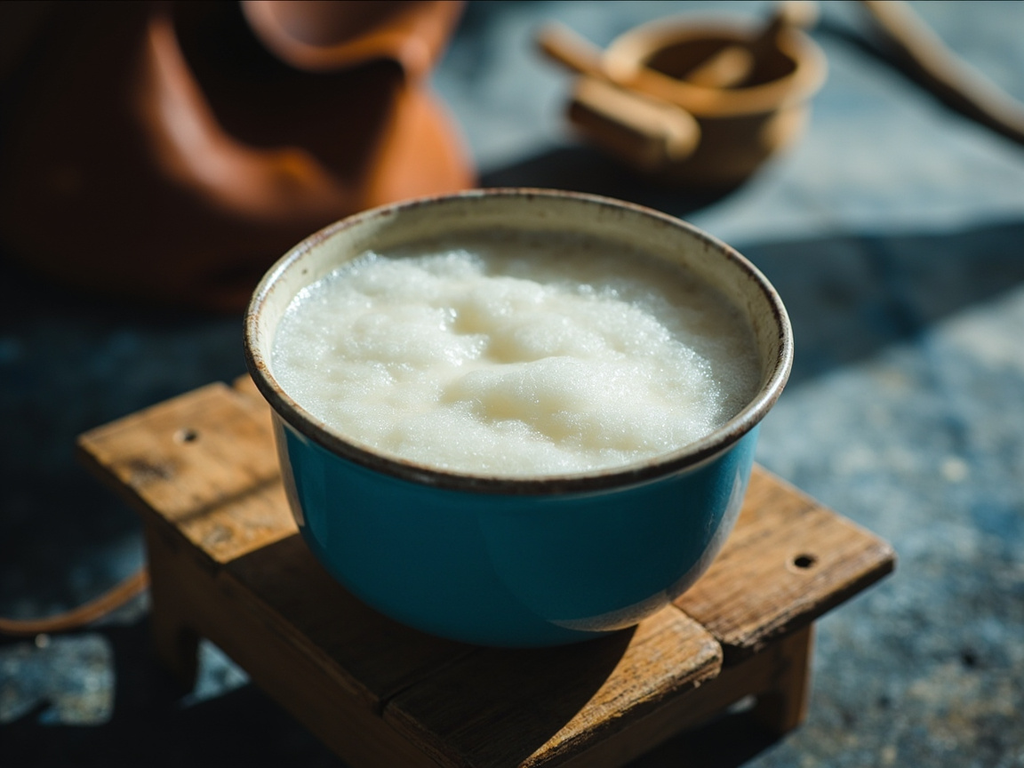
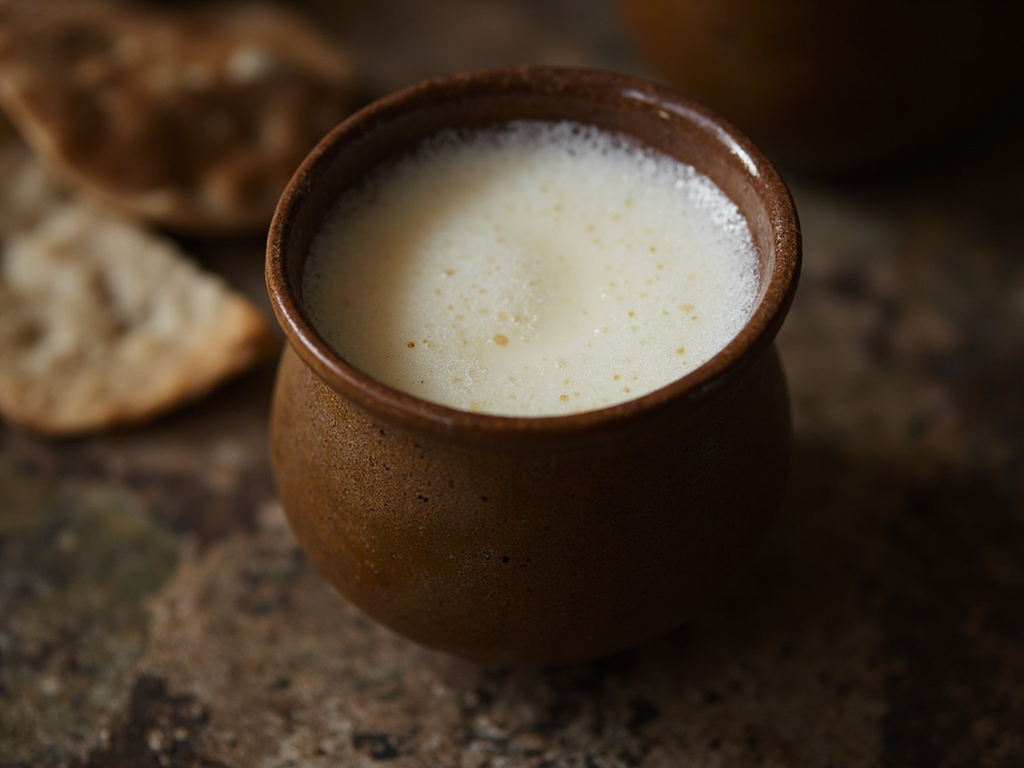
Fermented mare's milk, slightly fizzy and tangy, the sacred drink of the Turkic steppe. Its domestic version with cow's milk, kefir, is an accessible adaptation.
Qymyz is the white blood of the steppe, the drink of our fathers. I am a man of the city and the Book, but my lineage is of horsemen, and I have never forgotten the taste of that light foam beaten in the leather bag. At the court of Kashgar, sorbets and rose water are also served, but when emissaries from the tribes come, it is qymyz that is presented first, for it says: we are Turks, and our traditions live.
- •Fresh mare's milk — a full leather bag (fermentation base)
- •Qymyz starter (residue from a previous fermentation) — a bowl (ferment)
Qymyz (قمز)
Fermented mare's milk, slightly fizzy and tangy, the sacred drink of the Turkic steppe. Its domestic version with cow's milk, kefir, is an accessible adaptation.
Why this dish? Kumiss (qymyz) is the identity drink of the Turkic peoples. Yusuf Balasaguni, though a settled courtier and pious Muslim, came from a culture where kumiss remained omnipresent. The Kutadgu Bilig refers to feasts and Turkish hospitality, inseparable from this ancestral drink. Even in the Islamized Karakhanid cities, kumiss coexisted with water and syrups.
Qymyz is the white blood of the steppe, the drink of our fathers. I am a man of the city and the Book, but my lineage is of horsemen, and I have never forgotten the taste of that light foam beaten in the leather bag. At the court of Kashgar, sorbets and rose water are also served, but when emissaries from the tribes come, it is qymyz that is presented first, for it says: we are Turks, and our traditions live.
Ingredients (period version)
- Fresh mare's milk — a full leather bag (fermentation base)
- Qymyz starter (residue from a previous fermentation) — a bowl (ferment)
Ingredients
- Whole raw milk (cow or goat) — 1 liter (base)
- Milk kefir grains — 30 g (ferment (accessible substitute))
- Honey (optional) — 1 tsp (sweeten acidity)
Method
- Warm the milk to room temperature (it must not be hot, just tempered to 20-25°C).
- Place the kefir grains in a clean glass jar. Pour the milk over them.
- Cover with a cloth or a non-hermetic lid (fermentation produces gas). Let ferment for 24 to 48 hours at room temperature, gently shaking the jar twice a day.
- When the milk has thickened, is slightly fizzy and tangy to the taste, strain through a fine sieve to remove the kefir grains (save them for the next batch).
- Refrigerate the resulting kefir. If desired, add a drizzle of honey before serving.
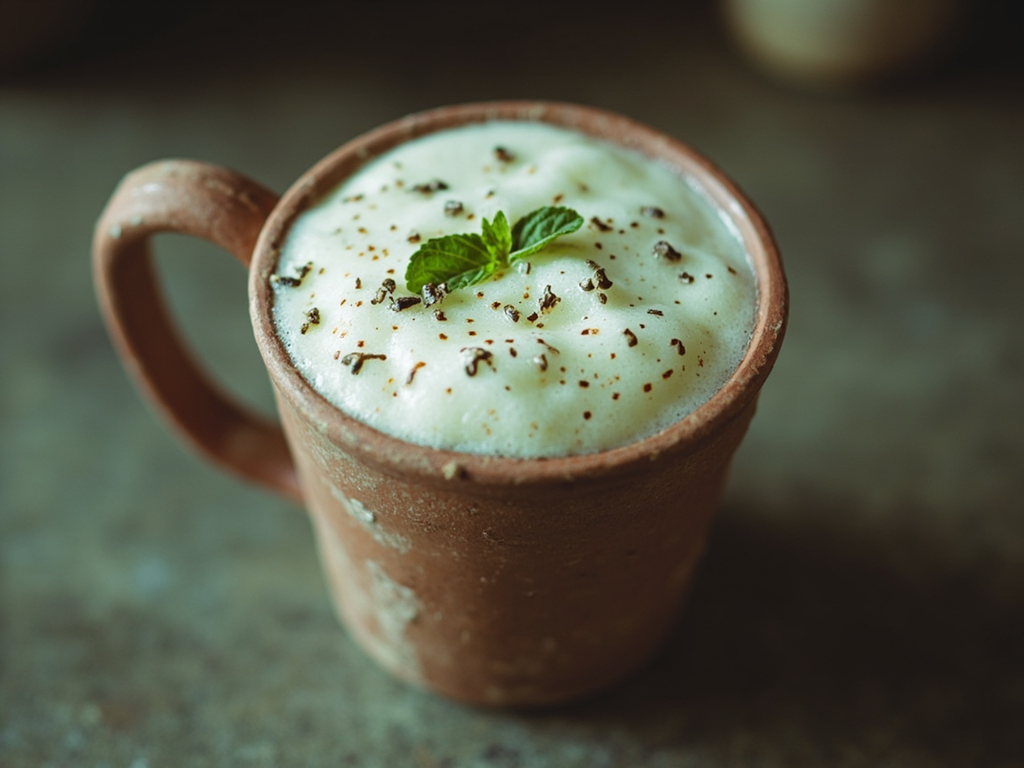
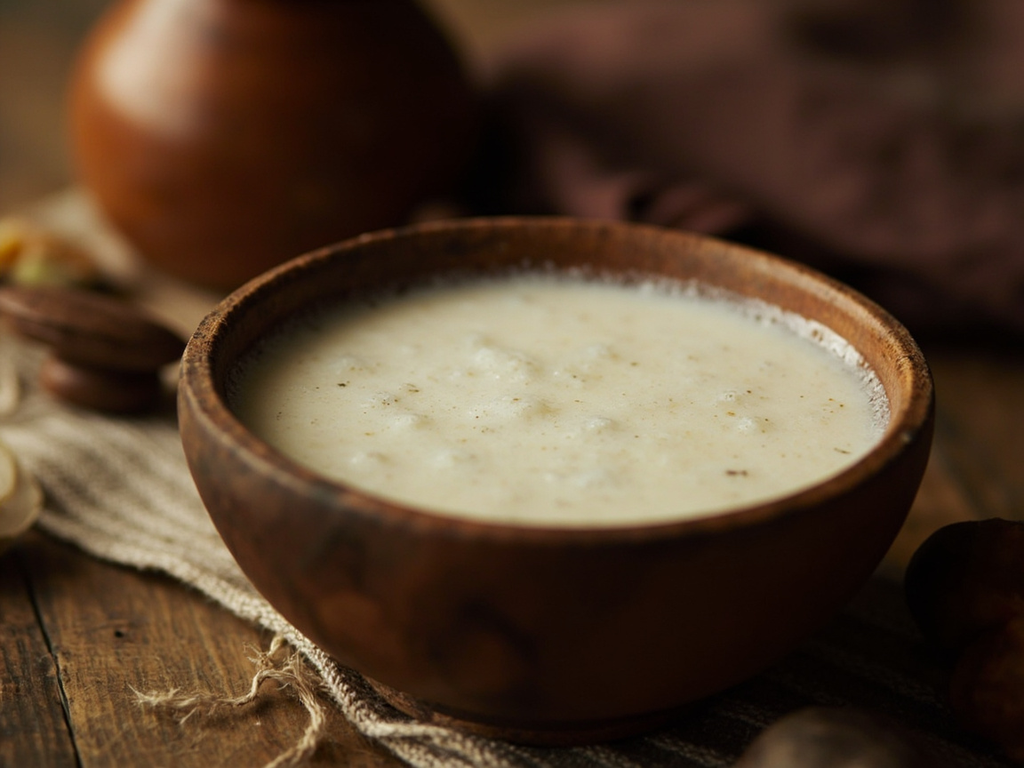
- Serve well chilled in bowls or cups. True qymyz is drunk lukewarm, but kefir is enjoyed cold.
How it was made : Qymyz (kumiss) is documented among Turkic and Mongol peoples since antiquity. William of Rubruck (13th century) describes it in detail. Mahmud al-Kashgari records the word 'qymyz' in his dictionary and notes that Turks consume it abundantly. Fermentation was done in leather bags (saba) that were regularly beaten. Mare's milk, sweeter and lower in casein than cow's milk, yields a lighter, naturally fizzy drink.
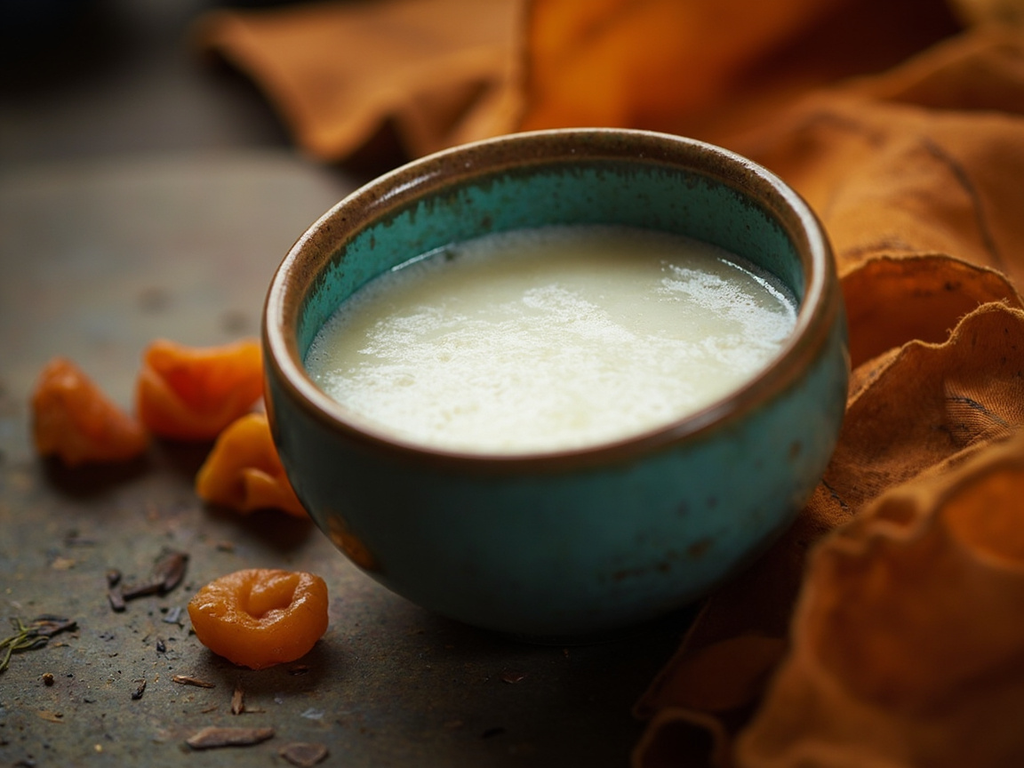
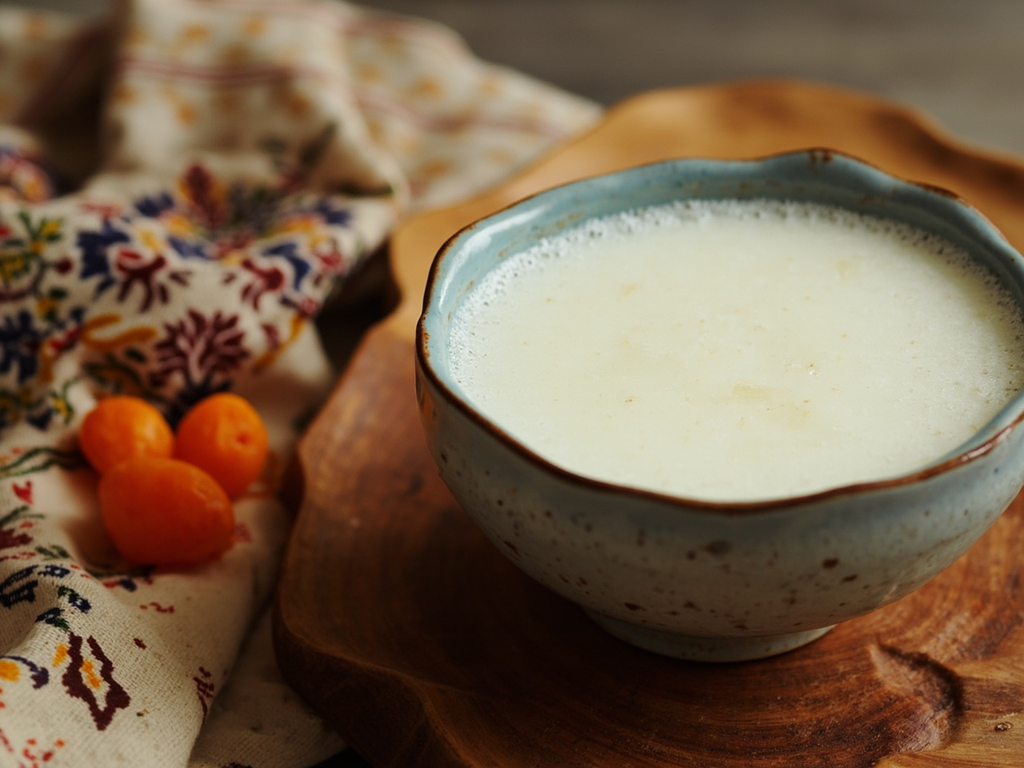
The contemporary twist : Serve the kefir in a small handmade ceramic bowl, accompanied by a few dried apricots from Samarkand — a reminder of the Silk Road oases.
Sources : Mahmud al-Kashgari, Dîwân Lughât al-Turk, 1072-1074 · William of Rubruck, Itinerarium, 1253-1255 · Paul D. Buell, 'Mongol Empire and Turkicization: The Evidence of Food and Foodways', in The Mongol Empire and Its Legacy, 1999
Yusuf Balasaguni · Charactorium