 Flip the card
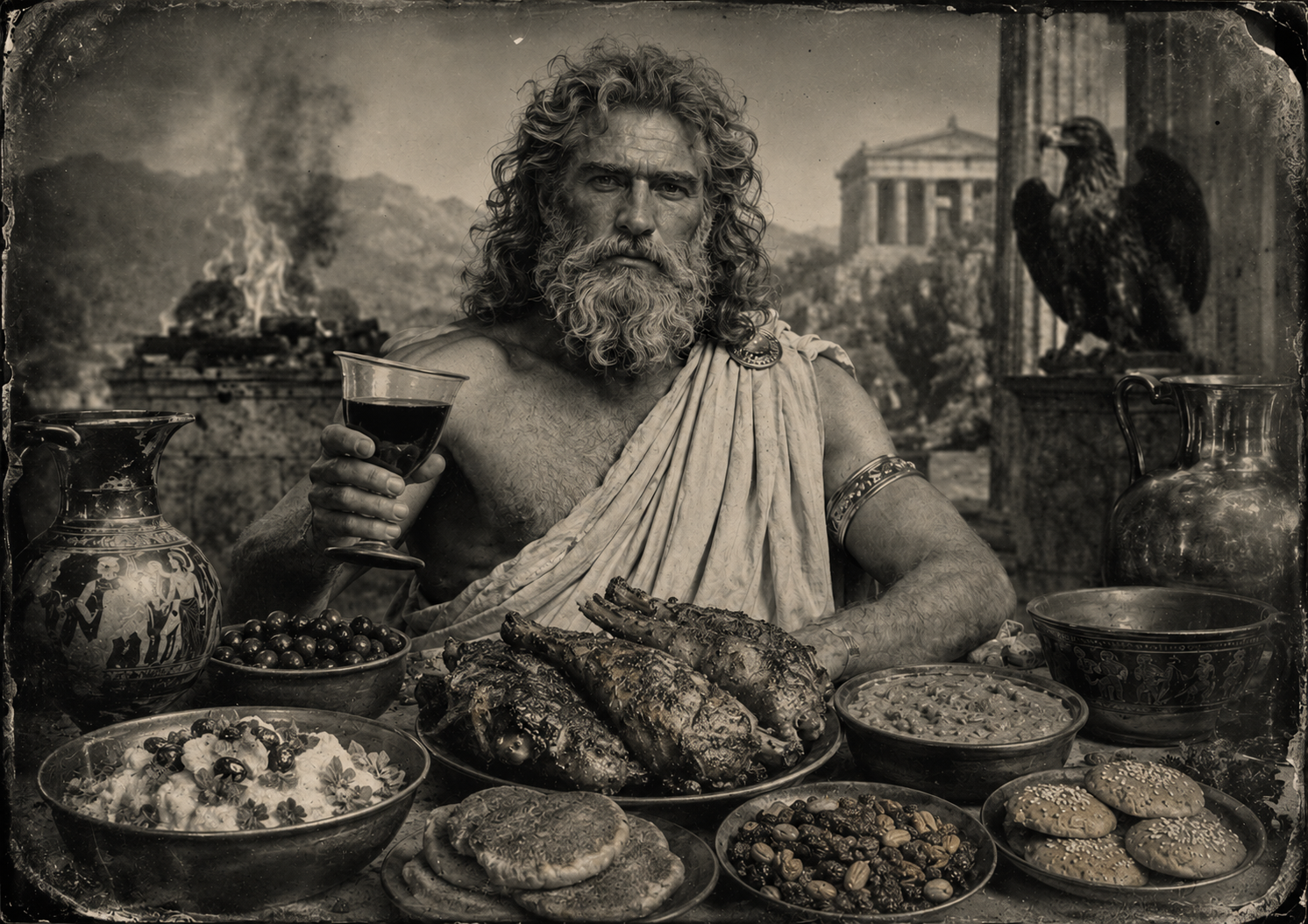
Zeus at the table
On the menu
Greek thysía and deîpnon
In ancient Greece, the meal revolved around sacrifice (thysía) and dinner (deîpnon). During a sacrifice to a god, the thigh bones wrapped in fat were burned on the altar — the divine portion, whose fragrant smoke (knísê) rose to Olympus — while mortals shared the meat in a collective banquet. The ordinary meal was based on sîtos (the staple, barley or wheat) accompanied by ópson (what you eat with it: olives, cheese, fish), washed down with wine mixed with water and always preceded by a libation to the gods.
Signature : Thyme honey and knísê (the fragrant smoke of sacrifice)
Two signatures echo each other: thyme honey from Hymettus, the sugar king of Greek offerings and ritual cakes, and knísê — the fatty aroma of thighs burned on the altar, the only 'flavor' the gods tasted. Zeus, they say, delighted in the savor more than in the flesh.
click to flip back
Zeus at the table
5 period recipes
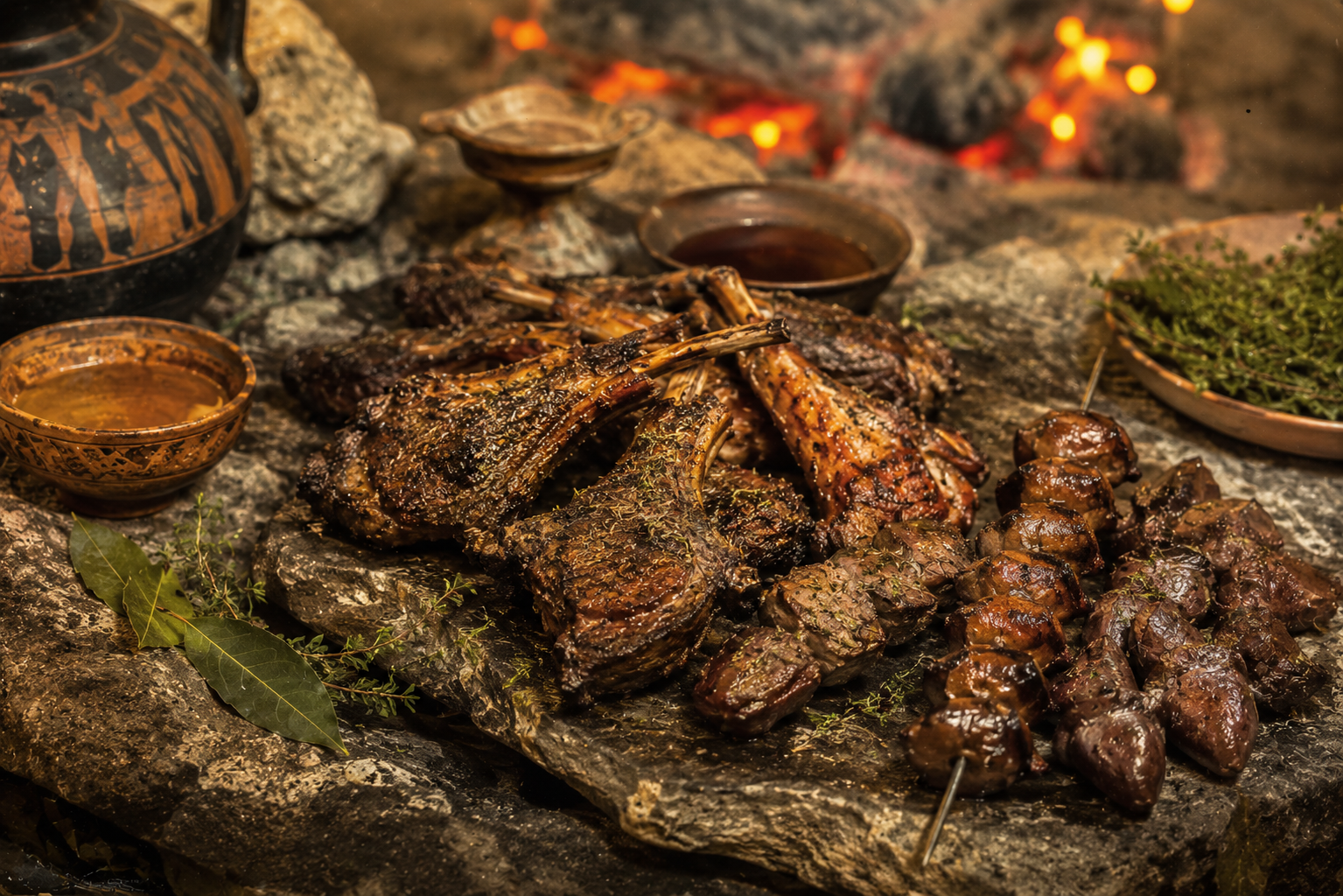 Festive
Mêría of Olympia — grilled thighs from the sacrificial banquet
Hieré thysía (blood sacrifice followed by shared banquet)
🧂 🍄· 1 h 30 (including 1 h marinade)
View the recipe
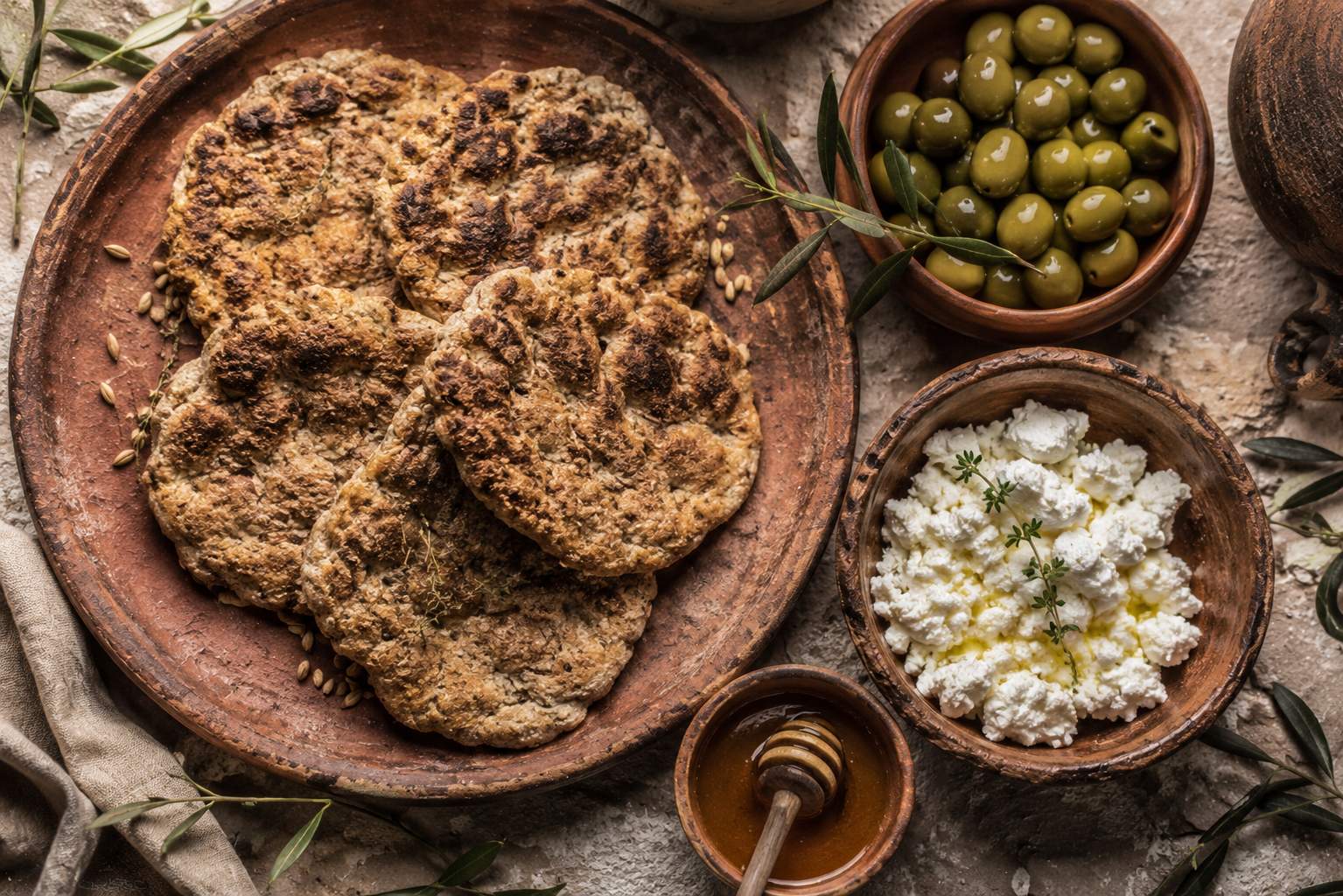 Everyday
Mâza — barley cake of the humble and pilgrims
Sîtos (the staple food of the meal, base of every Greek table)
🧂 ☕· 30 min
View the recipe
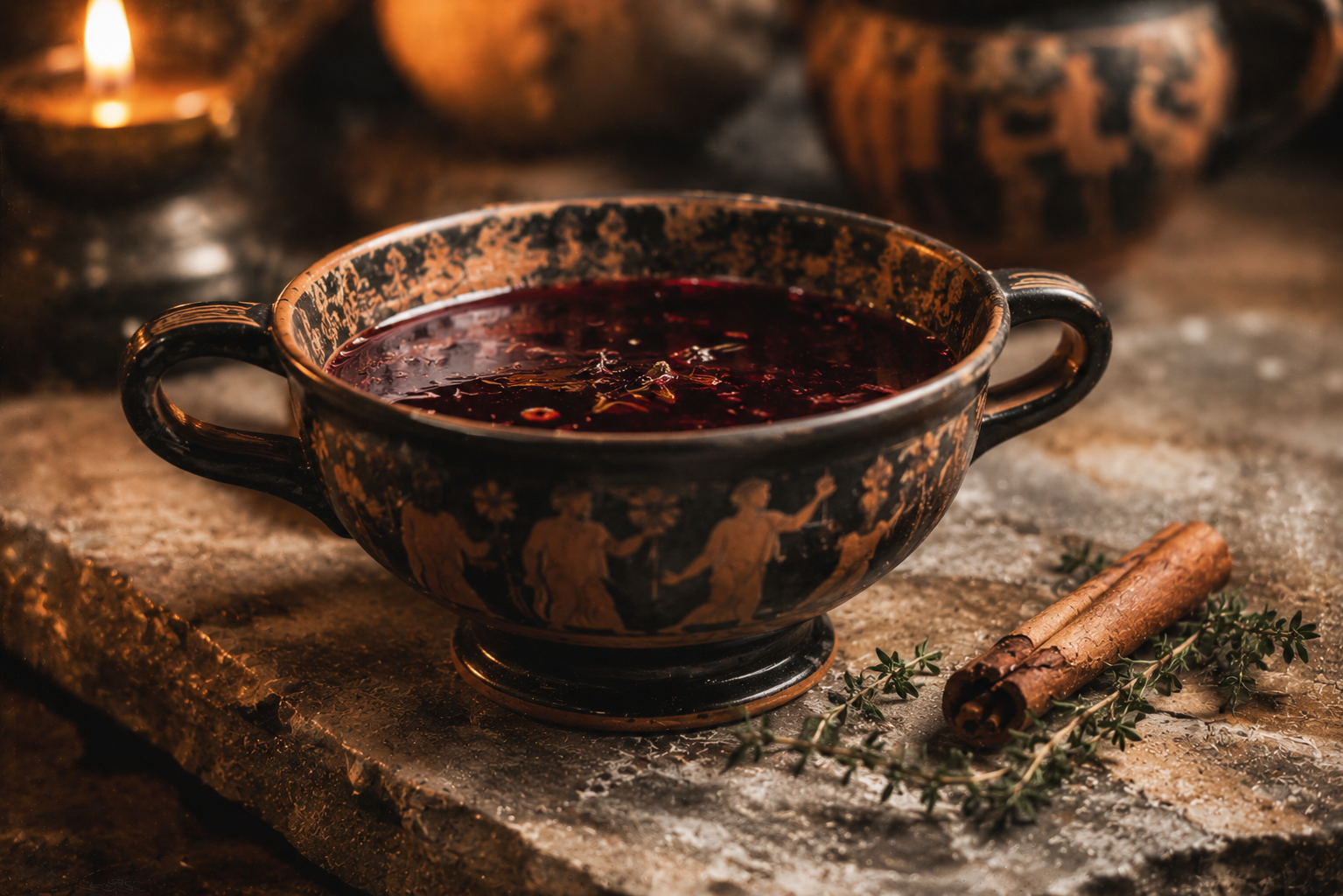 Drink
DrinkOinómeli — honeyed wine for the libation to Zeus
Sponḋê (libation poured to the gods before drinking) then sympósion (shared drink)
🍯 🫙· 20 min (+ 1 h infusion)
View the recipe
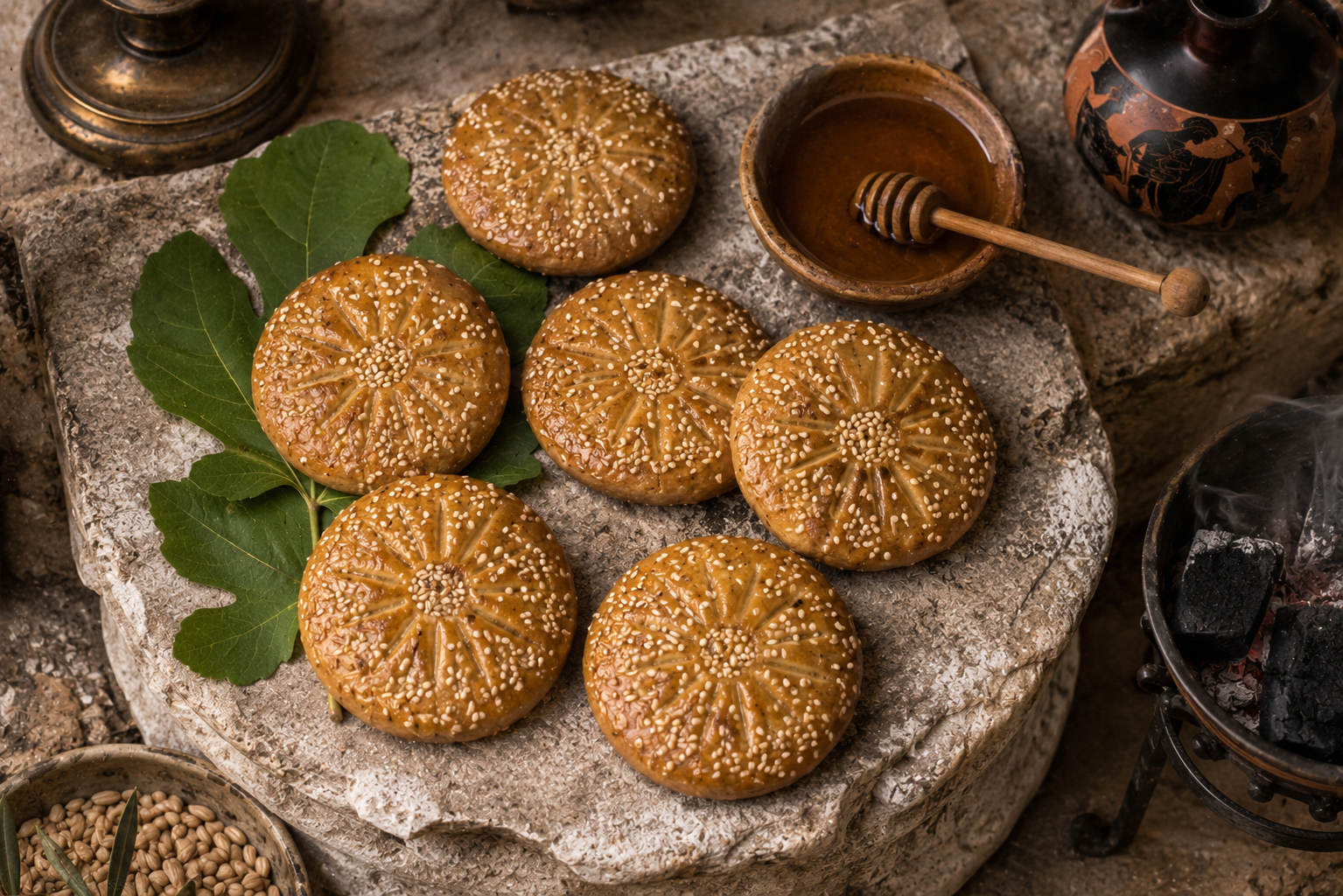 Offering
Pópana — small round altar cakes with honey and sesame
Pélanos / pópana (ritual cakes placed on the altar)
🍯· 40 min
View the recipe
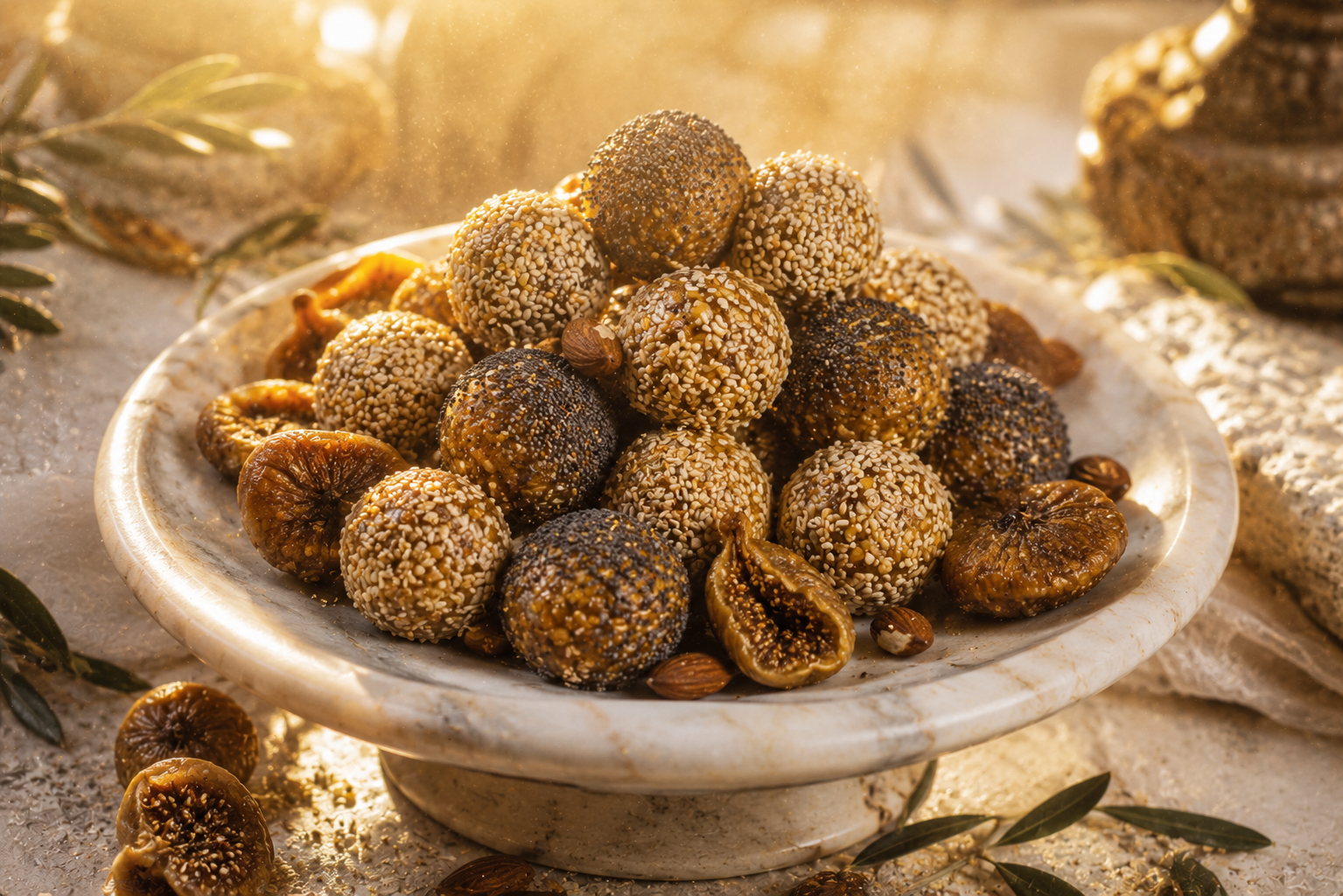 Remedy
Ambrosia — the food of immortality of the Olympians (evocation)
Trophê theôn (the 'food of the gods', beyond mortal meals)
🍯· 20 min (+ 1 h chilling)
View the recipe