 flip
flipMêría of Olympia — grilled thighs from the sacrificial banquet
Mêría of Olympia — grilled thighs from the sacrificial banquet
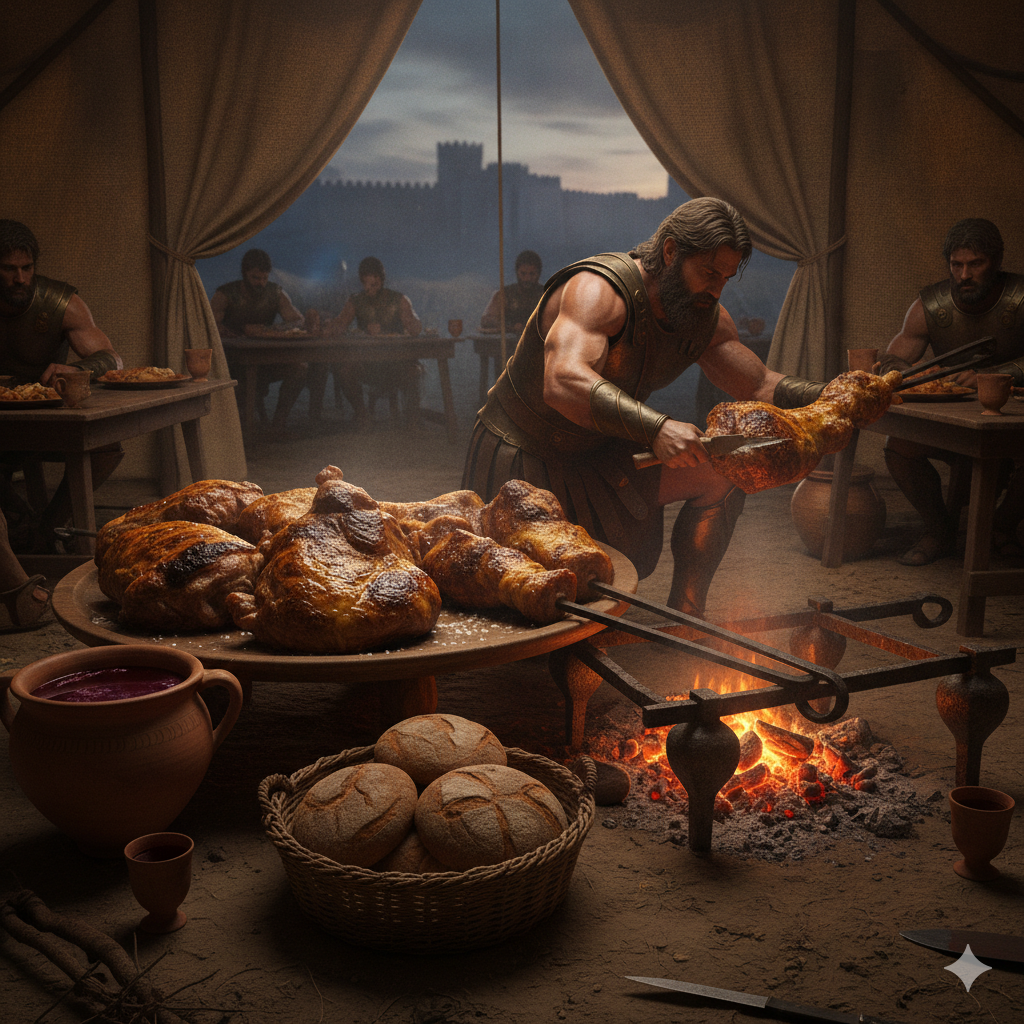
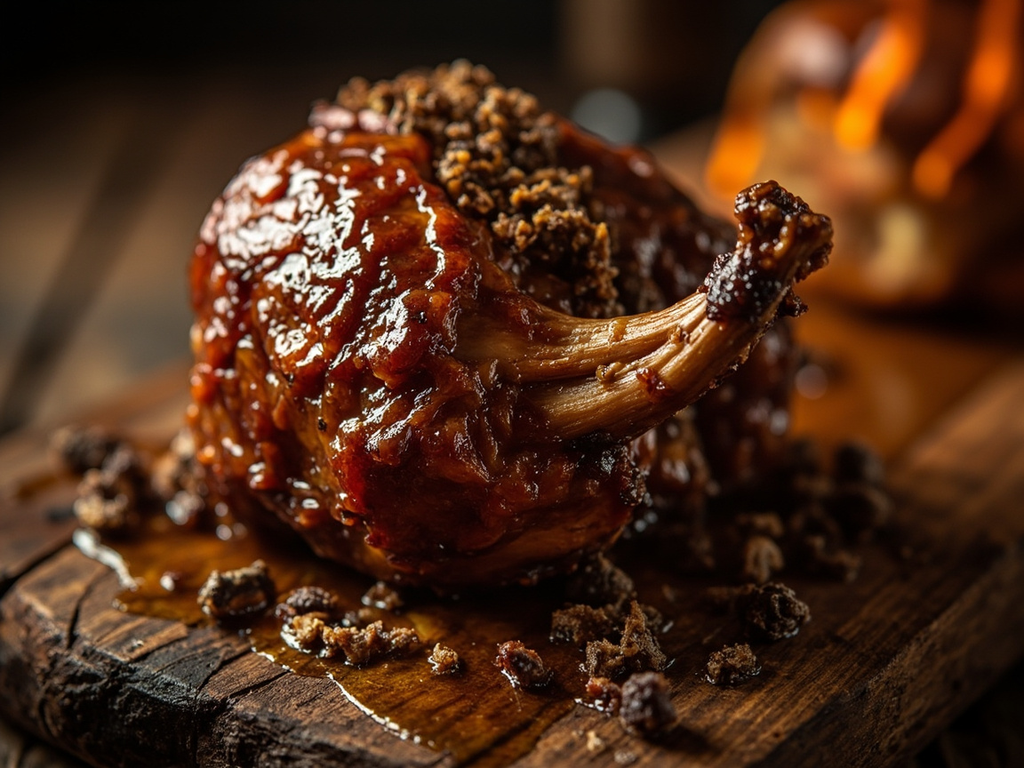
Why this dish? The greatest sanctuary of Zeus was Olympia, where a colossal altar of ashes kneaded with the fat of victims stood. During the great hecatombs in honor of the king of the gods, the thigh bones (mêría) wrapped in fat were burned for him, and the entrails (splánchna) were roasted first and shared by the faithful before the great feast.
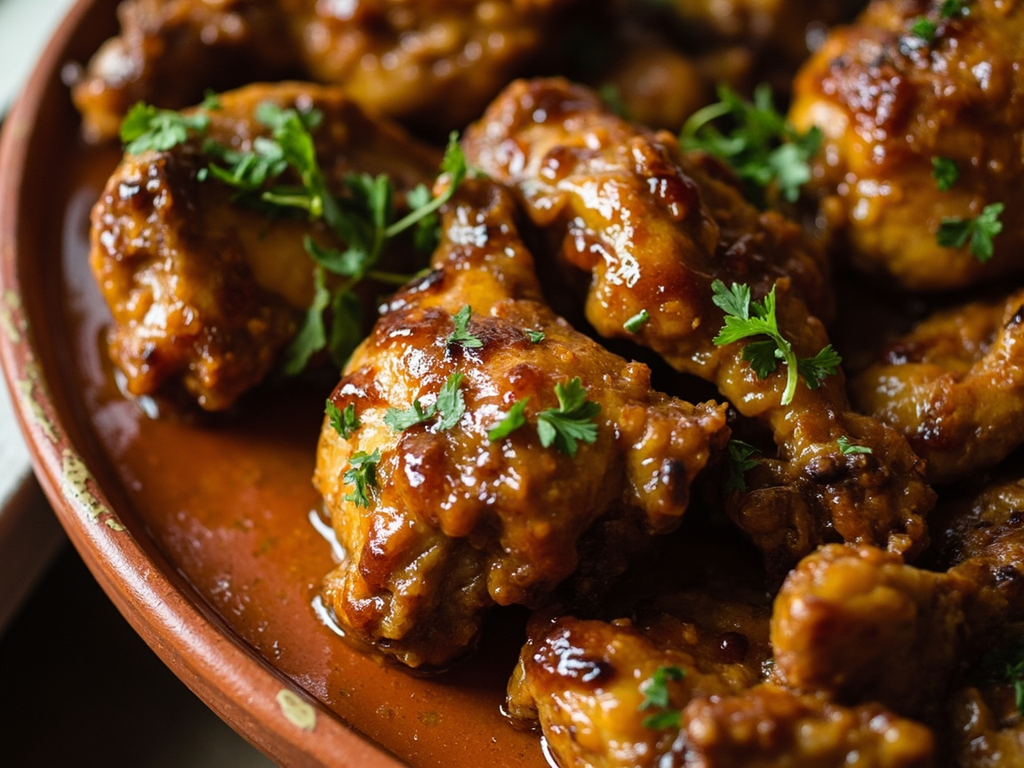
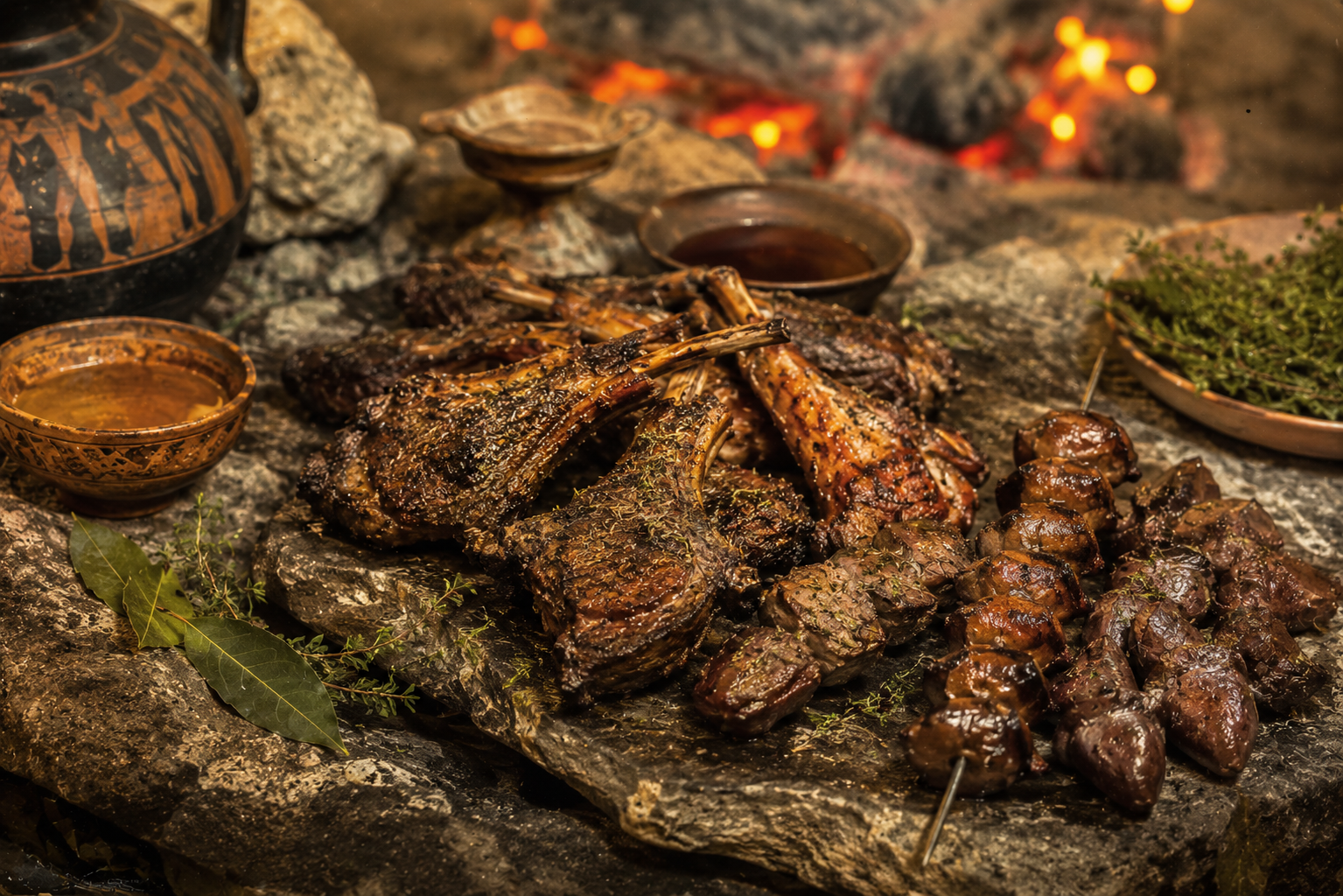
Pieces of meat (mutton or beef) and offal grilled over embers, salted and drizzled with olive oil, shared outdoors after offering the divine portion. The feast for mortal bellies, the fragrance for the god.
Mortal, when the smoke of your pyres rose from the banks of the Alpheus, I inhaled it from Olympus and my heart rejoiced. You burned the fat thighs for me on the altar of ashes, and kept the roasted meat for your table — so I had willed it since the division at Mecone. Salt the meat well, first redden the entrails on the embers and taste them among friends, for a sacrifice without a feast honors no one. Pour me a few drops of wine before you bite, and let joy fill my sanctuary.
- •Thigh and offal of sheep (or beef) — the fine cuts of the victim (banquet meat)
- •Fat of the victim — as needed (portion burned for the god)
- •Sea salt — a generous pinch (ritual seasoning)
- •Olive oil — a drizzle (basting)
- •Wild thyme and oregano — a few sprigs (fragrance)
Mêría of Olympia — grilled thighs from the sacrificial banquet
Pieces of meat (mutton or beef) and offal grilled over embers, salted and drizzled with olive oil, shared outdoors after offering the divine portion. The feast for mortal bellies, the fragrance for the god.
Why this dish? The greatest sanctuary of Zeus was Olympia, where a colossal altar of ashes kneaded with the fat of victims stood. During the great hecatombs in honor of the king of the gods, the thigh bones (mêría) wrapped in fat were burned for him, and the entrails (splánchna) were roasted first and shared by the faithful before the great feast.
Mortal, when the smoke of your pyres rose from the banks of the Alpheus, I inhaled it from Olympus and my heart rejoiced. You burned the fat thighs for me on the altar of ashes, and kept the roasted meat for your table — so I had willed it since the division at Mecone. Salt the meat well, first redden the entrails on the embers and taste them among friends, for a sacrifice without a feast honors no one. Pour me a few drops of wine before you bite, and let joy fill my sanctuary.
Ingredients (period version)
- Thigh and offal of sheep (or beef) — the fine cuts of the victim (banquet meat)
- Fat of the victim — as needed (portion burned for the god)
- Sea salt — a generous pinch (ritual seasoning)
- Olive oil — a drizzle (basting)
- Wild thyme and oregano — a few sprigs (fragrance)
Ingredients
- Leg of lamb or lamb chops — 800 g (main meat)
- Lamb liver and kidneys — 200 g (splánchna grilled as starter)
- Extra virgin olive oil — 4 tbsp (marinade and basting)
- Sea salt — 2 tsp (seasoning)
- Dried thyme and oregano — 2 tsp (herbs)
- Bay leaves — 3 (scent for the brazier)
Method
- Cut the lamb into large pieces and the offal into chunks; drizzle with olive oil, salt, thyme and oregano, let rest 1 hour.
- Light a charcoal fire (barbecue) until you have gray, even coals; toss in a bay leaf to scent the smoke.
- Skewer the offal (splánchna) first and grill quickly for a few minutes: this is the first bite of the banquet.
- Then grill the leg pieces for 12 to 15 minutes, turning and basting with oil, until nicely browned and pink inside.
- Salt again when removed from the fire and serve immediately on a shared board, to be eaten by hand.
How it was made : At Olympia, Zeus' altar was not stone but a huge mound made of ashes mixed with the fat of sacrifices accumulated over centuries, rebuilt each year. According to the myth reported by Hesiod, it was at Mecone that Prometheus tricked Zeus into choosing the bones covered with fat rather than the flesh: since then, men burn the bones for the gods and keep the meat.
The contemporary twist : Serve the splánchna as appetizer skewers under the name 'First share of the Olympians', with a lemon wedge — a citrus already known in the late Mediterranean world.
Sources : Hesiod, Theogony (division at Mecone) · Pausanias, Description of Greece, Book V (Olympia and the ash altar of Zeus) · Homer, Iliad (descriptions of sacrifices and knísê)
Zeus · Charactorium