 flip
flipMâza — barley cake of the humble and pilgrims
Mâza — barley cake of the humble and pilgrims
Why this dish? Before the meat of great festivals, the Greek people who came to honor Zeus fed themselves daily on mâza, the toasted barley paste. It was the bread of the poor, the farmer, and the pilgrim on the roads to the god's sanctuaries, from Dodona to Olympia.
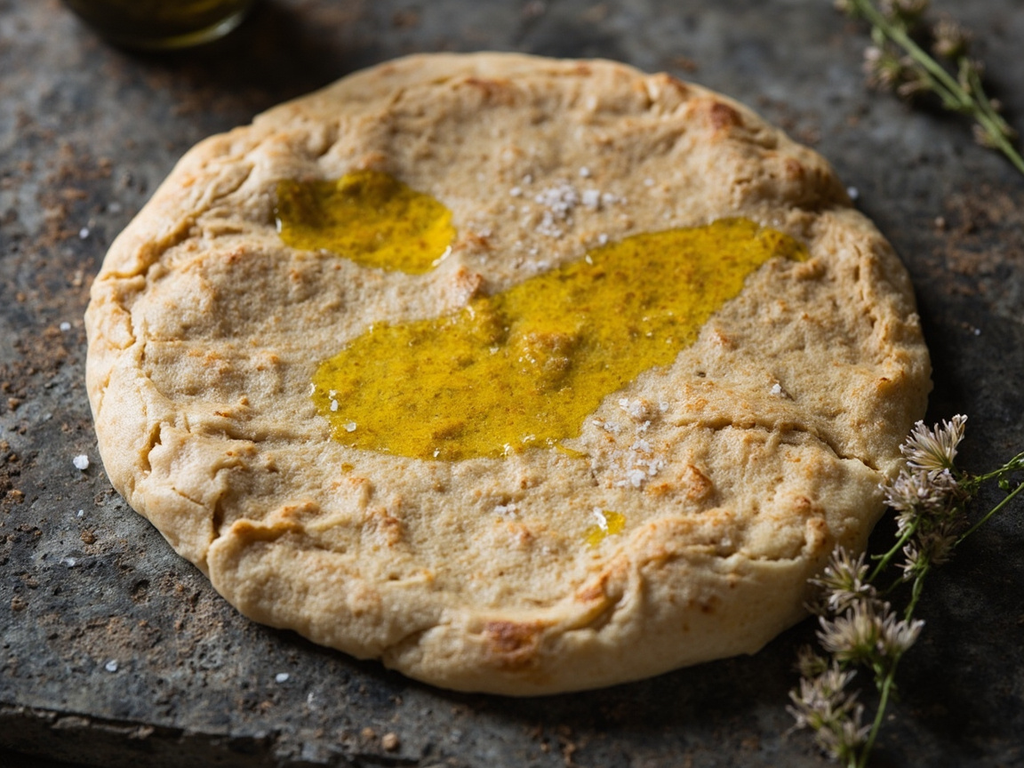
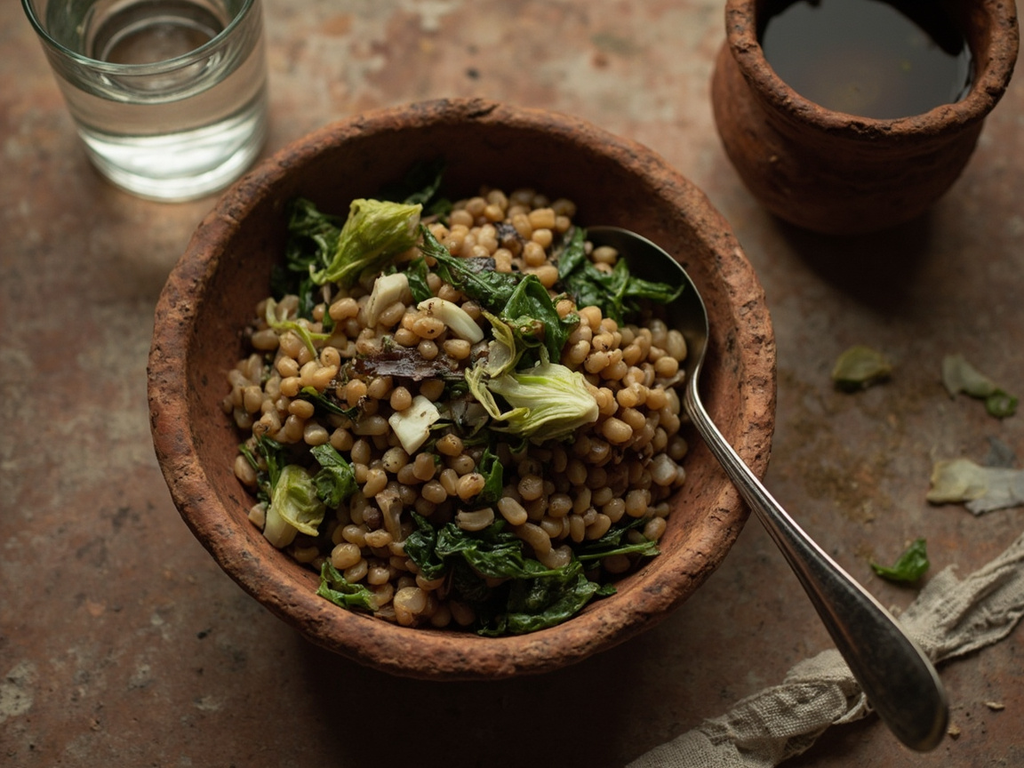
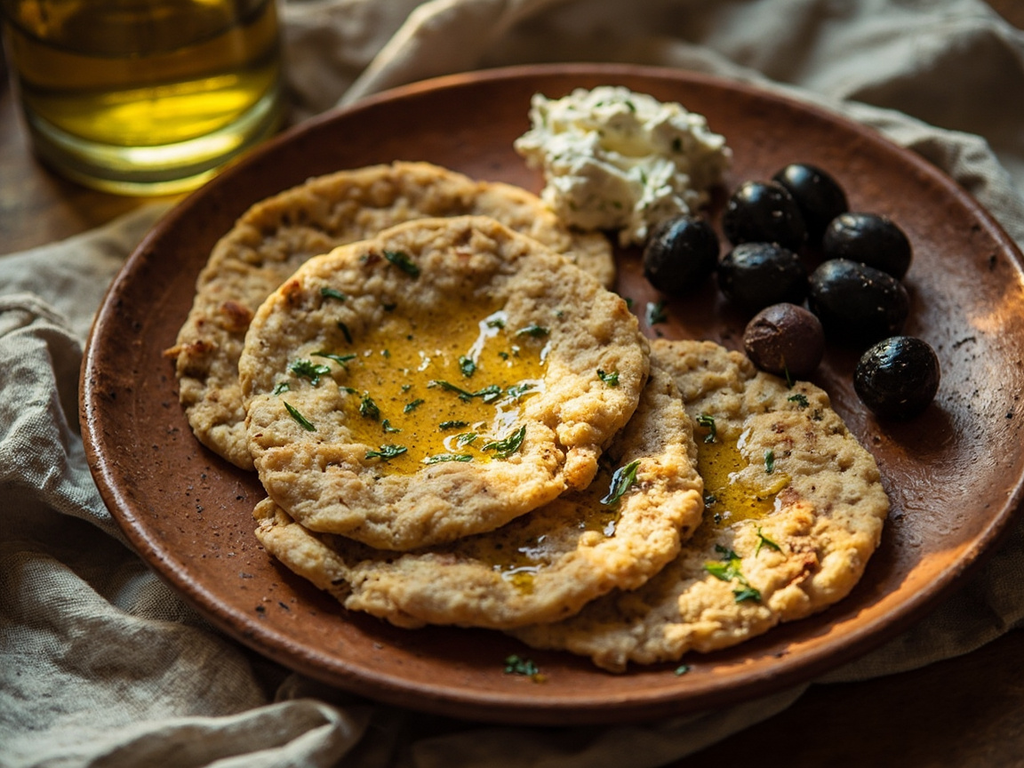
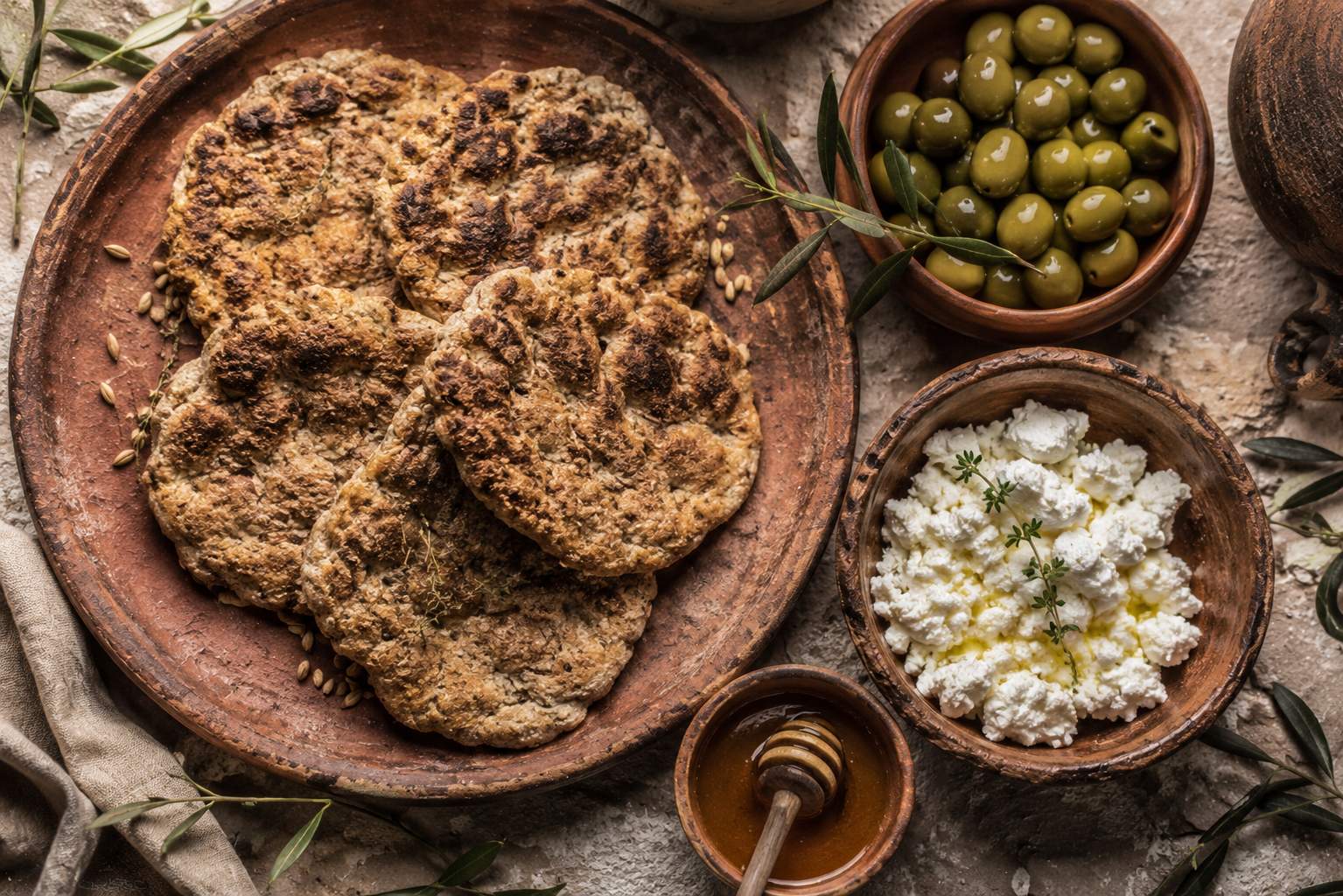
Flatbread or thick porridge of toasted barley flour, kneaded with water, olive oil and a little salt, sometimes enhanced with honey. Nutritious, economical, it is the foundation of ordinary Greek diet.
Do not think, mortal, that I taste only the feasts of kings. The laborer who had but a handful of toasted barley kneaded it with water and oil, tossed me a crumb as libation, and I watched over his harvest just as much. Toast your flour well over the fire before kneading, that is the whole secret of flavor. An olive, a little cheese, and you are satisfied like a free man.
- •Toasted barley flour (álphita) — two handfuls (base)
- •Spring water — as needed (binder)
- •Olive oil — a drizzle (softness and flavor)
- •Sea salt — a pinch (seasoning)
- •Thyme honey — a dash (optional) (sweetened version)
Mâza — barley cake of the humble and pilgrims
Flatbread or thick porridge of toasted barley flour, kneaded with water, olive oil and a little salt, sometimes enhanced with honey. Nutritious, economical, it is the foundation of ordinary Greek diet.
Why this dish? Before the meat of great festivals, the Greek people who came to honor Zeus fed themselves daily on mâza, the toasted barley paste. It was the bread of the poor, the farmer, and the pilgrim on the roads to the god's sanctuaries, from Dodona to Olympia.
Do not think, mortal, that I taste only the feasts of kings. The laborer who had but a handful of toasted barley kneaded it with water and oil, tossed me a crumb as libation, and I watched over his harvest just as much. Toast your flour well over the fire before kneading, that is the whole secret of flavor. An olive, a little cheese, and you are satisfied like a free man.
Ingredients (period version)
- Toasted barley flour (álphita) — two handfuls (base)
- Spring water — as needed (binder)
- Olive oil — a drizzle (softness and flavor)
- Sea salt — a pinch (seasoning)
- Thyme honey — a dash (optional) (sweetened version)
Ingredients
- Barley flour — 200 g (base)
- Warm water — about 120 ml (binder)
- Extra virgin olive oil — 3 tbsp (softness)
- Sea salt — 1/2 tsp (seasoning)
- Thyme honey — 1 tbsp (optional) (sweet variation)
- Sheep's cheese (like feta), olives — for serving (accompanying ópson)
Method
- Toast the barley flour dry in a pan over low heat for 3 to 4 minutes, stirring, until it smells nutty: this step gives all the flavor.
- Pour the flour into a bowl, add salt, olive oil, then warm water little by little while kneading until you get a soft, non-sticky dough.
- Shape into flat cakes 1 cm thick (add honey here for the sweet version).
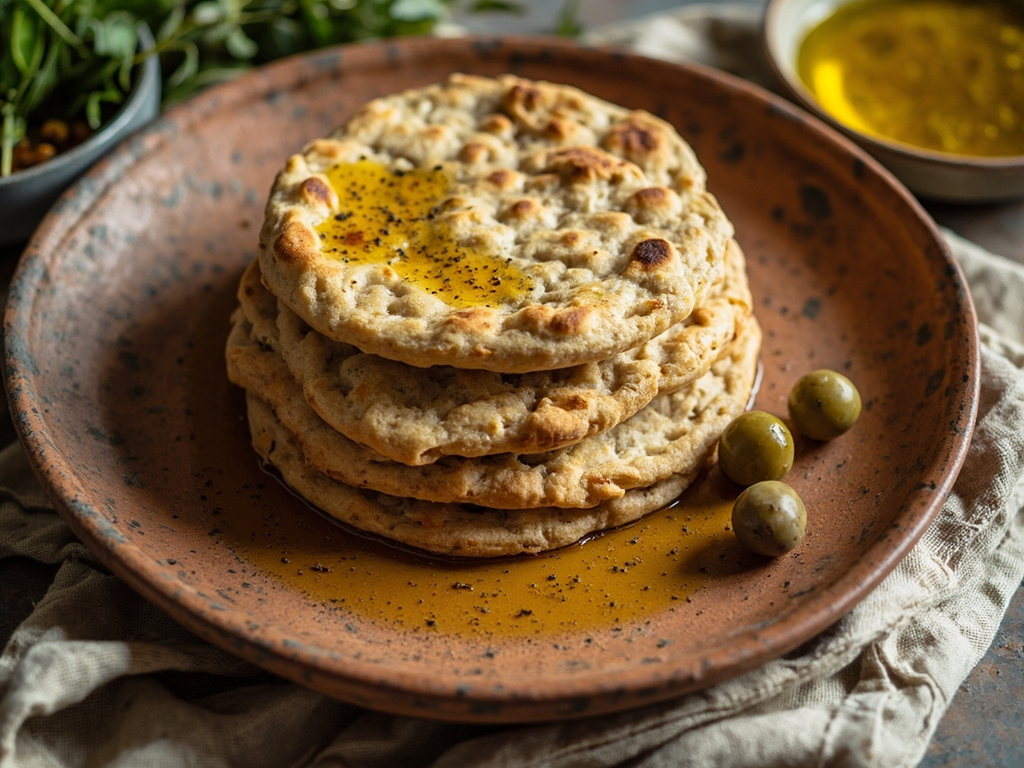
- Cook them on a hot griddle or pan for 4 to 5 minutes each side, or eat as a thick porridge by thinning the dough with a little more water.
- Serve with olives, sheep's cheese and a drizzle of oil.
How it was made : Barley grew more easily than wheat on Greek soils: mâza was therefore much more common than wheat bread, reserved for festive days and wealthy city-dwellers. Grains were often toasted before grinding (álphita), which preserved them better and allowed quick preparation without oven baking — ideal for travelers.
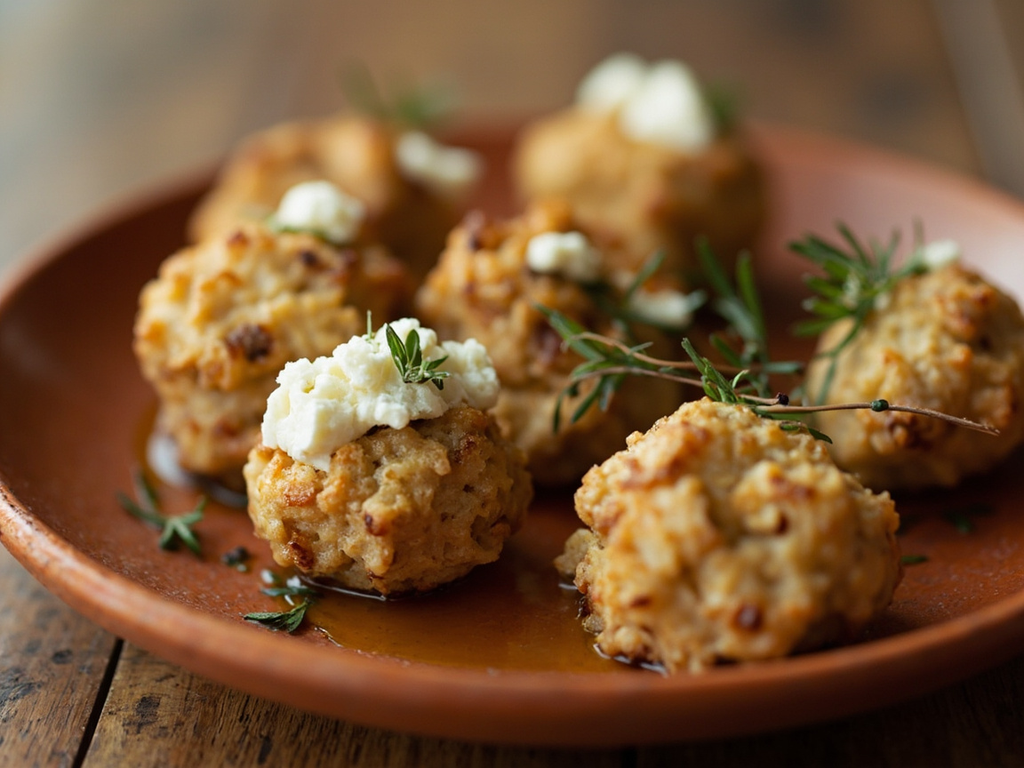
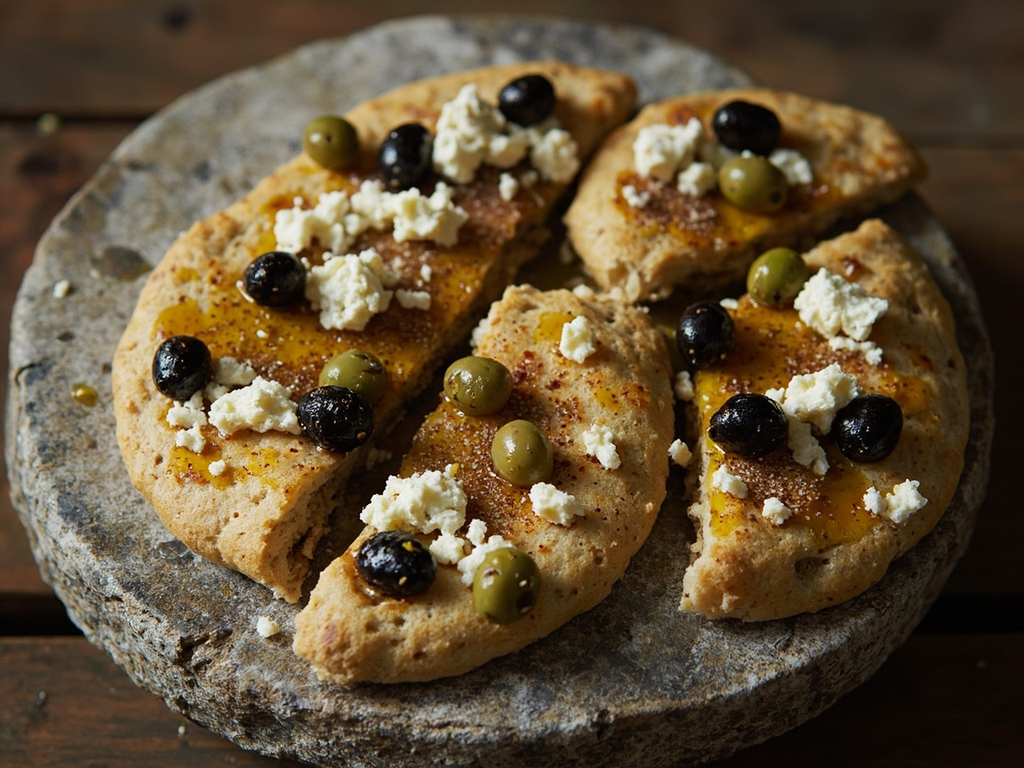
The contemporary twist : Serve mâza as 'Olympian toast': warm flatbread, crushed feta with thyme, honey and a few toasted sesame seeds.
Sources : Hesiod, Works and Days (the Greek peasant's diet) · Athenaeus of Naucratis, Deipnosophists (mentions of mâza and álphita)
Zeus · Charactorium