 flip
flipPópana — small round altar cakes with honey and sesame
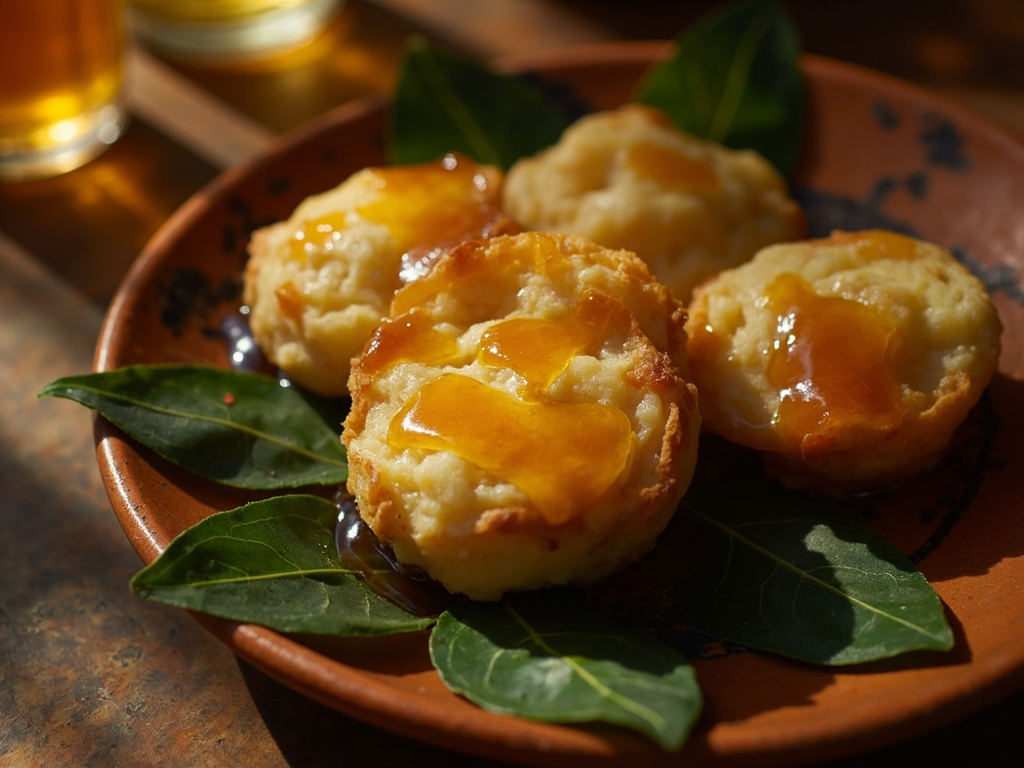
Pópana — small round altar cakes with honey and sesame
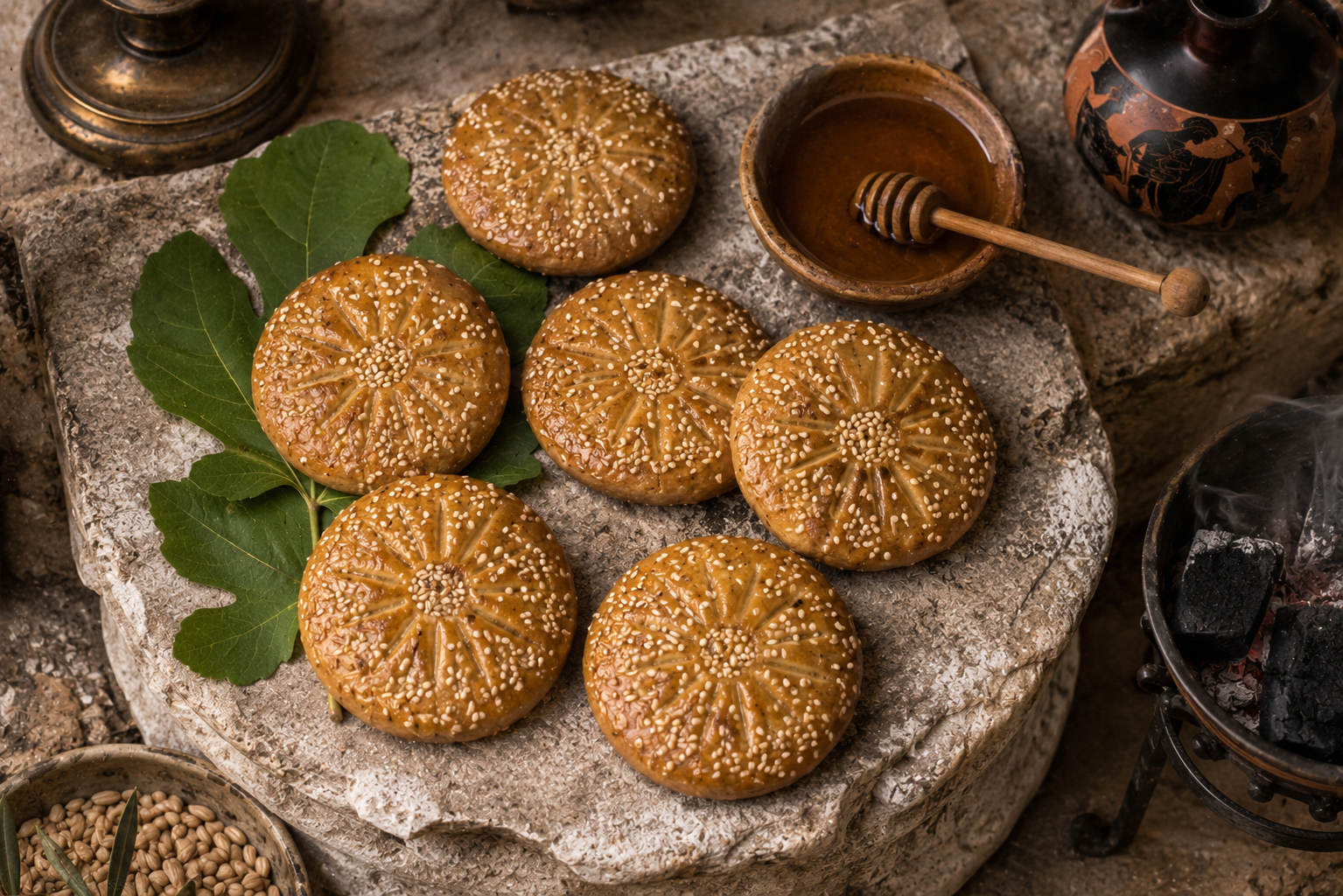
Why this dish? Not everyone could offer a bull to Zeus. The humbler folk, or daily offerings, took the form of small round cakes (pópana) placed on the altar, often marked with patterns evoking the stars of which Zeus, god of the sky, was master.
Small round cakes of wheat flour and honey, sprinkled with sesame, sometimes enriched with fresh cheese, shaped and marked before baking. A sweet and fragrant offering, accessible to all.
You have no ox or ram to offer me? No matter, mortal: a small round cake, kneaded with honey and fine flour, placed on my altar with a pure heart, is worth more than a hecatomb offered without faith. Mark it with the sun's circle or the moon's, for I am master of the wide sky. Sprinkle it with sesame, let it brown gently, and let its scent rise to me. The god looks at the hand that gives, not the size of the gift.
- •Fine wheat flour — two handfuls (base)
- •Thyme honey — generously (sweet binder)
- •Sesame seeds — a pinch (topping)
- •Fresh sheep's cheese — a little (optional) (softness)
- •Olive oil — a drizzle (binder)
Pópana — small round altar cakes with honey and sesame
Small round cakes of wheat flour and honey, sprinkled with sesame, sometimes enriched with fresh cheese, shaped and marked before baking. A sweet and fragrant offering, accessible to all.
Why this dish? Not everyone could offer a bull to Zeus. The humbler folk, or daily offerings, took the form of small round cakes (pópana) placed on the altar, often marked with patterns evoking the stars of which Zeus, god of the sky, was master.
You have no ox or ram to offer me? No matter, mortal: a small round cake, kneaded with honey and fine flour, placed on my altar with a pure heart, is worth more than a hecatomb offered without faith. Mark it with the sun's circle or the moon's, for I am master of the wide sky. Sprinkle it with sesame, let it brown gently, and let its scent rise to me. The god looks at the hand that gives, not the size of the gift.
Ingredients (period version)
- Fine wheat flour — two handfuls (base)
- Thyme honey — generously (sweet binder)
- Sesame seeds — a pinch (topping)
- Fresh sheep's cheese — a little (optional) (softness)
- Olive oil — a drizzle (binder)
Ingredients
- Wheat flour — 250 g (base)
- Thyme honey — 100 g (sweetener and binder)
- Mild olive oil — 3 tbsp (binder)
- Fresh sheep's cheese (like ricotta/myzithra) — 80 g (optional) (softness)
- Sesame seeds — 3 tbsp (topping)
- Water — 2 to 3 tbsp (dough adjustment)
Method
- Mix the flour, oil, honey (reserve a little for glazing) and fresh cheese if using; add water gradually until a malleable dough forms.
- Shape into small balls then flatten into disks 5 to 6 cm; mark them with a cross or rays using a knife (solar pattern).
- Sprinkle with sesame seeds, pressing lightly to adhere.
- Bake at 180°C for 15 to 18 minutes, until golden.
- Upon removal from the oven, brush with reserved honey to make them shine and let cool slightly.
How it was made : Sacrificial cakes (pélanos, pópana, popanon) were a standard offering in Greek sanctuaries, codified even in religious calendars carved on stone. Honey and sesame, symbols of sweetness and fertility, were ubiquitous; cane sugar was completely unknown to the Greeks, who sweetened only with honey and dried fruits.
The contemporary twist : Present them as 'Olympian medallions', each marked with a stylized lightning bolt, on a bed of fig leaves.
Sources : Inscriptions of Greek sacrificial calendars (offerings of pópana and pélanos) · Athenaeus of Naucratis, Deipnosophists (typology of Greek cakes, plakoûs)
Zeus · Charactorium