Imaginary dialogue between Duke Ellington and Adelaide Hall
by Charactorium · Adelaide Hall (1901 — 1993) · Music · Performing Arts · 5 min read
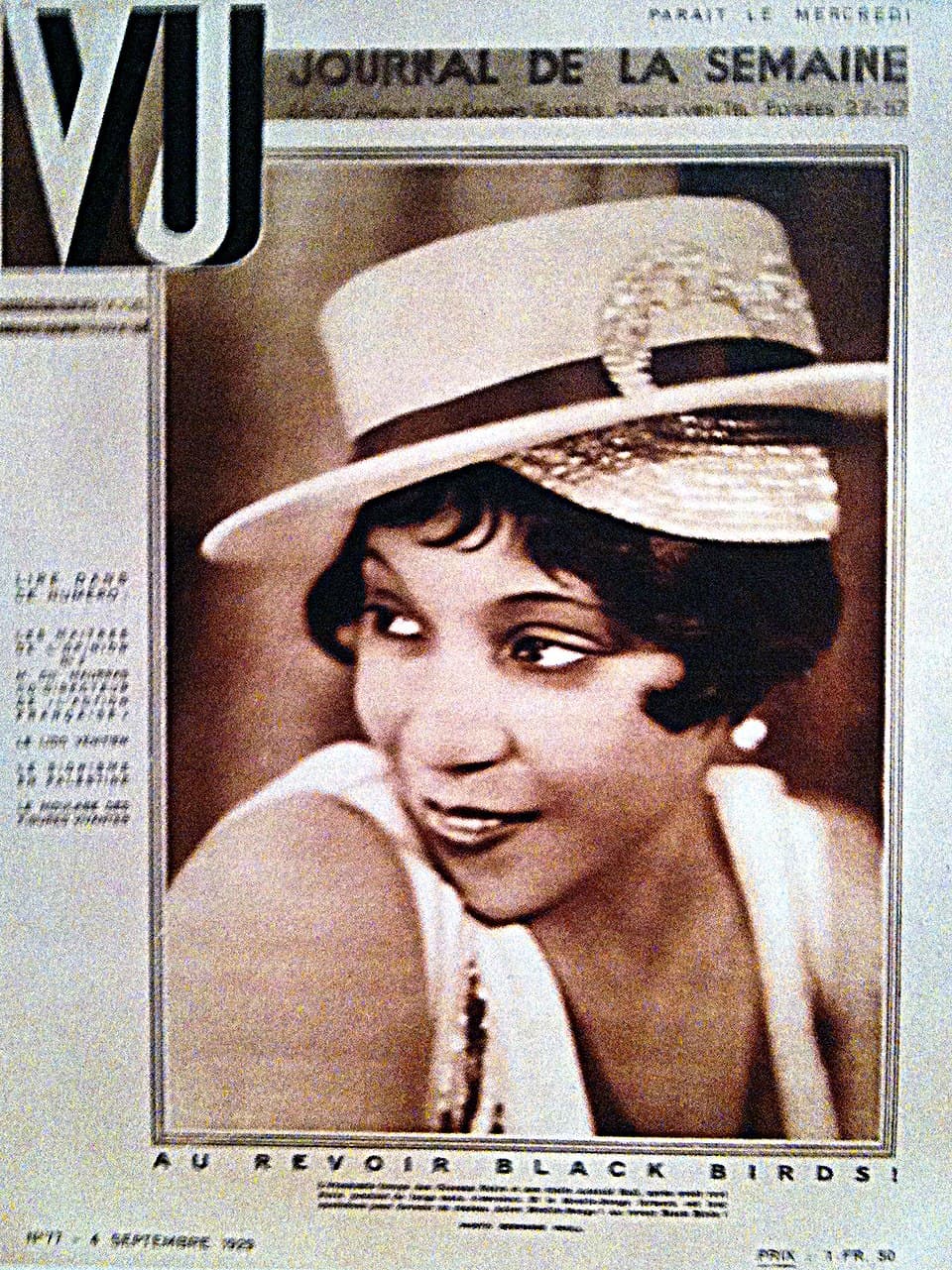
In the dim light of a London theater dressing room, one evening in 1938, Duke Ellington meets Adelaide Hall between two European tours. On the vanity, a 78 rpm record sits next to a still-steaming cup of tea and a telegram from Paris. They have known each other for over ten years, since that day in 1927 when her wordless voice had shaken the orchestra. The master comes tonight not as a bandleader, but as an old confidant, curious about everything the European stage has made of her.
—Adelaide, do you remember that session at Victor in 1927? Your voice floated without a word. Where did that crazy idea come from?
You who were there, Duke, know that nothing was premeditated. I was in the wings, the orchestra was playing Creole Love Call, and something caught in my throat: instead of singing words, I let the melody flow like a breath, as if my voice became another brass instrument in your section. I remember your look when you turned around — you said nothing, but the next day you wanted to cut it on wax. I was afraid the audience would find it strange, a woman singing without words. Deep down, I was just following the instrument I had always carried within me.
My voice became another brass instrument in your section — an instrument I had always carried within me.
—They call it scat, that singing that imitates the instrument. You who have experienced it on stage, what does it change for a singer?
It changes everything, Duke. Singing words is telling a story; vocalizing without words is blending into the orchestra, embracing its accents, responding to a solo as you would answer a question. I then feel less like a singer and more like a musician among yours. The audience no longer follows words: it follows pure emotion, that delicate thread that rises and falls. Some nights, I don't even know where the melody will take me, and that's when the magic happens. You need absolute trust in the orchestra to dare that void — and I had it with you.
Vocalizing without words is responding to a solo as you would answer a question.
—You left Harlem for Paris. There, in Montmartre, you opened your own cabaret. What did France offer you that America refused?
France gave me room to breathe, Duke. In Montmartre, I opened La Grosse Pomme — a nod to our New York — and there, a Black artist didn't come in through the service door. Parisians were crazy about our music; they came for the art, not the folklore. Joséphine had paved the way a few years earlier, and the whole city seemed to dance to our rhythms. I ran my own house there, chose my songs, received whomever I wanted. After the Harlem cabarets where you played to audiences that would never have welcomed you at their table, it was intoxicating freedom.
In Montmartre, a Black artist didn't come in through the service door.
—In Paris, in 1938, you recorded with that Gypsy guitarist, Django Reinhardt. How was such jazz, blending our two worlds, born?
Ah, Django! That man played with two burned fingers, yet his guitar sang like no one else. We came from different continents — me from Brooklyn, him from the caravans — and yet, from the first measure, we understood each other without a word of English or French. That's transatlantic jazz: a common language spoken without an interpreter. He laid down his chords like questions, and I answered with my voice. Those Paris sessions were among the freest of my life; we invented together, without a rigid score. You who love unexpected encounters, Duke, would have loved that chemistry.
A common language spoken without an interpreter: that is transatlantic jazz.
—I'm told that in London, in 1940, under the bombs, your club was destroyed. Why didn't you go back to America, to safety?
Because fleeing would not have changed the suffering of others, Duke. The Blitz blew up the club I ran with my husband Bert — one night, everything collapsed under the bombings. I could have taken the boat back, but these people had adopted me, and you don't abandon those who have opened their hearts to you. I kept singing, in shelters, for the BBC, for the soldiers. My voice couldn't stop the planes, but it could, for the space of a song, make fear forgotten. The British needed a little sweetness in that din — and I needed to be useful.
My voice couldn't stop the planes, but it could make fear forgotten.
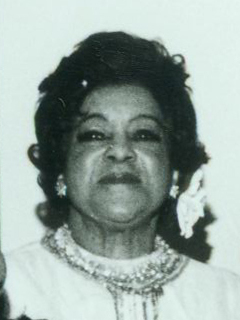
—Singing on the radio, for those soldiers you couldn't see — how do you experience that strange connection, through the wireless?
It's a mystery, Duke. In a BBC studio, there's no one in front of you, only a microphone and silence. And yet, I knew that at the other end, thousands of families were huddled around their sets, in the dark, seeking a little warmth. I sang for them as if each one were sitting at my table. Soldiers wrote to me from the front saying that one of my songs had kept them going. That's what war taught me: the voice travels farther than the body; it crosses walls and borders. I was no longer a cabaret star; I was a presence in their night.
The voice travels farther than the body; it crosses walls and borders.
—Between us, Adelaide — you who seem so radiant under the spotlights: what does a star's day hide before the curtain rises?
Much less glamour than one imagines, Duke! I get up late, because the voice needs as much sleep as the body. In the morning, I take care of my instrument: hot tea, honey, never anything cold. In the afternoon, rehearsals with the orchestra, fittings for those sparkling dresses that need last-minute adjustments, learning a new tune. That electric microphone that people sometimes mock gave me everything: thanks to it, I can sing with nuance, almost whisper, without forcing in front of a big orchestra. The audience sees the sequins; it doesn't see the nun-like discipline a voice demands.
The audience sees the sequins; it doesn't see the nun-like discipline a voice demands.
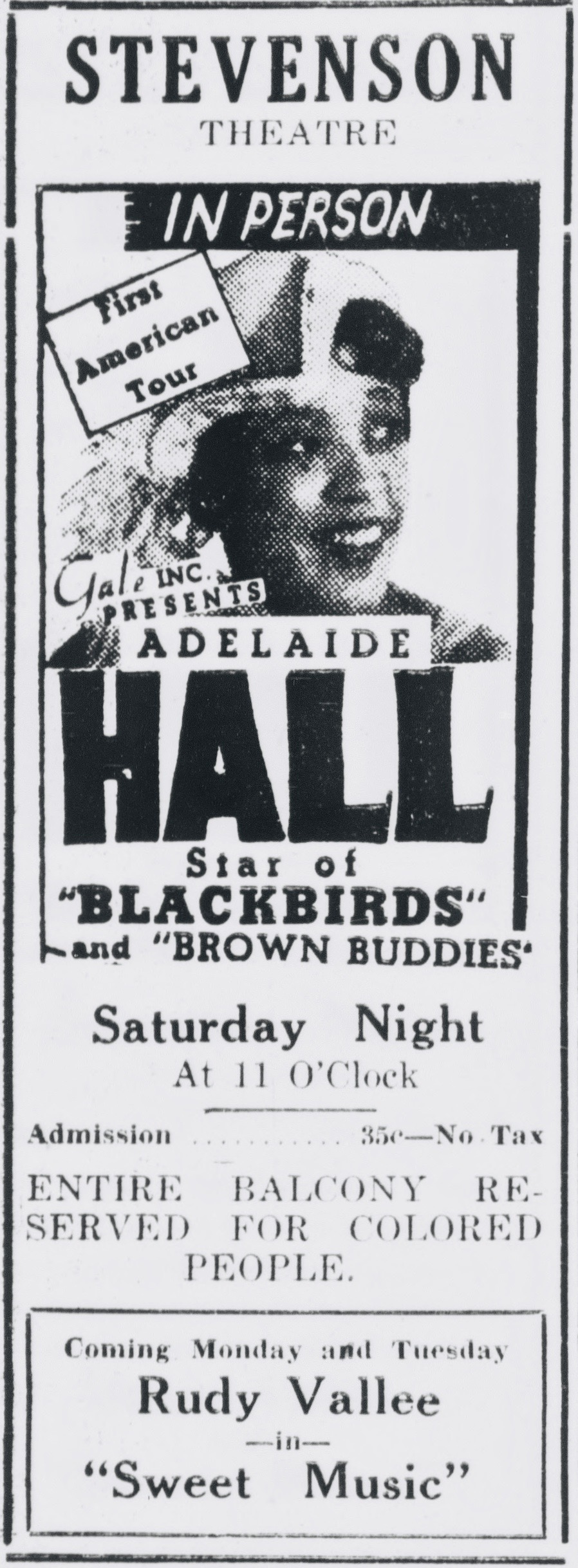
—Those revues, those music-halls, that whirlwind of feathers and lights — what still keeps you on those boards, night after night?
The thrill, Duke, always the same as the first night. Since Shuffle Along and the Blackbirds, I've sung I Can't Give You Anything But Love a thousand times, yet every audience is new. The revue is total art: you sing, dance, make people laugh, all in the same breath. There's that second, just before the entrance, when the heart beats too fast — and then the light takes you, and you exist only for them. Running my own club also forces me to oversee everything, down to the last drink served. It's exhausting, but take that away and I no longer know who I am.
Take the stage away from me and I no longer know who I am.
—Our first records spun on those fragile 78 rpm discs. How do you feel knowing your voice will be engraved long after us?
A dizziness, Duke, I admit. When we cut Creole Love Call on that shellac disc, I was thinking of one evening, not eternity. Those platters break at the slightest thing, yet they keep our breath intact, ready to come back to life at the slightest turn of the turntable. Imagine that a child not yet born may one day set the needle and hear what we did that morning at Victor. That's the magic of our era: the voice no longer dies with the concert. I don't know what the future will keep of me, but that groove, at least, will say that I existed.
Those platters break at the slightest thing, yet they keep our breath intact.
—Your career has already lasted since the twenties without faltering. Where do you draw that endurance, Adelaide, when so many others have faded?
From pleasure, Duke, simply. Many have sung for glory or money; I sing because I couldn't do otherwise, like breathing. I've been through Broadway, Harlem, Paris, London, war and ruins, and each time the stage has lifted me up. People sometimes tell me my career is already one of the longest in the business — I hardly think about it, because thinking about duration makes you feel old. As long as my voice responds and an audience wants to hear me, I'll be there. The day I stop won't be from fatigue: it will be because the world no longer thirsts for songs.
I sing because I couldn't do otherwise, like breathing.
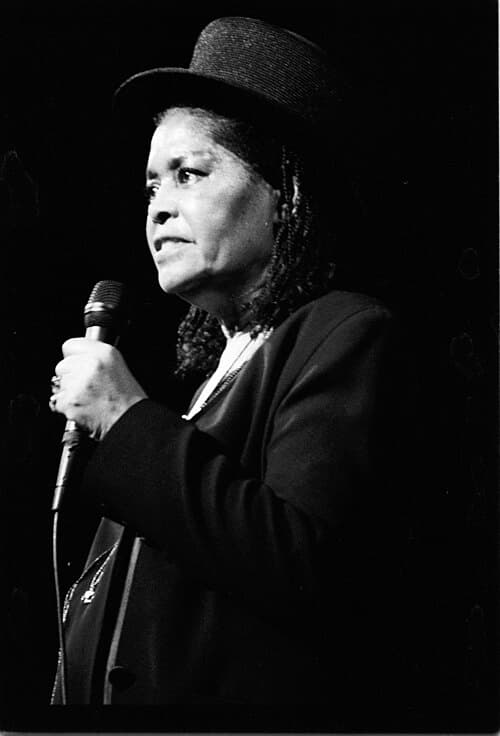

This imaginary interview was generated by artificial intelligence from sources documented in Adelaide Hall's profile. It dramatises what the figure might have said based on what we know about them, but does not constitute attested historical testimony. For primary sources and factual documentation, refer to the full profile.