Imaginary interview with Adelaide Hall
by Charactorium · Adelaide Hall (1901 — 1993) · Music · Performing Arts · 6 min read
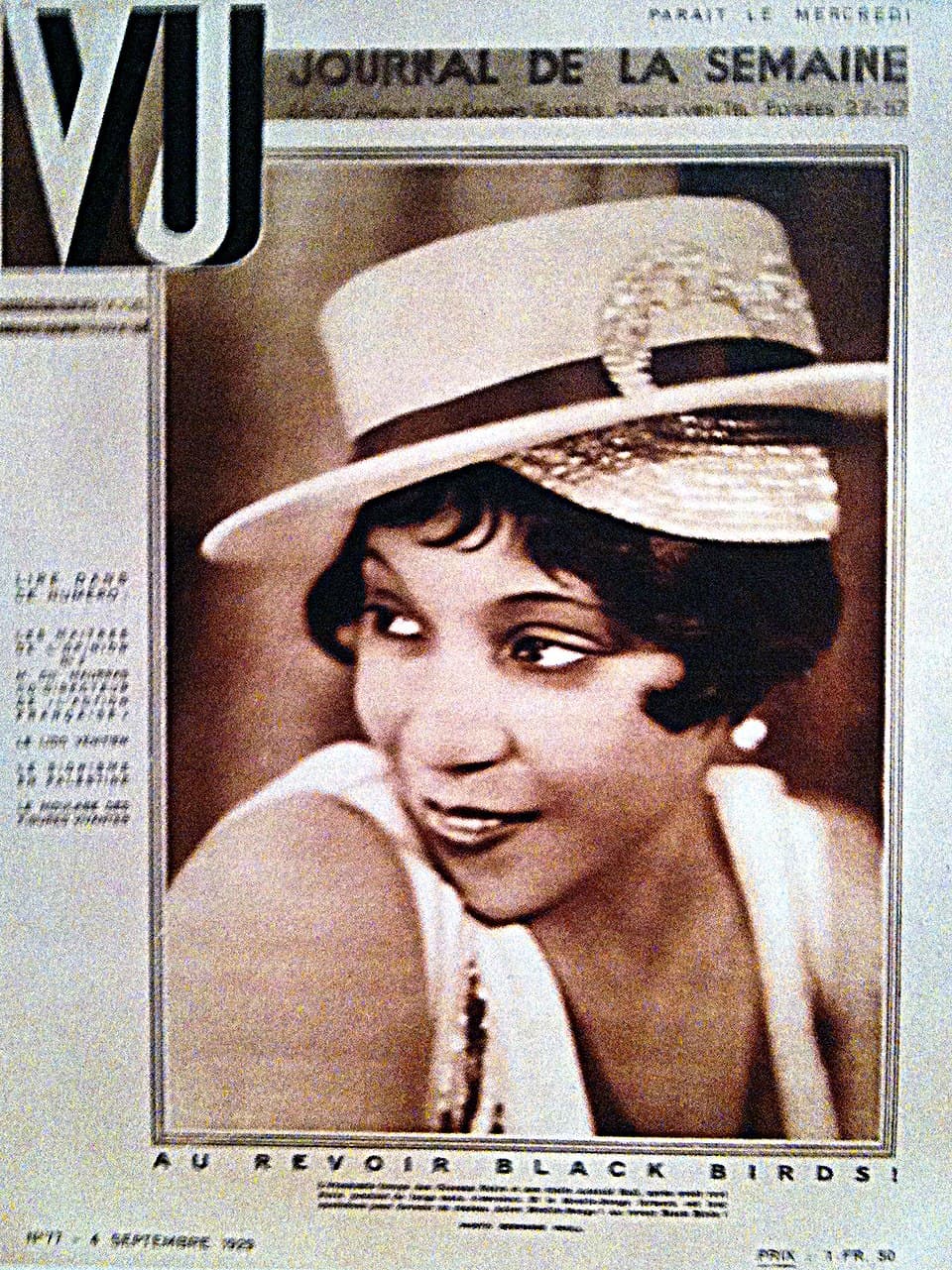
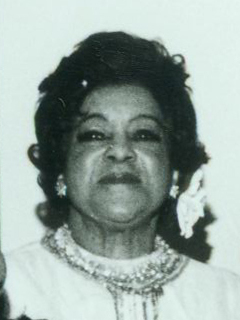
London, an afternoon in the late 1980s. In the hushed living room of a brick house, a small woman with bright eyes pours tea, a steaming cup beside her like a stage talisman. At over eighty, Adelaide Hall has traversed nearly the entire century, from Harlem to Montmartre, and indulges in the game of memories.
—How did a young girl from Brooklyn end up on the Broadway stage?
I was born in Brooklyn in 1901, in a house where singing was as natural as breathing — my father taught music. So when Shuffle Along opened on Broadway in 1921, I slipped in, very young, almost cheeky. You can't imagine what that meant: an all-African-American musical filling the theaters, in an America that didn't give us much. We carried what was called the Harlem Renaissance on our shoulders without even knowing it. At night, I'd come home exhausted, feet on fire, and yet I'd have started again right away. That's when I understood that a stage could be a country of your own, when the real country closes its doors to you.
A stage could be a country of your own, when the real country closes its doors to you.
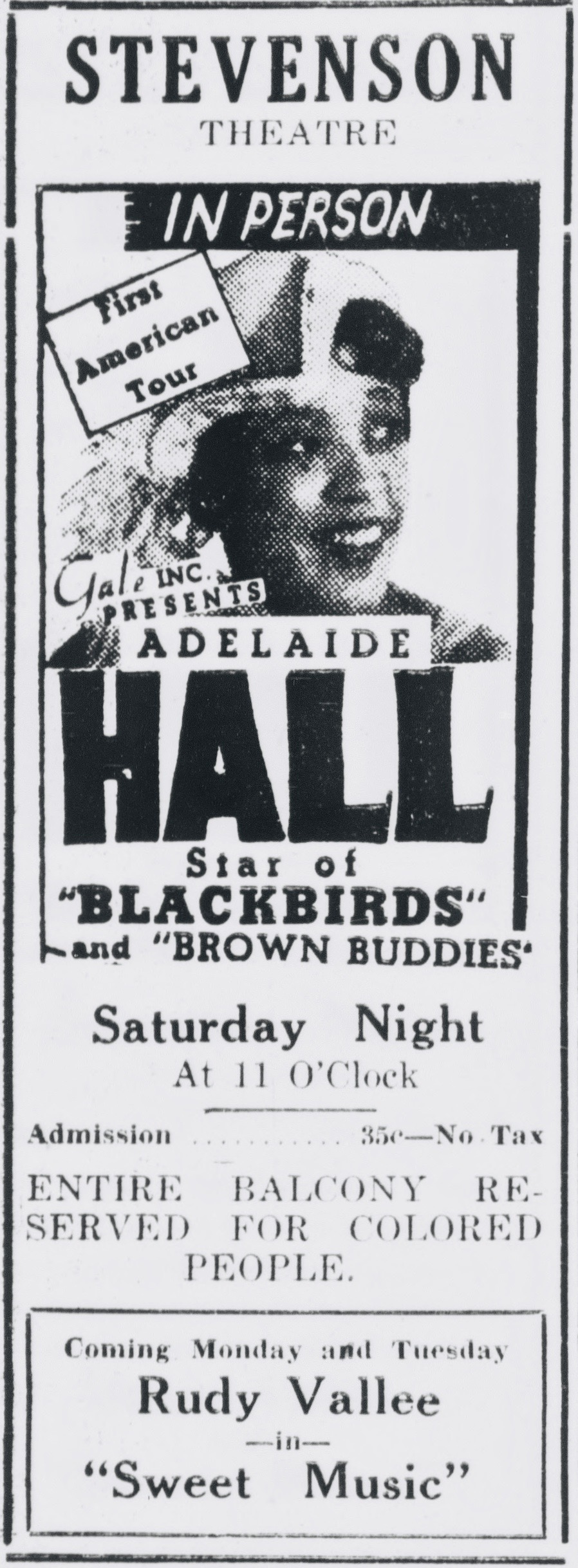
—What did the triumph of « Blackbirds of 1928 » mean to you?
Ah, Blackbirds of 1928! Every night, I'd launch into “I Can't Give You Anything But Love” to a packed house, and the refrain would echo back to me, carried by hundreds of voices. There was also “Diga Diga Doo,” fiery, that made the floor shake. It was the era of the great revues, those shows where singing, dancing, and laughter jostled without pause. You'd leave dizzy. But I never forgot that nearby, at the Cotton Club in Harlem, the finest Black orchestras played for an exclusively white audience. We were applauded and kept at a distance in the same motion. I sang with that contradiction planted in my heart, and I decided it would not silence me.
—Do you remember the night your voice became an instrument?
It was in 1927, on tour with Duke Ellington's orchestra. From the wings, I began improvising a melody without a single word — just sounds that rose, hovered, settled above the brass. What would later be called scat. Duke looked up, and I saw in his eyes that he had something. He had me record it immediately: it became Creole Love Call, cut on a 78 rpm record on October 26. My voice said nothing and yet said everything, like a trumpet that had learned to breathe. I was later told I had opened a door, that others rushed through it. I think above all I had discovered that the silence of words could sing louder than them.
My voice said nothing and yet said everything, like a trumpet that had learned to breathe.
—Why give up words, when a singer is meant to sing them?
Because words sometimes confine. When I vocalize on Creole Love Call, I'm no longer tied to a story, to an “I love you” or a “goodbye”: I become color, current of air, shiver. The electric microphone had just changed everything for us singers. Before, you had to push your voice to cover a big orchestra; now I could whisper a sound and let it float, all in nuances. That's what crooners were asked to do. My voice is my only true instrument, one I tune each morning by caring for my throat, avoiding cold drinks, drinking my hot tea with honey. Without words, it went straight to what music has most naked.
—What did you come to Paris to find in the 1930s?
Air, simply. Paris had been crazy about jazz since Josephine Baker triumphed in the Revue Nègre in 1925. They looked at African-American artists differently there — with appetite, with respect. So in 1937, I opened my own cabaret in Montmartre, “La Grosse Pomme,” after New York's nickname. Imagine: a piece of Harlem perched on the Butte, between the gas lamps and the stairs! People drank, danced until dawn, in that form of dinner-show that is cabaret. After afternoons spent rehearsing and whole evenings on stage, I still oversaw the nights. I was both boss and star. Paris gave me something rare: the right to simply be an artist.
Paris gave me something rare: the right to simply be an artist.
—What do you remember from your recording sessions with Django Reinhardt?
In 1938, in Paris, I recorded several songs accompanied by Django Reinhardt and the Quintette du Hot Club de France. His guitar was a living thing, unpredictable — he'd catch a phrase mid-air and turn it inside out. We came from two worlds: me, from Harlem America and the big revues; him, from Gypsy jazz on European roads. And yet, from the first bars, we understood each other without a word, just like on Creole Love Call. That was interwar jazz: a bridge thrown across the Atlantic, where a singer from Brooklyn and a guitarist from the caravans could trade phrases. Those records remain among my dearest studio memories.
—How did you experience the night your London club was destroyed?
I had settled in London in 1938, and with my husband Bert Hicks, we ran a very popular club. Then came the Blitz, the German bombings of 1940. One night, the bombs destroyed our establishment — months of work reduced to rubble and plaster dust. You might have thought everything stopped there. But giving up would have been letting them win. I kept singing, in shelters, in halls still standing, for people who had lost everything and came seeking three minutes of respite. A song doesn't rebuild a roof, I know. But it reminds those who listen that they are still alive, and that night, that was worth all the walls in the world.
A song doesn't rebuild a roof — but it reminds those who listen that they are still alive.
—What did your voice represent for the British during the war?
Between 1939 and 1945, I sang a lot for the BBC and for the troops. In the evening, in thousands of homes, people would lean toward the wireless set hoping for a little sweetness amid the din. My voice reached them through those waves, familiar, almost domestic. I was American by birth, but this people had adopted me, and I wanted to return their courage in the currency of melody. There was something strange in knowing I was being listened to in the dark, curtains drawn because of the raids. I didn't see my audience, but I felt them, straining toward the radio like toward a fire. That's when, I think, I truly became a familiar figure of London at war.
—How does it feel to step onto the Carnegie Hall stage at eighty-six?
In 1988, I was called back to Carnegie Hall in New York. Imagine: I had made my debut on Broadway in 1921, and here I was, more than sixty years later, under those same lights, in one of the world's most prestigious halls. I felt my legs tremble a little — not from fear, but from emotion. A whole lifetime came back with me that night: Harlem, Montmartre, the Blitz, the studios. When the first notes came out, the voice was still there, a little veiled by the years, but faithful. The audience, I think, came not just to hear a singer: they came to salute a century standing on two tired legs. Few are the artists whom the stage visits one last time with such tenderness.
The audience came to salute a century standing on two tired legs.
—What allowed you to sing for nearly seventy years?
I was told that the Guinness Book of Records had recorded my name for the longest recording career — more than seven decades, from the 1920s to the 1990s. That makes me smile, because I never counted. I simply continued. The secret? I think it comes down to a few things: care for your voice like a precious asset, never disdain an audience, whether in Harlem or a London shelter, and keep the appetite to learn one more song. Fashions passed — swing, the great revues, music hall — but the desire to go on stage never left me. You don't last by resisting time; you last by embracing each era you pass through.
You don't last by resisting time; you last by embracing each era you pass through.
This imaginary interview was generated by artificial intelligence from sources documented in Adelaide Hall's profile. It dramatises what the figure might have said based on what we know about them, but does not constitute attested historical testimony. For primary sources and factual documentation, refer to the full profile.