Imaginary dialogue between Oprah Winfrey and Aishwarya Rai
by Charactorium · Aishwarya Rai (1973 — ?) · Performing Arts · 5 min read
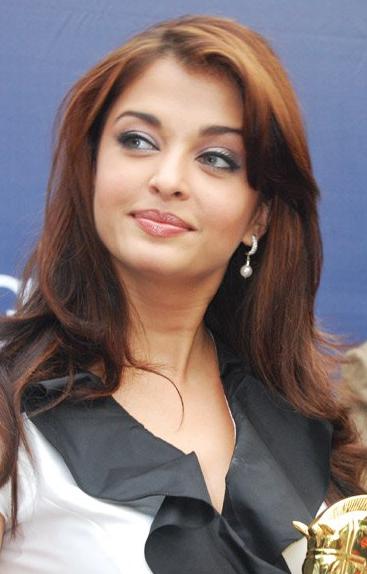
It is in a plush studio in Chicago, under the warm lights of a television set, that Oprah Winfrey meets Aishwarya Rai in the year 2005. On the coffee table, a cup of masala tea still steams, and the actress's turquoise silk sari catches every reflection of the spotlights. The two women know each other: Oprah introduced her to her American audience as the most beautiful woman on the planet, and today she comes to seek, behind the Bollywood icon, the young girl from Mangalore. The interview opens like a conversation between two women the world watches.
—Aishwarya, before being the star I introduced to my audience, you were studying architecture. How did that crown in 1994 turn everything upside down?
Oprah, I was twenty-one and drawing blueprints at my student desk. When my name echoed in Sun City, South Africa, I felt the ground give way. I was the fifth Indian to wear that Miss World crown, and you can't imagine the wave that swept over my country. As soon as I returned, millions of Indians looked at me as if I carried their dreams. I had chosen that stage to speak about women's education, peace — and suddenly Bollywood opened its doors to a girl who had never dreamed of cinema. That crown wasn't an end; it was a beginning I hadn't planned.
That crown wasn't an end; it was a beginning I hadn't planned.
—In 2002, you joined the jury of Cannes, the first from Bollywood. What did you feel crossing that threshold?
The Palais des Festivals intimidated me like no film set ever had. Sitting under the presidency of David Lynch, at the fifty-fifth edition, I carried an entire cinema on my shoulders. For decades, the West had looked down on Bollywood as exotic, noisy entertainment. And suddenly, I was asked to judge cinema from around the world. That same year, Devdas climbed those steps, and I saw French faces discover our colors, our extravagance, our raw emotions. You who know the weight of opening a door for those who come after, Oprah, you understand what that meant. I wasn't just an invited actress: I was proof that my country had a seat at that table.
I wasn't just an invited actress: I was proof that my country had a seat at that table.
—Back home, we talk about the American Dream. You embody something else. How did Bollywood become this force that radiates far beyond India?
It all began in 1991, Oprah, when India opened its markets. A vast middle class grew, hungry for dreams, and our cinema became its mirror. Then the Indian diaspora — in London, New York, Toronto — carried our films in their suitcases. By the two-thousands, Bollywood was everywhere, and I found myself as one of its faces. People call it soft power: a nation that seduces without ever raising its voice, through its songs, its colors, its love stories. I believe we tell emotion without shame, and the whole world thirsts for that. My craft ceased to be only Indian; it became a bridge.
A nation that seduces without ever raising its voice, through its songs, its colors, its love stories.
—Our viewers see the magic on screen. But tell me, what does a real shooting day in Mumbai look like?
It begins before dawn, Oprah. Long before the sun touches the Arabian Sea, I am on set, and for hours makeup artists and hairstylists transform me. Our productions demand elaborate makeup, almost a ritual. Then come the long musical sequences, choreographed, rehearsed twenty times in the heat. I wear silk Kanjeevaram saris and Kundan jewelry that sometimes weighs several kilos — by evening, my shoulders remember. And you must know a secret: I don't sing. It's playback singing, a magnificent voice recorded in studio, and I lend my lips and emotion. People think beauty is light; it is made of discipline, sweat, and endless patience.
People think beauty is light; it is made of discipline, sweat, and endless patience.
—Since 2006, you have been the global face of L'Oréal Paris, in over one hundred fifty countries. How do you carry these two worlds within you?
It's a constant dance between two identities, Oprah. One morning I wear a sari in Mumbai, the same evening haute couture in Paris. That contract, one of the largest ever signed by an Indian actress, placed me on billboards from New York to Tokyo. But I refuse to see only commerce in it. For a long time, beauty standards came from a single horizon, the West. Seeing an Indian woman embody a French brand worldwide meant that beauty has a thousand faces. My passport never leaves me — I live across three continents. Some criticize me for traveling too far from home. I answer that I carry India with me, wherever I am seen.
Seeing an Indian woman embody a French brand worldwide meant that beauty has a thousand faces.
—In 2007, you married Abhishek Bachchan, son of a huge film family. It was called an almost dynastic union. How did you experience it?
Millions of people in India and the diaspora followed that wedding as a national event, Oprah — it was dizzying. Entering the Bachchan family means joining a lineage that has embodied Indian cinema for generations. People called it a dynastic union, and I understand the image: our industry runs on families, on transmission, like a royalty of dreams. But behind the spotlights, it was above all two people choosing each other. We live in Juhu, that Mumbai seaside neighborhood where so many faces the world knows reside. I learned to protect an intimate space within this consuming celebrity. The crowd loves fairy tales; I, above all, valued a real life.
The crowd loves fairy tales; I, above all, valued a real life.
—You presented Devdas on the Croisette. What does that Western gaze from Cannes change for an Indian film?
It changes everything and nothing at once, Oprah. Devdas, this adaptation of a classic novel by Sanjay Leela Bhansali, was already a peak in our country. But when a French audience discovers it at Cannes, our cinema ceases to be a curiosity and becomes an art in its own right. I saw viewers moved by a story they thought too distant. Yet I remain faithful to what we are: our films don't have to resemble European auteur cinema to deserve respect. Our extravagance, our songs, our unabashed tears are our language. The West's gaze honors us, but I never want it to correct us. We existed long before it discovered us.
The West's gaze honors us, but I never want it to correct us.

—Much has been said about your eyes, your beauty. Is this fame based first on your appearance a gift or a burden?
Both, Oprah, and you know it better than anyone, you who received me and introduced me to your audience with those very words. My eyes opened doors, I won't deny it; they fascinated magazines, crowds. But an actress is not a fixed image. When I played a double role in Iruvar, that Tamil film by Mani Ratnam, people finally looked at my work rather than my face. That is what I seek: that my characters be remembered, not just the color of my irises. Beauty is an entry ticket, never a career. I had to prove, film after film, that behind the Miss World crown lived an actress who wanted to be taken seriously.
Beauty is an entry ticket, never a career.
—Between premieres, galas, and travels from Mumbai to Paris, do you remain attached to your roots in Karnataka?
Deeply, Oprah. My evenings are often taken up by premieres or charity galas, and during my trips to Cannes or Paris, dinners stretch late into the night. But wherever I am, I remain a girl from the coast, born near Mangalore. My Tulu origins, the simple food from home — rice, lentil dal, spiced vegetables — that's what keeps me standing. In the whirlwind of haute couture and spotlights, it is these childhood flavors that remind me who I am. One can wear designer gowns on all the red carpets of the world; one must know where one's steps come from. My roots are not a backdrop: they are my balance.
One can wear designer gowns on all the red carpets of the world; one must know where one's steps come from.
—To finish, Aishwarya: if a young Indian girl were watching you tonight from a distant village, what would you want her to take away from your journey?
That no door is closed in advance, Oprah. An architecture student from Mangalore became Miss World, then an actress, then a face on billboards in one hundred fifty countries. None of that was written. I want her to know that her dreams don't have to ask permission from the West or anyone. My country opened up, it grew, and young women today can aim for the whole world without renouncing who they are. I carry India on every red carpet, and I do it with pride, not apologizing for existing. Let her work tirelessly, keep her roots, and never wait for someone to tell her she has the right.
Her dreams don't have to ask permission from the West or anyone.
This imaginary interview was generated by artificial intelligence from sources documented in Aishwarya Rai's profile. It dramatises what the figure might have said based on what we know about them, but does not constitute attested historical testimony. For primary sources and factual documentation, refer to the full profile.