Kids interview Bartolina Sisa
by Charactorium · Bartolina Sisa (1750 — 1782) · Politics · Military · 5 min read
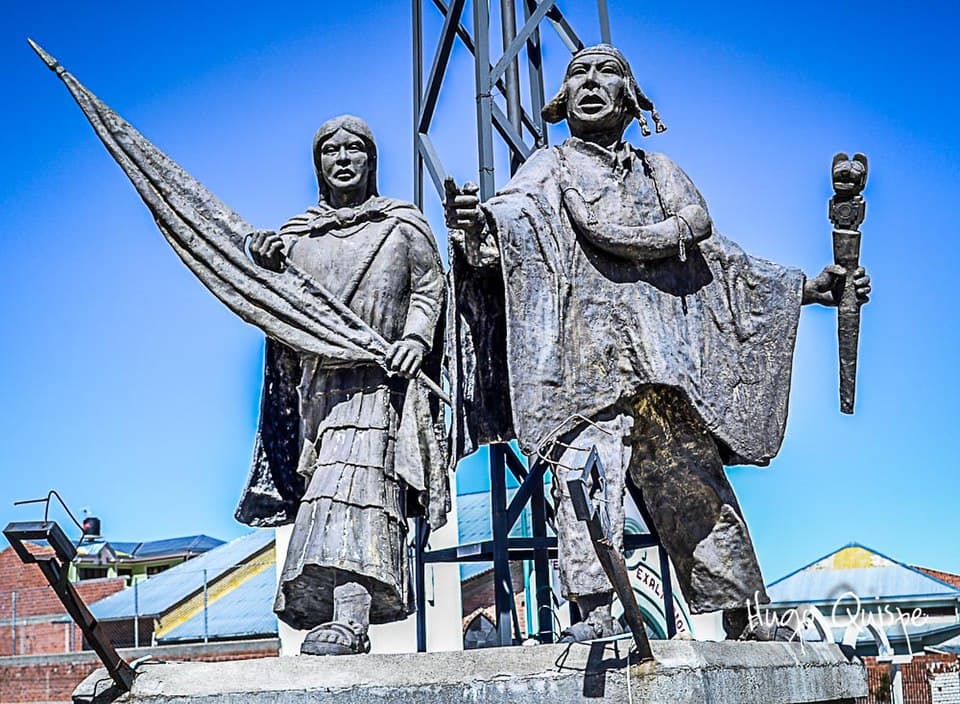
That morning, two young twelve-year-old visitors sat on the rough grass of the Altiplano, breathless from the altitude. Before them, an Aymara woman wrapped in her shawl looked at them with a smile. Her name is Bartolina Sisa, and she agreed to answer all their questions.
—What did you do, your family, when you were little?
You know, my child, my family sold coca. Imagine small green leaves that you chew to withstand the cold and altitude sickness, here at 3,600 meters elevation. We didn't have much, but we traveled. A coca merchant walks entire days from one village to another. You meet people, you listen, you speak the Aymara language everywhere. As a little girl, I already carried the chuspa, the small woven bag where you keep the leaves. I didn't know it yet, but learning the paths and the people was already learning to wage war.
Learning the paths and the people was already learning to wage war.
—And your husband, how did you meet him?
I married Julián Apaza in 1769. He too was a small Aymara merchant, a craftsman without fortune. Later, you will know him by another name: Túpac Katari. We sold coca together, and guess what that served us? To hide something else. When you carry sacks of leaves from village to village, no one is suspicious. We slipped messages, we counted the men ready to rise up, we planned everything. Our merchant account book was also the secret book of the revolt. Trade was our disguise, you understand? No one suspects two tired merchants on a mountain path.
Trade was our disguise.
—Is it true that you commanded soldiers, you, a woman?
Yes, my child, and the Spaniards couldn't believe it. In 1781, we surrounded the city of La Paz for over a hundred days. Túpac Katari held the north. And I held the south, sole leader of my front. Imagine rocky hills overlooking the city far below: I would settle on those heights, above the Spanish rooftops. From up there, I saw everything, and they couldn't easily climb up. A Spanish governor even wrote in his reports that Katari's wife commanded the Indians of the south. When an enemy fears you in writing, that's already a small victory.
When an enemy fears you in writing, that's already a small victory.
—What weapons did you fight with against the Spanish guns?
We had almost no guns, that's true. But we had the honda, the Andean sling. It's a wool braid in which you place a stone, you spin it, and you throw it very far, very hard. From the heights above La Paz, a rain of stones fell on the soldiers below. Our ancestors used it before us. Women and men alike knew how to use it. You see, when you are small and poor, you learn to fight with what the mountain gives you: stones, height, and patience. Courage often replaces gunpowder.
Courage often replaces gunpowder.
—And the other women, what did they do during the battles?
Ah, my child, without the women nothing would have held! I organized a whole network of Aymara women. We carried water, food, we tended the wounded. A hungry army does not fight. Every morning, I checked that supplies went to the fighters before they took their positions. We had chuño, frozen then dried potatoes that keep for years. Without us, the men on the hills would have had nothing to eat. Our role has long been forgotten in the stories. But remember this: a war is won as much with a sack of provisions as with a spear.
A war is won as much with a sack of provisions as with a spear.
—How did you communicate with the northern army?
That was the hardest part, you know. Túpac Katari was in the north, I in the south, and the besieged city separated us. So my women carried the messages, by word of mouth, from path to path. We also used the pututo, a large seashell into which you blow. Its cry carries very far in the mountains. A sound could say: “gather together.” Imagine, no written letter that could fall into the wrong hands, just voices and shell breaths crossing the Altiplano. That is how two separated armies acted as one. The silence of the mountain was our ally.
Two separated armies acted as one.
—How did you dress to go into battle?
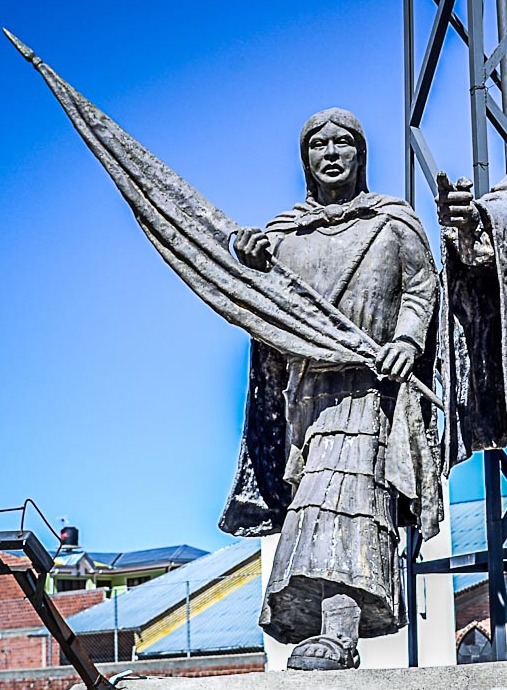
Like every day of my life, my child. I wore my pollera, that wide skirt with several layers of llama wool in bright colors, and my manta, the shawl pinned at the chest. I never wanted to disguise myself as a Spanish soldier or hide who I was. Others told me: dress differently, you will be recognized. I refused. My Aymara clothes were my flag. When my people saw me on the hill with my skirt flying in the wind, they knew that one of their own was commanding them. Showing yourself as you are is already resistance.
My Aymara clothes were my flag.
—Did you pray before battles? What did you believe in?
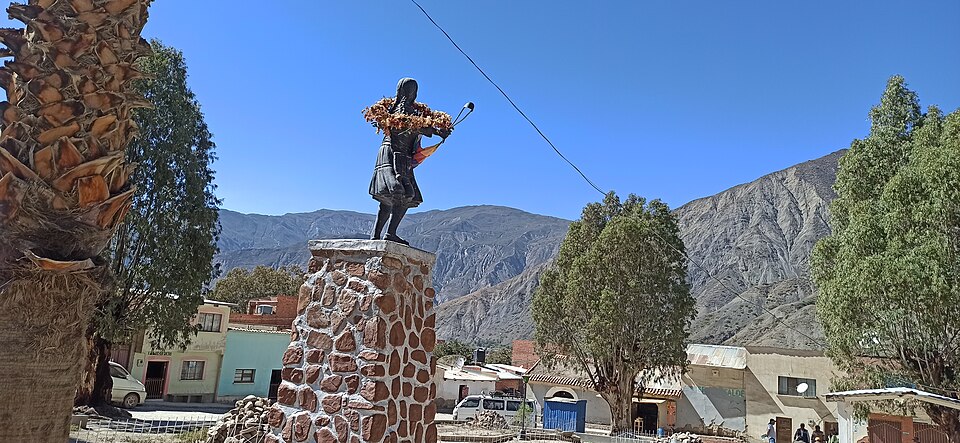
Yes, we prayed to Pachamama, the Earth Mother. For us, the earth is alive, she feeds us and protects us. Before battles, I presided over offerings: we gave her a little of what we had, to ask for strength and victory. That bonded the fighters' hearts, you understand. The elders of my people called me Kurusa Wara, “Star of the Cross,” and said I commanded with wisdom from the spirits of the earth. It wasn't magic, my child. It was trust. When people believe together in the same thing, they become stronger than fear.
When people believe together, they become stronger than fear.
—How did the Spaniards catch you?
Through a betrayal, in January 1782. Someone from our side handed me over. That is the hardest thing, my child: it is not always enemies who hurt the most. Shortly before, I had already lost my husband. Túpac Katari had been captured and executed near Peñas, not far from La Paz. I was a prisoner when I learned he was gone. Imagine: chained, alone, and that news falling on you. The Spaniards thought that by taking me, everything would collapse. A viceroy wrote it to the king of Spain. They were wrong: you can chain a person, not an idea.
You can chain a person, not an idea.
—Were they cruel to you when you were a prisoner?
They paraded me through the streets of La Paz, chained, with a crown of thorns on my head. They wanted to humiliate me before my people, make me a ridiculous queen to frighten others. But you know what? It had the opposite effect. Seeing me like that, my people did not mock: they remembered me as a martyr. Despite everything, I refused to give up names, paths, networks. They executed me on September 5. Today, that day has become Indigenous Women's Day. They wanted to erase me, and they made me unforgettable.
They wanted to erase me, and they made me unforgettable.
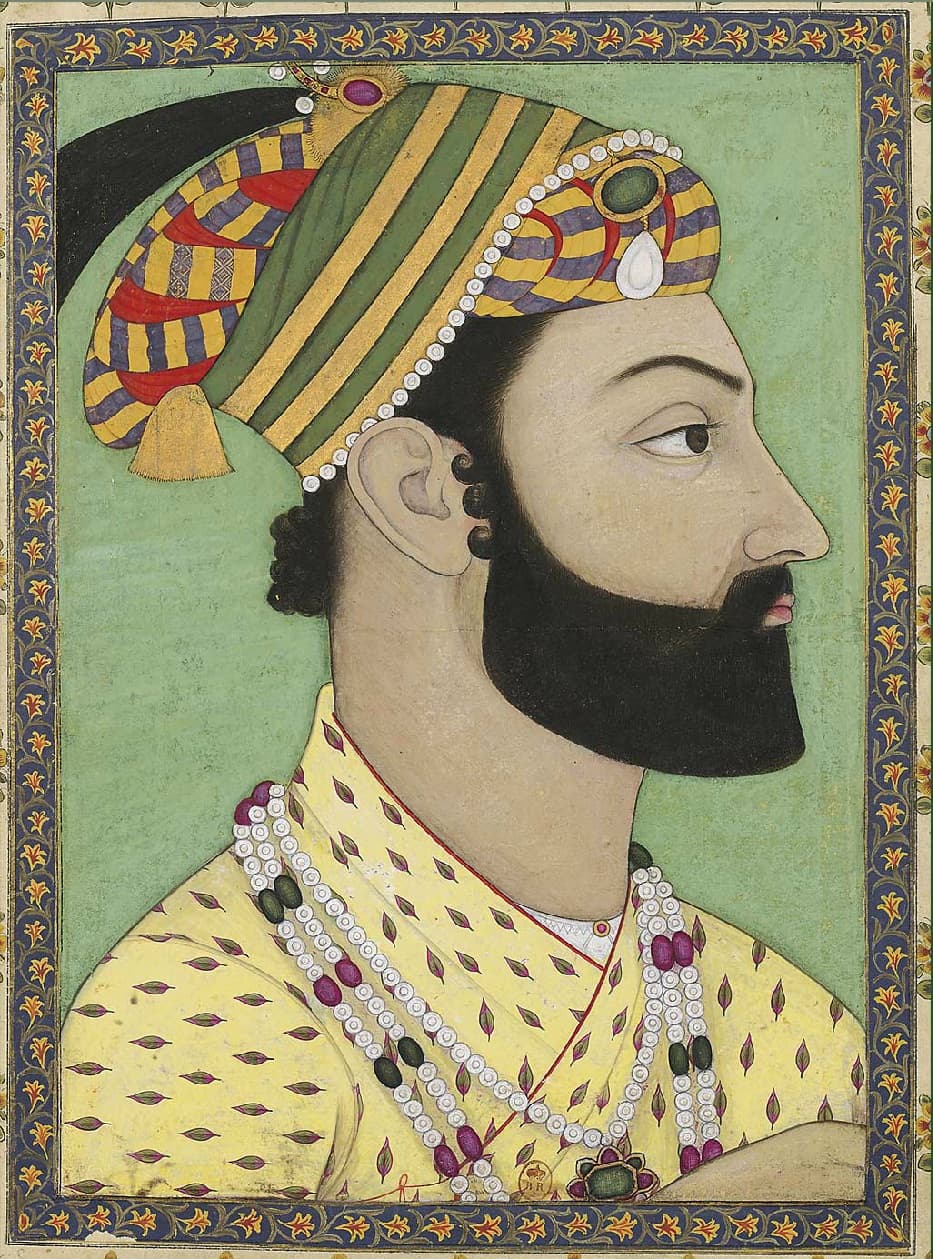
This imaginary interview was generated by artificial intelligence from sources documented in Bartolina Sisa's profile. It dramatises what the figure might have said based on what we know about them, but does not constitute attested historical testimony. For primary sources and factual documentation, refer to the full profile.