Imaginary interview with Bartolina Sisa
by Charactorium · Bartolina Sisa (1750 — 1782) · Politics · Military · 6 min read
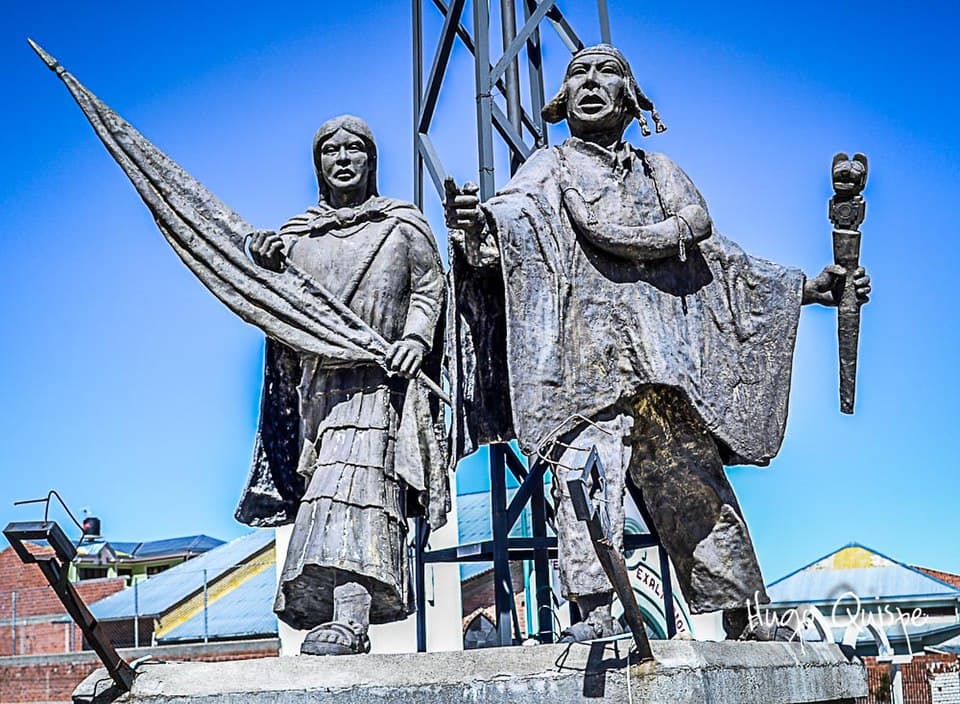
On the ridges of Pampahasi, above besieged La Paz, the wind of the Altiplano whips the mantas. A woman in a pollera receives us near a campfire, a chuspa of coca leaves at her belt, her eyes fixed on the city below. She speaks Aymara, but agrees, for us, to unfold her memory.
—You are often presented as a warrior, but where do you come from, before the weapons?
I was born in Sica Sica, in the province of Aroma, into a family of coca merchants. As a child, I learned to count arrobas of leaves before learning to fight, to follow the trails of the Altiplano from one ayllu to another, my chuspa full, chewing coca against the cold of 3,600 meters. People think trade is a peaceful thing. For us, it taught us the routes, the people, the silences to keep. When the revolt came, those same coca paths carried our messages, and my household's ledger hid more than numbers. A merchant sees everything and arouses no suspicion: that was the weapon they never gave me, and that I had always possessed.
A merchant sees everything and arouses no suspicion: that was the weapon they never gave me.
—How did you come to command men in battle yourself?
My husband, Túpac Katari, held the north of La Paz. I was entrusted with the south. Not as a wife's favor: because I knew the hills of Pampahasi and Churubamba better than anyone, and from above you hold a city like you hold a bird in your hand. Governor Segurola wrote, it seems, that 'the woman governed the Indians of the south' — that he wrote it with spite still delights me. For one hundred and nine days we squeezed that city. From the ridges, my contingents hurled stones with the honda, cut off supplies, ebbed and flowed like the tide. A man who commands from the plain sees only the dust before him. I saw all of La Paz breathing beneath my feet.
From above you hold a city like you hold a bird in your hand.
—Leading a siege alongside your husband, how was that shared in practice?
We were two heads of one body. Katari struck in the north, I in the south, and between us ran the scouts and the deep sound of the pututo that carried our orders from one mountain to another. In the morning, I toured my positions on a llama's back, listened to sector leaders, arranged supplies before the fighters took the ridge. In the evening, we compared what each had seen from his height. The Spanish chroniclers were amazed that a woman commanded thousands of men — their amazement was already a defeat for them. Among us, the ayllu decides together, and whoever knows how to command is listened to, man or woman. This division of the sky between us kept the city strangled much longer than they thought possible.
We were two heads of one body: he in the north, I in the south.
—What do you say to those who see women's role only as rear-guard work?
Let them try to make war without us, to see. Before dawn, when I prayed to Pachamama and chewed my coca against the frost, it was women I organized: those who carried water and chuño to the positions, those who tended the wounded at the bivouac, those who passed from front to front with a message that no soldier would have guessed under a manta. This invisible network is the backbone of any siege. Cut off supplies, and the bravest army collapses in three days. They may sing the names of the leaders and forget these women; that would be yet another injustice. Without them, my men on the ridges would have been nothing but hungry stone-throwers.
Let them try to make war without us, to see.
—How did this network of women hold up against an organized army?
Through patience and knowledge of the land. A Spanish soldiery sees a peasant woman going down to market with her chuspa and basket; she sees a servant, not a messenger. That was our strength: they looked at us without seeing us. My women knew every trail of the Altiplano, every spring, every ayllu ready to hide a wounded or hunted man. We transmitted orders, reported garrison movements, fed the revolt from within their certainties. Men could hold a ridge for a day; we could hold a country for months. This war has long been written as one of leaders alone. But a revolt that lasts is fed every morning, and it was women's hands that fed it.
They looked at us without seeing us: that was all our strength.
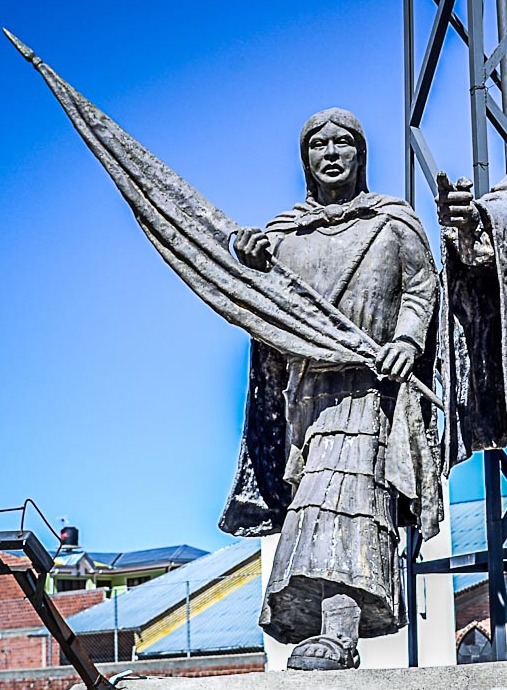
—It is said that you refused to change your attire for battle. Why this choice?
Because my pollera is not a garment, it is an answer. They wanted us to become like them, to hide what we are under city clothes or a Christian servant's dress. I fought in a llama-wool pollera of bright colors, the manta pinned on my chest, the flat-brimmed hat, like my mother and her mother before her. So that the fighter following me might see me from afar, recognize his own people in my dress, and remember for whom he was throwing stones. Under the wiphala with its colored squares, a woman dressed as an Aymara is worth more than a speech. To conceal myself would have been to give them reason before the battle even began. I never wanted to give them that gift.
My pollera is not a garment, it is an answer.
—What did that flag you raised on the heights represent for your fighters?
The wiphala says what a shouted order cannot: that we are not a horde, but peoples, each with its land, its colors, its place in a single checkerboard. When they saw it flying on the ridges of Churubamba, my people knew that there stood a command of their own, not a banner of a foreign king. Before the assault, we laid our offerings to Pachamama, the Earth-Mother who bears all; the stories of my people even gave me a name, Kurusa Wara, the Star of the Cross. A flag, a prayer, a garment: the Spaniards laughed at all this as superstitions. They never understood that a man who knows why he fights is worth ten soldiers paid by the purse.
The wiphala says what a shouted order cannot.
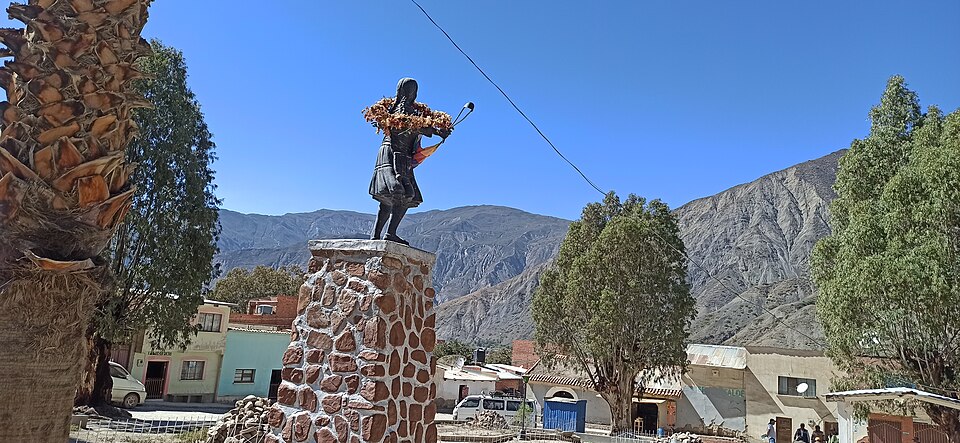
—Do you remember the moment when everything turned, when you were captured?
January 1782. We were not defeated by their weapons, but by a mouth from among our own: a betrayal in our ranks. I was handed over. A few weeks earlier, they had already taken Katari, captured and quartered near Peñas, not far from here — learning of his death from a cell is something I wish on no one. They paraded me through La Paz in chains, crowned with a crown of thorns and insignia of false royalty, to mock us, to show the Indians what becomes of a rebel queen. They thought they were humiliating me. But a people who see their martyr parade do not lower their eyes: they engrave the face in their memory. Their cortege of shame became, despite them, a coronation.
Their cortege of shame became, despite them, a coronation.
—From your prison, you were pressed to betray your own. What held you back?
What was left to me, except silence? They had my chains, they would soon have my life; they would not have my networks. Every name I let slip was a coca trail handed over, a woman messenger at the end of a rope, an ayllu burned. I had kept the accounts of our markets long enough to know what information is worth: everything. So I gave nothing. They thought that by striking down Katari and then breaking me, the revolt would collapse on its own — their viceroy wrote it to the King of Spain, so I was told. But you cannot kill an idea by killing two bodies. As long as I remained silent, the resistance still breathed. My last command was not an order: it was a closed mouth.
My last command was not an order: it was a closed mouth.
—If you could imagine being read in a century, what would you want to be remembered?
I do not know what will become of these lands. Perhaps one day, on this Altiplano around Lake Titicaca, Aymara children will no longer pay the tributo nor go to die in the mita. I will not see it. But if I am to be remembered, let it not be as a widow mourning her husband. Let them say: she was a daughter of coca merchants from Sica Sica, she held the southern front, she fed the revolt through her networks of women, and she died with her mouth shut. The rest — the honors, the flags that may be brandished — belongs to those who come after. I did what a human being can do standing: refuse to bend. Pachamama will do the rest.
I did what a human being can do standing: refuse to bend.
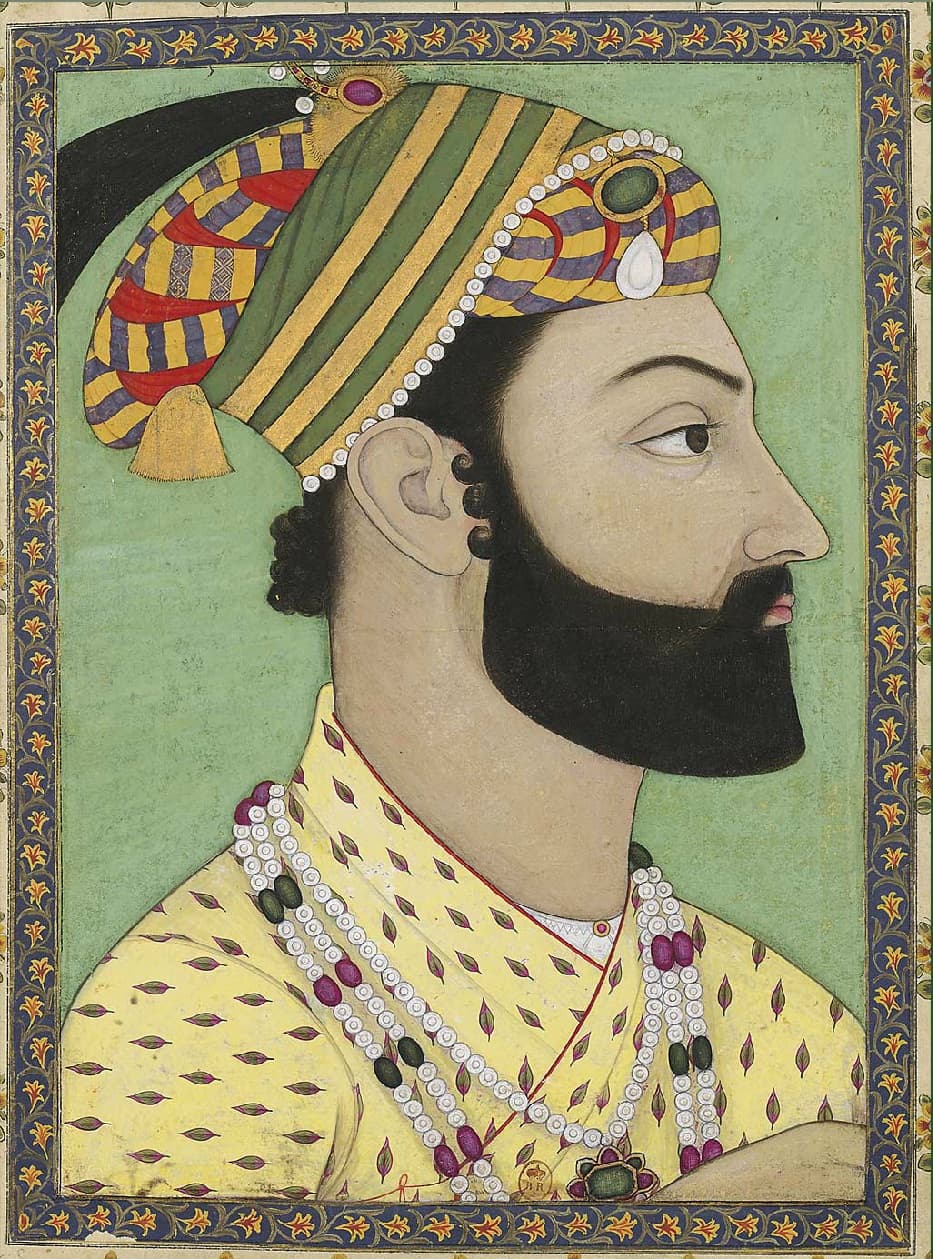
This imaginary interview was generated by artificial intelligence from sources documented in Bartolina Sisa's profile. It dramatises what the figure might have said based on what we know about them, but does not constitute attested historical testimony. For primary sources and factual documentation, refer to the full profile.