Imaginary interview with Bong Joon-ho
by Charactorium · Bong Joon-ho (1969 — ?) · Performing Arts · 6 min read
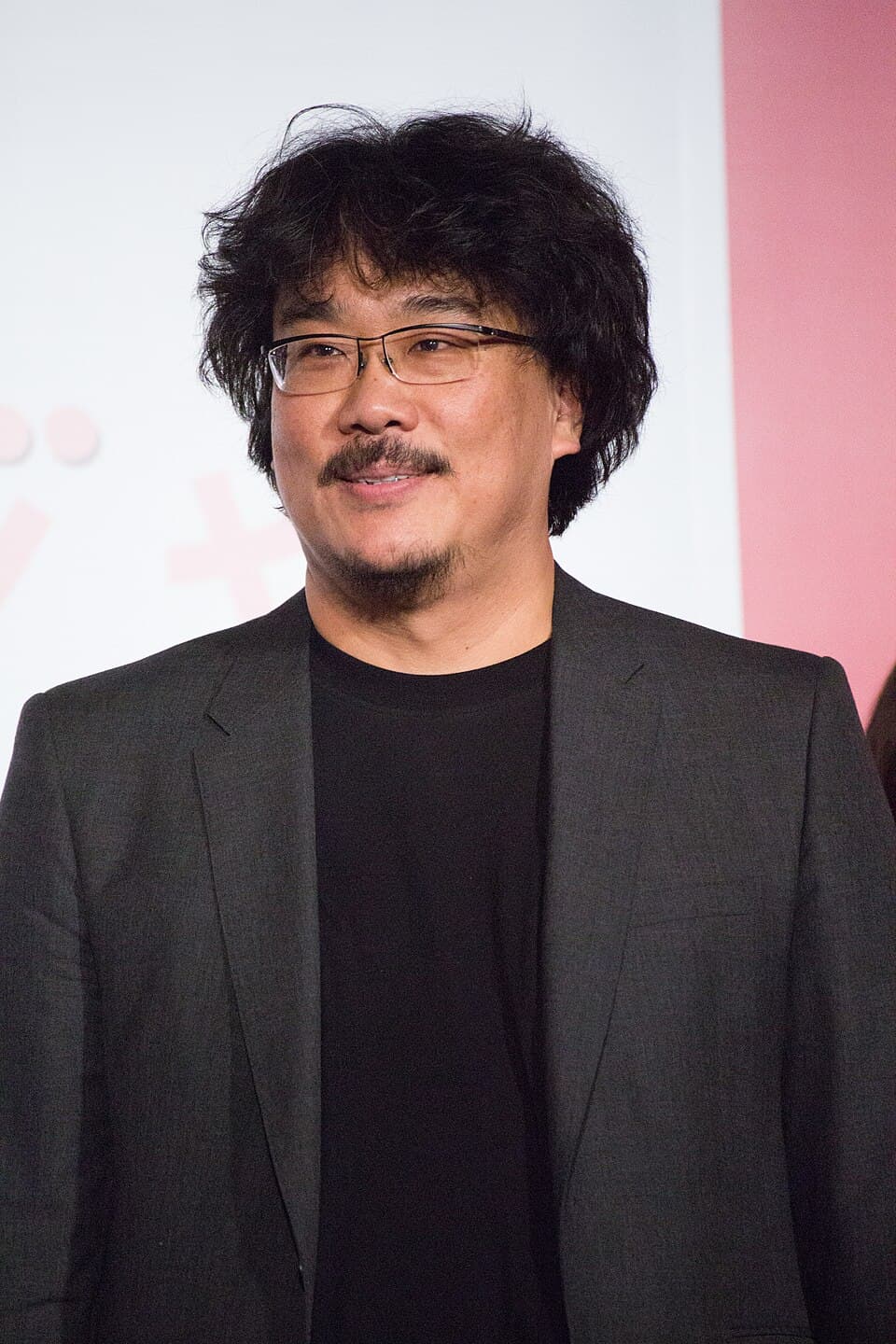
Late afternoon in a café in the Yeonhui district of Seoul. Bong Joon-ho orders an Americano, places a sketch-covered notebook on the table, and apologizes for having his head still full of a shot he can't frame. The conversation settles in, between sips, spanning nearly thirty years of cinema that started in a Korean semi-basement and climbed to the steps of the Dolby Theatre.
—How did you dare show your creature in broad daylight in The Host, when the genre usually hides it?
When I was preparing The Host in 2006, everyone told me that a monster should be hidden, that you suggest a fin, a shadow underwater, and that fear comes from what you don't see. I wanted the opposite: for the beast to emerge from the Han River in broad daylight, under an ordinary sun, in the middle of people having picnics. Terror becomes dirtier when it happens at lunchtime. I hired foreign effects studios because Korea couldn't yet make that kind of creature, and I spent weeks negotiating every muscle contraction. The film became the biggest Korean box office hit at the time. But for me, the real audacity wasn't the monster: it was saying it came from a river polluted by the negligence of the powerful.
Terror becomes dirtier when it happens at lunchtime.
—You're nicknamed 'Bong Tae-il.' What does that nickname say about your working method?
It's a pun my crew made, combining my name and the English word detail. It sounds like an affectionate reproach, and they're right. Before shooting, I draw the entire film myself, shot by shot, on very tight storyboards. The camera, the axis, the focal length, the actor's gesture: everything already exists on paper. My mornings start early, in Seoul cafes like this one, pencil in hand, alone. Some think it confines the actors, but it's the opposite: when the framework is that precise, I can let them improvise inside it without the film falling apart. A set is expensive, every hour burns money and energy; arriving with the film already framed in my head is my way of respecting everyone.
When the framework is that precise, I can let the actors improvise without the film falling apart.
—You grew up knowing an ancestor defected to North Korea. What weight did that carry?
My grandfather was Park Tae-won, a modernist novelist from the 1930s, a figure in Korean literature. During the war, he went North, and in a South Korea under dictatorship, such an ancestor is not spoken of aloud. As a child, I sensed there was a name in the family that was lowered, a sentence left unfinished. I grew up with the Gwangju Uprising of 1980, bloodily suppressed, and that diffuse fear of a power that decides what you have the right to say. I believe my taste for stories where people carry a secret, where the social surface hides a flaw, comes from there. I learned very early that official history and lived history never quite coincide.
There was a name in the family that was lowered, a sentence left unfinished.
—Parasite revolves around the banjiha, that semi-basement dwelling. Why was that setting so central?
The banjiha is that semi-basement where you live at ankle height of passersby, where light comes in at an angle and the smell of dampness clings to your skin. In Seoul, a skyscraper metropolis, these homes are the exact opposite of villas perched on the hills. For Parasite, in 2019, I wanted a space that tells the whole social gap without a word: you climb toward the rich, you descend toward the poor, the staircase does the storytelling. This architecture of inequality, I didn't invent it, I looked at it through the window. I wanted to tell a story about the coexistence of rich and poor, a universal subject in today's world. The basement wasn't a set: it was the film's thesis itself.
You climb toward the rich, you descend toward the poor: the staircase does the storytelling.
—What does it feel like when a film born in a Korean semi-basement ends up winning the Palme d'Or and then four Oscars?
In May 2019, when Parasite received the Palme d'Or at the Palais des Festivals in Cannes, I realized no Korean film had ever won it. A hundred years of cinema in my country, and there it was. Then, in February 2020, at the Dolby Theatre in Los Angeles, four statuettes, including Best Picture — the first non-English-language film to win that award. On stage, I quoted a phrase I engraved in my heart when I studied cinema: "The most personal is the most creative," and I said it was from our great Martin Scorsese. I looked at the audience and thought of the Korean technicians, the actors, all those who never imagined such a local story could resonate so far. The truth is, nothing is more universal than the deeply intimate.
Nothing is more universal than the deeply intimate.
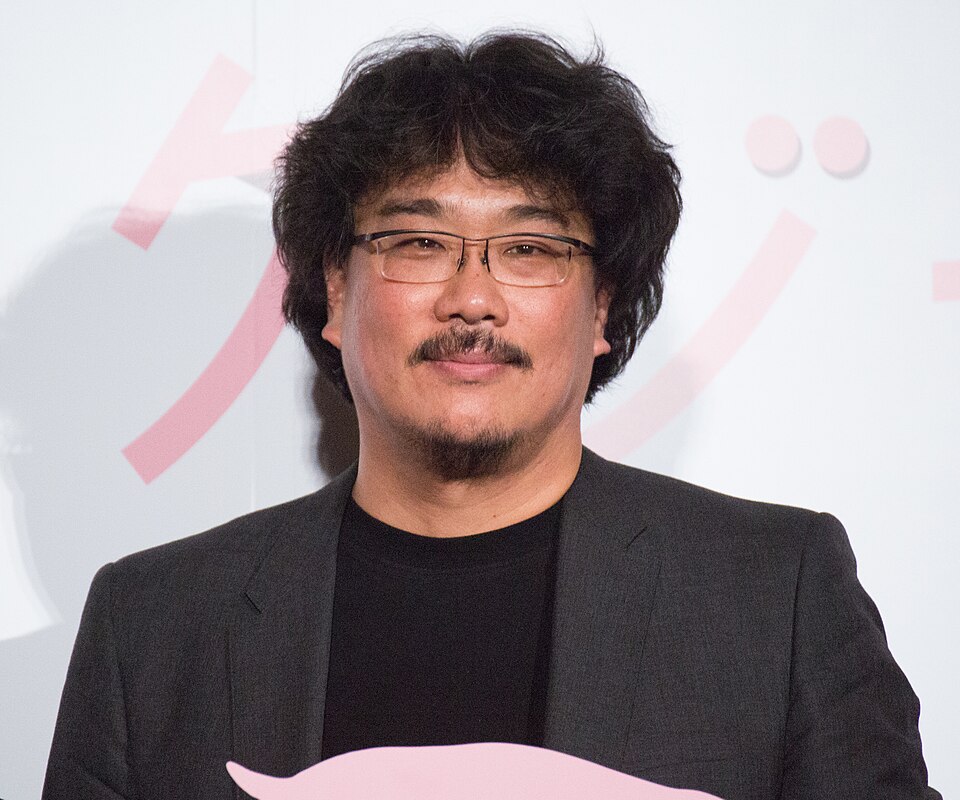
—At the Golden Globes, you spoke of the 'subtitles barrier.' What did you mean to that audience?
It was in January 2020, at the Golden Globes, in front of an American audience used to only seeing its own films. Through my translator's voice, I said: "Once you overcome the one-inch-tall barrier of subtitles, you will be introduced to so many more amazing films." That one inch is the height of a line of text at the bottom of the screen, almost nothing, and yet a wall for many viewers. I didn't want to give a lesson; I wanted to remind them that a whole world of cinema awaits on the other side. I myself grew up nourished by films from around the world, devouring everything that came my way in the evenings. Refusing a film because you have to read is to deprive yourself of continents.
That one inch, almost nothing, and yet a wall for many viewers.
—With Okja, produced by Netflix, you found yourself at the heart of the streaming debate at Cannes. How did you experience it?
In 2017, Okja, my tale of a little girl and her giant animal, was presented at Cannes even though it was produced by a streaming platform. Some booed, because the film wouldn't be released in French theaters. I found myself, against my will, at the center of a quarrel between two worlds: the big dark theater and the screen you watch at home. I understand both sides. I love collective projection, that shared darkness, more than anything. But thanks to a platform's funding, I was able to make a film no one else would have dared produce, with that freedom. The Korean wave, Hallyu, spread precisely because new channels crossed borders. You don't defend cinema by closing doors.
You don't defend cinema by closing doors.
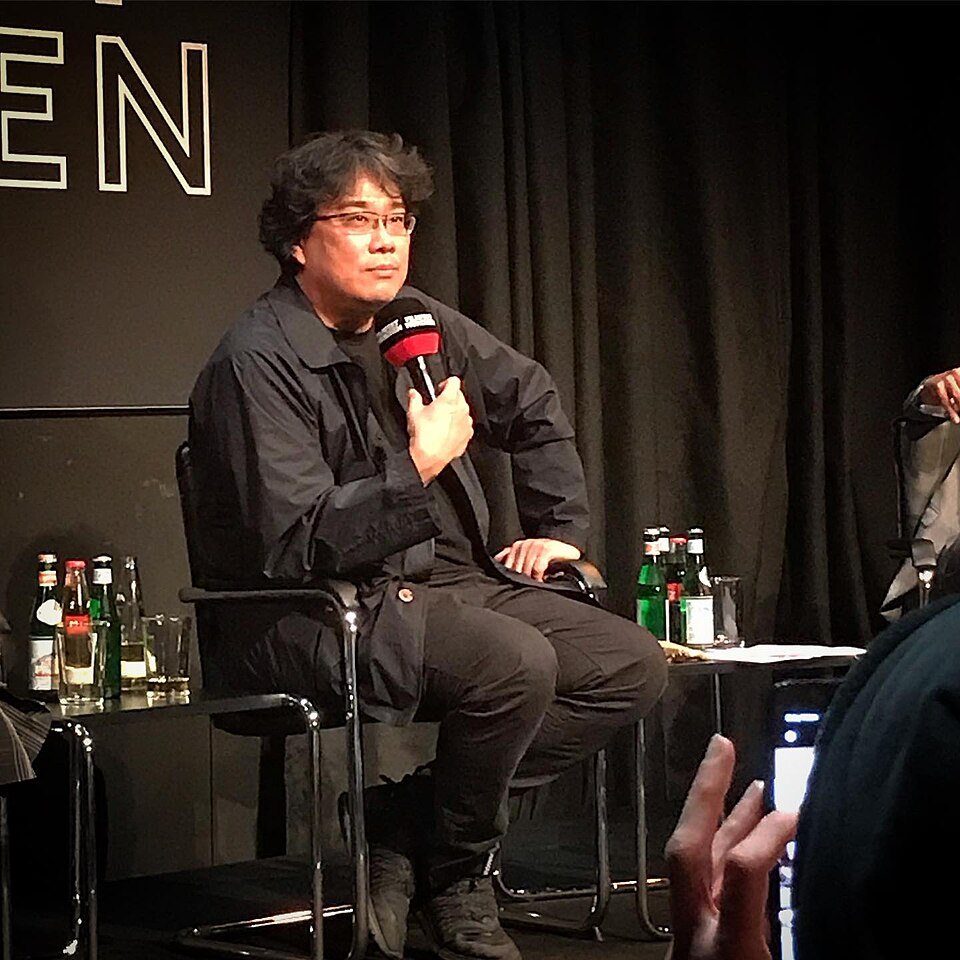
—You also write your scripts. How is a film born for you, from notebook to set?
Everything starts with a script I write myself, often in the morning, alone in a café, an Americano cooling next to the notebook. I put down the story, the dialogue, but already small sketches in the margin. Then comes the storyboard, where the film is drawn shot by shot. Only afterward do I bring it all to the set, where my afternoons are spent directing actors and technicians, each frame already thought out. In the evening, I become a spectator again: I watch films, still and always, because you only write well when nourished by others. People imagine the filmmaker as a conductor shouting; I see myself rather as a stubborn draftsman who, by dint of sketching, ends up seeing the film before it exists.
I see myself as a stubborn draftsman who ends up seeing the film before it exists.
—How did your childhood under dictatorship and the 1997 crisis shape your view of inequality?
I saw South Korea shift: the democratic transition of 1987 after years of military rule, then, ten years later, the Asian financial crisis of 1997, when the country had to put itself in the hands of the IMF. Overnight, entire families collapsed, fathers lost their jobs, the gap between those above and those below widened like a chasm. I believe my films carry that scar. The chaebols, those huge family conglomerates, prospered while others slid into basements. When I film a humiliated man or a mother ready to do anything, like in Mother, I don't start from an abstract idea: I start from faces that my generation saw collapse, in silence, with no one filming their fall.
I start from faces that my generation saw collapse, with no one filming their fall.
—After such a peak, how do you continue? What is left to tell when you've reached that point?
I'm often asked that question, as if the Palme d'Or and the Oscars were a finish line. But a filmmaker arrives nowhere; he always leaves from the same place, the blank page, the notebook open in a Seoul café. The reward is sweet and a little frightening: it watches you work over your shoulder. What still interests me are ordinary people caught in situations beyond them, families, classes, that social theater I've observed since Memories of Murder in 2003. Cinema is an art that crosses borders, and as long as there remains a wall, a banjiha, a subtitle to cross, I'll have something to draw. Success doesn't change the starting question: whose life do we decide to tell?
A filmmaker arrives nowhere; he always leaves from the blank page.


This imaginary interview was generated by artificial intelligence from sources documented in Bong Joon-ho's profile. It dramatises what the figure might have said based on what we know about them, but does not constitute attested historical testimony. For primary sources and factual documentation, refer to the full profile.