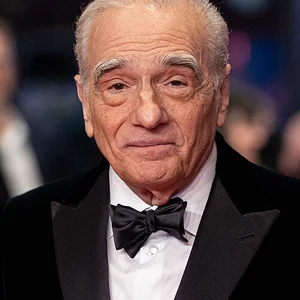

Martin Scorsese is an American filmmaker, screenwriter, and producer born in 1942 in New York. A major figure of the New Hollywood movement, he is one of the most influential directors in contemporary cinema.
Martin Scorsese(1942 — ?)
Martin Scorsese
États-Unis, Italie
6 min read
Frequently asked questions
Famous Quotes
« Cinema is a matter of what's in the frame and what's out.»
Key Facts
- Born on November 17, 1942, in New York into a family of Sicilian descent
- Directed Taxi Driver in 1976, which won the Palme d'Or at the Cannes Film Festival
- Directed Raging Bull (1980) and Goodfellas (1990), regarded as masterpieces
- Won the Academy Award for Best Director in 2007 for The Departed
- Founded The Film Foundation in 1990 to preserve cinematic heritage
Works & Achievements
A nervy dive into the everyday lives of small-time hoodlums in Little Italy; the film establishes Scorsese's style and his pairing with Robert De Niro.
Portrait of a lonely, unstable taxi driver in a decaying New York; winner of the Palme d'Or at Cannes and a cult classic.
Black-and-white biography of boxer Jake LaMotta, often ranked among the greatest American films.
An epic of the New York mafia, famous for its editing and voice-over narration, and a model for the modern gangster film.
A crime thriller that finally won Scorsese the Oscar for Best Director and Best Picture.
A frenzied satire of financial excess, starring Leonardo DiCaprio, and a huge box-office success.
A sweeping epic about organized crime that uses digital "de-aging" of the actors, produced by Netflix.
A drama about the murders of members of the Osage Nation in 1920s Oklahoma, denouncing racism and greed.
Anecdotes
As a child, Martin Scorsese suffered from asthma so severe that he couldn't run and play outside with the other boys of Little Italy. To keep him occupied, his parents took him very often to the neighborhood movie theater. It was there, in the darkness of the auditorium, that his all-consuming passion for film was born.
Before dreaming of cinema, the young Scorsese wanted to become a Catholic priest and even entered a junior seminary. He was dismissed after a year, and ultimately chose to study film at New York University. This religious imprint would leave a lasting mark on his films, which are haunted by the themes of sin and redemption.
To prepare for his role as a lonely taxi driver in *Taxi Driver* (1976), Robert De Niro actually obtained a license and drove a real cab through the streets of New York for several weeks. The famous line “You talkin' to me?” was partly improvised in front of the mirror.
Although he is regarded as one of the greatest living directors, Scorsese was for a long time the great loser at the Oscars: nominated five times without ever winning. He finally won the Oscar for Best Director only in 2007, for *The Departed*, to a standing ovation from the entire room.
Passionate about the history of cinema, Scorsese founded The Film Foundation in 1990, an organization devoted to restoring and preserving old films threatened with disappearance. Thanks to it, hundreds of vintage film reels from around the world have been saved from oblivion.
Primary Sources
For me, for the filmmakers I came to love and respect, for my friends who started making movies around the same time that I did, cinema was about revelation — aesthetic, emotional and spiritual revelation.
My whole life has been movies. The time I spend not making films is time spent living, and the time I spend making films, that's life.
The American filmmaker is in conflict with the very industry that sustains him. It is this paradox that, to my mind, defines American cinema.
Key Places
Neighborhood in New York where Martin Scorsese was born in 1942.
Italian-American neighborhood where Scorsese grew up and which deeply inspired films such as “Mean Streets.”
Institution where Scorsese studied film and made his first short films in the 1960s.
Heart of the American film industry, home to the studios Scorsese works with.
Festival where “Taxi Driver” won the Palme d'Or in 1976, establishing Scorsese on the international stage.
Typical Objects

The director's central tool, capturing the images of every shot. Scorsese is famous for his virtuoso camera movements, especially his long tracking shots.

A slate clapped at the start of each take to synchronize image and sound. It displays the scene and take numbers.

The photochemical medium on which films were traditionally shot and projected. Scorsese is a passionate advocate for it and campaigns for its preservation.

A series of drawings depicting each shot of the film in advance, like a comic strip. Scorsese, who draws himself, carefully prepares his sequences this way.

The text describing the film's story, dialogue and action. It is the written foundation from which the entire shoot is organized.

A golden trophy honoring the artisans of American cinema. Scorsese, long overlooked, finally won it in 2007 for “The Departed.”

The workstation where the filmed shots are assembled to give the film its final form. Scorsese has collaborated for decades with editor Thelma Schoonmaker.
School Curriculum
Vocabulary & Tags
Key Vocabulary
Tags
Daily Life
Morning
An early riser with boundless energy, Scorsese often devotes his mornings to preparing his work: rereading the script, reviewing the storyboards he draws himself, and meeting with his team. During a shoot, every shot is planned out in advance, down to the smallest detail.
Afternoon
The afternoon is spent on set, where he directs the actors with overflowing energy. Famous for speaking extremely fast and with great passion, he runs take after take until he achieves the exact emotion he is after.
Evening
In the evening, work continues in the editing room alongside his loyal editor, Thelma Schoonmaker. A great film lover, he also enjoys watching old classic movies, which he collects and studies tirelessly.
Food
Born into a Sicilian family in Little Italy, Scorsese grew up in the culture of Italian-American cooking, from pasta to slow-cooked family dishes. Known for his nervous energy, he is a fan of a good strong espresso.
Clothing
He is recognizable by his polished appearance: elegant suits, thick-framed glasses, and his famously bushy eyebrows. This distinguished figure stands in contrast to the often brutal world of his films.
Housing
Scorsese lives mainly in New York, the city that runs through all of his work. His home houses an immense collection of films and posters, a reflection of his passion as a historian and guardian of cinema.
Historical Timeline
Period Vocabulary
Liens externes & ressources
Références
Œuvres
Le Loup de Wall Street
2013
The Irishman
2019