Imaginary dialogue between Martin Scorsese and Bong Joon-ho
by Charactorium · Bong Joon-ho (1969 — ?) · Performing Arts · 5 min read
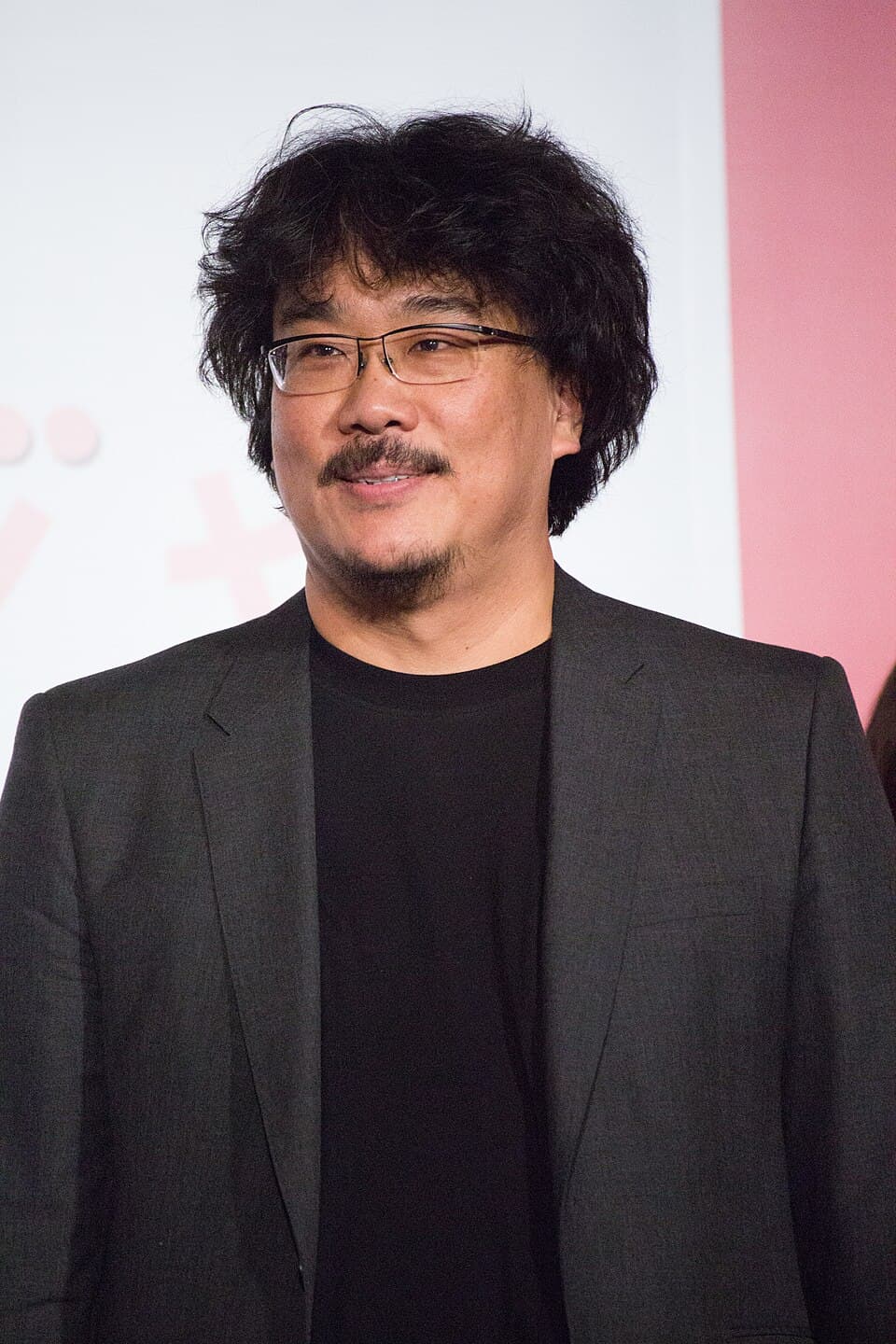
In a dim screening room in Los Angeles, a few days after the night of the 2020 Oscars, Martin Scorsese meets Bong Joon-ho. On the table, a pile of storyboards and two cups of cold coffee; outside, the low February light cuts through the palm trees. They have known each other through cinema long before shaking hands — Bong grew up with a phrase from the American master engraved in his heart. Scorsese, moved to have been quoted on the stage of the Dolby Theatre, comes to listen to the younger man whose Parasite has just turned Hollywood upside down.
—Bong, a few days ago, in that room at the Dolby Theatre, you quoted a phrase I once said. What did you feel as you went up to get those statuettes?
You who were sitting in the audience, Martin, you saw my vertigo. When Parasite won Best Picture, I couldn't believe it: never had a non-English-language film received that award. Nine months earlier, at Cannes, the Palme d'Or — the first for a Korean film — had already seemed unreal to me. But at the Oscars, when I wanted to share the Director trophy, it was your phrase I said: "The most personal is the most creative." I learned it while studying cinema, in Seoul, at a film club. Saying it in front of you, alive, was closing a circle that the little cinephile I was would never have dared to dream.
Never had a non-English-language film received that award — I couldn't believe it.
—At the Golden Globes, you talked about that tiny barrier of subtitles. Do you really believe an American audience can cross it that easily?
I believe it, Martin, otherwise I wouldn't have said it. I simply recalled that "once you overcome the one-inch-tall barrier of subtitles, you will be introduced to so many more amazing films." It's not a theory: it's my experience as a viewer. As a child, in Seoul, I was moved by Italian, American, Japanese films that I read at the bottom of the screen. Today the Korean wave, Hallyu, circulates everywhere — K-pop, our series. Parasite is just one drop in that movement. Cinema speaks a language of images; subtitles are just a small door to push. Many have walked through it without even noticing, and that is what pleases me most.
Cinema speaks a language of images; subtitles are just a small door to push.
—Your teams call you Bong Tae-il, "Bong the detail." As someone who likes to prepare every shot, tell me: what are you really looking for in those storyboards?
That nickname follows me, and it's deserved! Tae-il is my name combined with the English word detail. In the morning, at a café in Seoul, I draw each shot myself before filming — the framing, the axes, the movements. When I arrive on set, the film already exists on paper, almost entirely framed. You who cut your sequences with such care, you know why: it's not rigidity, it's freedom. Once the skeleton is drawn, I can play with the actors, breathe, improvise without getting lost. The storyboard protects me from panic. It allows me to listen to the set instead of trembling before it.
When I arrive on set, the film already exists on paper — it doesn't confine me, it frees me.
—Your Parasite digs a chasm between rich and poor, from the basement to the villa. Where does this obsession with your country's inequalities come from?
It comes from what I saw growing up around me, Martin. In 1997, the financial crisis threw Korea into the arms of the IMF: entire families collapsed. In our cities, there's the banjiha, that semi-basement housing where you live half under the sidewalk, and at the top the chaebol, those family conglomerates that own almost everything. Parasite inhabits this vertical gap. At Cannes, I said I wanted to tell the story of the coexistence of rich and poor, a universal subject today. It's not only Korean: social satire lets me make people laugh first, then tighten their throats. I prefer black comedy to sermons — you let your guard down, and the truth sinks in deeper.
There is the semi-basement and, at the very top, the big conglomerates: Parasite inhabits this vertical gap.
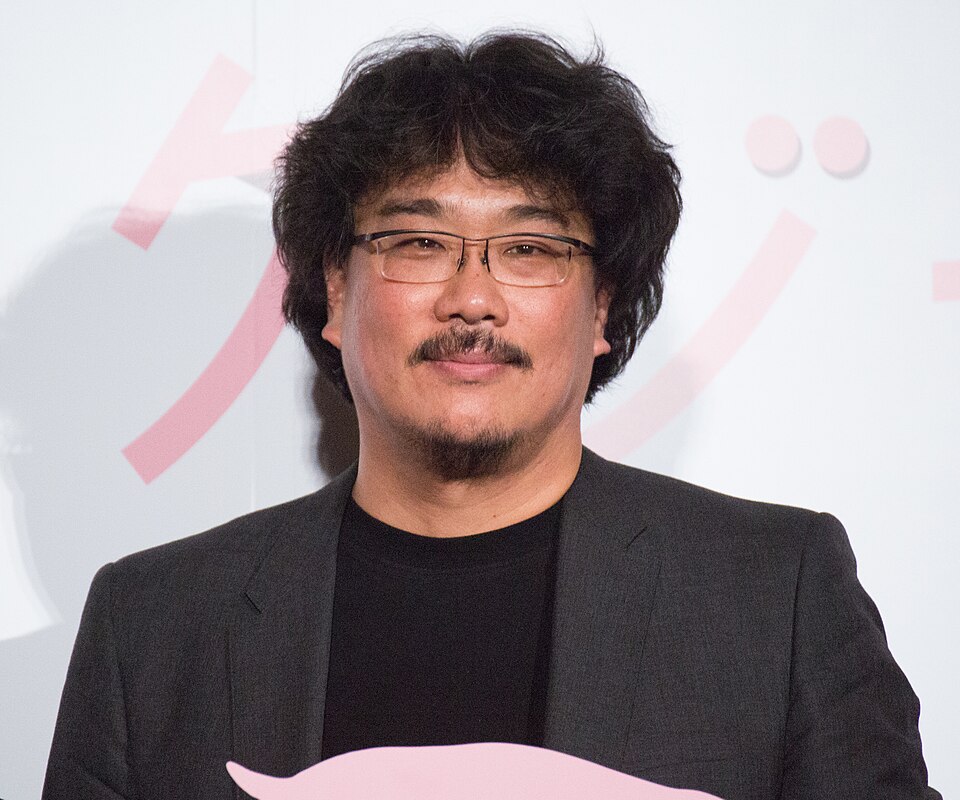
—Long before Parasite, you brought a monster out of the Han River in broad daylight. That was a crazy gamble — why refuse the shadows that protect creatures?
Because shadows are a comfortable lie! In The Host, in 2006, I wanted to show the beast in full light, running along the banks of the Han River at noon. Monster movies usually hide their creature; I exhibited it, with the help of foreign special effects studios, because real fear comes when you see everything. It was also a political film, a satire of authorities' incompetence. That gamble made The Host the biggest Korean box office hit at the time and opened the door to international audiences for me. You who have never feared mixing violence with slapstick, you understand: I refuse to choose a single genre. I like horror, laughter, and anger to coexist in the same shot.
Shadows are a comfortable lie; real fear comes when you see everything.
—You write your own scripts before drawing every shot. How do you go from the blank page to that manic precision of the frame?
It all starts with writing, alone, very early, in a café. I am as much a screenwriter as a director: the dialogue, the structure, I carry them long before I draw a single line. Then comes the storyboard, which translates words into images. It's a bridge, Martin: the script says what happens, the drawing says how we look at it. For Parasite, the staircase, the basement window, the dividing line between floors — everything was thought out before shooting, because space tells the story as much as the actors. I don't trust the randomness of the set for those things. Randomness, I keep for the actors' performances, never for the geometry of the frame.
The script says what happens, the storyboard says how we look at it.
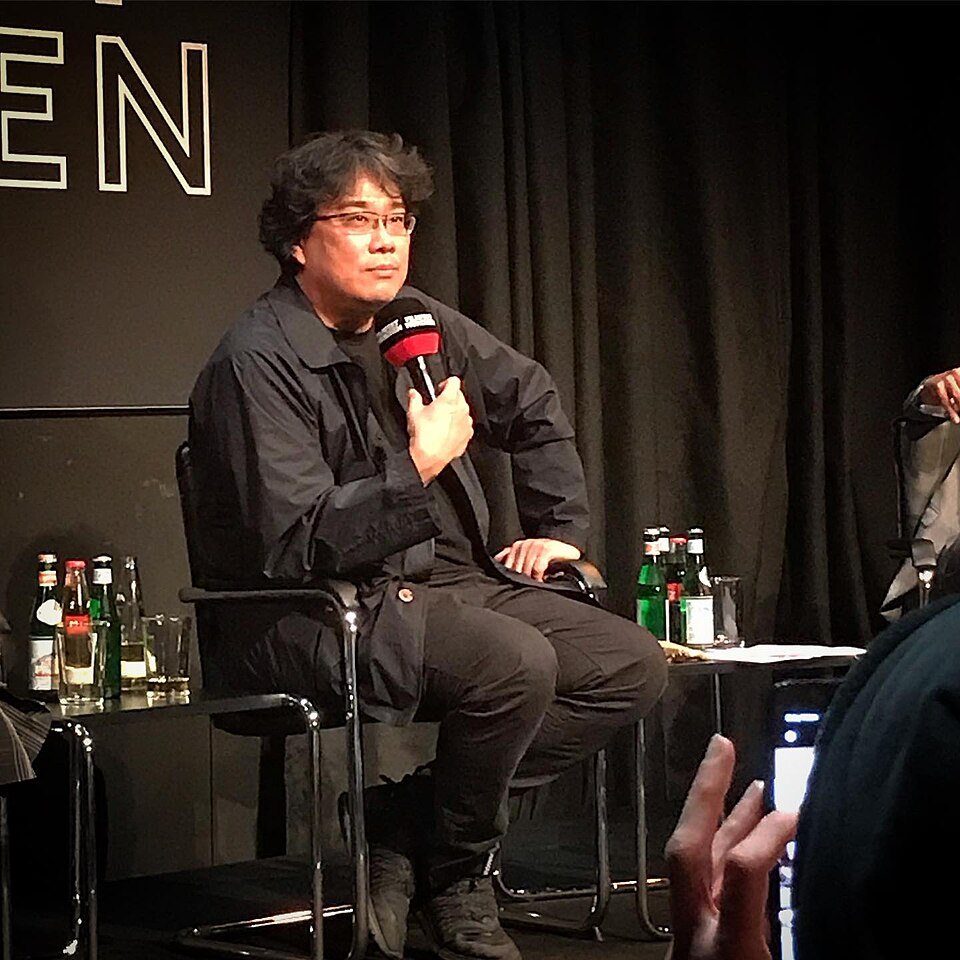
—Between walking up the steps at Cannes in May and the night of the Oscars, just a few months. How do you live through such a tidal wave without losing yourself?
You sleep little and laugh a lot! From 2019 to 2020, I went from festival to festival, screenings, travels between Korea, France, the United States. The Palme d'Or at the Palais des Festivals, then the four statuettes at the Dolby Theatre — it was exhilarating and exhausting. The secret, Martin, is to stay grounded in the concrete: my team, my actors, the next shot to imagine. When everything gets too big, I go back to my sketchbook. A filmmaker who thinks they are above their set is already lost. I distrust the light of trophies; it warms for a moment, but it's the dark work, the storyboard and editing, that lasts.
I distrust the light of trophies; it's the dark work that lasts.
—Netflix produced your Okja, presented at Cannes amid controversy. Do you think streaming threatens the movie theater that we both love?
It's a question that tugs at me, and I know it's close to your heart. For Okja, in 2017, Netflix's presence at Cannes sparked a real storm about the role of platforms. I don't have a clear answer: streaming gave me resources and freedom, but nothing replaces a dark theater full of strangers holding their breath together. The projector's light, the giant screen, the shared silence — that's where cinema grabbed me as a child. I want both: the global reach of platforms and the sacred ritual of the theater. Pitting them against each other would be a mistake; making them coexist is the real challenge of our time.
Nothing replaces a dark theater full of strangers holding their breath together.
—Your family hides a heavy story — a writer grandfather who went to the North. Does that nourish, silently, your view of your divided country?
You touch a sensitive spot, Martin. My grandfather was the novelist Park Tae-won, a modernist of the 1930s who went to North Korea during the war. For decades, under the South's dictatorship, that name was a heavy secret in our family. I grew up learning to keep quiet, to observe. Perhaps that's where my taste for stories of division, borders, people separated by invisible walls comes from — the basement and the upper floor, the North and the South. I don't make directly political films about my grandfather, but this wound irrigates my gaze. The filmmaker I am was born from those family silences as much as from dark theaters.
I grew up learning to keep quiet, to observe — the filmmaker I am was born from those silences.


This imaginary interview was generated by artificial intelligence from sources documented in Bong Joon-ho's profile. It dramatises what the figure might have said based on what we know about them, but does not constitute attested historical testimony. For primary sources and factual documentation, refer to the full profile.